
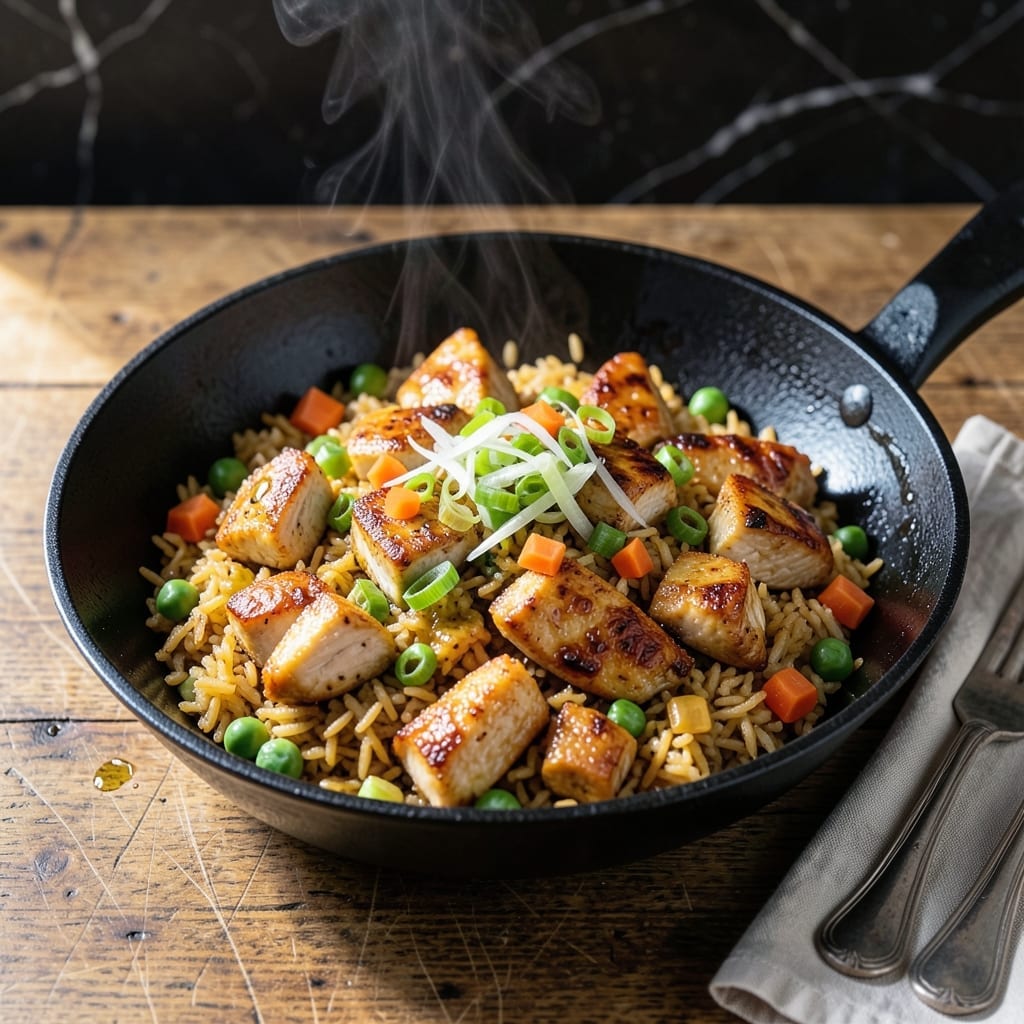
I learned the art of wok cooking during my apprenticeship in Charleston, and this dish remains a favorite for its speed and flavor. 20 minutes is all you need to create authentic street food at home.
The key is high heat and constant motion—this ensures each grain of rice stays separate while absorbing the savory chicken and vegetable flavors. A well-seasoned wok makes all the difference.
You’ll get tender chicken pieces, crisp vegetables, and rice with that signature slightly charred taste. The soy-based sauce ties everything together without making the dish soggy.
This works as a main course or a quick weeknight dinner. The technique is simple but delivers restaurant-quality results every time.
Ingredients for Chicken Fried Rice Wok
Pantry staples and fresh veggies make this wok classic come alive quickly.
| Ingredient | Amount | Notes |
|---|---|---|
| Cooked Jasmine Rice 🍚 | 4 cups | Day-old, cold, separated grains |
| Boneless Skinless Chicken Breast 🍗 | 1 lb | Cut into small even dice |
| Large Eggs 🥚 | 2 whole | Lightly beaten for scrambling |
| Green Onions 🧅 | 4 whole | Thinly sliced, whites and greens separated |
| Carrots 🥕 | 2 whole | Peeled and small diced |
| Frozen Green Peas 🌱 | 1 cup | No need to thaw |
| Garlic Cloves 🧄 | 3 cloves | Minced finely for even flavor |
| Soy Sauce 💧 | 3 tbsp | Low-sodium preferred for control |
| Oyster Sauce 🫒 | 2 tbsp | Vegetarian oyster sauce optional |
| Sesame Oil 🫒 | 1 tsp | Toasted for aromatic depth |
| Vegetable Oil 🫒 | 3 tbsp | High smoke point required |
| Kosher Salt 🧂 | ½ tsp | Or to taste after saucing |
| Ground White Pepper 🌶️ | ¼ tsp | Traditional for subtle heat |
| Fresh Ginger Root 🌿 | 1 tbsp | Peeled and minced fine |
The rice is non-negotiable—day-old jasmine from the fridge (the good stuff, not freshly cooked). Costco has great bulk jasmine, or any Asian market. Chicken breast stays tender when cut into even, small pieces. For the green onions, buy a bunch with firm white ends—limp ones are past their prime. The carrots should be bright orange and firm, not bendy.
No jasmine rice? Long-grain white rice works (just as good for this dish). Swap chicken breast for thighs for juicier bites. Vegetarian? Skip the oyster sauce or use vegetarian oyster sauce. Frozen peas are fine, but fresh sugar snap peas add crunch. Out of white pepper? Black pepper works, but it changes the visual speckles.
Cooked rice keeps 4-5 days in the fridge—perfect for fried rice. The dish itself reheats well for 3 days, but the rice loses its char. Freeze the cooked chicken separately for 3 months (worth the extra minute to label it).
Why You’ll Love This Recipe
- One Pan Wonder: I love that everything cooks together in the wok—rice, chicken, eggs, and veggies—no extra dishes piling up.
- Umami Bomb: The soy sauce and chicken create this deep, savory flavor that makes the rice taste way better than takeout.
- Feeds a Crowd: Honestly, this stretches to feed four with leftovers for lunch the next day—my kids even fight over the last bits.
- Pantry Hero: I always have jasmine rice and frozen chicken on hand, so this is my go-to when I need dinner fast without a grocery run.
Step-by-Step Instructions for Chicken Fried Rice
Here’s how to nail this classic dish with perfect texture and flavor every time.
Step 1: Prep Ingredients and Heat the Wok
Start by gathering all your prepped ingredients—this moves fast once the wok heats up. Have the diced boneless skinless chicken breast, lightly beaten large eggs, thinly sliced green onions, small diced carrots, frozen green peas, minced garlic cloves, and minced fresh ginger root within easy reach.
Place your wok over high heat and add 1 tablespoon of the vegetable oil. Swirl to coat the surface. The oil should shimmer but not smoke—this is your cue that it’s ready for the chicken. High heat is non-negotiable for that authentic wok hei flavor.
Step 2: Cook Chicken and Aromatics
Add the diced boneless skinless chicken breast to the hot wok. Spread it in an even layer and let it sear undisturbed for 30 seconds before stirring. Cook for 2-3 minutes until the pieces turn opaque white with golden edges.
Push the chicken to one side of the wok and add the remaining 2 tablespoons vegetable oil, minced garlic cloves, and minced fresh ginger root to the empty space. Stir-fry for 20-30 seconds until the aromatics become fragrant—this builds the flavor base that defines the dish.
Step 3: Scramble Eggs and Add Vegetables
Create a well in the center of the wok and pour in the lightly beaten large eggs. Let them set for 10 seconds before scrambling with a spatula. Once the eggs are just set but still slightly runny, break them into small pieces and mix with the chicken.
Add the small diced carrots and frozen green peas. Stir-fry for 1-2 minutes until the carrots begin to soften slightly and the peas are heated through. The carrots should retain a slight bite—they’ll cook more in the final steps. This is where the dish starts to come alive with color and texture.
Step 4: Combine with Rice and Sauces
Add the cold, separated cooked jasmine rice to the wok, breaking up any clumps with your spatula. The cold rice is crucial—it fries up fluffy instead of mushy. Stir-fry for 2-3 minutes until the rice is heated through and begins to take on a slight toast.
Drizzle the soy sauce, oyster sauce, and sesame oil evenly over the rice mixture. Add the kosher salt and ground white pepper. Toss everything together vigorously for 1-2 minutes until every grain is coated and the rice takes on a uniform, appetizing color. The soy sauce should darken the rice slightly, while the oyster sauce adds a glossy sheen.
Step 5: Finish with Green Onions and Serve
Stir in the thinly sliced green onions, reserving some of the green tops for garnish if desired. Cook for an additional 30 seconds just to wilt them slightly. The green onions add a fresh, crisp contrast to the rich, savory flavors.
Taste and adjust seasoning if needed—though the sauces should provide enough saltiness. Transfer to a serving platter and garnish with the remaining green onion tops. Serve immediately while hot, with the rice grains distinct and slightly crisp at the edges, each bite packed with the flavors of chicken, egg, and vegetables harmoniously blended together.
Pro Tips For Making Chicken Fried Rice Wok
- Crank the Heat: Use the highest heat your stove allows—fried rice needs that intense heat to get that classic wok hei flavor and prevent soggy rice. I learned this the hard way after too many lukewarm, limp batches.
- Dry the Rice: Spread your cooked jasmine rice on a tray and refrigerate it uncovered for at least an hour, or use day-old rice. Fresh rice is too moist and will turn to mush in the wok.
- Skip Overcrowding: Cook the chicken in batches if needed—overcrowding the wok steams the meat instead of searing it, and nobody wants rubbery chicken in their fried rice.
- Scramble Eggs First: Push the cooked chicken and veggies to one side of the wok, pour the beaten eggs into the empty space, and scramble quickly. This keeps the eggs soft and distinct instead of disappearing into the rice.
Flavor Customization for chicken fried rice wok
Spice It Up
For heat lovers, add 1-2 chopped Thai bird’s eye chilies with the aromatics. I also toss in ½ tsp chili garlic sauce at the end for depth. Remember, the heat builds as you eat, so start small. 🌶️
Vegetable Swaps
Swap carrots for bell peppers or broccoli florets—cut them small for even cooking. I often use 1 cup bean sprouts added at the very end for fresh crunch. The key is keeping everything uniform in size.
Protein Variations
Shrimp works beautifully—use ½ lb peeled and deveined, cooking just until pink. For pork, try char siu from your local Asian market. I’ve even used leftover Thanksgiving turkey for a Southern twist.
Sauce Adjustments
Boost umami with 1 tbsp fish sauce or 1 tsp hoisin. For sweetness, add 1 tsp brown sugar to balance the salt. I always taste before serving—wok cooking concentrates flavors, so adjust carefully.
Extra Flavor Boosters
Finish with 1 tsp toasted sesame seeds or crushed roasted peanuts for texture. A squeeze of lime juice brightens everything up. These small touches make the dish restaurant-quality. 💫
Low-Sodium Option
Use low-sodium soy sauce and increase fresh ginger to 1½ tbsp for depth. I also add 1 tsp rice vinegar to compensate. The ginger adds warmth without extra salt.
Nutrition Facts
Frequently Asked Questions
Why must the rice be cold?
Cold rice has dried slightly, preventing mushiness when stir-fried. Fresh rice steams instead of frying, ruining the texture.
Can I use a regular skillet?
A wok’s high walls and wide surface allow better tossing and even heat. A large skillet works in a pinch, but expect slightly less char.
How do I prevent soggy fried rice?
Cook in small batches over high heat, and avoid overcrowding. Add sauces last and stir-fry just until rice is hot.
What’s the best oil for wok cooking?
Use oils with a high smoke point like peanut, vegetable, or canola. Avoid olive oil—it burns at wok temperatures.

- Jollof Rice Sauce Recipe: West African Tomato and Spice Infusion - September 25, 2026
- Japanese Rice Soup Recipe: Umami-Rich Comfort in a Bowl - September 25, 2026
- Homemade Cream Of Rice Recipe: Silk-Smooth Breakfast in Minutes - September 25, 2026