
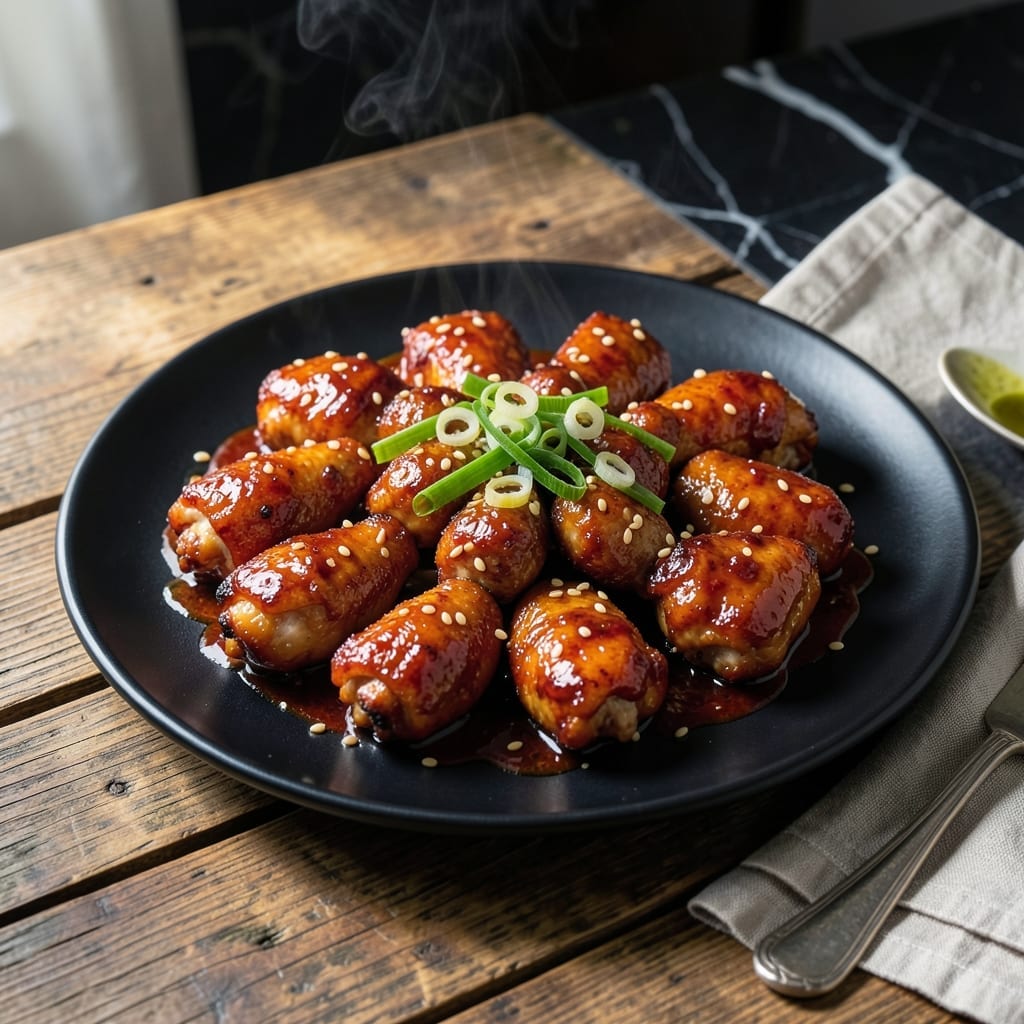
This Korean-inspired chicken dish brings bold, spicy flavors to your dinner table with minimal effort. The gojuchang glaze delivers a perfect balance of heat, sweetness, and umami that transforms ordinary chicken into something extraordinary.
I developed this recipe to capture authentic Korean flavors while keeping the technique approachable. The sauce comes together quickly with pantry staples, and the chicken cooks in 20 minutes under the broiler for that signature charred finish.
The result is tender chicken pieces coated in a glossy, sticky glaze that caramelizes beautifully. Every bite delivers complex layers of spice and depth that will have you reaching for seconds.
Serve with steamed rice and quick-pickled vegetables to complete the meal. This dish proves that restaurant-quality flavor is achievable at home.
Ingredients for Chicken Gojuchang
Pantry staples plus a quick trip to the Asian market. Bold flavors, minimal effort.
| Ingredient | Amount | Notes |
|---|---|---|
| Boneless Skinless Chicken Thighs 🍗 | 1 ½ lb | Cut into bite-sized pieces |
| Gochujang 🌶️ | ½ cup | Korean fermented chili paste |
| Soy Sauce 🫒 | ¼ cup | Low-sodium preferred |
| Brown Sugar 🍯 | 3 tbsp | Packed, for sweetness |
| Rice Vinegar 🍚 | 2 tbsp | For acidity balance |
| Sesame Oil 🫒 | 1 tbsp | Toasted for depth |
| Garlic Cloves 🧄 | 4 cloves | Minced for sauce |
| Fresh Ginger 🌿 | 1 tbsp | Grated, peeled first |
| Cornstarch 🌾 | 1 tbsp | For glaze thickening |
| Toasted Sesame Seeds 🌰 | 1 tbsp | For garnish |
| Green Onions 🧅 | 3 whole | Thinly sliced for topping |
| Vegetable Oil 🫒 | 1 tbsp | For searing chicken |
| Red Pepper Flakes 🌶️ | ½ tsp | Adjust for heat preference |
| Water 💧 | ¼ cup | For sauce consistency |
The gochujang is non-negotiable here. H Mart or Korean markets carry it, but most Whole Foods have it too—look for the red tubs in the international aisle. Chicken thighs stay juicier than breasts under the broiler (trust me on this). If you’re buying pre-cut, grab the boneless skinless—saves you the trouble of trimming. The fresh ginger and garlic? Peel and prep them first—makes the sauce come together faster.
No gochujang? Sriracha plus miso paste gets you 70% there, but the flavor won’t be as deep. Out of rice vinegar? Apple cider vinegar at the same amount works, but it’s slightly fruitier. Brown sugar can be swapped for honey (or maple syrup for vegan), but the caramelization might differ slightly. For the sesame oil, Kadoya brand is my go-to—strong toasty flavor without bitterness.
The glaze thickens as it cools, so thin with a splash of water if needed. Leftovers keep 3-4 days in the fridge (the flavors actually deepen). Freeze the sauce base for up to 3 months—just thaw and cook fresh chicken when ready. Always garnish with sesame seeds and green onions right before serving.
Why You’ll Love This Recipe
- One Pan Wonder: I toss everything in a single pan and let the oven do the work—minimal cleanup, maximum flavor.
- Sweet Heat Magic: The gochujang and brown sugar create this sticky, spicy-sweet glaze that clings to the chicken. Honestly, I could drink it with a spoon.
- Meal Prep Hero: Makes enough for lunches all week, and the flavors only get better overnight.
- Budget Friendly: Chicken thighs stay juicy and cheap, and a little gochujang goes a long way.
Step-by-Step Instructions for Chicken Gojuchang
This method delivers sticky, spicy-sweet chicken with a glossy glaze and restaurant-quality flavor.
Step 1: Sear the Chicken Thighs
Heat the 1 tablespoon vegetable oil in a large skillet over medium-high heat until it shimmers. Add the 1.5 lb boneless skinless chicken thighs (cut into bite-sized pieces) in a single layer. You’ll hear a satisfying sizzle when they hit the pan.
Let them sear undisturbed for 4-5 minutes until the bottoms develop a deep golden-brown crust. Flip and cook for another 3-4 minutes until cooked through. The chicken should reach 165°F internally. Transfer to a plate and set aside.
Step 2: Build the Gojuchang Glaze
In the same skillet, reduce heat to medium. Add the 4 cloves garlic cloves (minced) and 1 tablespoon fresh ginger (grated). Sauté for 30 seconds until fragrant—just until the raw aroma dissipates.
Stir in the 0.5 cup gochujang, 0.25 cup soy sauce, 3 tablespoons brown sugar, 2 tablespoons rice vinegar, 0.5 teaspoon red pepper flakes, and 0.25 cup water. Bring to a gentle simmer, stirring to dissolve the sugar.
Step 3: Thicken the Sauce and Finish
In a small bowl, whisk the 1 tablespoon cornstarch with 1 tablespoon cold water to create a slurry. Slowly pour this into the simmering sauce while stirring constantly. The mixture will thicken within 1-2 minutes into a glossy, coat-the-back-of-a-spoon consistency.
Return the chicken to the skillet along with any accumulated juices. Stir to coat each piece thoroughly in the sauce. Cook for an additional 2 minutes to let the flavors meld. The chicken should glisten with a deep red, sticky glaze.
Step 4: Garnish and Serve
Remove from heat and stir in the 1 tablespoon sesame oil. This adds a nutty depth to the dish. Taste and adjust seasoning if needed—though the combination of salty, sweet, and spicy should be perfectly balanced.
Transfer to a serving platter and sprinkle with 1 tablespoon toasted sesame seeds and 3 whole green onions (thinly sliced). Serve immediately over steamed rice to soak up every last bit of that incredible sauce.
Pro Tips For Making Chicken Gojuchang
- Sear Chicken First: Brown the chicken thighs in a hot pan before adding the sauce—I learned this the hard way after ending up with pale, steamed meat instead of that caramelized crust.
- Thin the Gochujang: Mix the gochujang with a splash of warm water before combining with other sauce ingredients. Sounds weird, but it works: prevents clumping and helps it coat the chicken evenly.
- Skip the Overcooking: Pull the chicken at 165°F and let it rest—thighs keep cooking off the heat, and dry gojuchang chicken is a sad meal.
- Balance the Sweetness: Taste before serving and add a little more rice vinegar if needed. Brown sugar can overpower the gochujang’s heat, and I was skeptical until I tried it.
Perfect Pairings for These Flavors
Side Dish Pairings
Steamed jasmine rice is non-negotiable—its mild flavor and fluffy texture soak up that incredible gochujang glaze. I use a 1:1.5 rice-to-water ratio in my rice cooker for perfect results every time. For extra flair, try coconut rice with a ½ cup canned coconut milk substitution. 🥗
Fresh Accompaniments
Quick-pickled cucumbers cut through the richness beautifully. Thinly slice 2 Persian cucumbers and toss with ¼ cup rice vinegar, 1 tsp sugar, and a pinch of salt. Let sit for 15 minutes while the chicken cooks. The cool crunch contrasts perfectly with the spicy heat.
Wine Pairings
An off-dry Riesling from Washington state balances the heat with its subtle sweetness and crisp acidity. I love Chateau Ste. Michelle—it’s widely available and budget-friendly. For red lovers, a lightly chilled Beaujolais offers bright fruit without overpowering the dish. 🍷
Beer Options
A crisp Korean lager like Hite or OB Beer is traditional and refreshing. For craft beer fans, a Belgian witbier with its citrus notes complements the ginger and garlic. Avoid hoppy IPAs—they’ll clash with the spicy-sweet profile.
Vegetable Sides
Stir-fried bok choy with garlic takes just 5 minutes and adds a fresh, slightly bitter contrast. Sear 4 halved baby bok choy in the same pan after removing the chicken, adding 2 minced garlic cloves and a splash of soy sauce. The charred edges echo the chicken’s caramelization.
Finishing Touches
Set out extra gochujang and sriracha for heat seekers. I also offer lime wedges—a squeeze brightens each bite. For crunch, top with crushed peanuts or fried shallots just before serving. These small additions let everyone customize their plate. 🔥
Nutrition Facts
Frequently Asked Questions
Can I use chicken breast instead of thighs?
Yes, but thighs stay juicier. If using breasts, reduce cooking time to 3-4 minutes per side to prevent dryness. The glaze works the same, but the texture will be less tender.
How do I make it less spicy?
Cut the gochujang to ¼ cup and add 1 extra tablespoon of brown sugar. Skip the red pepper flakes entirely. The dish will still have depth without the heat.
Can I make this ahead of time?
Prepare the glaze up to 2 days ahead and refrigerate. Cook the chicken fresh, then reheat everything together in a skillet for 5 minutes on medium-low.

- Jollof Rice Sauce Recipe: West African Tomato and Spice Infusion - September 25, 2026
- Japanese Rice Soup Recipe: Umami-Rich Comfort in a Bowl - September 25, 2026
- Homemade Cream Of Rice Recipe: Silk-Smooth Breakfast in Minutes - September 25, 2026