
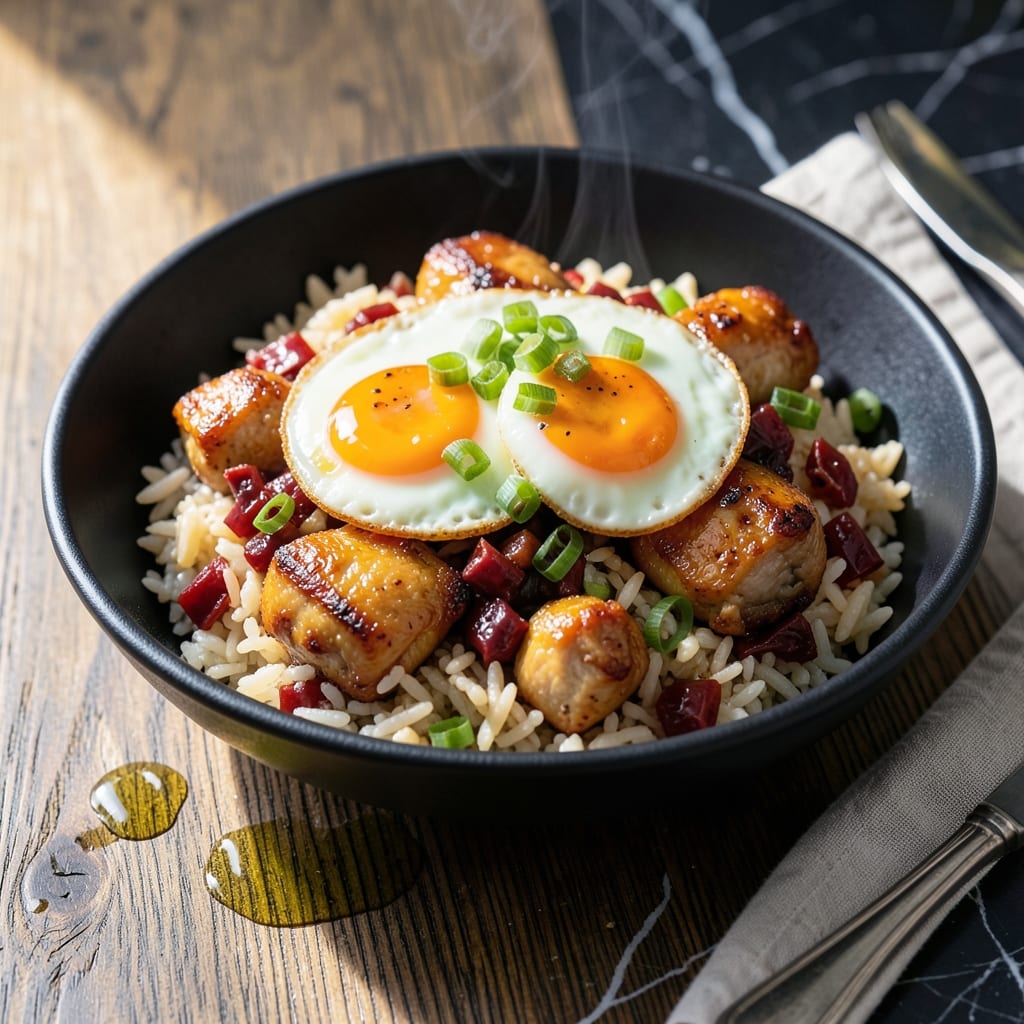
This dish brings bold Korean flavors to your weeknight table with minimal effort and maximum impact. The combination of tender chicken, tangy kimchi, and perfectly cooked rice creates a balance of heat, umami, and texture that’s hard to resist.
I developed this recipe to capture the essence of traditional kimchi fried rice while making it approachable for home cooks. The key is using day-old rice, which fries up fluffy and separate, and allowing the kimchi to caramelize slightly in the pan.
You’ll end up with a dish that’s deeply savory, with just enough spice to keep things interesting. The chicken adds protein and heartiness, while the kimchi provides that signature fermented kick that makes this recipe stand out.
Serve it straight from the pan with a fried egg on top for the ultimate comfort meal.
Ingredients for Chicken Kimchi Fried Rice
Pantry staples meet bold Korean flavors in this easy weeknight dish.
| Ingredient | Amount | Notes |
|---|---|---|
| Cooked White Rice 🍚 | 4 cups | Day-old for best texture |
| Kimchi 🥬 | 1 ½ cups | Chopped, with juices |
| Boneless Chicken Thighs 🍗 | 1 lb | Diced into small pieces |
| Large Eggs 🥚 | 4 whole | For topping, optional |
| Garlic Cloves 🧄 | 4 cloves | Minced finely |
| Green Onions 🧅 | 4 whole | Thinly sliced, white and green parts separated |
| Soy Sauce 🫚 | 3 tbsp | Low-sodium preferred |
| Gochujang 🌶️ | 1 tbsp | Korean chili paste |
| Sesame Oil 🫒 | 1 tbsp | Toasted, for finishing |
| Vegetable Oil 🫒 | 2 tbsp | Neutral flavor, for frying |
| Granulated Sugar 🍚 | 1 tsp | Balances kimchi sourness |
| Salt 🧂 | ½ tsp | Adjust to taste |
| Black Pepper 🌶️ | ¼ tsp | Freshly ground |
| Sesame Seeds 🌿 | 1 tsp | Toasted, for garnish |
The kimchi is non-negotiable here. Look for the refrigerated kind (not shelf-stable)—it’s got the live cultures and tang you need. Korean markets will have the best selection, but Whole Foods and even Trader Joe’s stock solid options. Day-old rice is key—fresh rice will turn mushy. Leftovers from last night’s takeout work perfectly (don’t even rinse it).
No gochujang? A mix of sriracha and miso paste gets you close, but it won’t be the same. Chicken breasts work in a pinch, but thighs stay juicier. Short on time? Skip the egg topping—it’s delicious either way. And if you’re sensitive to heat, rinse the kimchi before chopping to tone down the spice.
Store leftovers in the fridge for up to 4 days—it reheats great in a dry pan. Freeze without the egg for up to 3 months (the texture changes slightly, but it’s still tasty). Always add the sesame oil at the end so it doesn’t burn.
Why You’ll Love This Recipe
- One Pan Wonder: I toss everything—the chicken, kimchi, and rice—into one skillet, and cleanup is a breeze.
- Flavor Bomb: The tangy kimchi and garlic make every bite so addictive I sometimes eat it straight from the pan.
- Meal Prep Hero: It reheats beautifully, so I make a big batch for lunches all week.
- Budget Stretch: Boneless chicken thighs and leftover rice keep this dish cheap but still packed with flavor.
Step-by-Step Instructions for Chicken Kimchi Fried Rice
Here’s the method I swear by for that perfect balance of spicy, savory, and umami in every bite.
Step 1: Prep and Cook the Chicken
Start by dicing the 1 lb Boneless Chicken Thighs into small, even pieces—this ensures they cook quickly and evenly. Season them with 0.5 tsp Salt and 0.25 tsp Black Pepper, then toss to coat. Heat 1 tbsp Vegetable Oil in a large wok or skillet over medium-high heat.
Add the chicken and cook for 5-6 minutes, stirring occasionally, until the pieces are golden brown and cooked through. You’ll know it’s done when the juices run clear and there’s no pink left inside. Transfer the chicken to a plate and set aside—it’ll go back into the dish later.
Step 2: Sauté the Aromatics and Kimchi
In the same pan, add the remaining 1 tbsp Vegetable Oil and heat it over medium-high heat. Toss in the 4 cloves Garlic Cloves (minced finely) and the white parts of the 4 whole Green Onions, stirring for 30 seconds until fragrant. Be careful not to let the garlic burn—it’ll turn bitter fast.
Next, add the 1.5 cups Kimchi (with its juices) and the 1 tbsp Gochujang. Stir-fry for 2-3 minutes until the kimchi softens slightly and the gochujang melts into the mixture. This step builds the base of your fried rice with that signature spicy, tangy kick.
Step 3: Combine Rice, Chicken, and Seasonings
Add the 4 cups Cooked White Rice to the pan, breaking up any clumps with your spatula. The day-old rice works best here because it’s drier and fries up beautifully. Stir-fry for 2-3 minutes until the rice is heated through and starts to crisp slightly in spots.
Return the cooked chicken to the pan, then drizzle in the 3 tbsp Soy Sauce and 1 tsp Granulated Sugar. Stir everything together for 1-2 minutes until the rice is evenly coated and the chicken is warmed through. Taste and adjust seasoning if needed—this is where you fine-tune the flavor balance.
Step 4: Finish with Eggs and Garnishes
Push the rice mixture to one side of the pan and crack the 4 whole Large Eggs into the empty space. Scramble them lightly with your spatula until they’re just set but still slightly runny. Then, mix the eggs into the rice so they coat every grain. The residual heat will finish cooking them perfectly.
Remove the pan from heat and stir in the 1 tbsp Sesame Oil. Garnish with the green parts of the 4 whole Green Onions and the 1 tsp Sesame Seeds. The sesame oil adds a nutty depth, while the green onions and sesame seeds provide freshness and crunch. Serve immediately while it’s hot and fragrant.
Pro Tips For Making Chicken Kimchi Fried Rice
- Use Cold Rice: I learned this the hard way—fresh rice turns mushy, but day-old, cold rice from the fridge fries up with perfect texture, giving you those distinct grains that actually hold up to the kimchi and chicken.
- Squeeze the Kimchi: After burning my first batch, I now always squeeze out excess liquid from the kimchi before chopping—about 30 seconds of pressure prevents a soggy pan and lets the flavors concentrate.
- High Heat First: Crank the heat to medium-high when searing the chicken thighs—about 3-4 minutes per side—so they get that golden crust before you chop them into bite-sized pieces for the rice.
- Eggs Last: Sounds weird, but it works: push the rice to one side of the pan, add a little extra oil, then scramble the eggs in the empty space before mixing everything together at the end.
Troubleshooting Great chicken kimchi fried rice
Soggy Rice Fix
If your rice turns mushy, you likely used fresh rice or overcrowded the pan. Spread rice in a thin layer and cook over medium-high heat for 3-4 minutes without stirring. This creates crispy bits called nurungji. I always use day-old rice from Charleston markets for best results. 🔥
Bland Flavor Rescue
If your dish lacks punch, add 1 tbsp gochujang or 1 tsp soy sauce at the end. Stir in 1 tsp sesame oil for depth. Taste as you go—kimchi varies in saltiness. I often keep extra Mother-in-Law’s Kimchi on hand for adjustments.
Burnt Garlic Issue
Garlic burns quickly over high heat. Cook it over medium heat for just 30 seconds until fragrant, not brown. If it burns, start over—bitter garlic ruins the dish. My vintage cast iron retains heat well, so I adjust temperatures accordingly.
Egg Troubles
For runny eggs, scramble them separately in a small pan with 1 tsp vegetable oil over low heat. Slide them onto the rice just before serving. This gives you perfect control over doneness. I learned this trick during my CIA training.
Sticky Pan Problems
Use a well-seasoned wok or nonstick skillet. Heat the pan first, then add oil. If food sticks, let it develop a crust before stirring. A splash of water or broth can help release fond. My 47-piece cast iron collection always delivers. ✨
Kimchi Too Spicy
Rinse chopped kimchi under cold water and squeeze dry to reduce heat. Start with 1 cup instead of 1.5 cups and adjust to taste. The sugar in the recipe helps balance spiciness too. I often do this for guests sensitive to heat.
Nutrition Facts
Frequently Asked Questions
Can I use fresh rice instead of day-old?
Fresh rice contains more moisture, making it prone to mushiness. Spread it on a tray and refrigerate uncovered for 30 minutes to dry it out before cooking. Day-old is still ideal for best texture.
What can I substitute for gochujang?
Mix 1 tbsp sriracha with 1 tsp miso paste for a similar spicy, umami flavor. Add 1 tsp honey to balance heat. It won’t be identical but works in a pinch.
How do I make this dish less spicy?
Rinse chopped kimchi before using and reduce to 1 cup. The sugar in the recipe helps mellow heat. For extra mildness, skip gochujang entirely.
Can I use chicken breast instead of thighs?
Yes, but dice it small and cook for only 4-5 minutes to prevent dryness. Thighs are preferred for their juiciness and flavor. Add 1 tbsp broth if breast meat seems dry.

- Jollof Rice Sauce Recipe: West African Tomato and Spice Infusion - September 25, 2026
- Japanese Rice Soup Recipe: Umami-Rich Comfort in a Bowl - September 25, 2026
- Homemade Cream Of Rice Recipe: Silk-Smooth Breakfast in Minutes - September 25, 2026