
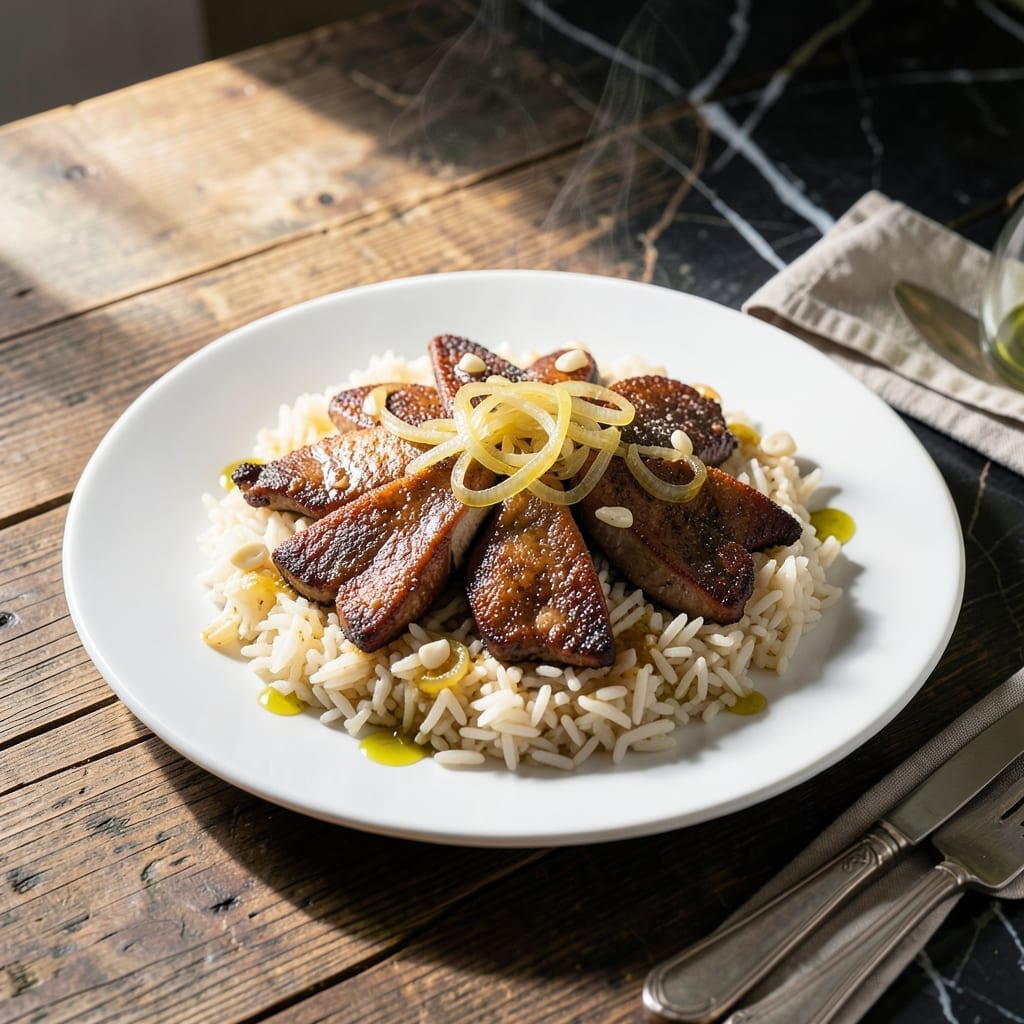
This dish transforms humble ingredients into a restaurant-quality meal with deep, savory flavors. The chicken livers develop a rich, velvety texture when cooked properly, while the rice absorbs all the umami goodness.
The key is balancing the liver’s intensity with the rice’s mildness. I’ve perfected the timing so both components finish together—tender livers and fluffy grains in every bite.
What you get is a hearty, satisfying dish that feels special without complicated techniques. The livers stay moist and flavorful, while the rice soaks up the pan juices for maximum taste.
Serve it hot for the best experience. Here’s how to make it right.
Ingredients for Chicken Liver and Rice
Restaurant-quality results start with these carefully selected, humble ingredients for maximum umami depth.
| Ingredient | Amount | Notes |
|---|---|---|
| Chicken Livers 🍗 | 1 ½ lb | Trimmed of connective tissue |
| Long-Grain White Rice 🍚 | 1 ½ cups | Uncooked, rinsed until clear |
| Unsalted Butter 🧈 | ½ cup | Divided for cooking and finishing |
| Yellow Onion 🧅 | 1 whole | Finely diced for base flavor |
| Garlic Cloves 🧄 | 4 cloves | Minced for aromatic depth |
| All-Purpose Flour 🌾 | ¼ cup | For light dredging of livers |
| Chicken Stock 🍲 | 2 cups | Low-sodium preferred for control |
| Dry White Wine 🍷 | ½ cup | For deglazing and depth |
| Fresh Thyme Sprigs 🌿 | 4 pieces | Stems removed, leaves only |
| Bay Leaf 🍃 | 1 whole | For subtle aromatic background |
| Kosher Salt 🧂 | 1 ½ tsp | Diamond Crystal preferred for even seasoning |
| Freshly Ground Black Pepper 🌶️ | 1 tsp | Coarse grind for texture |
| Fresh Flat-Leaf Parsley 🌿 | ¼ cup | Chopped for bright finish |
The chicken livers are non-negotiable for this dish. Optimal quality requires fresh, never frozen livers from a reputable butcher or specialty grocery like Whole Foods. Look for vibrant, deep red color with no grayish spots—this indicates peak freshness. The rice should be a standard long-grain variety; Basmatis or jasmine work particularly well for achieving those fluffy grains promised in the intro.
No white wine? Substitute chicken stock with 1 tbsp lemon juice to mimic the acidity. Fresh thyme can be replaced with dried at one-third the amount, though the flavor profile will be slightly more concentrated. For a gluten-free version, cornstarch or rice flour can replace the all-purpose flour for dredging. The butter is essential for richness, but a high-quality olive oil works in a pinch.
Prepare this dish fresh for best results, as the livers are most tender when served immediately. Leftovers keep for 2-3 days in the fridge, though the rice may absorb more moisture. Reheat gently on the stove with a splash of water to restore texture. The parsley garnish is best added fresh, not stored with the cooked dish.
Why You’ll Love This Recipe
- One-Pot Wonder: I love that everything cooks together—livers, rice, onions—so I’m not stuck washing a sink full of dishes.
- Buttery Richness: The butter and garlic turn the livers into this melt-in-your-mouth experience that’s honestly hard to resist.
- Feeds the Family: Between us, it’s a hit with both kids and adults, and leftovers taste even better the next day.
- Budget Stretcher: Chicken livers are so affordable, and this dish makes them taste like a million bucks without breaking the bank.
Step-by-Step Instructions for Chicken Liver and Rice
Master the technique for tender livers and perfectly cooked rice with this refined method.
Step 1: Prepare and Sear the Chicken Livers
Pat the 1.5 lb Chicken Livers completely dry with paper towels after trimming connective tissue. This ensures a proper sear rather than steaming. Season both sides with ½ tsp Kosher Salt and ½ tsp Freshly Ground Black Pepper.
Lightly dredge the livers in 0.25 cup All-Purpose Flour, shaking off excess. Heat 2 tbsp Unsalted Butter in a large skillet over medium-high heat until foaming subsides. Add the livers in a single layer, working in batches if needed to avoid crowding. Sear for 2-3 minutes per side until browned with a slightly pink center.
Transfer the seared livers to a plate and tent with foil to keep warm. Don’t overcrowd the pan—this causes the livers to steam rather than develop a rich, caramelized exterior.
Step 2: Build the Aromatic Base
In the same skillet, reduce heat to medium and add the remaining 6 tbsp Unsalted Butter. Once melted, add the finely diced Yellow Onion and cook for 5-6 minutes until translucent and soft.
Add the 4 cloves minced Garlic Cloves, Fresh Thyme Sprigs (leaves only), and 1 whole Bay Leaf. Sauté for 1 minute until the garlic is fragrant but not browned. This aromatic foundation layers depth into the dish without overpowering the delicate liver flavor.
Pour in 0.5 cup Dry White Wine to deglaze, scraping up any browned bits from the bottom of the pan. Let it simmer for 2-3 minutes until reduced by half.
Step 3: Cook the Rice in Flavorful Liquid
Add the 1.5 cups Long-Grain White Rice to the skillet and stir to coat in the buttery, aromatic mixture. Toast the rice for 1 minute to enhance its nutty flavor. Pour in 2 cups Chicken Stock and bring to a boil.
Reduce heat to low, cover, and simmer for 15-18 minutes, or until the rice is tender and the liquid is absorbed. Avoid stirring during cooking to prevent the rice from becoming gummy. The rice should be fluffy with individual grains that separate easily.
Remove from heat and let the rice sit covered for 5 minutes to steam and finish cooking. Discard the bay leaf.
Step 4: Combine and Finish
Gently fold the reserved seared livers into the cooked rice, breaking them into bite-sized pieces as you go. This distributes the rich, umami flavor throughout the dish. Season with the remaining 1 tsp Kosher Salt and ½ tsp Freshly Ground Black Pepper, adjusting to taste.
Return the skillet to low heat for 2-3 minutes to warm everything through. The livers should remain tender and slightly pink inside. If the mixture seems dry, add a splash of warm chicken stock to loosen it.
Stir in 0.25 cup chopped Fresh Flat-Leaf Parsley just before serving for a bright, fresh finish. The parsley adds a pop of color and balances the richness of the dish.
Pro Tips For Making Chicken Liver And Rice
- Soak the Livers: Cover chicken livers in milk for 30 minutes before cooking—this removes any bitterness and makes them incredibly tender. I learned this the hard way after serving a few too-strong batches to skeptical dinner guests.
- Brown the Butter: Let the unsalted butter cook until it turns golden and nutty before adding onions—about 3-4 minutes on medium heat. It adds a depth of flavor that plain butter just can’t match.
- Skip Overcooking Rice: Start the rice in the pan with the livers and onions, then add liquid and let it absorb. Resist the urge to stir constantly—this breaks the grains and turns it mushy.
- Use Liver Juices: After searing the livers, pour those rich, meaty juices right into the rice as it cooks. Sounds simple, but it’s the thing that makes the rice taste so good.
Best Sauces and Condiments for This Dish
Classic Pan Sauce
After removing the livers, use the browned bits in your skillet to create a quick pan sauce. Add ½ cup chicken stock and 2 tbsp butter, then simmer for 3-4 minutes until slightly thickened. Drizzle this over the finished dish for extra richness. 💫
Creamy Mustard Sauce
Whisk together ¼ cup Dijon mustard, ¼ cup heavy cream, and 1 tbsp white wine vinegar. This tangy sauce cuts through the liver’s richness beautifully. I often add 1 tsp honey to balance the sharpness.
Garlic-Herb Butter
Mix 4 tbsp softened butter with 1 minced garlic clove and 1 tbsp chopped fresh thyme. A dollop of this melts into the hot rice and livers, adding aromatic depth to every bite.
Spicy Pepper Sauce
For heat lovers, combine ¼ cup hot sauce with 2 tbsp melted butter and 1 tsp smoked paprika. This adds a kick that complements the earthy liver flavor without overpowering it.
Wine Reduction
Use the same dry white wine from the recipe to make a simple reduction. Simmer 1 cup wine with 1 shallot until reduced by half, then finish with 1 tbsp butter. The wine’s acidity brightens the dish. 🍷
Lemon-Parsley Garnish
Beyond the recipe’s parsley, add zest of 1 lemon and 1 tbsp lemon juice to the finished dish. This fresh, citrusy touch enhances all the other flavors and keeps the dish from feeling too heavy.
Nutrition Facts
Frequently Asked Questions
Should I soak the livers before cooking?
Soaking in milk for 30 minutes removes bitterness and mellows the flavor. It also helps achieve a more tender texture. Pat thoroughly dry before dredging for best searing results.
Can I use brown rice instead of white?
Yes, but adjust the liquid and cooking time. Use 2.25 cups stock and simmer for 40-45 minutes. The texture will be chewier, but the nutty flavor pairs well with the livers.
Why did my rice turn out mushy?
Stirring the rice while cooking or using too much liquid breaks down the grains. Always keep the lid on and resist the urge to stir. For perfect results, use the exact 1:1.25 rice-to-liquid ratio specified.
How do I know when the livers are done?
They should be browned outside with a slightly pink center inside. Overcooking makes them tough—aim for 2-3 minutes per side over medium-high heat. The interior will continue cooking slightly off the heat.

- Jollof Rice Sauce Recipe: West African Tomato and Spice Infusion - September 25, 2026
- Japanese Rice Soup Recipe: Umami-Rich Comfort in a Bowl - September 25, 2026
- Homemade Cream Of Rice Recipe: Silk-Smooth Breakfast in Minutes - September 25, 2026