
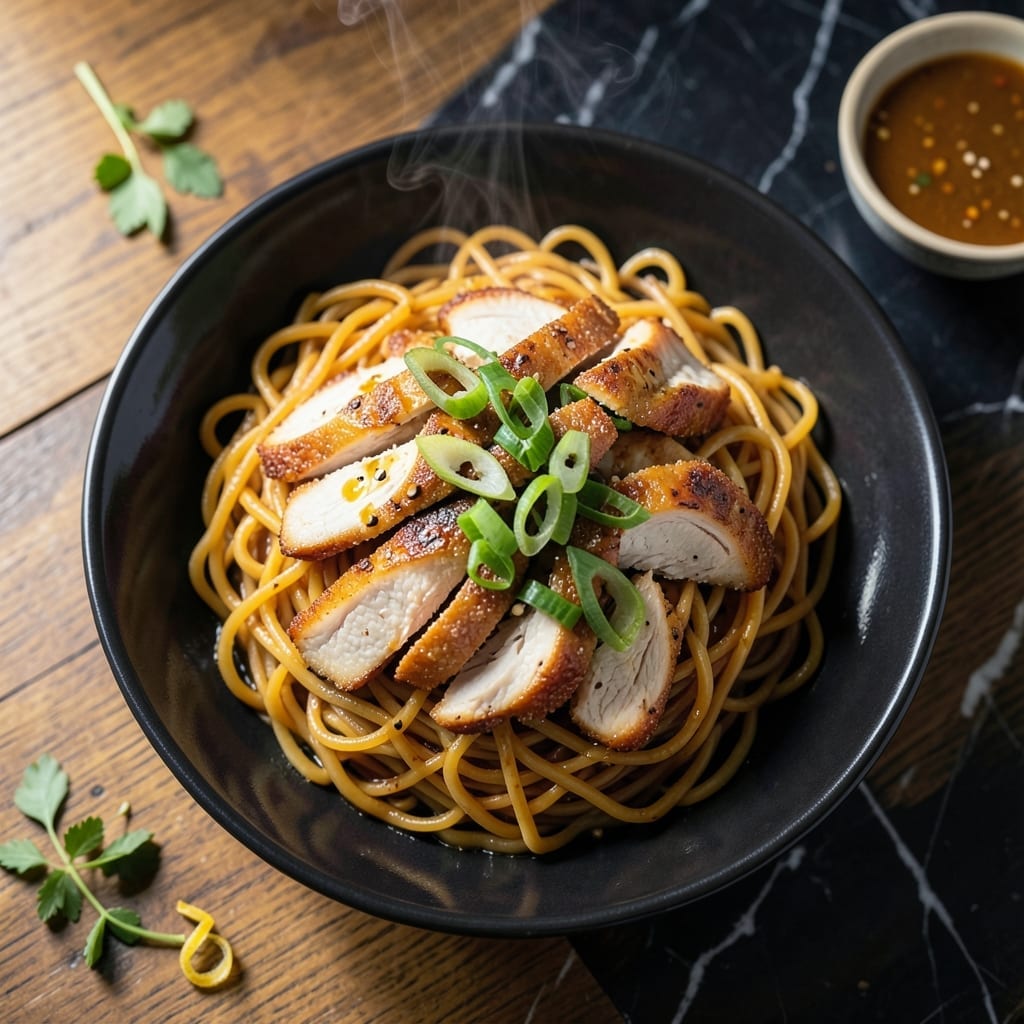
This chicken lomein delivers the tender textures and savory flavors of your favorite takeout, made entirely at home.
I developed this method after years of testing to achieve perfectly cooked noodles and juicy chicken every time. The secret lies in velveting the chicken and par-cooking the noodles separately before the final toss.
The sauce comes together in minutes with soy sauce, oyster sauce, and a touch of sesame oil for depth. Each bite features springy noodles, succulent chicken pieces, and a glossy coating that clings to every strand.
Serve it straight from the wok for the most authentic experience. This dish proves homemade can rival restaurant quality.
Ingredients for Chicken Lomein
Pantry staples meet fresh veggies for that perfect takeout flavor at home.
| Ingredient | Amount | Notes |
|---|---|---|
| Dried Egg Noodles 🍜 | 8 oz | Or fresh egg noodles |
| Boneless Skinless Chicken Thighs 🍗 | 1 lb | Cut into thin strips |
| Cornstarch 🌾 | 2 tbsp | For velveting chicken |
| Soy Sauce 🫒 | ⅓ cup | Divided for marinade and sauce |
| Oyster Sauce 🫒 | 2 tbsp | Essential for depth |
| Sesame Oil 🫒 | 1 tbsp | Toasted variety preferred |
| Garlic Cloves 🧄 | 4 cloves | Minced finely |
| Fresh Ginger 🌿 | 1 tbsp | Grated or minced |
| Green Onions 🧅 | 4 whole | Thinly sliced, whites and greens separated |
| Carrot 🥕 | 1 whole | Julienned or shredded |
| Red Bell Pepper 🌶️ | 1 whole | Thinly sliced |
| Vegetable Oil 🫒 | 2 tbsp | High smoke point for stir-frying |
| Brown Sugar 🍚 | 1 tbsp | Balances saltiness |
| Rice Vinegar 🍶 | 1 tbsp | Adds brightness |
The noodles are non-negotiable. Egg noodles give that classic chew you expect from lo mein. Most grocery stores carry them in the dry pasta aisle or refrigerated section. For the chicken, thighs stay juicier than breasts through the high heat—look for boneless, skinless at Costco for the best value. The ginger and garlic? Fresh only, no shortcuts (those jars just don’t cut it).
No oyster sauce? Hoisin plus a dash of soy gets you close. Swap chicken thighs for breasts if that’s what you’ve got (just don’t overcook). The veggies are flexible—snow peas or cabbage work great. For gluten-free, use tamari instead of soy and rice noodles. The cornstarch is key for that velveting step—don’t skip this part (worth the extra minute).
Leftovers keep beautifully for 3-4 days in the fridge. The flavors deepen overnight, making lunch the next day even better. Freeze for up to 2 months if you’re meal prepping. Reheat in a skillet with a splash of water to revive the noodles.
Why You’ll Love This Recipe
- One Pan Wonder: I toss the chicken thighs in cornstarch, sear them, then cook the noodles in the same pan—minimal mess, maximum flavor.
- Umami Bomb: The combo of soy and oyster sauce hits that salty, rich depth I crave in every bite.
- Meal Prep Hero: This keeps beautifully for days, and honestly, the flavors just get better overnight.
- Budget Stretcher: Boneless thighs and egg noodles feed my family for pennies compared to takeout.
Step-by-Step Instructions for Chicken Lomein
Here’s the method that guarantees tender chicken and perfectly sauced noodles every time.
Step 1: Velvet the Chicken for Maximum Tenderness
Cut the 1 lb Boneless Skinless Chicken Thighs into thin strips, about ¼-inch thick. This ensures quick, even cooking. Place the strips in a bowl and add 2 tbsp Cornstarch along with 1 tbsp Soy Sauce from the 0.33 cup Soy Sauce. Toss gently until every piece is lightly coated.
I let this sit for 10 minutes while I prep the rest. The cornstarch creates a velvety texture that locks in juices, and the soy sauce adds an early layer of flavor. Don’t skip this step—it’s the secret to that melt-in-your-mouth tenderness.
Step 2: Stir-Fry Vegetables Until Crisp-Tender
Heat 1 tbsp Vegetable Oil from the 2 tbsp Vegetable Oil in a large wok or skillet over high heat until shimmering. Add the minced 4 cloves Garlic Cloves and 1 tbsp Fresh Ginger, stir for 15 seconds until fragrant. Quickly add the julienned 1 whole Carrot, thinly sliced 1 whole Red Bell Pepper, and the white parts of the 4 whole Green Onions.
Stir-fry for 3-4 minutes until the vegetables are vibrant and just beginning to soften but still retain a slight crunch. The goal is to preserve their texture and color. Remove the vegetables and set aside—they’ll finish cooking when combined with the noodles later.
Step 3: Cook Chicken and Build the Sauce
Add the remaining 1 tbsp Vegetable Oil to the same wok over high heat. Once hot, add the velveted chicken in a single layer. Don’t stir for the first 30 seconds—this allows the chicken to sear and develop a light crust. Then stir-fry for 3-4 minutes until the chicken is cooked through and no longer pink.
Pour in the remaining soy sauce, 2 tbsp Oyster Sauce, 1 tbsp Brown Sugar, and 1 tbsp Rice Vinegar. Stir well to coat the chicken. The sauce should bubble and thicken slightly, coating the back of a spoon. Taste and adjust seasoning if needed.
Step 4: Combine Everything with Noodles
Cook the 8 oz Dried Egg Noodles according to package instructions until al dente. Drain, reserving ½ cup of pasta water. Add the noodles to the wok with the chicken and sauce. Toss everything together with the reserved vegetables.
Drizzle in the 1 tbsp Sesame Oil and toss for another 1-2 minutes until the noodles are evenly coated and heated through. If it looks dry, add a splash of the reserved pasta water. The noodles should glisten with sauce, not be swimming in it.
Step 5: Garnish and Serve Immediately
Transfer to a serving dish and sprinkle with the green parts of the green onions. The key here is to serve it right away while everything is hot—the noodles absorb the sauce best when fresh from the wok.
Each bite should have a perfect balance of tender chicken, crisp vegetables, and silky noodles with that rich, savory sauce clinging to every strand. The sesame oil adds a nutty aroma that ties it all together.
Pro Tips For Making Chicken Lomein
- Parcook the Noodles: Boil the egg noodles for just 2-3 minutes until slightly underdone, then finish them in the stir-fry—this keeps them from turning to mush when tossed with the sauce.
- Velveteen the Chicken: Toss the chicken thighs with 1 tablespoon cornstarch before cooking; it gives that silky, restaurant-style texture and helps the sauce cling better.
- Skip the Overcrowding: Cook the chicken in batches if needed—crowding the pan steams it instead of browning, and you’ll lose that good caramelization from the oyster sauce.
- Bloom the Sauces: Heat the soy and oyster sauces in the pan for 30 seconds before adding noodles; it deepens the flavor and prevents a raw, thin taste.
Storing and Reheating This Dish
Refrigerator Storage
Let your lomein cool completely (about 30 minutes) before transferring to airtight containers. I use glass containers with snap-tight lids. Store in the fridge at 40°F or below for up to 4 days. The flavors deepen overnight as the noodles soak up the sauce. ❄️
Freezer Storage
For longer storage, freeze in quart-sized freezer bags for up to 2 months. Lay bags flat to save space and thaw faster. Squeeze out excess air before sealing to prevent freezer burn. Portion into single servings for easy meal prep.
Stovetop Reheating
This is my preferred method. Heat a skillet over medium heat, add lomein with 2 tbsp water or chicken broth, and cover for 3-4 minutes. Stir occasionally until heated through. The steam revives the noodles beautifully.
Microwave Reheating
Place a single portion in a microwave-safe bowl with 1 tbsp water. Cover with a damp paper towel and heat on 50% power for 2 minutes. Stir, then heat in 30-second bursts until reaching 165°F. 🔥
Reheating Tip
Add a fresh drizzle of sesame oil after reheating to restore that nutty aroma. If the dish seems dry, a splash of soy sauce can help revive the flavors. The chicken and noodles will still have great texture.
Nutrition Facts
Frequently Asked Questions
Can I use chicken breast instead of thighs?
Yes, but thighs stay juicier through high heat. If using breasts, cut into thin strips and reduce cooking time to 2-3 minutes to prevent dryness. The velveting step remains essential for tenderness.
What if I don’t have oyster sauce?
Substitute with 1 tbsp hoisin sauce plus 1 tsp soy sauce. The flavor won’t be identical, but it provides similar depth. Avoid skipping this entirely as the sauce relies on its umami richness.
How do I prevent soggy noodles?
Cook noodles 1 minute less than package instructions, then rinse under cold water to stop cooking. Stir-fry immediately with sauce to maintain texture. Overcooked noodles absorb too much liquid.
Can I make this gluten-free?
Use tamari instead of soy sauce and rice noodles in place of egg noodles. Check all sauce labels for hidden gluten. The cornstarch is naturally gluten-free for the velveting step.

- Jollof Rice Sauce Recipe: West African Tomato and Spice Infusion - September 25, 2026
- Japanese Rice Soup Recipe: Umami-Rich Comfort in a Bowl - September 25, 2026
- Homemade Cream Of Rice Recipe: Silk-Smooth Breakfast in Minutes - September 25, 2026