
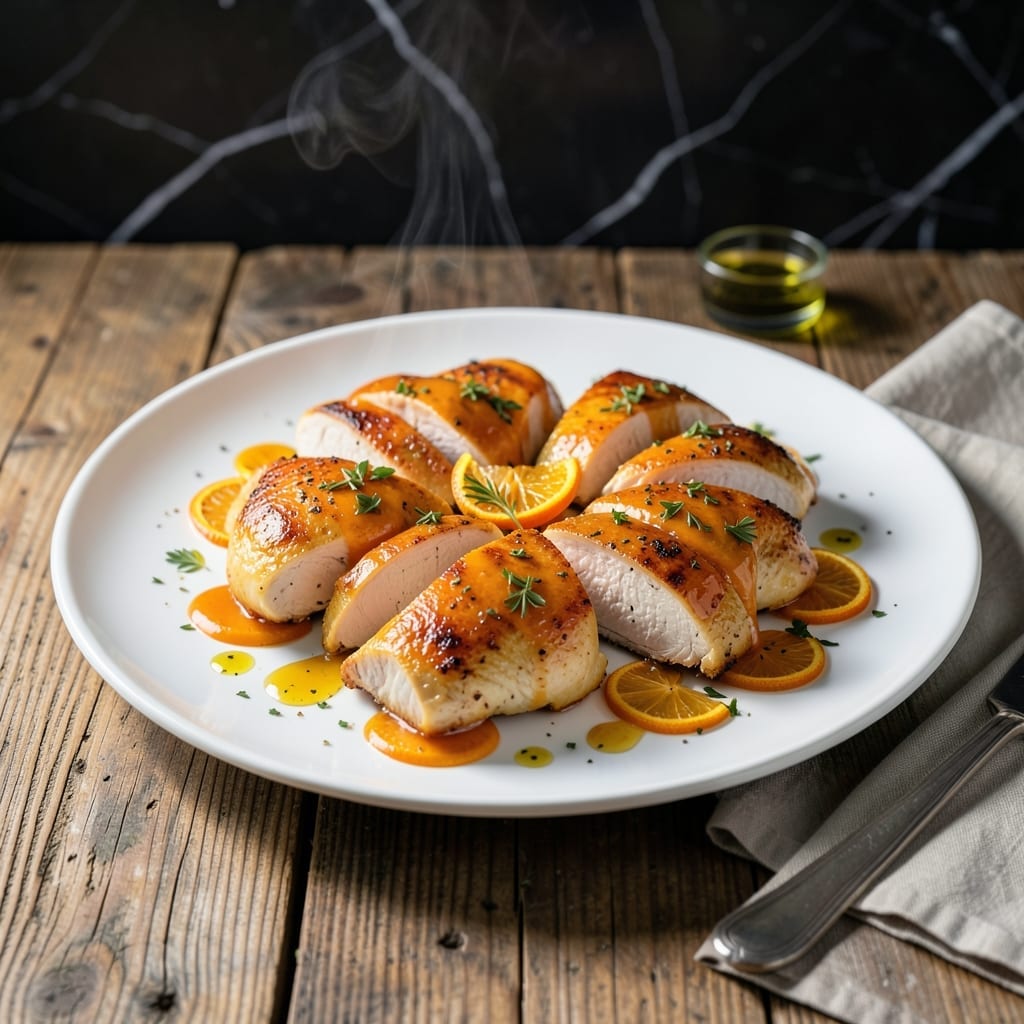
This classic French dish brings sophisticated citrus flavors to your dinner table with minimal effort. The combination of tender chicken and bright orange sauce creates a restaurant-quality experience at home.
The secret lies in balancing sweet and tangy notes while maintaining the chicken’s juiciness. A simple reduction of orange juice, zest, and a touch of sugar transforms into a glossy, richly flavored sauce that complements the meat perfectly.
Traditional techniques ensure authentic results without complexity. Pan-searing the chicken first develops deep flavor before finishing it in the oven, while the sauce comes together in the same pan for easy cleanup.
Serve this elegant dish with rice or crusty bread to soak up every drop of the vibrant orange sauce. The results speak for themselves.
Ingredients for Chicken L’orange
Elegant French flavors require just these essential ingredients for a restaurant-quality dish at home.
| Ingredient | Amount | Notes |
|---|---|---|
| Chicken Breast Cutlets 🍗 | 1 ½ lb | Boneless, skinless, pounded to even thickness |
| Orange Juice 🍊 | 1 ½ cups | Freshly squeezed preferred |
| Orange Zest 🍊 | 2 tbsp | Finely grated from fresh oranges |
| Granulated Sugar 🍚 | 1 tbsp | For balancing acidity |
| White Wine Vinegar 🍷 | 1 tbsp | Or substitute apple cider vinegar |
| Chicken Stock 🍲 | ½ cup | Low-sodium preferred |
| Unsalted Butter 🧈 | 3 tbsp | Divided for cooking and finishing |
| All-Purpose Flour 🌾 | ¼ cup | For dredging chicken |
| Olive Oil 🫒 | 2 tbsp | For searing chicken |
| Garlic Cloves 🧄 | 2 cloves | Minced finely |
| Shallot 🧅 | 1 whole | Finely diced |
| Fresh Thyme Sprigs 🌿 | 2 whole | Leaves stripped and chopped |
| Kosher Salt 🧂 | 1 tsp | Plus more to taste |
| Freshly Ground Black Pepper 🌶️ | ½ tsp | Plus more to taste |
| Grand Marnier 🍹 | 2 tbsp | Optional for depth of flavor |
The citrus is non-negotiable here. Freshly squeezed orange juice has a brightness that bottled can’t match, and the zest (from about 2 oranges) packs concentrated flavor. Use navel or Valencia oranges—they’re juicy and seedless. For the Grand Marnier, a good brand like Cordon Bleu adds complexity, but skip it if you prefer. The chicken should be uniform thickness for even cooking—Costco often carries pre-pounded cutlets that save time.
No Grand Marnier? Triple sec or Cointreau work too, or just add an extra tablespoon of sugar to compensate. Out of white wine vinegar? Apple cider vinegar at the same amount is a fine substitute. The flour dredge is subtle but essential for texture—don’t skip it. If you’re avoiding gluten, cornstarch or almond flour can stand in. The shallot can be replaced with half a small onion if needed.
The sauce keeps beautifully for 3-4 days in the fridge—store it separately from the chicken to prevent sogginess. Leftovers reheat well, though the chicken is best fresh. For make-ahead, prep the sauce base (without butter) a day ahead, then finish when ready to serve. Always use airtight containers to preserve the vibrant citrus aroma.
Why You’ll Love This Recipe
- One Pan Meal: I love that everything cooks together—chicken, citrusy sauce, and all—so cleanup is a breeze.
- Sweet-Tangy Magic: The orange zest and vinegar balance each other so well, it’s like a party in your mouth.
- Weeknight Hero: Honestly, this is my go-to for busy evenings when I need something fancy but fast.
- Leftovers? Even Better: The flavors deepen overnight, so I always make extra for tomorrow’s lunch.
Step-by-Step Instructions for Chicken L’Orange
Master this classic French technique with precise timing and elegant citrus balance.
Step 1: Prepare and Season the Chicken Cutlets
Pat the 1.5 lb chicken breast cutlets thoroughly dry with paper towels. This ensures a perfect sear and prevents steaming. Season both sides evenly with the 1 tsp kosher salt and 0.5 tsp freshly ground black pepper, pressing gently so the seasoning adheres.
Dredge each cutlet in the 0.25 cup all-purpose flour, shaking off any excess. The flour creates a delicate crust that will thicken the sauce later. Set the dredged cutlets aside on a plate while you prepare the pan.
Step 2: Sear the Chicken to Golden Perfection
Heat 2 tbsp olive oil and 1 tbsp unsalted butter in a large skillet over medium-high heat until the butter melts and begins to foam. Add the chicken cutlets in a single layer, working in batches if necessary to avoid crowding the pan.
Cook for 3-4 minutes per side until the chicken is golden brown and cooked through (internal temperature should reach 165°F). The cutlets should release easily from the pan when ready to flip. Transfer the cooked chicken to a plate and tent with foil to keep warm.
Step 3: Build the Orange Sauce Foundation
In the same skillet, reduce heat to medium and add the remaining 2 tbsp unsalted butter. Once melted, add the finely diced shallot and cook for 2 minutes until softened. Stir in the 2 minced garlic cloves and cook for 30 seconds until fragrant.
Pour in the 2 tbsp Grand Marnier (if using) and deglaze the pan, scraping up any browned bits with a wooden spoon. Let it simmer for 1 minute to cook off the alcohol. This step adds depth and complexity to the sauce.
Step 4: Create the Citrus Glaze and Finish
Add the 1.5 cups orange juice, 2 tbsp orange zest, 1 tbsp granulated sugar, 1 tbsp white wine vinegar, and 0.5 cup chicken stock to the skillet. Stir in the stripped fresh thyme sprigs. Bring to a simmer and cook for 8-10 minutes, stirring occasionally, until the liquid reduces by half and thickens slightly.
Return the chicken to the skillet, nestling the cutlets into the sauce. Spoon the sauce over the chicken and simmer for an additional 2-3 minutes to allow the flavors to meld and the chicken to absorb the citrus glaze. The sauce should coat the back of a spoon with a glossy sheen.
Step 5: Plate and Serve with Elegance
Transfer the chicken to a serving platter or individual plates. Spoon the reduced orange sauce over the top, ensuring each cutlet is generously coated. Garnish with additional orange zest or fresh thyme leaves if desired.
Serve immediately while hot. The sauce should have a balanced sweet-tart flavor with a velvety texture that complements the tender, juicy chicken. This dish pairs beautifully with steamed asparagus or a simple green salad to complete the meal.
Pro Tips For Making Chicken L’Orange
- Pound the Cutlets: Use a meat mallet to evenly pound the chicken to 1/4-inch thickness—this guarantees even cooking and prevents dry, chewy edges.
- Zest Before Juicing: Always zest the oranges first, then juice them. I learned this the hard way after struggling to zest a halved, slippery orange.
- Reduce the Sauce: Simmer the orange juice, vinegar, and sugar until it thickens enough to coat the back of a spoon—about 8-10 minutes—so it clings to the chicken instead of pooling on the plate.
- Let It Rest: Give the chicken a solid 5 minutes off the heat before serving, tented with foil. Skipping this step means all those juices will end up on the cutting board, not in your meat.
Best Sauces and Condiments for These Flavors
Classic Orange Reduction
A simple reduction of fresh orange juice and zest amplifies the dish’s natural flavors. I simmer 1.5 cups juice with 2 tbsp zest until syrupy, then finish with a pat of butter for gloss. This mirrors the recipe’s sauce technique perfectly. 🍊
Grand Marnier Glaze
For extra sophistication, I whisk 2 tbsp Grand Marnier into the reduced orange sauce. The liqueur’s orange-forward profile deepens the citrus notes. Let it simmer for 1 minute to burn off alcohol before serving.
Herb-Infused Variations
A sprinkle of fresh thyme or rosemary in warm sauce adds earthy contrast. I tie sprigs with kitchen twine for easy removal. The herbs complement without overpowering the delicate orange flavor.
Creamy Orange Sauce
Stir in ¼ cup crème fraîche or heavy cream at the end for a velvety finish. This richer version pairs beautifully with the chicken’s juices. Reduce heat to low to prevent curdling. ✨
Citrus Butter Compound
Mix 4 tbsp softened butter with 1 tbsp orange zest and 1 tsp honey. Top warm chicken with a dollop for instant melting flavor. This quick compound butter elevates leftovers too.
Nutrition Facts
Frequently Asked Questions
Can I use chicken thighs instead of breast?
Yes, bone-in thighs work well and stay juicier. Adjust cooking to 185°F internal temperature and add 5 minutes to searing time. The sauce pairs especially well with dark meat.
How do I prevent the sauce from being too sweet?
Balance is key. Use fresh orange juice and add the 1 tbsp sugar gradually. The white wine vinegar cuts sweetness—taste before final seasoning.
Can I make this ahead of time?
Prepare the sauce base without butter up to a day ahead. Reheat gently, whisk in butter, then add cooked chicken to warm through. Avoid overcooking.
What if my sauce doesn’t thicken?
Simmer uncovered for 2-3 extra minutes. If still thin, mix 1 tsp cornstarch with water and stir in. The flour from dredging helps too.

- Jollof Rice Sauce Recipe: West African Tomato and Spice Infusion - September 25, 2026
- Japanese Rice Soup Recipe: Umami-Rich Comfort in a Bowl - September 25, 2026
- Homemade Cream Of Rice Recipe: Silk-Smooth Breakfast in Minutes - September 25, 2026