
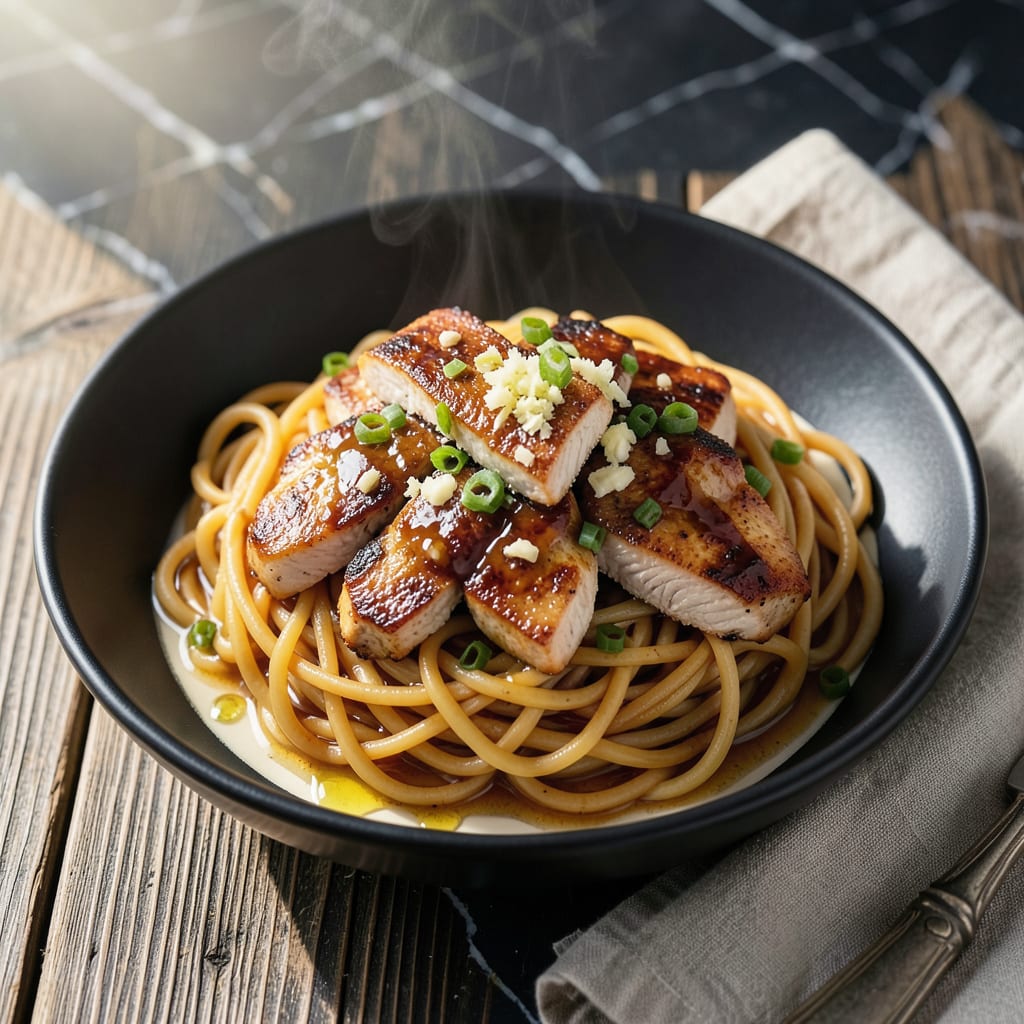
This one-pot chicken noodle dish delivers deep umami flavor with minimal effort. The soy sauce base creates a rich, savory broth that infuses every bite with authentic taste.
Tender chicken and perfectly cooked noodles absorb the sauce, resulting in a satisfying meal that’s ready in 30 minutes. Simple ingredients, maximum flavor—ideal for weeknight dinners.
Ingredients for Chicken Noodle Soy Sauce
One-pot wonder with deep umami from soy sauce and tender chicken pieces ready in minutes.
| Ingredient | Amount | Notes |
|---|---|---|
| Boneless Skinless Chicken Thighs 🍗 | 1 ½ lb | Cut into bite-sized pieces |
| Egg Noodles 🍜 | 8 oz | Wide or medium width |
| Soy Sauce 🫒 | ½ cup | Low-sodium preferred for control |
| Chicken Broth 🥣 | 2 cups | Low-sodium or homemade |
| Garlic Cloves 🧄 | 4 cloves | Minced finely for even distribution |
| Fresh Ginger Root 🌿 | 1 tbsp | Peeled and grated |
| Brown Sugar 🍚 | 1 tbsp | Light or dark variety |
| Sesame Oil 🫒 | 1 tbsp | Toasted for depth of flavor |
| Green Onions 🧅 | 3 whole | Thinly sliced, white and green parts |
| Vegetable Oil 🫒 | 1 tbsp | For sautéing chicken |
| Rice Vinegar 🍶 | 1 tbsp | Balances the soy sauce richness |
| Red Pepper Flakes 🌶️ | ½ tsp | Adjust for desired heat level |
| Kosher Salt 🧂 | ½ tsp | Adjust to taste |
| Ground Black Pepper 🌶️ | ¼ tsp | Freshly ground preferred |
[recipeingredientscaler]
The chicken thighs are non-negotiable here—they stay juicy even after absorbing the soy-based broth. Opt for boneless, skinless to save prep time. For the soy sauce, Kikkoman or Pearl River Bridge are reliable brands available at most supermarkets. Fresh ginger is ideal, but ground ginger at one-quarter the amount works in a pinch (texture will differ slightly).
No chicken broth? Water plus bouillon powder gets you close. Short on soy sauce? Tamari or coconut aminos work, though tamari is saltier. The brown sugar can be swapped with honey or maple syrup. Egg noodles are traditional, but udon or ramen noodles add a fun twist. The sesame oil is worth the special trip to an Asian market for the toasted variety.
This keeps well for 3-4 days in the fridge, though the noodles will soak up more broth over time. Reheat with a splash of water to loosen. Freezes for up to 3 months (thaw overnight before reheating). The flavors deepen after a day, making leftovers even better.
Why You’ll Love This Recipe
- One Pot Wonder: I toss everything in—thighs, noodles, broth—and let it simmer while I set the table.
- Umami Bomb: The soy sauce and garlic turn simple chicken into something deep and savory.
- Weeknight Hero: Between us, I’ve served this for company and weeknights alike—no one complains.
- Budget Stretcher: A pound of thighs and a bag of noodles feeds four, with leftovers for lunch.
Step-by-Step Instructions for Chicken Noodle Soy Sauce
This one-pot method delivers perfectly tender chicken and richly flavored noodles with minimal cleanup.
Step 1: Sear the Chicken Thighs
Heat the 1 tablespoon vegetable oil in a large pot or deep skillet over medium-high heat. Add the 1.5 lb boneless skinless chicken thighs cut into bite-sized pieces, seasoned with 0.5 teaspoon kosher salt and 0.25 teaspoon ground black pepper.
Cook for 5-6 minutes, stirring occasionally, until the chicken is lightly browned and cooked through. The pieces should release easily from the pan when properly seared. Remove the chicken and set aside.
Step 2: Build the Aromatic Sauce Base
In the same pot, add the 4 cloves minced garlic and 1 tablespoon grated fresh ginger root. Sauté for 30-45 seconds until fragrant, being careful not to let the garlic burn.
Pour in the 0.5 cup soy sauce, 1 tablespoon brown sugar, 1 tablespoon rice vinegar, 0.5 teaspoon red pepper flakes, and 2 cups chicken broth. Stir well and bring to a gentle simmer.
Step 3: Cook the Noodles and Finish
Add the 8 oz egg noodles to the simmering liquid, pressing them down to submerge. Cook for 8-10 minutes or until the noodles are tender and have absorbed most of the liquid, stirring occasionally.
Return the chicken to the pot along with the 1 tablespoon sesame oil. Stir everything together and cook for an additional 2 minutes to heat through completely. The sauce should cling to the noodles with a glossy sheen.
Step 4: Garnish and Serve
Remove from heat and stir in the 3 whole thinly sliced green onions, reserving some for garnish. Let sit for 2 minutes to allow the flavors to meld.
Serve immediately in shallow bowls, topped with the remaining green onions. The noodles should be perfectly coated with the rich soy-ginger sauce, and the chicken should be tender with a light caramelization from the searing.
Pro Tips For Making Chicken Noodle Soy Sauce
- Brown the Chicken: Cook the thighs on medium-high until deeply golden—about 4-5 minutes per side. I learned this the hard way: under-browned chicken makes the broth taste bland.
- Salt the Broth: Taste your chicken broth before adding soy sauce; if it’s unsalted, you’ll need to compensate. My grandmother swore by this, and she was right: season in layers.
- Skip Pre-Boiling Noodles: Add dry egg noodles directly to the simmering broth with 8-10 minutes left. They’ll soak up flavor and save you a pot to wash—I was skeptical until I tried it.
- Crush the Garlic: Smash the garlic cloves with the side of your knife before mincing. Sounds weird, but it works: you’ll get more aroma with less effort, and it blends better into the soy sauce.
Regional Styles of These Flavors
Chinese Style
In China, this dish resembles jiāng miàn, where wheat noodles soak up a savory soy-based sauce. I add 1 tsp Shaoxing wine and 1 star anise pod to the broth for depth. Remove the star anise before serving for a subtle, aromatic touch. 🗺️
Japanese Twist
For a Japanese approach, swap egg noodles for udon and add 1 tbsp mirin to the sauce. Top with soft-boiled eggs and nori strips for an umami boost. The mirin adds a sweetness that balances the soy perfectly.
Korean Version
Korean jajangmyeon inspires this variation. Use chunjang (black bean paste) mixed with soy sauce and add diced zucchini and carrots for texture. Garnish with cucumber slices for freshness.
Thai Adaptation
Infuse Thai flavors by adding 1 tbsp fish sauce, 1 stalk lemongrass (bruised), and 3 kaffir lime leaves to the broth. Use rice noodles instead of egg noodles, and finish with fresh cilantro and lime wedges. 🌶️
Filipino Style
Filipino pancit uses thin rice sticks and adds cabbage and carrots to the mix. I include calamansi juice for a citrusy note. This version is often served at celebrations and family gatherings.
American Fusion
For a local twist, I use whole wheat noodles and add bell peppers and snap peas for crunch. A drizzle of sriracha before serving adds a spicy kick that many enjoy.
Nutrition Facts
Frequently Asked Questions
Can I use chicken breast instead of thighs?
Yes, but thighs stay juicier. If using breast, cook for only 4-5 minutes to prevent dryness. The flavor will be slightly milder but still delicious with the soy-based sauce.
How can I make this gluten-free?
Swap egg noodles for rice noodles or tamari instead of soy sauce. Check that all sauces are certified gluten-free to be safe.
Can I add vegetables to this dish?
Stir in bell peppers, snap peas, or carrots during the last 5 minutes of cooking. They’ll soak up the flavorful sauce beautifully.
Why is my sauce too salty?
Using low-sodium soy sauce helps control saltiness. If it’s too strong, add 1/2 cup water or a splash of rice vinegar to balance the flavors.

- Jollof Rice Sauce Recipe: West African Tomato and Spice Infusion - September 25, 2026
- Japanese Rice Soup Recipe: Umami-Rich Comfort in a Bowl - September 25, 2026
- Homemade Cream Of Rice Recipe: Silk-Smooth Breakfast in Minutes - September 25, 2026