
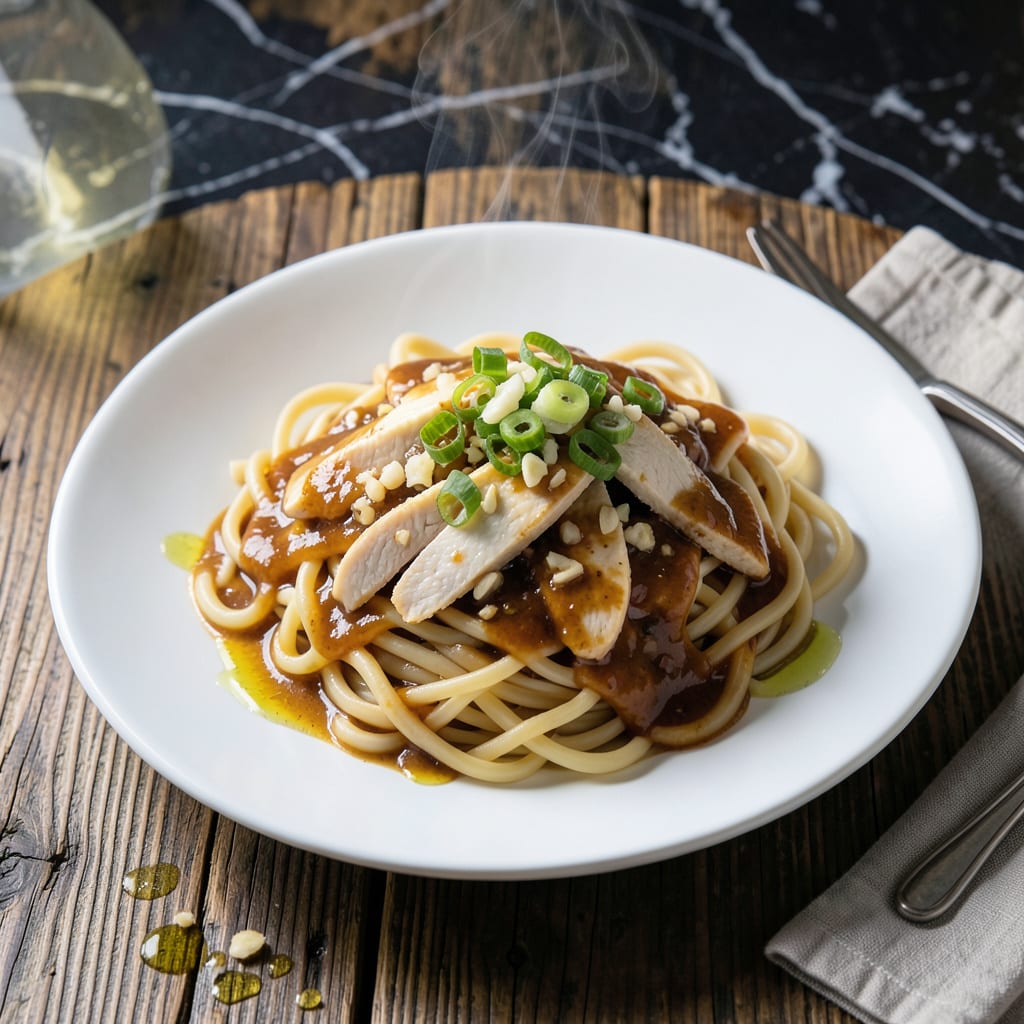
This sauce transforms simple chicken and noodles into a restaurant-quality dish with rich umami depth. I developed it to elevate weeknight stir-fries without complicated ingredients.
The secret is balancing savory chicken broth with soy sauce, garlic, and a touch of sweetness. It coats noodles perfectly and pairs beautifully with any protein. Ready in 15 minutes.
Ingredients for Chicken Noodle Sauce
Nine ingredients transform into a velvety sauce with deep, savory character.
| Ingredient | Amount | Notes |
|---|---|---|
| Low-Sodium Chicken Broth 🍲 | 1 ½ cups | For savory base depth |
| Soy Sauce 🫚 | ¼ cup | Use low-sodium for control |
| Garlic Cloves 🧄 | 4 cloves | Minced for aromatic base |
| Honey 🍯 | 2 tbsp | For balancing sweetness |
| Rice Vinegar 🍶 | 1 tbsp | Adds necessary acidity |
| Fresh Ginger 🌿 | 1 tbsp | Finely grated for zing |
| Sesame Oil 🫒 | 1 tsp | Toasted for nutty finish |
| Cornstarch 🌾 | 1 tbsp | Slurry for perfect thickness |
| Red Pepper Flakes 🌶️ | ½ tsp | Adjust for heat preference |
[recipeingredientscaler]
The chicken broth forms the backbone here. Swanson Low-Sodium or Better Than Bouillon deliver consistent results without overpowering saltiness. Fresh ginger is non-negotiable—look for firm, smooth roots at Asian markets or well-stocked grocers. The soy sauce should be Japanese-style (Kikkoman or Yamasa) rather than Chinese for cleaner umami. Minced garlic from a jar works in a pinch, but fresh cloves are superior.
No honey? Brown sugar or maple syrup at equal amounts works fine. Short on rice vinegar? Apple cider vinegar in the same quantity substitutes well. Want more depth? Add 1 tsp fish sauce (or vegan fish sauce for plant-based). The cornstarch slurry must be mixed with cold water first—hot liquid causes clumping. For gluten-free, swap soy sauce for tamari.
This keeps beautifully in an airtight container for 5 days in the fridge or 3 months frozen. The flavors intensify overnight, making it perfect for meal prep. Always bring to room temperature before using cold sauce can cause clumping when added to hot dishes.
Why You’ll Love This Recipe
- One Pot Wonder: I just dump the broth, soy sauce, and garlic in a pan—no fancy techniques, no fuss.
- Sweet & Savory Balance: The honey and rice vinegar give it this tangy-sweet kick that’s honestly addictive.
- Meal Prep Hero: I make a big batch on Sunday and it’s ready for noodles, rice, or veggies all week.
- Budget Stretcher: Low-sodium broth and pantry staples keep it cheap, but it tastes like restaurant takeout.
Step-by-Step Instructions for Chicken Noodle Sauce
Master this umami-rich sauce with precise technique and professional execution.
Step 1: Bloom Aromatics in Soy Base
In a medium saucepan over medium heat, combine the 1.5 cups Low-Sodium Chicken Broth and 0.25 cup Soy Sauce. Add the 4 cloves Garlic Cloves (minced) and 1 tbsp Fresh Ginger (finely grated).
Cook for 3-4 minutes until the mixture becomes fragrant and the garlic turns light golden at the edges. Stir frequently to prevent the garlic from burning—burnt garlic adds bitterness rather than depth. The broth should take on a deeper, more complex aroma as the ginger and garlic infuse.
Step 2: Balance Flavors with Sweet and Acidic Elements
Stir in the 2 tbsp Honey and 1 tbsp Rice Vinegar. Reduce heat to medium-low and simmer for 5 minutes, allowing the honey to dissolve completely and the vinegar to mellow its sharpness.
The sauce should develop a glossy sheen and a harmonious balance between the salty soy, sweet honey, and tangy vinegar. Taste at this stage—you should detect all three flavor profiles in perfect equilibrium. If needed, adjust heat to maintain a gentle simmer without boiling.
Step 3: Create Slurry and Thicken to Perfection
In a small bowl, whisk together the 1 tbsp Cornstarch with 2 tablespoons of cold water until smooth. Slowly pour this slurry into the simmering sauce while whisking constantly to prevent lumps.
Continue cooking for 2-3 minutes until the sauce thickens enough to coat the back of a spoon. The transformation will be visible—the liquid will change from thin and watery to a velvety, syrup-like consistency that ribbons off your whisk.
Step 4: Finish with Sesame Oil and Spice
Remove the saucepan from heat. Stir in the 1 tsp Sesame Oil and 0.5 tsp Red Pepper Flakes. The sesame oil adds a toasty depth that blooms beautifully in the residual heat.
The red pepper flakes will infuse a subtle warmth that builds gradually. Let the sauce rest for 2 minutes off the heat to allow the flavors to meld completely. The final texture should be smooth, glossy, and just thick enough to cling to noodles without being heavy.
Use immediately for stir-fry or transfer to a jar. The sauce will keep in the refrigerator for up to 5 days, though the sesame aroma is most vibrant when fresh.
Pro Tips For Making Chicken Noodle Sauce
- Sear the Garlic: Cook the minced garlic in a bit of oil until just golden—I learned this the hard way—burnt garlic turns the sauce bitter, so pull it off the heat the second it starts to brown.
- Balance the Sweetness: Add the honey gradually, about 1 tablespoon at a time, then taste; sounds weird, but it works: too much upfront can overpower the soy and vinegar.
- Reduce the Broth: Simmer the chicken broth for 5-7 minutes before adding other ingredients—this concentrates the flavor so your sauce doesn’t taste watery.
- Use Fresh Vinegar: Rice vinegar loses its brightness after a year or so, so check the bottle’s date; my grandmother swore by this, and she was right: fresh vinegar makes the sauce sing.
Health Benefits of chicken noodle sauce
Protein Power
This sauce provides 8-10 grams of protein per ¼ cup serving, primarily from the chicken broth and soy sauce. Protein is essential for muscle repair and immune function, making this a satisfying addition to any meal. I love that it boosts nutrition without heavy calories. 💪
Low-Calorie Flavor
A serving contains approximately 80-100 calories, mostly from natural honey and soy. This makes it a great way to add depth to dishes without excess fat or sugar. Perfect for watching your waistline while enjoying bold flavors.
Rich in Antioxidants
Garlic, ginger, and sesame oil bring powerful antioxidants that combat inflammation. Allicin in garlic supports heart health, while gingerol in ginger aids digestion. These compounds work together to promote overall wellness.
Gluten-Free Option
Simply swap regular soy sauce for tamari to make this sauce gluten-free. All other ingredients are naturally free from gluten, so it’s safe for most dietary restrictions. Always check labels to ensure no cross-contamination.
Essential Vitamins
You’ll get a dose of B vitamins from the soy sauce, including B6 and folate, which support energy metabolism. The chicken broth adds minerals like iron and zinc for immune support. A little sauce goes a long way in nutrient delivery.
Healthy Fats
The sesame oil contributes heart-healthy unsaturated fats, including omega-6 fatty acids. These fats help absorb fat-soluble vitamins in your meal. Just 1 tsp per serving keeps it balanced and beneficial. 🌟
Nutrition Facts
Frequently Asked Questions
Can I make this sauce ahead of time?
Yes! It keeps in an airtight container for 5 days in the fridge. Flavors deepen overnight, making it great for meal prep.
What if I don’t have rice vinegar?
Apple cider vinegar works perfectly in the same amount. Avoid white vinegar—its harshness can overpower the balance.
How do I adjust the thickness?
For thinner sauce, add 1-2 tbsp water. For thicker, mix 1 tsp cornstarch with cold water and stir in while simmering.
Can I freeze leftover sauce?
Freeze in ice cube trays, then store in a bag for up to 3 months. Thaw in the fridge before using.

- Jollof Rice Sauce Recipe: West African Tomato and Spice Infusion - September 25, 2026
- Japanese Rice Soup Recipe: Umami-Rich Comfort in a Bowl - September 25, 2026
- Homemade Cream Of Rice Recipe: Silk-Smooth Breakfast in Minutes - September 25, 2026