
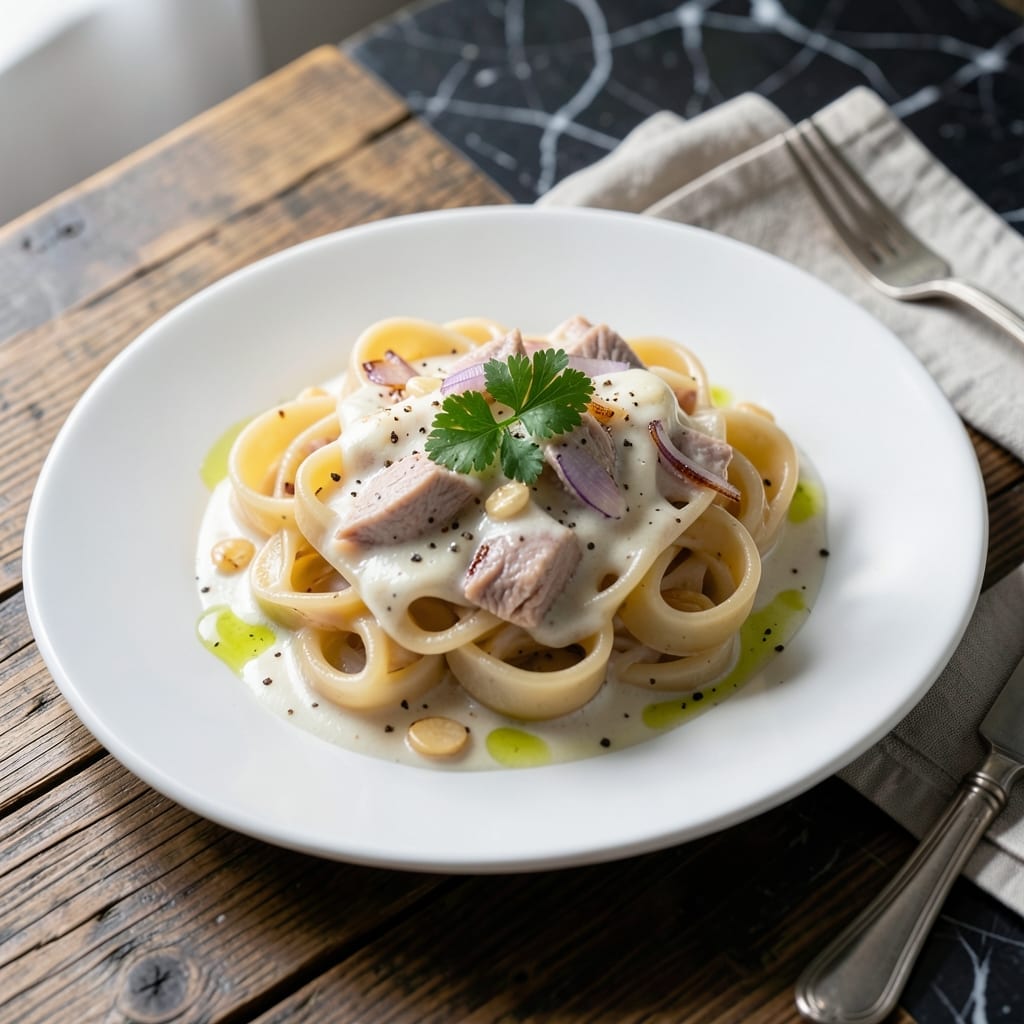
This dish transforms canned tuna into a creamy, restaurant-worthy meal that’s ready in under 20 minutes. Working in professional kitchens taught me that simple ingredients, when treated with care, can rival any gourmet creation.
The secret lies in balancing the tuna’s natural richness with a light cream sauce that clings perfectly to pasta. I use a touch of white wine to brighten the sauce, a technique I picked up during my Charleston apprenticeship.
What you get is flaky tuna distributed evenly throughout al dente pasta, coated in a velvety sauce that’s rich without being heavy. The dish comes together quickly but tastes like it took hours of slow cooking.
Perfect for busy weeknights when you want something comforting yet refined. This method never fails to impress.
Ingredients for Chicken of the Sea
Pantry staples and a few fresh touches create this elegant pasta dish.
| Ingredient | Amount | Notes |
|---|---|---|
| Pasta 🍝 | 12 oz | Spaghetti or linguine preferred |
| Canned Tuna 🐟 | 2 cans | Chicken of the Sea, drained |
| Heavy Cream 🥛 | 1 cup | Full-fat for richness |
| White Wine 🍷 | ½ cup | Dry variety like Pinot Grigio |
| Garlic Cloves 🧄 | 3 cloves | Minced finely |
| Shallot 🧅 | 1 whole | Finely diced |
| Unsalted Butter 🧈 | 2 tbsp | For sautéing aromatics |
| All-Purpose Flour 🌾 | 1 tbsp | To thicken sauce |
| Parmesan Cheese 🧀 | ½ cup | Freshly grated from block |
| Fresh Parsley 🌿 | ¼ cup | Chopped, for garnish |
| Lemon Zest 🍋 | 1 tsp | From one lemon |
| Salt 🧂 | 1 tsp | Diamond Crystal kosher |
| Black Pepper 🌶️ | ½ tsp | Freshly ground preferred |
| Red Pepper Flakes 🌶️ | ¼ tsp | Adjust to taste |
The tuna quality matters more than you think. Chicken of the Sea in water (not oil) gives the cleanest flavor—drain it well and flake gently to keep that texture. I grab mine from Costco for bulk savings, but any grocery store carries it. The white wine should be dry and crisp—Pinot Grigio or Sauvignon Blanc work perfectly. Skip the cooking wine; it’s too salty and harsh for this delicate sauce.
No white wine? Dry vermouth at half the amount is an excellent substitute. Heavy cream can be swapped for half-and-half (just reduce the sauce a bit longer). If you’re avoiding dairy, full-fat coconut milk works in a pinch, though the flavor profile shifts slightly. For the pasta, linguine holds the sauce beautifully, but fettuccine or spaghetti are great too.
This dish reheats well for 2-3 days in the fridge. Store leftovers in an airtight container and add a splash of water when reheating to loosen the sauce. Freezing isn’t ideal—tuna can get mushy. Fresh parsley is best added just before serving (the good stuff, not the pre-chopped kind).
Why You’ll Love This Recipe
- One Pot Wonder: I love that everything cooks in a single pan—pasta, tuna, and that creamy garlic-wine sauce.
- Rich & Creamy: The heavy cream and white wine blend into this luxurious sauce that clings perfectly to the pasta.
- Weeknight Hero: Between us, this is my go-to for busy evenings when I need dinner fast but still crave restaurant-quality flavor.
- Pantry MVP: Canned tuna and basic staples mean I can make this without a last-minute grocery run. Honestly, it’s saved me more than once.
Step-by-Step Instructions for Flaky Tuna in a Creamy Pasta Base
This method delivers tender pasta with rich, velvety sauce every time.
Step 1: Cook Pasta to Al Dente Perfection
Bring a large pot of salted water to a rolling boil. Add the 12 oz Pasta and cook according to package instructions minus 1 minute for al dente texture. You want the pasta slightly underdone because it will finish cooking in the sauce later.
Reserve 1 cup of pasta water before draining. This starchy liquid is essential for adjusting the sauce consistency. Drain the pasta but do not rinse it—the surface starch helps the sauce cling beautifully to each strand.
Step 2: Sauté Aromatics for Flavor Foundation
In a large skillet, melt the 2 tbsp Unsalted Butter over medium heat. Add the 1 whole Shallot, finely diced, and cook for 2-3 minutes until translucent and fragrant. The shallot should soften without browning—adjust heat as needed.
Add the 3 cloves Garlic Cloves, minced, and 0.25 tsp Red Pepper Flakes. Sauté for 30 seconds until the garlic releases its aroma. Be careful not to burn the garlic, as it can turn bitter quickly. The red pepper flakes will infuse the butter with a subtle heat.
Step 3: Create a Velvety Sauce Base
Sprinkle the 1 tbsp All-Purpose Flour over the aromatics and stir to combine. Cook for 1 minute to remove the raw flour taste. Slowly pour in the 0.5 cup White Wine, stirring constantly to create a smooth mixture. Let it simmer for 2 minutes until slightly reduced.
Gradually whisk in the 1 cup Heavy Cream and bring to a gentle simmer. The sauce should begin to thicken and coat the back of a spoon. This process transforms the liquid into a rich, creamy base that will perfectly complement the tuna.
Step 4: Incorporate Tuna and Finish the Sauce
Reduce heat to low and add the 2 cans Canned Tuna, drained, breaking it into large flakes with a fork. Gently fold in the 0.5 cup Parmesan Cheese, 1 tsp Salt, and 0.5 tsp Black Pepper. Stir until the cheese is fully melted and the sauce is smooth.
Add the cooked pasta to the skillet along with ½ cup of reserved pasta water. Toss everything together for 1-2 minutes until the pasta is well coated and the sauce clings perfectly. If needed, add more pasta water 1 tablespoon at a time to reach your desired consistency.
Step 5: Garnish and Serve Immediately
Remove the skillet from heat and stir in the 1 tsp Lemon Zest. This adds a bright, citrusy note that balances the richness of the sauce. Taste and adjust seasoning if needed—the lemon zest should be noticeable but not overpowering.
Transfer to serving plates and garnish with the 0.25 cup Fresh Parsley, chopped. Serve immediately while hot. Each bite should deliver tender pasta, flaky tuna, and a luxuriously creamy sauce with a hint of lemon and herbs. The parsley adds a fresh finish to this comforting dish.
Pro Tips For Making Chicken Of The Sea
- Drain the Tuna Well: Press the canned tuna between paper towels to remove excess oil—this keeps the sauce from getting greasy. I learned this the hard way after my first batch tasted more like canned fish than a creamy pasta dish.
- Reduce the Wine First: Simmer the white wine for 2-3 minutes before adding cream to cook off the raw alcohol taste. Sounds weird, but it works: the flavor deepens without overpowering the tuna.
- Skip Cold Cream: Let the heavy cream sit at room temperature for 10 minutes before adding it to the pan. Cold cream can curdle when hitting hot wine, and nobody wants a broken sauce.
- Save Pasta Water: Always reserve ½ cup of starchy pasta water before draining—it’s the easiest way to loosen the sauce if it thickens too much. My grandmother swore by this, and she was right.
Flavor Customization for These Flavors
Citrus Brightness Boost
Add 1-2 tbsp fresh lemon juice along with the zest for a tangier profile. The acidity cuts through the creaminess beautifully, making the dish feel lighter. I learned this trick during my Charleston apprenticeship—it elevates canned tuna to restaurant quality. 🍋
Herb Variations
Swap parsley for fresh basil or dill—both pair wonderfully with tuna. Use ¼ cup chopped and add it at the end with the pasta. Dill especially complements the briny notes of the tuna, while basil brings a sweeter, Italian-inspired touch.
Spice It Up
Increase the red pepper flakes to ½ tsp for noticeable heat, or add ½ tsp smoked paprika with the flour for depth. The paprika gives a subtle BBQ-like warmth that reminds me of my competition days on the Southeast circuit. 🔥
Creamy Texture Twists
Stir in 2 oz cream cheese with the heavy cream for extra richness. Or, for a lighter version, replace half the cream with ½ cup whole milk. Both adjustments maintain the velvety texture while letting you control the indulgence level.
Umami Depth
Add 1 tbsp capers or 2 chopped anchovies with the tuna for a briny punch. These ingredients amplify the seafood flavor and add complexity. I keep a jar of capers in my pantry specifically for dishes like this.
Cheese Alternatives
Swap Parmesan for Pecorino Romano (same amount) for a sharper, saltier bite. Or mix in ¼ cup grated Gruyère for nutty undertones. Both cheeses melt beautifully but bring distinct personalities to the dish.
Nutrition Facts
Frequently Asked Questions
Can I use a different type of pasta?
While linguine holds sauce beautifully, fettuccine or spaghetti work just as well. For a heartier bite, try pappardelle. Just adjust cooking time to package instructions.
How do I prevent the sauce from being too thick?
Use reserved pasta water 1 tablespoon at a time to thin the sauce. The starchy water helps create a silky consistency without diluting flavor. Stir well after each addition.
What should I do if my sauce separates?
Lower the heat and whisk vigorously. If needed, add a splash of cold water or cream to bring it back together. Keep heat at low-medium to prevent splitting.
Can I make this ahead of time?
Cook pasta al dente, rinse with cold water, and store separately. Reheat sauce gently and combine just before serving. Leftovers keep 2-3 days refrigerated.

- Jollof Rice Sauce Recipe: West African Tomato and Spice Infusion - September 25, 2026
- Japanese Rice Soup Recipe: Umami-Rich Comfort in a Bowl - September 25, 2026
- Homemade Cream Of Rice Recipe: Silk-Smooth Breakfast in Minutes - September 25, 2026