
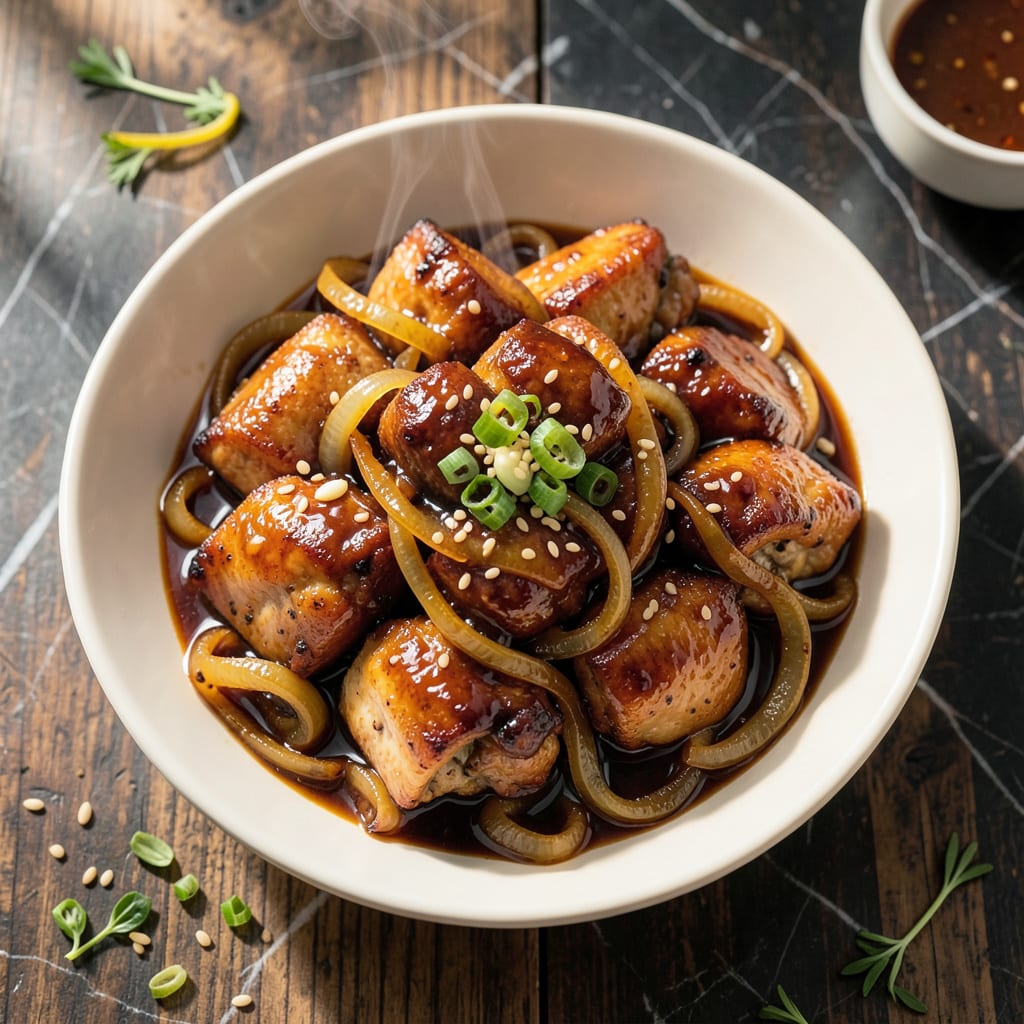
This stir-fry delivers a perfect balance of sweet and salty flavors with tender chicken and caramelized onions. The soy sauce base creates depth while maintaining simplicity.
I developed this method to ensure the chicken stays juicy and the onions reach that ideal golden-brown stage. It comes together quickly with minimal ingredients and maximum flavor impact.
Ingredients for Chicken Onion Soy Sauce
Tender chicken, caramelized onions, and a bold soy sauce base come together quickly and deliciously.
| Ingredient | Amount | Notes |
|---|---|---|
| Boneless Chicken Thighs 🍗 | 1 ½ lb | Skin-on or skinless, cut into bite-sized pieces |
| Yellow Onions 🧅 | 3 whole | Thinly sliced for caramelization |
| Soy Sauce 🫒 | ½ cup | Low-sodium preferred for balance |
| Dark Brown Sugar 🍚 | 2 tbsp | Packed for sweetness depth |
| Fresh Garlic Cloves 🧄 | 4 cloves | Minced finely for even distribution |
| Fresh Ginger Root 🌿 | 1 tbsp | Grated or minced finely |
| Cornstarch 🌾 | 1 tbsp | For thickening sauce |
| Water 💧 | ¼ cup | To dissolve cornstarch |
| Vegetable Oil 🫒 | 2 tbsp | High smoke point for stir-frying |
| Rice Vinegar 🍯 | 1 tbsp | For acidity balance |
| Sesame Oil 🫒 | 1 tsp | Toasted for finishing aroma |
| Green Onions 🌱 | ½ cup | Sliced thinly for garnish |
| Toasted Sesame Seeds 🌾 | 1 tbsp | For garnish and crunch |
[recipeingredientscaler]
The chicken thighs are key here—bone-in skin-on gives maximum flavor, but boneless works if you’re short on time. Look for thighs with good marbling at your butcher or Whole Foods. The onions should be yellow (sweet or white work too, but yellow caramelizes best). Buy them firm and dry, never sprouting. For soy sauce, Kikkoman or San-J low-sodium are my go-tos.
No dark brown sugar? Light brown plus a pinch of molasses works. Out of rice vinegar? Apple cider vinegar at the same amount. If you don’t have sesame oil, skip it—don’t substitute with more vegetable oil. Short on time? Pre-minced garlic and ginger from Trader Joe’s are acceptable (but fresh is always better). Cornstarch can be replaced with arrowroot powder at one-to-one ratio.
Leftovers keep 3-4 days in the fridge, but the onions will soften more. Freeze for up to 3 months—thaw in the fridge overnight. Best served fresh, though. The sauce thickens as it cools, so reheat with a splash of water to loosen.
Why You’ll Love This Recipe
- One Pan Wonder: I toss everything in a skillet and let the soy sauce and brown sugar do the work while I set the table.
- Sweet-Savory Magic: The caramelized onions and garlic in that soy-brown sugar glaze? I could drink it with a spoon.
- Feeds the Crowd: I make a double batch and it disappears whether it’s a weeknight dinner or Sunday potluck.
- Leftovers, Please: Honestly, it tastes even better the next day—those thighs soak up the sauce overnight like a flavor sponge.
Step-by-Step Instructions for Chicken Onion Soy Sauce Stir-Fry
Master the technique for this balanced sweet-salty dish with professional precision.
Step 1: Prepare the Chicken and Aromatics
Cut the 1.5 lb boneless chicken thighs into uniform 1-inch pieces for even cooking. I prefer keeping the skin on for extra flavor, but skinless works equally well. Thinly slice the 3 whole yellow onions into half-moons—they should be about ¼-inch thick for proper caramelization.
Mince the 4 cloves fresh garlic cloves and grate the 1 tbsp fresh ginger root finely. This ensures their flavors distribute evenly throughout the dish. Having all ingredients prepped before cooking begins is crucial for stir-fry success.
Step 2: Create the Sauce and Velouté
In a small bowl, whisk together the 0.5 cup soy sauce, 2 tbsp dark brown sugar, 1 tbsp rice vinegar, and 1 tbsp cornstarch until smooth. The sugar should dissolve completely, creating a glossy mixture.
In a separate container, combine the 1 tbsp cornstarch with 0.25 cup water to make a slurry. This will thicken the sauce at the end. Set both mixtures aside while you begin cooking—they’ll be added at different stages.
Step 3: Stir-Fry the Chicken and Onions
Heat 2 tbsp vegetable oil in a large skillet or wok over medium-high heat until shimmering. Add the chicken pieces in a single layer, being careful not to overcrowd the pan. Cook undisturbed for 3-4 minutes until the bottoms develop a golden-brown sear.
Flip the chicken and add the sliced yellow onions. Stir-fry for another 5-6 minutes until the chicken is cooked through and the onions begin to soften and turn translucent. Add the minced garlic and grated ginger during the last 30 seconds of cooking to prevent burning.
Step 4: Combine and Thicken the Sauce
Pour the soy sauce mixture over the chicken and onions. Stir well to coat everything evenly and bring to a simmer. The liquid should bubble gently around the edges of the pan. After 1-2 minutes, pour in the cornstarch slurry while stirring constantly.
The sauce will begin to thicken immediately. Cook for an additional 1-2 minutes until it coats the back of a spoon and the chicken is fully glazed. The onions should be tender with some caramelized edges, and the sauce should have a glossy, syrupy consistency.
Step 5: Finish and Garnish Professionally
Remove the pan from heat and stir in the 1 tsp sesame oil. This adds a final layer of aromatic depth to the dish. Taste and adjust seasoning if needed, though the balance of sweet and salty should be perfect.
Transfer to a serving platter and sprinkle with the 0.5 cup green onions and 1 tbsp toasted sesame seeds. The green onions add freshness and color contrast, while the sesame seeds provide textural crunch. Serve immediately over steamed rice for the complete experience.
Pro Tips For Making Chicken Onion Soy Sauce
- Sear Chicken First: Get your pan screaming hot before adding the chicken thighs—this creates a deep brown crust that locks in flavor before you add onions and soy sauce.
- Slice Onions Evenly: Cut yellow onions into uniform 1/4-inch slices so they soften at the same rate and absorb the soy sauce evenly without some pieces turning mushy.
- Skip Overcrowding: Cook chicken in batches if needed—crowding the pan steams the meat instead of browning it, and you’ll end up with a watery soy sauce mess.
- Bloom the Garlic: Add minced garlic to the pan after the onions have softened for 30 seconds—any sooner and it burns, turning bitter in the soy sauce glaze.
Regional Styles of These Flavors
Japanese Yakitori Style
In Japan, this dish evolves into yakitori with skewered chicken and onions glazed in a tare sauce of soy, mirin, and sugar. Use 1:1 ratio of soy sauce to mirin with 1 tbsp sugar for authenticity. Grill over charcoal for smoky depth. 🗾
Korean Dakgangjeong
Korean versions add gochujang for heat and sweetness. Mix 2 tbsp soy sauce, 1 tbsp gochujang, and 1 tbsp honey for the glaze. Double-fry the chicken for extra crispiness. Serve with pickled radish for contrast.
Chinese Cantonese Approach
Cantonese cooks often add oyster sauce and Shaoxing wine. Use 1 tbsp oyster sauce and 2 tbsp wine with your soy base. Velvet the chicken first with 1 egg white and 1 tbsp cornstarch for silky texture.
Thai Basil Variation
Thai street vendors add holy basil and Thai chilies. Toss in 1 cup basil leaves and 2 sliced chilies at the end. Finish with 1 tbsp fish sauce for umami depth. Serve over jasmine rice.
Filipino Adobo Style
Filipino adobo uses more vinegar for tang. Combine ½ cup soy sauce, ½ cup vinegar, and 5 crushed garlic cloves. Simmer chicken and onions for 30 minutes until deeply flavorful. 💡
American Diner Twist
Midwest diners often serve this as a gravy-style dish over rice or mashed potatoes. Thicken with extra cornstarch slurry and add 1 tsp Worcestershire sauce for complexity. Serve with steamed broccoli.
Nutrition Facts
Frequently Asked Questions
Can I use chicken breast instead of thighs?
Yes, but thighs stay juicier. If using breast, cook for 2-3 minutes less to prevent dryness.
Why do the onions need to be sliced thinly?
Thin slices caramelize faster and evenly. ¼-inch thick pieces ensure they soften perfectly during stir-frying.
What if my sauce is too thin?
Mix 1 tsp cornstarch with 1 tbsp water and stir in. Simmer for 1-2 minutes until thickened.
Can I make this dish ahead of time?
Yes, but reheat gently. Store in an airtight container for up to 3 days. Add a splash of water when reheating.

- Jollof Rice Sauce Recipe: West African Tomato and Spice Infusion - September 25, 2026
- Japanese Rice Soup Recipe: Umami-Rich Comfort in a Bowl - September 25, 2026
- Homemade Cream Of Rice Recipe: Silk-Smooth Breakfast in Minutes - September 25, 2026