
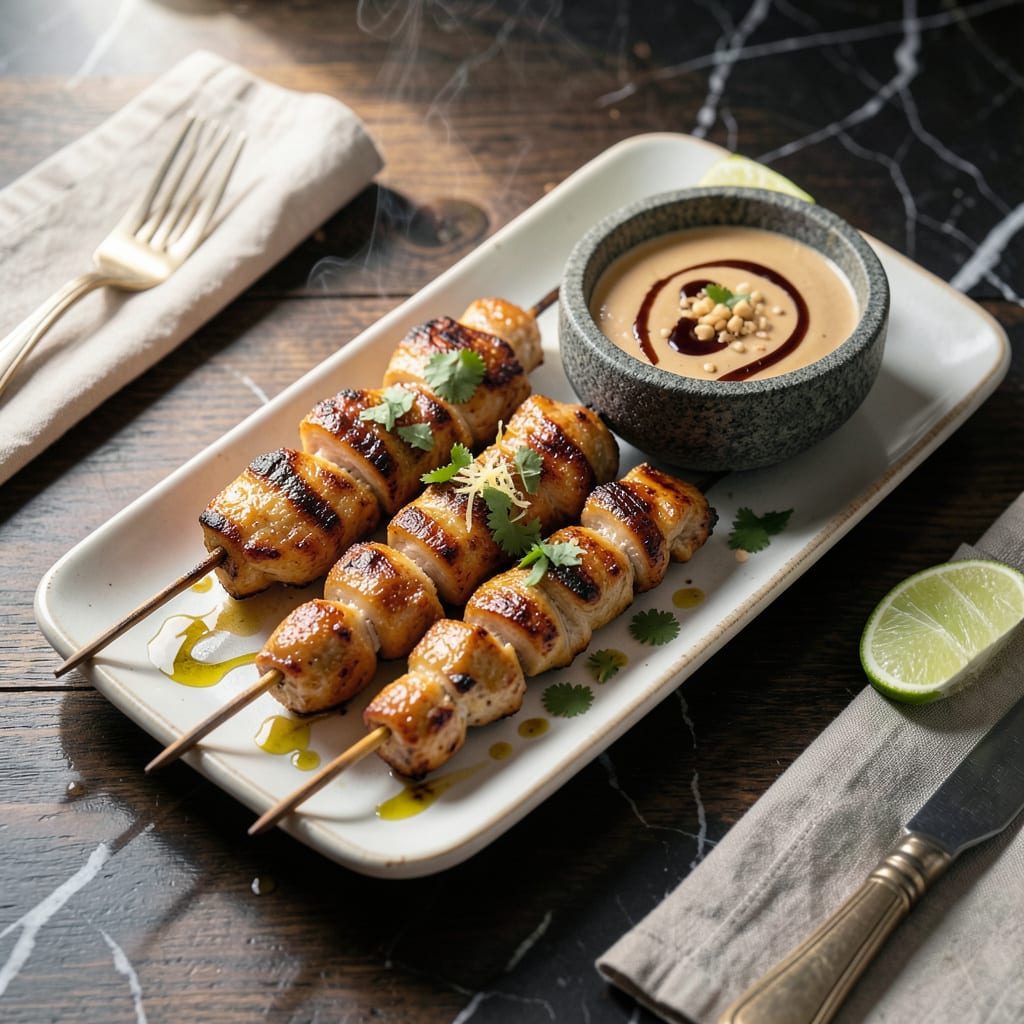
This Thai-inspired peanut sauce delivers creamy perfection with every dip. I developed this recipe to capture the authentic balance of sweet, tangy, and nutty flavors that elevate any dish.
With just a few simple ingredients and 10 minutes, you’ll have a versatile sauce that transforms grilled meats, vegetables, or even salads into something extraordinary. The smooth texture and rich taste make it irresistible.
Ingredients for Chicken Satay Peanut Dipping Sauce
Nine ingredients create this rich, Thai-inspired sauce with authentic sweet, tangy, and nutty depth.
| Ingredient | Amount | Notes |
|---|---|---|
| Creamy Peanut Butter 🥜 | ¾ cup | Unsweetened, smooth variety preferred |
| Coconut Milk 🥥 | ½ cup | Full-fat for rich texture |
| Soy Sauce 🫕 | 2 tbsp | Low-sodium or tamari preferred |
| Lime Juice 🍈 | 2 tbsp | Freshly squeezed for brightness |
| Honey 🍯 | 2 tbsp | Pure, unprocessed variety |
| Fresh Ginger 🌿 | 1 tbsp | Peeled and finely grated |
| Garlic Cloves 🧄 | 2 cloves | Peeled and minced |
| Red Curry Paste 🌶️ | 1 tbsp | Thai-style for authentic flavor |
| Sriracha Sauce 🔥 | 1 tsp | Adjust to taste preference |
| Sesame Oil 🫒 | 1 tsp | Toasted for depth of flavor |
[recipeingredientscaler]
The peanut butter is the foundation—natural, unsweetened creamy is ideal, but conventional works in a pinch (stir well to redistribute oils). For the coconut milk, Thai Kitchen or Chaokoh brands deliver consistent creaminess. Red curry paste varies by brand; Maesri or Thai Kitchen are reliable choices at most Asian markets or the international aisle at larger supermarkets.
Out of lime juice? Rice vinegar at half the quantity provides tang, though the citrus note will differ slightly. Need a honey substitute? Agave or maple syrup work beautifully here. For heat adjustments, half the sriracha for mild or double for extra spice. The ginger and garlic are non-negotiable for authentic flavor—don’t skip or substitute with powdered versions.
This sauce keeps beautifully in an airtight container. Store in the fridge for up to 1 week, or freeze for 3 months (thaw overnight before using). The flavors deepen over time, making leftovers even more delicious. Stir well before each use, as natural separation may occur.
Why You’ll Love This Recipe
- 5-Minute Magic: I just dump peanut butter, coconut milk, soy sauce, lime, and honey in a bowl and stir—no cooking required.
- Flavor Bomb: That salty-sweet tang from soy, lime, and honey hitting the creamy peanut? I could drink it with a spoon.
- Party MVP: I make a double batch for game day and it disappears faster than the wings.
- Budget Stretcher: A jar of peanut butter and a can of coconut milk feed a crowd for pennies. Honestly, it’s my cheapest crowd-pleaser.
Step-by-Step Instructions for Chicken Satay Peanut Dipping Sauce
This method ensures a velvety, authentic sauce with balanced sweet, spicy, and tangy notes.
Step 1: Bloom Aromatics in Sesame Oil
Heat a small saucepan over medium-low heat. Add the 1 tsp sesame oil and swirl to coat the pan evenly. The oil should shimmer but not smoke—this prevents bitterness.
Add the 1 tbsp fresh ginger and 2 cloves garlic cloves, stirring constantly for 1-2 minutes until fragrant. Watch closely; garlic burns quickly. You’ll notice the raw edge softens and the mixture becomes golden.
This step builds the aromatic foundation. Undercooking leaves a harsh bite, while overcooking makes the sauce bitter.
Step 2: Toast the Curry Paste
Push the ginger and garlic to one side of the pan. Add the 1 tbsp red curry paste to the cleared space and toast for 30-45 seconds, stirring frequently. The paste should darken slightly and release its oils into the mixture.
Toasting the paste deepens its earthy, spicy flavors and eliminates any raw, starchy taste. The oil should turn a vibrant red as the paste dissolves into it. If it sticks, lower the heat immediately.
Combine the toasted paste with the aromatics, stirring until fully incorporated. This creates a uniform, fragrant base for the sauce.
Step 3: Emulsify with Peanut Butter and Liquids
Reduce heat to low. Add the 0.75 cup creamy peanut butter and stir vigorously to melt it into the aromatic mixture. The peanut butter will initially resist, but persistent stirring creates a smooth, thick paste.
Gradually pour in the 0.5 cup coconut milk, whisking continuously to prevent separation. The mixture should transform into a glossy, creamy liquid. If it seizes, add a splash of warm water to loosen it.
This emulsification step is critical. Properly combined, the sauce will have a luxurious, velvety texture that clings perfectly to satay skewers.
Step 4: Balance Flavors and Simmer
Add the 2 tbsp soy sauce, 2 tbsp lime juice, 2 tbsp honey, and 1 tsp sriracha sauce. Stir well to combine. The soy sauce adds umami depth, the lime juice brightens, and the honey rounds out the heat.
Increase heat to medium and simmer for 3-4 minutes, stirring occasionally. The sauce should thicken slightly and become glossy. Taste and adjust sweetness or acidity if needed—this is your moment to perfect the balance.
Watch for the sauce to coat the back of a spoon. If it’s too thick, thin with a teaspoon of warm water. If too thin, simmer a minute longer.
Pro Tips For Making Chicken Satay Peanut Dipping Sauce
- Warm the Peanut Butter: Stir the creamy peanut butter over low heat for 1-2 minutes before mixing—it blends into the coconut milk smoothly instead of clumping.
- Balance the Lime: Add lime juice gradually, tasting as you go; too much early on can make the sauce bitter, and you can’t take it out once it’s in.
- Skip the Salt: Soy sauce already brings plenty of saltiness, so hold off on adding extra until you’ve tasted the final sauce.
- Thin with Water: If the sauce is too thick after mixing, add a tablespoon of warm water at a time—it’s easier to adjust than adding more coconut milk.
Regional Styles of These Flavors
Thai Classic Style
In central Thailand, peanut sauce often includes tamarind paste for tang instead of lime juice. Use 1 tbsp tamarind mixed with 1 tbsp water to replace the lime. The result is deeper, more complex acidity that’s traditional in Bangkok street food stalls. 🌟
Indonesian Satay Sauce
Indonesian versions often add kecap manis (sweet soy sauce) for richness. Replace 1 tbsp soy sauce with kecap manis and add ½ tsp ground coriander. This creates the signature Javanese satay flavor profile found in Surabaya.
Malaysian Variation
Malaysian peanut sauce typically includes lemongrass and galangal. Add 1 stalk bruised lemongrass and 1 tsp minced galangal with the ginger. Remove lemongrass before serving. This version pairs perfectly with beef satay.
Vietnamese Light Style
Vietnamese peanut dipping sauce is often lighter. Use ½ cup water instead of coconut milk and add 1 tbsp fish sauce. The result is a thinner, saltier sauce that’s traditional for gỏi cuốn (fresh spring rolls).
Philippine Version
Filipino satay sauce often includes calamansi juice. Replace lime juice with 2 tbsp calamansi for a unique citrus note. Add 1 tsp annatto powder for color. This style is popular in Mindanao.
Nutrition Facts
Frequently Asked Questions
Can I make this sauce ahead of time?
It keeps well in an airtight container in the fridge for up to 1 week. Flavors deepen over time, making it even tastier. Stir before using as separation may occur.
What can I use instead of honey?
Agave nectar or maple syrup work perfectly as 1:1 substitutes. For a sugar-free option, try 1 tbsp coconut sugar dissolved in 1 tbsp warm water.
Why is my sauce grainy instead of smooth?
This usually happens if the peanut butter isn’t fully melted. Warm it slightly before mixing, or whisk vigorously while adding coconut milk. A splash of hot water can help smooth it out.
How do I adjust the spice level?
For milder sauce, reduce sriracha to ½ tsp. For extra heat, add up to 1 tbsp. Balance with extra honey if needed. The red curry paste also adds heat, so taste as you go.

- Jollof Rice Sauce Recipe: West African Tomato and Spice Infusion - September 25, 2026
- Japanese Rice Soup Recipe: Umami-Rich Comfort in a Bowl - September 25, 2026
- Homemade Cream Of Rice Recipe: Silk-Smooth Breakfast in Minutes - September 25, 2026