
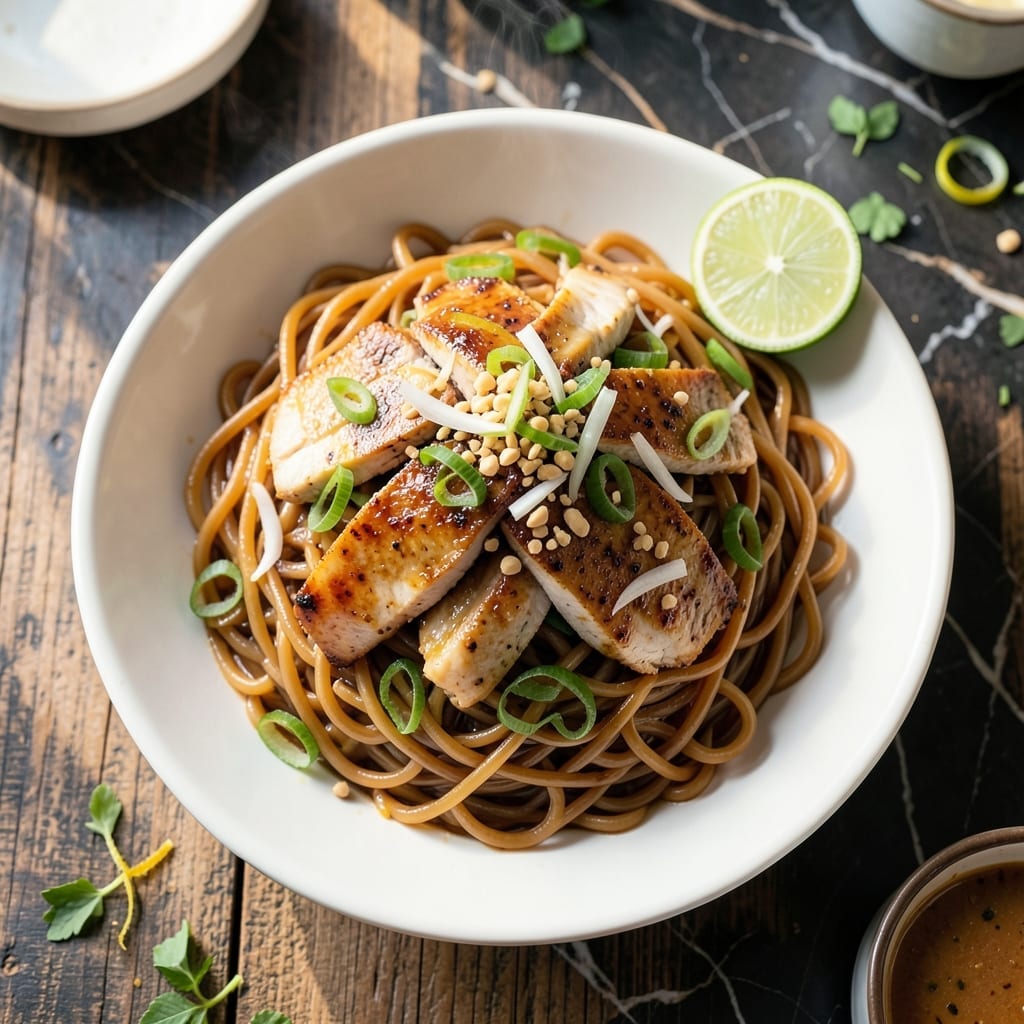
This recipe brings authentic Thai street food flavor to your kitchen with minimal effort.
The secret lies in the balance of sweet, tangy, and savory flavors achieved through a perfectly timed cooking process. Chicken stays tender while rice noodles absorb the rich, umami-packed sauce.
Topped with crushed peanuts and fresh lime, each bite delivers the signature texture and brightness that defines this dish. The aroma alone will transport you to a bustling Bangkok market.
Ready in under 30 minutes, it’s a meal that feels special but comes together quickly for busy weeknights.
Ingredients for Chicken Pad Tai
Rice noodles, chicken, and a bold sauce bring this street food favorite to life in your kitchen.
| Ingredient | Amount | Notes |
|---|---|---|
| Rice Noodles 🍜 | 8 oz | Flat, medium-width preferred |
| Boneless Chicken Breast 🍗 | 1 lb | Thinly sliced for even cooking |
| Tamari Sauce 🫒 | ⅓ cup | Or substitute soy sauce |
| Rice Vinegar 🧉 | 2 tbsp | For tangy brightness |
| Brown Sugar 🍚 | ¼ cup | Light or dark works |
| Fish Sauce 🐟 | 2 tbsp | Essential for umami depth |
| Tamarind Paste 🌾 | 2 tbsp | For authentic sour flavor |
| Garlic Cloves 🧄 | 3 cloves | Minced for maximum flavor |
| Large Eggs 🥚 | 2 whole | Lightly beaten for topping |
| Roasted Peanuts 🥜 | ½ cup | Unsalted, roughly chopped |
| Fresh Lime 🍋 | 1 whole | Cut into wedges for serving |
| Green Onions 🧅 | ½ cup | Thinly sliced for garnish |
| Bean Sprouts 🌱 | 1 cup | Fresh, rinsed before using |
| Dried Red Chili Flakes 🌶️ | ½ tsp | Adjust to taste for heat |
| Vegetable Oil 🫒 | 2 tbsp | High smoke point preferred |
The rice noodles are non-negotiable—look for flat, medium-width at your Asian market (or the international aisle at Kroger). Tamarind paste is the secret weapon; Red Boat or Thai Kitchen brands are reliable. For the chicken, thighs stay juicier than breasts, but either works in a pinch. Fish sauce is the soul of Pad Thai—Tiparos or Three Crabs are my go-tos. Don’t skip it, even if the smell is intense at first.
No tamarind? Lime juice plus extra brown sugar gets you 80% there. Vegetarian? Swap fish sauce for more tamari and a dash of soy sauce. Peanut allergy? Crushed cashews or almonds work too. The bean sprouts can be skipped (though they add great crunch), and if you’re missing green onions, thinly sliced bell peppers add color and freshness. Eggs are traditional but optional.
Sauce ingredients keep indefinitely, but mix them fresh each time for best flavor. Noodles last 1-2 years in the pantry. Leftovers? 3-4 days in the fridge—reheat gently with a splash of water to loosen the sauce. The peanuts will soften, so add fresh ones when serving.
Why You’ll Love This Recipe
- One Pan Meal: I love that everything cooks together—just soak the rice noodles, sear the chicken, and toss with tamari and brown sugar.
- Sweet-Savory Balance: The tamari and brown sugar create this rich, caramelized depth that’s honestly addictive.
- Weeknight Hero: Between us, this is my go-to for busy evenings when I need dinner fast but still crave restaurant flavor.
- Leftovers for Days: The flavors actually deepen overnight, so I always make extra for lunches.
Step-by-Step Instructions for Chicken Pad Thai
Here’s how I make this street food classic with authentic flavors every time.
Step 1: Soak and Prepare the Rice Noodles
Place the 8 oz Rice Noodles in a large bowl and cover with warm water. I’ve found that soaking them for 20-25 minutes until they’re pliable but still slightly firm gives the best texture. Drain immediately when ready—over-soaking makes them mushy.
While the noodles soak, slice the 1 lb Boneless Chicken Breast into thin strips. Uniform pieces ensure even cooking. I cut against the grain for maximum tenderness. Have all your other ingredients prepped and within reach—this dish comes together fast.
Step 2: Cook the Chicken and Aromatics
Heat 1 tablespoon of the 2 tbsp Vegetable Oil in a wok or large skillet over medium-high heat until shimmering. Add the sliced chicken and stir-fry for 4-5 minutes until just cooked through and no longer pink. Remove to a plate and set aside.
In the same pan, add the remaining 1 tablespoon of Vegetable Oil. Add minced 3 cloves Garlic Cloves and 0.5 tsp Dried Red Chili Flakes, stirring for 30 seconds until fragrant but not browned. This builds the flavor base that makes pad thai irresistible.
Step 3: Combine Noodles, Eggs, and Sauce
Add the drained rice noodles to the pan along with the 2 whole Large Eggs. Toss everything together for 1-2 minutes until the eggs are just set and the noodles begin to soften. The residual heat from the pan will finish cooking the noodles perfectly.
Now add the sauce: 0.33 cup Tamari Sauce, 2 tbsp Rice Vinegar, 0.25 cup Brown Sugar, 2 tbsp Fish Sauce, and 2 tbsp Tamarind Paste. Stir well to coat everything evenly. Taste and adjust seasoning if needed—this is your moment to perfect the balance.
Step 4: Finish with Fresh Toppings
Return the cooked chicken to the pan and toss to combine. Add 1 cup Bean Sprouts and stir for 30 seconds until just wilted but still crisp. The sprouts should retain a slight crunch for texture contrast.
Transfer to serving plates and top with 0.5 cup Roasted Peanuts, 0.5 cup Green Onions, and Fresh Lime wedges. The peanuts add crunch, the green onions bring freshness, and the lime brightens all the flavors. Serve immediately while hot for the best experience.
Pro Tips For Making Chicken Pad Tai
- Soak Noodles Right: Cover rice noodles with warm—not boiling—water for exactly 8-10 minutes, then drain. I learned this the hard way after ending up with mushy noodles more than once.
- Slice Chicken Thin: Cut the boneless chicken breast into ¼-inch strips against the grain. This guarantees quick, even cooking and tender bites every time.
- Balance the Sauce: Taste as you go—start with 2 tablespoons tamari, 1 tablespoon rice vinegar, and 1 tablespoon brown sugar, then adjust. Sounds weird, but the vinegar’s acidity cuts through the sweetness beautifully.
- Use High Heat: Crank the wok or skillet to high and cook in small batches. After burning three batches, I finally figured out that high heat and space prevent soggy, steamed noodles.
Make-Ahead Tips for chicken pad tai
Prep Ahead Strategy
I always prep my sauce ingredients the night before—whisk together 0.33 cup tamari, 2 tbsp rice vinegar, 0.25 cup brown sugar, 2 tbsp fish sauce, and 2 tbsp tamarind paste in a jar. This saves 5 minutes of frantic measuring during cooking. 💡
Noodle Prep
Soak your 8 oz rice noodles in warm water for 15 minutes before storing in the fridge. Drain and toss with 1 tsp oil to prevent sticking. They’ll finish cooking perfectly when stir-fried later.
Chicken Prep
Slice your 1 lb chicken breast into thin strips and store in an airtight container. For extra tenderness, marinate with 1 tbsp tamari and 1 tsp oil for up to 24 hours. This also enhances flavor absorption during cooking.
Topping Prep
Chop your 0.5 cup peanuts and slice 0.5 cup green onions, then store separately. Rinse 1 cup bean sprouts and pat dry—keep them in a damp paper towel in the fridge. Cut lime wedges just before serving for maximum freshness.
Storage Tips
Prepared ingredients keep well for 24-48 hours in the fridge. Store noodles submerged in water to prevent drying. The sauce mixture can last up to 1 week refrigerated, but fresh is always best. 💪
Day-Of Efficiency
When ready to cook, have all prepped ingredients within arm’s reach. This dish comes together in 10 minutes once you start stir-frying. I use small bowls to organize everything—it’s a game-changer for speed.
Nutrition Facts
Frequently Asked Questions
Can I use chicken thighs instead of breasts?
Thighs stay juicier and add more flavor. Just slice them thinly and cook for 5-6 minutes instead of 4-5 minutes to ensure they’re fully done.
What if I can’t find rice noodles?
In a pinch, use linguine or spaghetti as substitutes. Soak them for 10 minutes in warm water before stir-frying to mimic rice noodle texture.
How do I make it gluten-free?
Swap regular tamari for gluten-free tamari and ensure all sauces are certified gluten-free. The rice noodles themselves are naturally gluten-free, so you’re good to go!
Why is my pad thai mushy?
Over-soaking the noodles is the most common culprit. Soak for only 20-25 minutes, then drain immediately. Stir-fry quickly over medium-high heat to maintain texture.

- Jollof Rice Sauce Recipe: West African Tomato and Spice Infusion - September 25, 2026
- Japanese Rice Soup Recipe: Umami-Rich Comfort in a Bowl - September 25, 2026
- Homemade Cream Of Rice Recipe: Silk-Smooth Breakfast in Minutes - September 25, 2026