
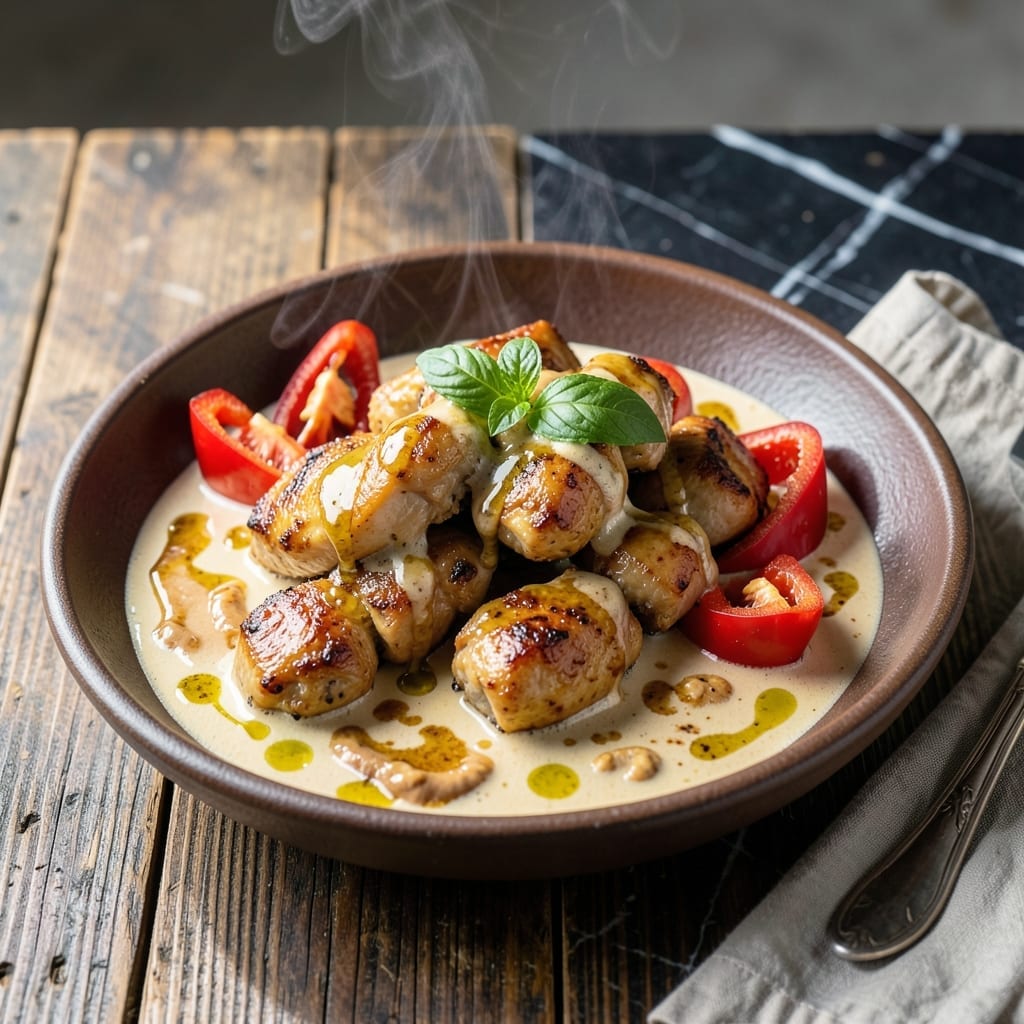
This Thai-inspired dish brings together tender chicken, creamy coconut milk, and rich peanut flavors in a perfectly balanced curry. The aromatic blend of spices creates an authentic taste that’s both comforting and exotic.
Panang curry stands out with its smooth, slightly sweet sauce and nutty undertones. I’ve refined this recipe to ensure every bite delivers restaurant-quality depth without complicated steps.
The chicken cooks until juicy and flavorful, absorbing the coconut and peanut notes. A touch of lime brightens the dish, making it irresistible.
Perfect for a weeknight dinner that feels special. Here’s how to make it at home.
Ingredients for Chicken Panang
Tender chicken, coconut milk, and peanut flavors create this restaurant-quality curry with aromatic depth.
| Ingredient | Amount | Notes |
|---|---|---|
| Boneless Skinless Chicken Thighs 🍗 | 1 ½ lb | Cut into bite-sized pieces |
| Coconut Milk 🥥 | 2 cups | Full-fat for creaminess |
| Peanut Butter 🥜 | ½ cup | Creamy natural variety |
| Panang Curry Paste 🌶️ | 3 tbsp | Thai brand preferred |
| Red Bell Pepper 🌶️ | 1 whole | Sliced into strips |
| Fish Sauce 🐟 | 2 tbsp | Or substitute soy sauce |
| Brown Sugar 🧈 | 2 tbsp | Light or dark variety |
| Lime 🍋 | 1 whole | Juiced and zested |
| Fresh Cilantro 🌿 | ¼ cup | Chopped for garnish |
| Garlic Cloves 🧄 | 4 cloves | Minced finely |
| Shallot 🧅 | 1 whole | Finely diced |
| Vegetable Oil 🫒 | 2 tbsp | Neutral flavor preferred |
| Salt 🧂 | 1 tsp | Kosher or sea salt |
| Black Pepper 🌶️ | ½ tsp | Freshly ground |
| Thai Basil Leaves 🌿 | ¼ cup | Optional for garnish |
The chicken is non-negotiable for texture. Boneless skinless thighs stay juicy where breasts might dry out—look for uniform size pieces for even cooking. Thai Kitchen or Maesri curry paste brands deliver authentic flavor without artificial additives. Coconut milk must be full-fat; light versions separate and lack richness. Most specialty markets carry these, or order online from Amazon.
No peanut butter? Crushed roasted peanuts at half the amount (plus a splash of oil) work in a pinch. Soy sauce can replace fish sauce at a 1:1 ratio for vegetarian versions. Fresh lime juice is essential—bottled lacks the brightness. If Thai basil is unavailable, regular basil plus a pinch of mint mimics the aroma. The bell pepper can be swapped for zucchini or snap peas.
Curry paste keeps in the fridge for 1 month once opened, or freeze in ice cube trays. Coconut milk stores 1 week refrigerated after opening. The dish itself reheats beautifully—actually improves overnight as flavors meld. Best consumed within 3-4 days.
Why You’ll Love This Recipe
- One Pan Wonder: I toss everything in—chicken, coconut milk, peanut butter—and let the panang paste do the work. No fancy techniques, just big flavor.
- Rich Peanut Sauce: The peanut butter and coconut milk blend into this creamy, slightly sweet sauce that clings to every bite of chicken. Honestly, I lick the spoon.
- Weeknight Hero: Between us, this is my Tuesday night lifesaver. Ready before the kids finish arguing over who gets the last bell pepper slice.
- Stretches Further: Leftovers taste even better the next day. I’ll be real: I make extra just so I can have it for lunch tomorrow.
Step-by-Step Instructions for Chicken Panang
Master the technique for this rich Thai curry with layered flavors and velvety texture.
Step 1: Sear the Chicken and Aromatics
Heat the 2 tbsp vegetable oil in a large pot over medium-high heat until shimmering. Add the 1.5 lb boneless skinless chicken thighs and sear for 4-5 minutes until golden brown on all sides. This builds a flavorful fond that deepens the curry base.
Remove the chicken and set aside. In the same pot, add the finely diced shallot and cook for 2 minutes until softened. Stir in the 4 cloves minced garlic cloves and 3 tbsp Panang curry paste, toasting for 1 minute until the paste darkens slightly and becomes fragrant.
Step 2: Build the Curry Base
Pour in 1 cup of the 2 cups coconut milk and stir vigorously to deglaze the pot, scraping up all the browned bits. This creates a rich, complex foundation for the curry. Add the sliced red bell pepper and cook for 3 minutes until the strips begin to soften.
Stir in the 0.5 cup peanut butter, 2 tbsp fish sauce, and 2 tbsp brown sugar. Cook for 2-3 minutes, stirring constantly, until the peanut butter melts and the sauce thickens to a creamy consistency. The mixture should coat the back of a spoon.
Step 3: Simmer to Perfection
Return the chicken to the pot along with the remaining 1 cup coconut milk. Stir well to combine, ensuring the chicken is fully submerged in the sauce. Bring to a gentle simmer, then reduce heat to medium-low.
Cover and let it cook for 15-20 minutes, stirring occasionally, until the chicken is tender and cooked through and the bell pepper strips are softened but still retain a slight bite. The sauce should reduce to a thick, velvety texture that clings to the chicken.
Step 4: Finish and Garnish
Remove from heat and stir in the juice and zest of the lime. Taste and adjust seasoning with 1 tsp salt and 0.5 tsp black pepper as needed. The lime brightens the rich, creamy sauce and balances the flavors beautifully.
Ladle the curry into bowls and garnish with 0.25 cup chopped fresh cilantro and 0.25 cup Thai basil leaves. Serve immediately with steamed jasmine rice to soak up every bit of the luscious peanut-coconut sauce. The aromatic herbs add a fresh, vibrant finish.
Pro Tips For Making Chicken Panang
- Brown the Chicken First: Sear the boneless chicken thighs in a hot pan for 3-4 minutes per side until golden—this locks in flavor and prevents them from turning rubbery in the coconut milk. I learned this the hard way after skipping it once and ending up with pale, bland meat.
- Use Full-Fat Coconut Milk: Skip the light version; the fat in full-fat coconut milk emulsifies with the peanut butter and curry paste for a richer, creamier sauce. After burning three batches with thin, watery results, I finally switched and never looked back.
- Bloom the Curry Paste: Cook the panang curry paste in a little oil for 1-2 minutes before adding liquids—this wakes up the flavors and removes any raw, bitter edge. Sounds weird, but it works.
- Slice Peppers Thin: Cut the red bell pepper into thin strips so they soften quickly in the sauce. This isn’t the prettiest method, but it’s the tastiest—no one wants crunchy peppers in their curry.
Storing and Reheating This Dish
Refrigerator Storage
Let your curry cool for no more than 2 hours before transferring to airtight containers. Store in the fridge at 40°F or below for up to 4 days. I find the flavors deepen overnight as the spices meld together. ❄️
Freezer Storage
This dish freezes beautifully for up to 3 months without losing quality. Use quart-sized freezer bags for efficient storage, leaving 1 inch of headspace for expansion. Squeeze out excess air to prevent freezer burn.
Stovetop Reheating
My preferred method for maintaining the creamy texture. Reheat in a saucepan over medium-low heat for 8-10 minutes, stirring occasionally. Add ¼ cup water or coconut milk if the sauce looks too thick. 🔥
Microwave Reheating
For quick meals, microwave individual portions covered with a damp paper towel. Heat on 70% power for 2-3 minutes, stir, then continue in 30-second intervals until reaching 165°F.
Flavor Revival Tip
After reheating, stir in a squeeze of fresh lime juice to brighten the flavors. Garnish with fresh cilantro or Thai basil to restore that vibrant, restaurant-quality finish.
Nutrition Facts
Frequently Asked Questions
Can I use chicken breast instead of thighs?
You can, but thighs stay juicier. If using breasts, reduce cooking time to 12-15 minutes to prevent dryness.
What if I don’t have Panang curry paste?
Red curry paste works in a pinch, but add 1 tbsp peanut butter extra for that signature nutty flavor.
How do I make it less spicy?
Reduce curry paste to 2 tbsp and add 1 tbsp brown sugar to balance heat. Coconut milk also mellows spiciness.
Can I make this ahead of time?
The flavors deepen overnight. Store in an airtight container for up to 4 days.

- Jollof Rice Sauce Recipe: West African Tomato and Spice Infusion - September 25, 2026
- Japanese Rice Soup Recipe: Umami-Rich Comfort in a Bowl - September 25, 2026
- Homemade Cream Of Rice Recipe: Silk-Smooth Breakfast in Minutes - September 25, 2026