
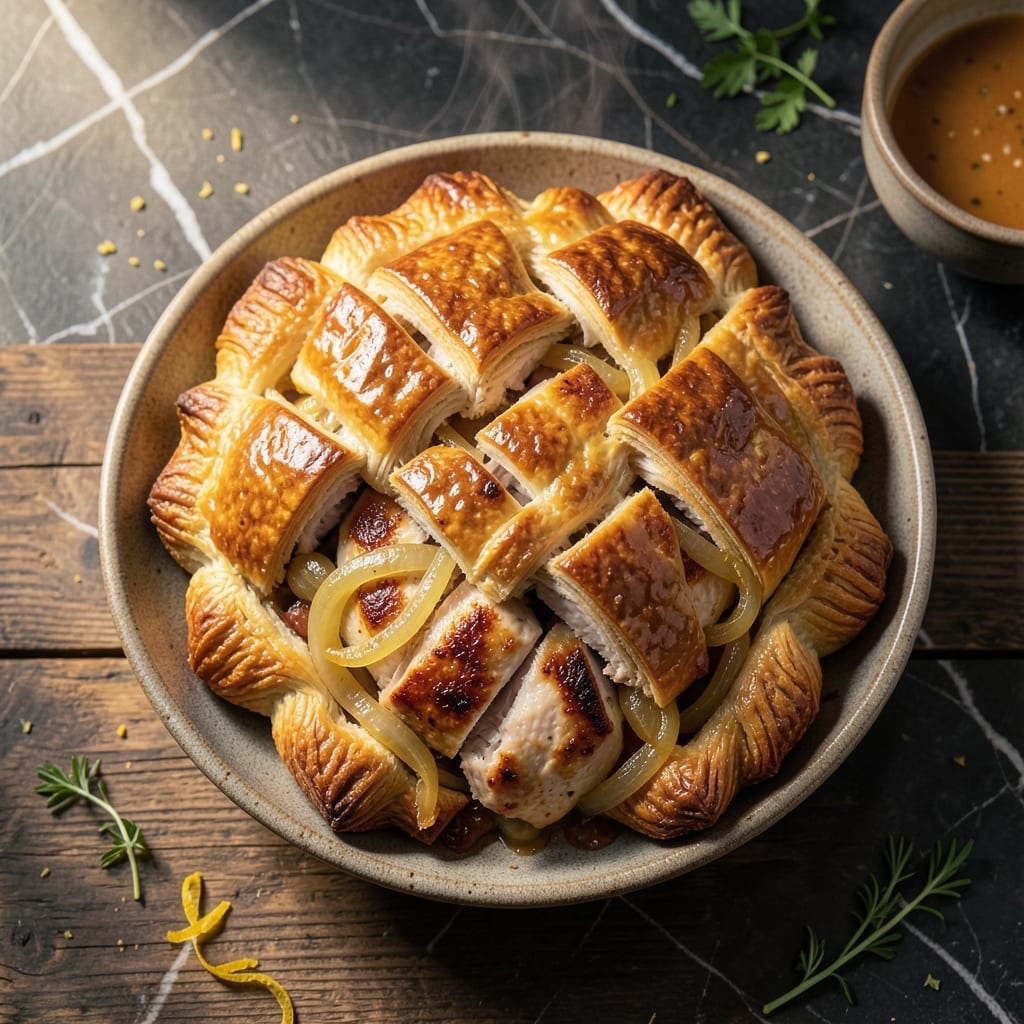
This chicken pasty delivers on the promise of a flaky golden crust encasing a rich, savory filling that’s both comforting and impressive. The secret lies in handling the pastry dough minimally to maintain its delicate texture.
I’ve perfected this version with a well-seasoned chicken and herb mixture that stays juicy inside its buttery casing. The filling is hearty yet balanced, with just enough moisture to keep it tender without sogging the crust.
The result is a handheld meal with layers of crisp, buttery pastry giving way to a warm, aromatic center. It’s a dish that feels special but comes together with straightforward techniques.
Perfect for lunch, dinner, or a portable meal on the go. Here’s how to make it right every time.
Ingredients for Chicken Pasty
Flaky crust meets juicy herbed chicken. Pantry staples plus a few fresh picks.
| Ingredient | Amount | Notes |
|---|---|---|
| All-Purpose Flour 🌾 | 3 cups | Plus extra for dusting |
| Unsalted Butter 🧈 | 1 cup | Cold, cubed for crust |
| Ice Water 💧 | ½ cup | For pastry dough |
| Salt 🧂 | 1 tsp | Divided for dough and filling |
| Boneless Skinless Chicken Breast 🍗 | 1 lb | Diced into small pieces |
| Yellow Onion 🧅 | 1 whole | Finely diced |
| Garlic Cloves 🧄 | 3 cloves | Minced for filling |
| Fresh Thyme Leaves 🌿 | 1 tbsp | Chopped, or 1 tsp dried |
| Fresh Rosemary 🌿 | 1 tbsp | Finely chopped |
| Chicken Broth 🍲 | ¼ cup | Low-sodium preferred |
| Heavy Cream 🥛 | 2 tbsp | For filling moisture |
| Black Pepper 🌶️ | ½ tsp | Freshly ground preferred |
| Large Egg 🥚 | 1 whole | For egg wash |
| Olive Oil 🫒 | 1 tbsp | For sautéing filling |
The butter is non-negotiable here—cold, unsalted, high-fat (80% or more). I grab Kerrygold or Plugrá from the grocery store. For the flour, all-purpose works perfectly, but if you’ve got White Lily in your pantry (the Southern favorite), it makes an even more tender crust. Don’t overwork the dough (the good stuff, not the pre-shredded kind)—just bring it together until it barely holds.
Need to swap the chicken? Boneless thighs stay juicier (and they’re cheaper). No fresh herbs? Dried at one-third the amount works fine—just add them with the broth. The cream is mostly for richness, so whole milk or half-and-half does the trick in a pinch. If you’re avoiding dairy, coconut cream adds a nice depth (worth the extra minute).
Assemble and bake right away—dough gets tough if left to sit. Leftovers keep 3-4 days in the fridge, but they’re best fresh. Freeze unbaked pasties on a tray first, then bag them for up to 2 months (don’t skip this part).
Why You’ll Love This Recipe
- One Bowl Wonder: I mix the flour, butter, and ice water right in the same bowl—no extra dishes, no fuss.
- Buttery Layers: That flaky crust from the cold butter and the tender chicken inside? Pure comfort in every bite.
- Feeds the Freezer: I make a double batch and freeze half—perfect for nights I don’t feel like cooking.
- Budget Stretch: A little chicken and basic pantry staples go a long way, especially when it tastes this good.
Step-by-Step Instructions for Chicken Pasty
Here’s the method. Straightforward, tested, works every time.
Step 1: Prepare the Flaky Pastry Dough
In a large bowl, combine the 3 cups All-Purpose Flour with ½ tsp Salt. Add the 1 cup Unsalted Butter (cold and cubed) and work it into the flour with your fingers until the mixture resembles coarse crumbs with some pea-sized butter pieces visible.
This is what creates those flaky layers—don’t overwork it. Drizzle in the ½ cup Ice Water 1 tablespoon at a time, mixing gently with a fork until the dough just comes together. It’ll look shaggy, and that’s perfect.
Shape the dough into a disk, wrap it in plastic, and refrigerate for 30 minutes. The cold butter is key to achieving that promised flaky texture.
Step 2: Make the Savory Chicken Filling
Heat the 1 tablespoon Olive Oil in a skillet over medium heat. Add the diced 1 whole Yellow Onion and cook for 3-4 minutes until soft and translucent. Stir in the minced 3 cloves Garlic Cloves and cook for 30 seconds until fragrant.
Add the diced 1 lb Boneless Skinless Chicken Breast and cook for 5-6 minutes until no longer pink. Season with ½ tsp Salt, ½ tsp Black Pepper, 1 tbsp Fresh Thyme Leaves, and 1 tbsp Fresh Rosemary.
Pour in the ¼ cup Chicken Broth and 2 tbsp Heavy Cream. Simmer for 2-3 minutes until the liquid reduces slightly. Remove from heat and let cool completely.
Step 3: Assemble and Seal the Pasties
On a lightly floured surface, roll out the chilled dough to ⅛-inch thickness. Using a bowl or plate as a guide, cut out 4 circles about 8 inches in diameter. You want them large enough to hold a generous portion of filling.
Divide the cooled chicken filling evenly among the dough circles, placing it on one half of each circle and leaving a 1-inch border. Fold the dough over the filling to create a half-moon shape.
Crimp the edges tightly with your fingers, then use a fork to press and seal. This prevents the filling from leaking out during baking. Brush each pasty with the beaten 1 whole Large Egg for a golden finish.
Step 4: Bake to Golden Perfection
Preheat your oven to 375°F. Place the pasties on a parchment-lined baking sheet and cut a small slit in the top of each to allow steam to escape. This prevents them from bursting open in the oven.
Bake for 35-40 minutes until the crust is golden brown and the filling is bubbly. Rotate the baking sheet halfway through for even browning.
Let them cool for 5 minutes before serving. The crust should be crisp and flaky, with the savory chicken and herb filling perfectly encased inside. Each bite delivers that buttery, layered texture you worked so hard to create.
Pro Tips For Making Chicken Pasty
- Chill the Dough: After mixing the flour, butter, and ice water, let the dough rest in the fridge for at least 30 minutes—this prevents the butter from melting too soon and keeps the pastry flaky.
- Cube the Chicken: Cut the boneless skinless chicken breast into small, even cubes so they cook through quickly and evenly inside the pasty.
- Seal Tightly: Press the edges of the pastry firmly with a fork to avoid leaks, otherwise the filling can ooze out and make a mess in the oven.
- Brush with Egg: Before baking, brush the pasty with beaten egg for a golden, glossy finish—it looks more appealing and adds a nice crunch.
Pro Cooking Tips for chicken pasty
Dough Temperature Control
Keep your butter ice-cold until the moment you work it into the flour. I stash mine in the freezer for 15 minutes before cubing. If the dough starts feeling warm during handling, pop it back in the fridge for 10 minutes. Warm butter = flat pastries. 🌡️
Sealing the Edges
Crimp the edges with your fingers first, then use a fork to press firmly. Dip your fingers in cold water if the dough sticks. Test your seal by gently pulling the edges—if it holds, you’re good. A weak seal means filling leaks and sad, flat pasties.
Venting Steam
Cut 2-3 small slits in the top of each pasty before baking. This lets steam escape without bursting the crust. I use a sharp paring knife for clean cuts. Without proper venting, the filling can push through weak spots in the dough.
Baking Surface
Always use a parchment-lined baking sheet. The parchment prevents the bottoms from over-browning and makes cleanup a breeze. For extra crispiness, preheat the baking sheet in the oven for 5 minutes before adding the pasties. 🔥
Egg Wash Technique
Beat your egg with 1 tsp water for a thinner, more even wash. Brush it on just before baking—too early and it’ll soak into the dough. For extra shine, add a pinch of salt to the egg wash.
Resting Time
Let your pasties rest for 5 minutes after baking. This lets the filling set slightly, making them easier to handle. The crust will crisp up further as it cools. Skipping this step often leads to a soggy bottom.
Nutrition Facts
Frequently Asked Questions
Can I use store-bought pie crust instead?
Yes, but the texture won’t be as flaky. Use 2 sheets of cold pie dough and roll them slightly thinner for best results.
Why did my pasties turn out soggy?
This usually happens from underbaking or excess filling moisture. Ensure your oven reaches 375°F and cool the filling completely before assembling.
How do I prevent the filling from leaking?
Seal edges tightly with a fork and avoid overfilling. Leave a 1-inch border and make 2-3 steam vents in each.
Can I make these ahead of time?
Assemble and refrigerate unbaked pasties for up to 1 day, or freeze for 2 months. Bake from frozen, adding 5-10 minutes to time.

- Jollof Rice Sauce Recipe: West African Tomato and Spice Infusion - September 25, 2026
- Japanese Rice Soup Recipe: Umami-Rich Comfort in a Bowl - September 25, 2026
- Homemade Cream Of Rice Recipe: Silk-Smooth Breakfast in Minutes - September 25, 2026