
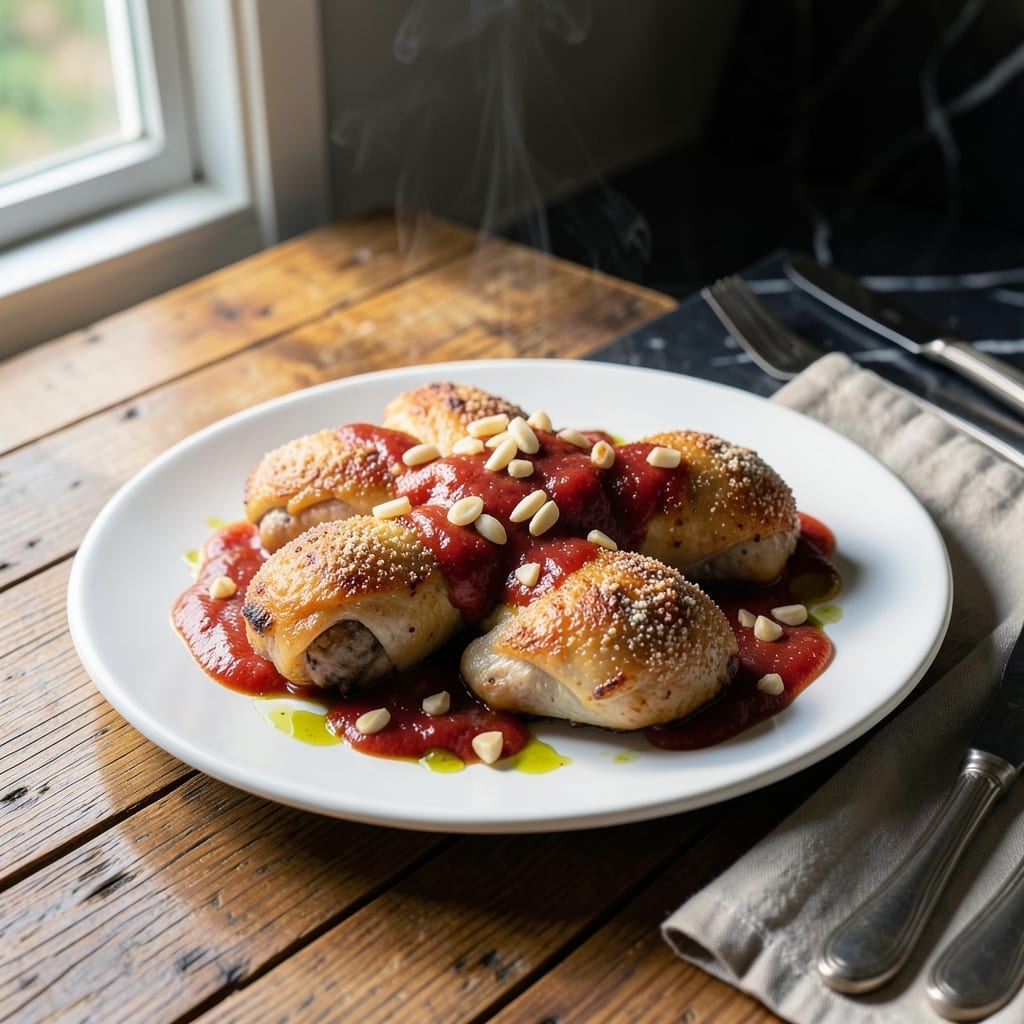
There’s a reason this dish remains a classic—it delivers tender chicken smothered in a bold, spicy tomato sauce with minimal effort. I’ve refined the technique over years to ensure the chicken stays juicy while the sauce develops deep, complex flavors.
The key lies in searing the chicken first to lock in moisture, then simmering it gently in the sauce. This method prevents dryness and allows the flavors to meld beautifully. A touch of red pepper flakes adds heat without overwhelming the dish.
What emerges is succulent chicken coated in a vibrant, slightly tangy sauce that clings perfectly to each piece. The balance of spice, acidity, and richness makes it irresistible. Serve with pasta or crusty bread to soak up every last drop.
This version stays true to tradition while keeping the process straightforward. Here’s how to make it at home.
Ingredients for Chicken Piccante
Simple ingredients create a bold, spicy tomato sauce over tender chicken thighs.
| Ingredient | Amount | Notes |
|---|---|---|
| Chicken Thighs 🍗 | 1 ½ lb | Boneless, skinless preferred |
| Olive Oil 🫒 | 2 tbsp | Divided for searing and sauce |
| All-Purpose Flour 🌾 | ½ cup | For dredging chicken |
| Salt 🧂 | 1 tsp | Kosher or sea salt |
| Black Pepper 🌶️ | ½ tsp | Freshly ground preferred |
| Garlic Cloves 🧄 | 4 cloves | Minced for sauce |
| Yellow Onion 🧅 | 1 whole | Finely diced |
| Red Pepper Flakes 🌶️ | 1 tsp | Adjust for heat preference |
| Canned Diced Tomatoes 🍅 | 1 can | 28 oz can, undrained |
| Tomato Paste 🍅 | 2 tbsp | For sauce thickness |
| Dry White Wine 🍷 | ½ cup | Or substitute chicken broth |
| Dried Oregano 🍃 | 1 tsp | Crushed between fingers |
| Fresh Basil Leaves 🌿 | ¼ cup | Chopped, for garnish |
| Chicken Broth 🍲 | 1 cup | Low-sodium preferred |
The chicken thighs are non-negotiable here. Bone-in, skin-on gives the best flavor, but boneless works if that’s what you have. Look for thighs with good marbling at Whole Foods or your regular supermarket—just avoid the pre-cut stew meat. The canned tomatoes should be San Marzano if you want to splurge, but any good brand will do in a pinch.
No white wine? Chicken broth with a splash of lemon juice mimics the acidity. Fresh oregano can replace dried at a 1:1 ratio, but use half if it’s particularly potent. The red pepper flakes are flexible—start with less and add more to taste. If you’re out of tomato paste, ketchup in a pinch (but don’t tell anyone I said that).
This tastes even better the next day once the flavors meld. Keeps 4-5 days in the fridge, freezes for 3 months. Reheat gently to keep the chicken tender—microwave works, but stovetop is kinder.
Why You’ll Love This Recipe
- One Pan Wonder: I love how the chicken thighs crisp up in olive oil while the flour keeps them juicy—minimal cleanup, maximum flavor.
- Zesty Kick: The piccante sauce gives that perfect spicy-sweet contrast to the savory chicken, and the peppery finish ties it all together.
- Weeknight Hero: Honestly, this is my go-to for busy evenings—ready faster than takeout and way more satisfying.
- Budget Friendly: Chicken thighs are cheap, the pantry staples do the rest, and leftovers taste even better the next day.
Step-by-Step Instructions for Chicken Piccante
Master this method for perfectly tender chicken with a bold, spicy tomato sauce.
Step 1: Dredge and Sear the Chicken Thighs
Pat the 1.5 lb Chicken Thighs dry with paper towels—this ensures a good sear. Season both sides with the 1 tsp Salt and 0.5 tsp Black Pepper, then dredge each piece in the 0.5 cup All-Purpose Flour, shaking off any excess.
Heat 1 tbsp Olive Oil in a large skillet over medium-high heat. When the oil shimmers, add the chicken and sear for 4-5 minutes per side until golden brown and crisp. Don’t crowd the pan—work in batches if needed. Transfer the seared chicken to a plate and set aside.
Step 2: Build the Flavorful Sauce Base
In the same skillet, add the remaining 1 tbsp Olive Oil. Sauté the finely diced Yellow Onion for 3-4 minutes until translucent and just beginning to soften. Add the 4 cloves minced Garlic Cloves and cook for 30 seconds until fragrant.
Stir in the 2 tbsp Tomato Paste, 1 tsp Red Pepper Flakes, and 1 tsp Dried Oregano. Cook for 1 minute, stirring constantly, until the mixture deepens in color. This step builds the foundation of the sauce’s rich, spicy flavor.
Step 3: Deglaze and Simmer the Sauce
Pour in the 0.5 cup Dry White Wine and scrape up any browned bits from the bottom of the pan. Let it simmer for 2-3 minutes until reduced by half. This deglazing step captures all the concentrated flavors from searing the chicken.
Add the 1 can Canned Diced Tomatoes (undrained) and 1 cup Chicken Broth. Stir well, then reduce heat to medium-low and simmer for 10 minutes to meld the flavors. The sauce should thicken slightly and develop a vibrant red color.
Step 4: Finish with Chicken and Fresh Basil
Return the seared chicken thighs to the skillet, nestling them into the sauce. Simmer for an additional 10-12 minutes, turning the chicken occasionally, until the internal temperature reaches 165°F and the sauce has thickened.
Just before serving, stir in the 0.25 cup chopped Fresh Basil Leaves. The basil adds a bright, aromatic finish that balances the heat from the red pepper flakes. Serve the chicken hot, spooning the spicy tomato sauce generously over each piece.
Pro Tips For Making Chicken Piccante
- Pat the Thighs Dry: Skip the soggy coating—I learned this the hard way. Dab the chicken thighs with a paper towel before dredging in flour so the crust actually browns instead of steaming.
- Hot Oil First: Get the olive oil shimmering but not smoking before adding the chicken. About 350°F is the sweet spot, or the flour will absorb oil instead of frying.
- Season the Flour: Mix salt and black pepper right into the flour before dredging. Sounds simple, but it guarantees every bite is seasoned, not just the surface.
- Rest Before Serving: Give the chicken 5 minutes off the heat after cooking. It keeps the juices inside where they belong, not all over your plate.
Pro Cooking Tips for This Dish
Perfect Searing Technique
Always pat the chicken thighs completely dry before dredging—this ensures a beautiful golden-brown sear. I use a cast iron skillet for even heat distribution. The oil should shimmer but not smoke when you add the chicken.
Sauce Flavor Development
Cook the tomato paste with the spices for at least 1 minute to deepen its flavor. This step, called the pincage, removes the raw taste and builds complexity. The sauce will transform from bright to rich and velvety.
Deglazing Mastery
Use a wooden spoon to scrape up all the browned bits when adding the wine. Those fond bits are pure flavor. Let the wine reduce by half before adding other liquids—this takes about 2-3 minutes on medium heat. 💡
Chicken Doneness Check
Use an instant-read thermometer to check the internal temperature reaches 165°F. The thighs will continue cooking slightly off heat. If you don’t have a thermometer, pierce the thickest piece—the juices should run clear.
Sauce Consistency
If your sauce is too thin, simmer uncovered for a few extra minutes. For a thicker sauce, mash some of the tomatoes with your spoon. The sauce should coat the back of a spoon but still be pourable.
Resting Time
Let the chicken rest in the sauce for 5 minutes after cooking. This allows the juices to redistribute. Serve immediately while hot—the flavors are most vibrant fresh from the pan. 🔥
Nutrition Facts
Frequently Asked Questions
Can I use chicken breasts instead of thighs?
You can, but thighs stay juicier. Breasts dry out faster, so reduce cooking time to 8-10 minutes in the sauce. For best results, brine breasts in saltwater for 30 minutes first.
How do I make it less spicy?
Start with 0.5 tsp red pepper flakes instead of 1 tsp, then adjust to taste. Removing seeds from fresh peppers (if added) also reduces heat. The wine helps balance spiciness.
What’s the best side dish pairing?
Serve with pasta or crusty bread to soak up the sauce. Polenta or roasted vegetables also complement the bold flavors. A simple green salad adds freshness.
Can I make this ahead of time?
Yes! The flavors deepen overnight. Store in an airtight container for up to 4 days in the fridge. Reheat gently on the stove to prevent drying.

- Jollof Rice Sauce Recipe: West African Tomato and Spice Infusion - September 25, 2026
- Japanese Rice Soup Recipe: Umami-Rich Comfort in a Bowl - September 25, 2026
- Homemade Cream Of Rice Recipe: Silk-Smooth Breakfast in Minutes - September 25, 2026