
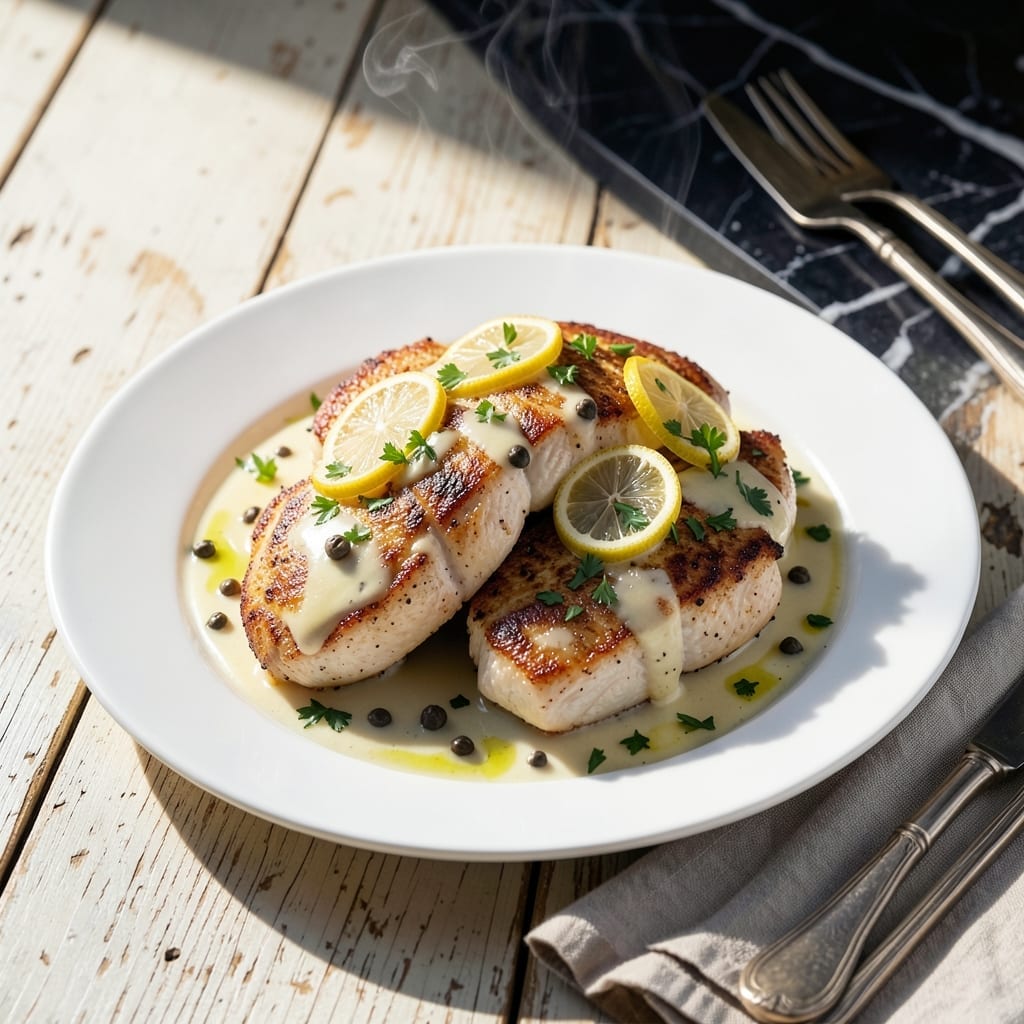
This classic dish delivers tender chicken cutlets topped with a bright, tangy lemon-caper sauce that’s surprisingly simple to master.
I perfected this method after testing it multiple times in my small Boston kitchen, ensuring the chicken stays moist while the sauce develops its signature zesty kick.
The secret lies in quick cooking and a pan sauce that comes together in minutes, using the same skillet for maximum flavor.
You’ll achieve restaurant-quality results with minimal effort and ingredients you likely already have on hand.
Ingredients for Chicken Piccata Recipe Nyt
Tender chicken and that zesty lemon-caper sauce start with these pantry staples and fresh touches.
| Ingredient | Amount | Notes |
|---|---|---|
| Chicken Breast Cutlets 🍗 | 1 ½ lb | Pounded to even 1/4-inch thickness |
| All-Purpose Flour 🌾 | ½ cup | For dredging cutlets |
| Kosher Salt 🧂 | 1 ½ tsp | Diamond Crystal preferred |
| Freshly Ground Black Pepper 🌶️ | ½ tsp | Coarse grind ideal |
| Unsalted Butter 🧈 | 6 tbsp | Divided for cooking and sauce |
| Olive Oil 🫒 | 3 tbsp | Light or extra-virgin |
| Garlic Cloves 🧄 | 2 cloves | Minced for sauce |
| Dry White Wine 🍷 | ½ cup | Sauvignon Blanc or Pinot Grigio |
| Fresh Lemon Juice 🍋 | ⅓ cup | About 2-3 lemons |
| Capers 🌿 | 3 tbsp | Drained, non-pasteurized preferred |
| Low-Sodium Chicken Broth 🍲 | ½ cup | For deglazing pan |
| Fresh Flat-Leaf Parsley 🌿 | ¼ cup | Chopped, for garnish |
The chicken is everything here. Boneless, skinless breasts pounded thin ensure even cooking—look for air-chilled at Whole Foods or Market Basket for better texture. Don’t skip the pounding step (worth the extra minute). The capers? Non-pasteurized in brine from the olive bar have more punch than jarred. And the wine—any crisp white works, but I always keep a box of Pinot Grigio around just for cooking.
No white wine? Substitute with extra chicken broth and a splash of lemon juice. Out of capers? Chopped green olives at half the amount get you close. Want more brightness? Add a pinch of lemon zest to the sauce. The flour can be swapped for cornstarch (use one-third the amount) if you need gluten-free. And fresh parsley is ideal, but dried works in a pinch—just use a fraction.
Leftovers keep surprisingly well—3-4 days in the fridge, though the chicken is best fresh. The sauce actually improves overnight as flavors meld. Don’t freeze this one; the texture changes. Reheat gently in a skillet with a splash of broth (don’t microwave).
Why You’ll Love This Recipe
- One Pan Magic: I love that I only need a skillet and a spatula—no piles of dishes later.
- Bright and Zesty: That buttery lemon sauce with capers hits just right, cutting through the crispy chicken.
- Weeknight Hero: Honestly, it’s fancy enough for guests but quick enough for a Tuesday.
Step-by-Step Instructions for Chicken Piccata
Here’s the method that delivers tender cutlets with a bright, tangy sauce every time.
Step 1: Prep and Dredge the Chicken Breast Cutlets
Pat the 1.5 lb Chicken Breast Cutlets completely dry with paper towels. This is non-negotiable—any moisture prevents proper browning. Season both sides evenly with the 1.5 tsp Kosher Salt and 0.5 tsp Freshly Ground Black Pepper.
Dredge each cutlet lightly in the 0.5 cup All-Purpose Flour, shaking off any excess. I use a wide, shallow dish for this—it makes the process cleaner. The flour creates a delicate crust that helps the sauce cling to the chicken later. Let the dredged cutlets rest for 5 minutes while you heat the pan.
Step 2: Sear the Cutlets to Golden Perfection
Heat 3 tbsp Olive Oil and 2 tbsp Unsalted Butter in a large skillet over medium-high heat. When the butter stops foaming, add the cutlets in a single layer (work in batches if needed). Cook for 3-4 minutes per side until golden brown and just cooked through.
Don’t crowd the pan—this causes steaming instead of searing. The cutlets should release easily when they’re ready to flip. Transfer the cooked chicken to a warm plate and tent loosely with foil to keep warm. You’ll use the remaining 4 tbsp Unsalted Butter later for the sauce.
Step 3: Build the Lemon-Caper Sauce Base
In the same skillet (don’t wipe it clean—those browned bits are flavor gold), reduce heat to medium. Add the 2 cloves Garlic Cloves (minced) and cook for 30 seconds until fragrant but not browned.
Pour in the 0.5 cup Dry White Wine and scrape up all the browned bits from the bottom of the pan with a wooden spoon. This deglazing step is crucial—it lifts all that concentrated chicken flavor into your sauce. Simmer for 2-3 minutes until the wine reduces by half.
Step 4: Finish the Sauce and Return Chicken
Reduce heat to medium-low and add the remaining 4 tbsp Unsalted Butter, 0.33 cup Fresh Lemon Juice, 3 tbsp Capers, and 0.5 cup Low-Sodium Chicken Broth. Whisk constantly until the butter melts and the sauce emulsifies into a silky consistency.
Return the chicken to the skillet along with any accumulated juices. Spoon the sauce over the cutlets and simmer for 2-3 minutes to heat through and allow the flavors to meld. The sauce should coat the back of a spoon with a glossy sheen.
Step 5: Garnish and Serve Immediately
Transfer the chicken to serving plates and spoon the sauce generously over each portion. Sprinkle with the 0.25 cup Fresh Flat-Leaf Parsley (chopped) for a pop of color and freshness.
Serve immediately while the sauce is still hot and vibrant. The capers should provide little bursts of briny flavor, while the lemon creates that signature bright tang. Each bite should deliver tender chicken with a perfect balance of rich butter and sharp citrus.
Pro Tips For Making Chicken Piccata Recipe Nyt
- Pound Evenly: Use a meat mallet to pound the chicken cutlets to an even ¼-inch thickness—I learned this the hard way after ending up with half-cooked thick spots and overdone edges.
- Season the Flour: Mix a teaspoon of kosher salt and ½ teaspoon of black pepper directly into the flour before dredging; it distributes the seasoning better than sprinkling it on the chicken.
- Hot Pan, Quick Flip: Get the pan screaming hot before adding the butter and chicken, then resist the urge to move it—2-3 minutes per side is all it takes for that golden crust.
- Use Room-Temp Butter: Take the unsalted butter out 30 minutes before cooking; it melts faster and more evenly, so your piccata sauce emulsifies smoothly instead of breaking.
Regional Styles of This Dish
Italian Classic Style
This is the version I grew up with in my Nonna’s kitchen. Use extra-virgin olive oil from an Italian deli and non-pasteurized capers from the olive bar. The sauce gets a touch more depth with a splash of vermouth instead of wine. Serve with crusty ciabatta to soak up every drop. 💛
French Influence
My French twist adds 2 tbsp Dijon mustard to the sauce for complexity. Use crème fraîche instead of butter for a richer finish. I learned this in a cooking class in Paris—it adds a velvety texture that pairs beautifully with the lemon.
Boston Bistro
Local chefs here often add 1 tsp chopped thyme to the sauce. I tested this in my tiny Boston kitchen and loved how it complements the capers. Use local sea salt from New England for a subtle mineral note.
Southern Comfort
For a warmer take, add ¼ tsp cayenne pepper to the flour dredge. The heat plays nicely against the bright sauce. I also like using buttermilk-brined chicken for extra tenderness, a trick I picked up from a Southern chef friend.
Mediterranean Twist
Add ¼ cup chopped kalamata olives with the capers for a briny depth. A pinch of oregano in the sauce ties it to Greek flavors. I love this version with a side of roasted lemon potatoes. ✨
Nutrition Facts
Frequently Asked Questions
What’s the best way to pound chicken for even cooking?
Place cutlets between plastic wrap and pound gently with a rolling pin or meat mallet to 1/4-inch thickness. This ensures even cooking and maximum tenderness.
Can I use chicken thighs instead of breasts?
Yes! Boneless, skinless thighs work well and stay juicier. Pound them to the same thickness and adjust cooking time slightly if needed.
How do I prevent the sauce from breaking?
Whisk constantly when adding butter to emulsify. If it separates, remove from heat and whisk vigorously to bring it back together.
What if my capers are too salty?
Rinse them briefly under cold water to remove excess salt. Pat dry before adding to the sauce for balanced flavor.

- Jollof Rice Sauce Recipe: West African Tomato and Spice Infusion - September 25, 2026
- Japanese Rice Soup Recipe: Umami-Rich Comfort in a Bowl - September 25, 2026
- Homemade Cream Of Rice Recipe: Silk-Smooth Breakfast in Minutes - September 25, 2026