
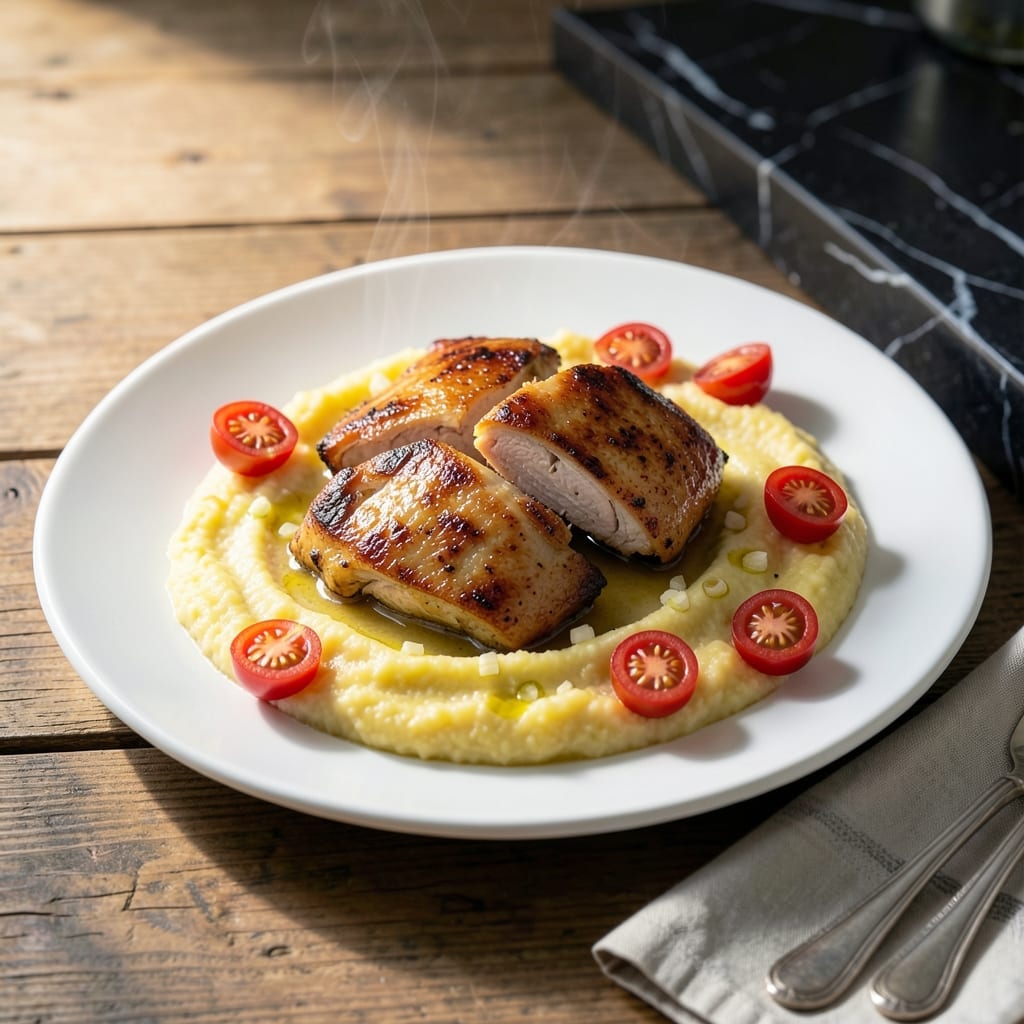
This one-pan dinner brings rustic Italian flavors to your table with minimal effort. The combination of tender chicken, creamy polenta, and fresh tomatoes creates a balanced meal that feels special without complicated techniques.
I developed this recipe to capture the essence of traditional Italian cooking—simple ingredients transformed through careful timing. The polenta cooks directly in the pan with the chicken, absorbing all the savory juices as it thickens to a creamy consistency.
You’ll end up with juicy chicken pieces nestled in rich polenta, topped with bright tomatoes that add freshness to each bite. The entire dish comes together in about 40 minutes, with most of that time being hands-off.
Serve straight from the pan for a comforting meal that’s perfect for weeknights or casual entertaining. Here’s how to make it.
Ingredients for Chicken Polenta Tomato
Simple ingredients for a rustic Italian one-pan dinner with big flavor.
| Ingredient | Amount | Notes |
|---|---|---|
| Chicken Thighs 🍗 | 1 ½ lb | Boneless, skinless preferred |
| Polenta 🌽 | 1 cup | Yellow cornmeal, coarse grind |
| Chicken Broth 🍲 | 4 cups | Low-sodium preferred |
| Cherry Tomatoes 🍅 | 2 cups | Halved for sweetness |
| Garlic Cloves 🧄 | 4 cloves | Minced for depth |
| Shallot 🧅 | 1 whole | Finely diced for aroma |
| Olive Oil 🫒 | 3 tbsp | Extra-virgin for richness |
| Butter 🧈 | 2 tbsp | Unsalted for control |
| Parmesan Cheese 🧀 | ½ cup | Freshly grated from block |
| Fresh Rosemary 🌿 | 1 tbsp | Chopped, stems removed |
| Fresh Thyme 🍃 | 1 tbsp | Leaves stripped from stems |
| Salt 🧂 | 1 tsp | Diamond Crystal kosher |
| Black Pepper 🌶️ | ½ tsp | Freshly ground for brightness |
| Red Pepper Flakes 🌶️ | ½ tsp | Optional for heat |
The chicken is the foundation here. Boneless, skinless thighs stay juicy and hold up to the long cook time—avoid breasts, they dry out. Costco has great deals on family packs, or grab a smaller portion from Whole Foods if you’re cooking for two. For the polenta, coarse yellow cornmeal gives the creamiest texture (Bob’s Red Mill is my go-to).
No cherry tomatoes? Grape tomatoes or diced Roma work just fine. Out of fresh herbs? Dried rosemary and thyme at half the amount gets the job done. The Parmesan is non-negotiable for that salty, umami depth—skip the pre-grated stuff (it’s coated in anti-caking agents). If you’re avoiding dairy, nutritional yeast adds a similar savory note.
Leftovers keep 4-5 days in the fridge, but the polenta thickens as it sits—just stir in a splash of broth when reheating. Freezes for 3 months too. I like to double the recipe and stash portions for lazy nights.
Why You’ll Love This Recipe
- I’ll be real: this is my Wednesday dinner lifesaver when I need something hearty without the fuss.
- One Pan Wonder: I toss everything in a single skillet—chicken, polenta, tomatoes—and let the broth do the work.
- Garlic-Tomato Magic: The cherry tomatoes burst in the pan, blending with the garlic into this rich, saucy goodness that soaks right into the polenta.
- Weeknight MVP: I’ll be real: this is my Wednesday dinner lifesaver when I need something hearty without the fuss.
Step-by-Step Instructions for Chicken Polenta and Tomatoes
Here’s how to create this rustic one-pan dinner with minimal effort and maximum flavor.
Step 1: Sear the Chicken Thighs to Golden Perfection
Heat 2 tbsp olive oil in a large, deep skillet over medium-high heat. While it heats, pat the 1.5 lb chicken thighs dry and season both sides with 1 tsp salt, 0.5 tsp black pepper, and 0.5 tsp red pepper flakes. The dry surface ensures a good sear.
Add the chicken thighs skin-side down (if using skin-on) and cook undisturbed for 5-6 minutes until the skin is deep golden brown and releases easily from the pan. Flip and cook another 4-5 minutes until cooked through. Transfer to a plate and set aside.
Step 2: Build the Flavor Base with Aromatics
In the same skillet, reduce heat to medium and add the remaining 1 tbsp olive oil. Sauté the finely diced shallot for 2-3 minutes until translucent and fragrant. Add the minced garlic cloves, 1 tbsp fresh rosemary, and 1 tbsp fresh thyme, stirring constantly for 30 seconds to bloom the herbs.
Next, add the 2 cups halved cherry tomatoes and cook for 3-4 minutes until they begin to soften and release their juices. This creates a bright, acidic base that balances the richness of the polenta and chicken.
Step 3: Cook the Creamy Polenta
Pour in the 4 cups chicken broth and bring to a boil. Gradually whisk in the 1 cup polenta in a slow, steady stream to prevent clumping. Reduce heat to low and stir frequently for 18-20 minutes until the mixture thickens to a porridge-like consistency.
Stir in the 2 tbsp butter and 0.5 cup parmesan cheese until melted and fully incorporated. The polenta should be creamy but still hold its shape when spooned. If it thickens too much, add a splash of warm water to loosen it.
Step 4: Bring It All Together
Return the chicken thighs to the skillet, nesting them into the polenta. Spoon the tomato-herb mixture over the chicken and polenta. Cover and let it sit off heat for 5 minutes to allow the flavors to meld and the chicken to warm through.
Serve immediately while hot, with each portion featuring a chicken thigh atop a generous scoop of polenta and a spoonful of the tomato-herb mixture. The polenta should be creamy, the chicken juicy, and the tomatoes burst with sweetness and acidity. Garnish with extra parmesan if desired.
Pro Tips For Making Chicken Polenta Tomato
- Brown the Thighs First: Sear the chicken thighs skin-side down in a hot pan for 5-6 minutes until golden—this builds flavor and keeps the meat juicy. I learned this the hard way after my first few attempts turned out pale and bland.
- Use Stone-Ground Polenta: Skip the instant stuff; stone-ground polenta cooked in chicken broth has a creamier texture and richer taste. It takes 25-30 minutes, but it’s worth the stir.
- Halve the Tomatoes: Cut the cherry tomatoes in half before adding them to the pan so they release their juices and collapse into the sauce faster. Sounds small, but it actually changes the outcome.
- Deglaze the Pan: After cooking the chicken, pour in a splash of broth or water to scrape up those browned bits—this adds depth to the sauce. My grandmother swore by this, and she was right.
Common Mistakes When Making chicken polenta tomato
Skipping the Sear
Don’t rush the chicken sear—5-6 minutes per side on medium-high heat builds flavor. Skipping this step means bland chicken and missed depth. I learned this the hard way with pale, tasteless meat. 🌡️
Overcrowding the Pan
Cook chicken in batches if needed. Overcrowding steams instead of sears, leaving you with rubbery textures. A 12-inch skillet fits 1.5 lb thighs comfortably with space between pieces.
Polenta Lumps
Whisk polenta into boiling broth in a slow, steady stream. Dumping it all at once creates impossible clumps. Stir constantly at first—this is your insurance against a lumpy disaster.
Under-seasoning
Taste as you go! Polenta needs salt to shine. I add ½ tsp to the broth before whisking in the cornmeal, then adjust at the end. The Parmesan adds salt too, so balance carefully.
Rushing the Cook
Polenta requires 18-20 minutes of stirring on low heat. High heat burns the bottom while the center stays raw. Patience rewards you with that perfect creamy texture.
Dry Tomatoes
Cook tomatoes just until they soften and release juices—3-4 minutes. Overcooking turns them mushy and loses that bright pop of flavor that cuts through the richness.
Nutrition Facts
Frequently Asked Questions
Can I use chicken breasts instead of thighs?
Thighs are ideal because they stay juicy during the 18-20 minute polenta cook. Breasts will dry out, but if you must, reduce cooking time to 12-15 minutes and check internal temp reaches 165°F.
What if my polenta is too thick?
Stir in warm broth or water, 1 tablespoon at a time, until creamy. Polenta thickens as it cools, so serve immediately for the perfect texture. Avoid adding cold liquid, which can create lumps.
Can I make this ahead of time?
Polenta firms up as it sits. Reheat gently with extra broth, stirring constantly, and add the chicken last to prevent overcooking. Best eaten fresh but leftovers keep 4-5 days refrigerated.
Is it okay to substitute dried herbs?
Yes, use 1 tsp dried for each 1 tbsp fresh. Add them with the shallots to bloom properly. Fresh herbs deliver brighter flavor, but dried work in a pinch.

- Jollof Rice Sauce Recipe: West African Tomato and Spice Infusion - September 25, 2026
- Japanese Rice Soup Recipe: Umami-Rich Comfort in a Bowl - September 25, 2026
- Homemade Cream Of Rice Recipe: Silk-Smooth Breakfast in Minutes - September 25, 2026