
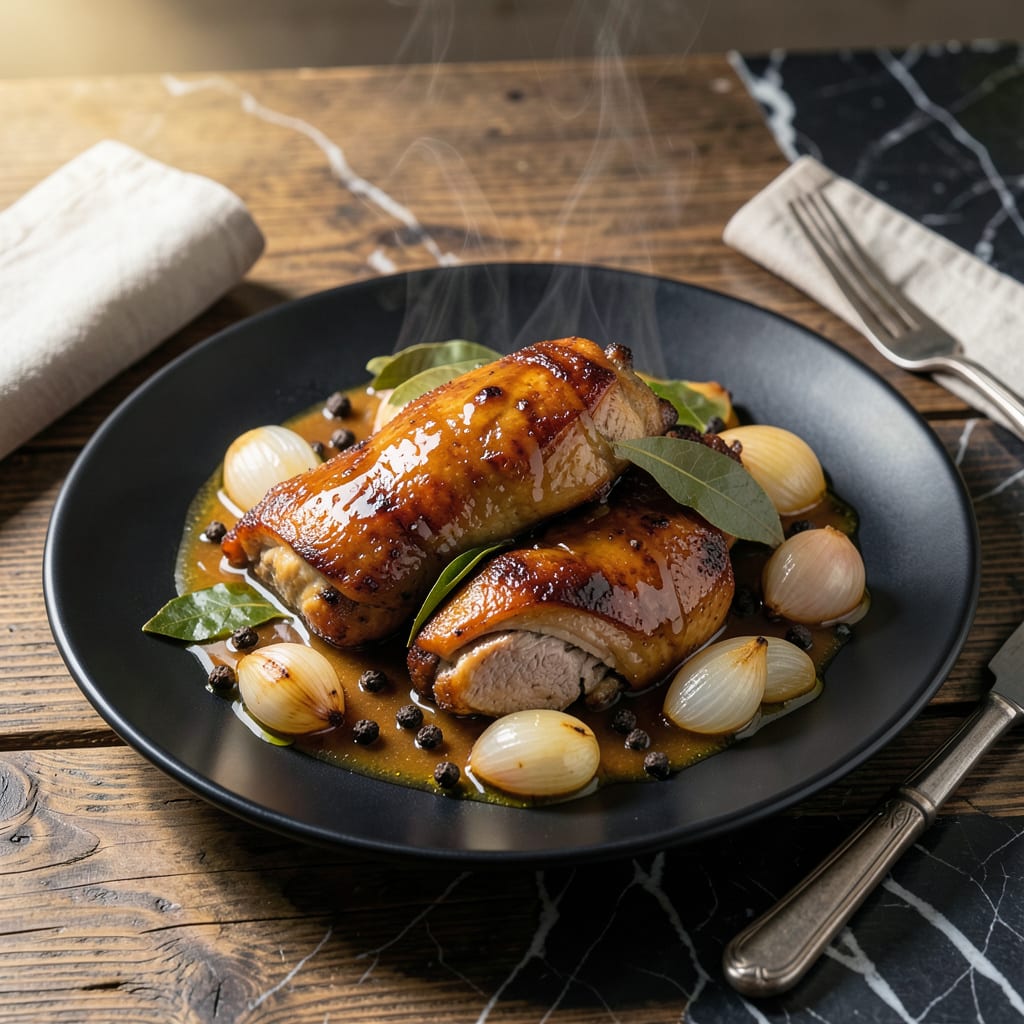
This adobo-inspired chicken delivers bold Filipino flavors with minimal effort. The combination of soy sauce, vinegar, and garlic creates a savory sauce that tenderizes the meat beautifully.
Simmered until fall-off-the-bone tender, this dish proves that authentic taste doesn’t require complicated techniques. The vinegar balances the saltiness while keeping the chicken incredibly juicy.
Ingredients for Chicken Recipe Easy Filipino Style
Bold Filipino flavors start with these pantry staples and fresh ingredients for tender chicken.
| Ingredient | Amount | Notes |
|---|---|---|
| Chicken Thighs 🍗 | 2 lb | Boneless, skinless preferred |
| Soy Sauce 🥄 | ¾ cup | Use low-sodium for balance |
| White Vinegar 💧 | ½ cup | Cane vinegar traditional |
| Garlic Cloves 🧄 | 8 cloves | Minced for maximum flavor |
| Bay Leaves 🍃 | 3 whole | Dried, for aroma |
| Black Peppercorns 🌶️ | 1 tsp | Whole, lightly crushed |
| Brown Sugar 🍚 | 2 tbsp | Balances acidity |
| Onion 🧅 | 1 whole | Yellow or white, sliced |
| Olive Oil 🫒 | 2 tbsp | For searing chicken |
| Water 💧 | ½ cup | To adjust sauce consistency |
| Green Onions 🌱 | ½ cup | Sliced, for garnish |
| Salt 🧂 | ½ tsp | Adjust to taste |
[recipeingredientscaler]
The chicken thighs are non-negotiable for that fall-off-the-bone texture—bone-in works too if you prefer more depth of flavor. Asian markets carry the best soy sauce varieties, but Kikkoman or San-J tamari are widely available. Look for vinegar labeled as ‘cane vinegar’ for authenticity, though white vinegar will do in a pinch. Fresh garlic cloves are essential; pre-minced lacks the punch.
Need to swap the soy sauce? Coconut aminos work for a gluten-free version. No bay leaves? Dried oregano at half the amount adds a similar earthiness. Brown sugar can be replaced with coconut sugar or honey (1:1 ratio). The onion can be red for a slight sweetness twist. For extra richness, add 1 tbsp of fish sauce (optional, but traditional).
This dish actually improves overnight as flavors meld. Store in an airtight container for up to 4 days in the fridge or freeze for 3 months. Reheat gently to maintain the chicken’s juiciness—microwave works but stovetop is better.
Why You’ll Love This Recipe
- One Pan Wonder: I just toss the thighs, soy sauce, vinegar, and garlic into a pot—no fancy prep, no fuss.
- Umami Bomb: The soy and vinegar mix with garlic creates that tangy, savory depth I crave in every bite.
- Feeds a Crowd: Honestly, I double the batch and it’s just as good reheated for lunch the next day.
- Budget Hero: Chicken thighs stay juicy and cheap, and the pantry staples do all the flavor work.
Step-by-Step Instructions for Chicken Adobo
Master this traditional Filipino method with minimal effort and maximum flavor.
Step 1: Sear the Chicken Thighs
Heat the 2 tbsp olive oil in a large, heavy-bottomed pot over medium-high heat. Pat the 2 lb chicken thighs dry with paper towels to ensure proper browning. Season lightly with the 0.5 tsp salt.
Working in batches if necessary, sear the chicken thighs for 3-4 minutes per side until they develop a deep golden-brown crust. Avoid overcrowding the pot to prevent steaming. Transfer the seared thighs to a plate and set aside.
Step 2: Sauté Aromatics and Build the Sauce
In the same pot, add the sliced 1 whole onion and cook for 2-3 minutes until softened and translucent. Stir in the minced 8 cloves garlic cloves and cook for 30 seconds until fragrant but not browned.
Add the 0.75 cup soy sauce, 0.5 cup white vinegar, 2 tbsp brown sugar, 3 whole bay leaves, and 1 tsp black peppercorns. Stir well to combine, ensuring the sugar dissolves completely. Return the chicken thighs to the pot along with any accumulated juices.
Step 3: Simmer to Perfection
Pour in the 0.5 cup water and bring the mixture to a gentle simmer. Reduce the heat to low, cover, and let it cook for 30-35 minutes. Stir occasionally to prevent sticking and ensure even cooking.
After 20 minutes, check that the chicken thighs are becoming tender. The sauce will begin to thicken slightly, and the thighs should easily pull apart with a fork when fully cooked. Adjust the heat as needed to maintain a steady, gentle simmer.
Step 4: Reduce the Sauce and Finish
Once the chicken is tender, remove the lid and increase the heat to medium. Simmer uncovered for an additional 10-12 minutes, allowing the sauce to reduce and intensify in flavor. The sauce should coat the back of a spoon lightly.
Discard the bay leaves and taste the sauce. Adjust seasoning if necessary, though the soy sauce typically provides sufficient saltiness. Return the chicken thighs to the pot, coating them thoroughly in the reduced sauce.
Step 5: Garnish and Serve
Transfer the chicken thighs and sauce to a serving dish. Garnish with the 0.5 cup green onions, sliced thinly. The green onions add a fresh, bright contrast to the rich, savory sauce.
Serve hot with steamed rice to soak up the flavorful sauce. The chicken should be fall-off-the-bone tender, and the sauce should have a balanced sweet, salty, and tangy profile characteristic of classic adobo.
Pro Tips For Making Chicken Recipe Easy Filipino Style
- Marinate Longer: Give the chicken at least 30 minutes in the soy-vinegar-garlic mix—I learned this the hard way when my first batch tasted flat. The vinegar needs time to tenderize and the flavors to really sink in.
- Simmer, Don’t Boil: Once the sauce is in the pan, keep it at a gentle simmer. Boiling makes the soy sauce bitter and the chicken tough, and nobody wants that.
- Crush the Garlic: Smash the garlic cloves lightly before adding them whole. It releases more flavor without the risk of burning minced garlic, and you can pick the cloves out if you prefer.
- Use Thighs, Not Breasts: Chicken thighs stay juicy even with the long cooking time in the tangy sauce. Breasts dry out and turn stringy—trust me, I’ve ruined a few that way.
Dietary Considerations for This Dish
Gluten-Free Option
For gluten-free adobo, swap the soy sauce for coconut aminos or San-J tamari. Both maintain the savory depth while eliminating wheat. I use 1:1 ratio as replacement—no other adjustments needed. 💡
Lower Sodium Version
Use low-sodium soy sauce and reduce the amount to ½ cup. Add extra black peppercorns or freshly ground pepper to compensate for flavor. The vinegar and garlic still deliver big taste without excess salt.
Dairy-Free and Nut-Free
This dish is naturally free from dairy and nuts, making it safe for most allergies. Just double-check your soy sauce label for hidden ingredients. Kikkoman and Silver Swan brands are typically safe choices.
Sugar Alternatives
Replace brown sugar with coconut sugar or honey in 1:1 ratio. Both add the needed sweetness to balance the vinegar’s tang. For a sugar-free version, a pinch of stevia works, though it may alter the sauce texture slightly.
Lower Fat Option
Use skinless chicken thighs or substitute chicken breast for a leaner dish. Note that breast may dry out faster, so reduce simmering time to 20-25 minutes. The flavor remains robust, just less rich.
Vegan Adaptation
Replace chicken with tofu or mushrooms. Press and cube 1 lb firm tofu, then sear before adding to the sauce. Simmer for 15-20 minutes to absorb flavors fully. 🌱
Nutrition Facts
Frequently Asked Questions
Can I use chicken breast instead of thighs?
Yes, but reduce simmering time to 20-25 minutes to prevent dryness. Thighs stay juicier, but breast works if you prefer leaner meat.
Why does the vinegar not make the dish sour?
The vinegar mellows during cooking, balancing soy sauce’s saltiness. Its acidity tenderizes the meat while adding depth, not overpowering tang.
How do I store leftovers?
Keep in an airtight container in the fridge for up to 4 days or freeze for 3 months. Reheat gently to preserve moisture and flavor.
Can I make this without soy sauce?
Use coconut aminos or fish sauce as substitutes. Both provide umami, though flavors will vary slightly from traditional adobo.

- Jollof Rice Sauce Recipe: West African Tomato and Spice Infusion - September 25, 2026
- Japanese Rice Soup Recipe: Umami-Rich Comfort in a Bowl - September 25, 2026
- Homemade Cream Of Rice Recipe: Silk-Smooth Breakfast in Minutes - September 25, 2026