
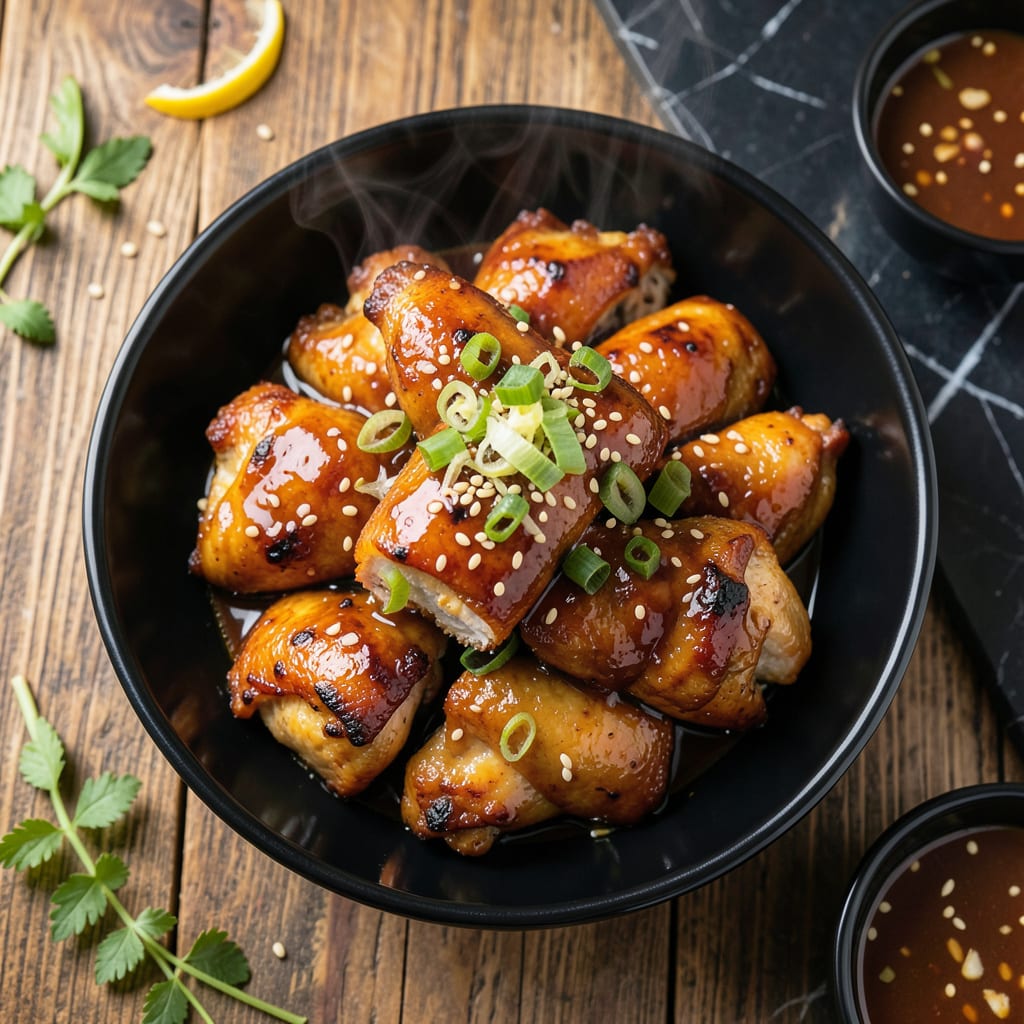
This Filipino-style chicken teriyaki delivers a sweet-savory glaze with bold garlic notes that set it apart from traditional versions. The simple marinade transforms ordinary chicken into something extraordinary with minimal effort.
The cooking process ensures tender meat coated in a thick, glossy sauce that clings perfectly. Serve it over steamed rice to soak up every last drop of that irresistible garlic-infused teriyaki goodness.
Ingredients for Chicken Teriyaki Recipe Easy Filipino Style
A handful of pantry staples transforms chicken into a sweet-savory Filipino teriyaki delight with bold garlic notes.
| Ingredient | Amount | Notes |
|---|---|---|
| Boneless Skinless Chicken Thighs 🍗 | 1 ½ lb | Cut into bite-sized pieces |
| Soy Sauce 🫒 | ½ cup | Use low-sodium if preferred |
| Brown Sugar 🍚 | ⅓ cup | Packed, for caramelization |
| Garlic Cloves 🧄 | 6 cloves | Minced, for bold flavor |
| Rice Vinegar 🍶 | 2 tbsp | Balances sweetness with acidity |
| Fresh Ginger 🌿 | 1 tbsp | Grated, enhances depth |
| Cornstarch 🌾 | 1 tbsp | Mixed with water for slurry |
| Water 💧 | 2 tbsp | For cornstarch slurry |
| Vegetable Oil 🫒 | 2 tbsp | For searing chicken |
| Sesame Oil 🫒 | 1 tsp | Toasted, for finishing |
| Green Onions 🧅 | 3 whole | Sliced, for garnish |
| Steamed Rice 🍚 | 2 cups | Cooked, for serving |
| Black Pepper 🌶️ | ½ tsp | Freshly ground preferred |
[recipeingredientscaler]
The soy sauce is foundational here—Kikkoman or Silver Swan (a Filipino favorite) for authentic flavor. Chicken thighs stay juicier than breasts during cooking; source air-chilled, skinless from Whole Foods or your local butcher. Fresh ginger and garlic are non-negotiable for that signature Filipino aromatic base. Look for vibrant green onions with crisp stems for garnish.
No brown sugar? Coconut sugar at a 1:1 ratio works well. Substitute apple cider vinegar for rice vinegar if needed. For gluten-free, use tamari instead of soy sauce. Fresh ginger can be swapped with one-third the amount of ground ginger, but fresh delivers superior brightness. Chicken breasts can replace thighs, but reduce cooking time by 2-3 minutes.
The cooked chicken keeps for 4 days refrigerated in an airtight container. The sauce thickens further upon cooling—reheat gently with a splash of water. For meal prep, store chicken and rice separately to maintain texture. Freezes well for up to 3 months (thaw overnight before reheating).
Why You’ll Love This Recipe
- One Pan Dinner: I throw everything in a single skillet—chicken, soy sauce, brown sugar, garlic—and let the magic happen while I fold laundry.
- Sweet-Savory Bomb: The brown sugar caramelizes with the soy sauce, and the garlic? Honestly, it makes the sauce so good I could drink it with a straw.
- Weeknight Hero: Between us, this is my Tuesday night lifesaver—ready before the kids start asking what’s for dinner.
- Budget Stretcher: Boneless thighs stay juicy and cost half as much as breasts, and the sauce is so flavorful leftovers disappear fast.
Step-by-Step Instructions for Chicken Teriyaki Filipino Style
Here’s the method. Straightforward, tested, works every time.
Step 1: Prepare the Teriyaki Marinade
In a bowl, whisk together the 0.5 cup Soy Sauce, 0.33 cup Brown Sugar, minced 6 cloves Garlic Cloves, 2 tbsp Rice Vinegar, and grated 1 tbsp Fresh Ginger until the sugar dissolves completely. I like to press the sugar against the bowl to help it break down faster.
The mixture should look glossy and slightly thickened from the sugar. This balance of sweet, salty, and tangy is what makes the Filipino-style teriyaki distinct. Set it aside while you prep the chicken.
Step 2: Sear the Chicken Thighs
Cut the 1.5 lb Boneless Skinless Chicken Thighs into bite-sized pieces and pat them dry with paper towels. Season lightly with 0.5 tsp Black Pepper—the soy sauce in the marinade will provide enough saltiness.
Heat the 2 tbsp Vegetable Oil in a large skillet over medium-high heat until shimmering. Add the chicken in a single layer, working in batches if needed to avoid crowding. Sear for 4-5 minutes until the pieces are golden brown on both sides and cooked through. Remove from the skillet and set aside.
Step 3: Simmer in the Teriyaki Sauce
Pour the prepared marinade into the same skillet and bring to a gentle boil over medium heat. Let it simmer for 2-3 minutes to meld the flavors and slightly reduce the sauce.
Return the seared chicken to the skillet, coating each piece in the sauce. Reduce the heat to medium-low and let it simmer for another 3-4 minutes, allowing the chicken to soak up the flavors.
Step 4: Thicken and Finish
In a small bowl, mix the 1 tbsp Cornstarch with the 2 tbsp Water to create a slurry. Stir this into the skillet and cook for an additional 1-2 minutes until the sauce thickens to a glossy, syrup-like consistency that coats the back of a spoon.
Remove from heat and stir in the 1 tsp Sesame Oil. This adds a nutty depth that complements the sweet-savory profile. The sauce should cling beautifully to the chicken, creating that signature teriyaki glaze.
Step 5: Garnish and Serve
Transfer the chicken and sauce to a serving dish. Garnish with sliced 3 whole Green Onions for a fresh, oniony bite. Serve immediately over 2 cups Steamed Rice to soak up every bit of the rich, glossy sauce.
The chicken should be tender and juicy, with a deep mahogany glaze that shines under the light. Each bite delivers the perfect balance of sweetness from the caramelized sugar, umami from the soy, and a subtle garlic-ginger warmth.
Pro Tips For Making Chicken Teriyaki Recipe Easy Filipino Style
- Pre-cook the sauce: Simmer the soy sauce, brown sugar, garlic, and rice vinegar for 3-4 minutes before adding the chicken—this deepens the flavor and prevents a watery teriyaki glaze.
- Score the thighs: Make shallow cuts across the chicken thighs so the sauce penetrates better and they cook more evenly.
- Don’t overcrowd the pan: I learned this the hard way—cook the chicken in batches if needed, otherwise it steams instead of searing, and the sauce won’t thicken properly.
- Use a lid briefly: After browning the chicken, cover the pan for 2-3 minutes to speed up cooking without drying out the thighs.
Dietary Considerations for These Flavors
Gluten-Free Adaptation
For gluten sensitivity, swap regular soy sauce for tamari—it’s naturally gluten-free and delivers the same umami depth. I’ve tested this with San-J Tamari and it works perfectly. The flavor remains rich and balanced. 💡
Lower Sodium Option
Use low-sodium soy sauce or coconut aminos to reduce salt content by up to 40%. The dish still packs bold flavor, especially with the garlic and ginger. I often use Kikkoman Low-Sodium for my family.
Sugar Alternatives
Replace brown sugar with coconut sugar at a 1:1 ratio for a lower glycemic index. The caramelization is just as good, with a slight molasses note. Honey works too, but reduce by 25% to avoid over-sweetening.
Protein Swaps
For a leaner version, use boneless chicken breast instead of thighs, but reduce cooking time by 2-3 minutes. Tofu or shrimp also work—press tofu first for better sauce absorption. I’ve had great results with extra-firm tofu.
Dairy-Free Note
This recipe is naturally dairy-free, so no modifications are needed. The sauce relies on soy, sugar, and aromatics—no butter or cream. Perfect for lactose-intolerant diners or vegan adaptations with tofu. ✨
Allergen Awareness
Check soy sauce labels for wheat if gluten is a concern. Sesame oil is the only tree nut-derived ingredient here. For nut allergies, omit it or use a neutral oil like avocado instead.
Nutrition Facts
Frequently Asked Questions
Can I use chicken breast instead of thighs?
Yes, but reduce cooking time by 2-3 minutes since breasts dry out faster. Thighs are preferred for their juiciness and ability to absorb the bold Filipino-style flavors better.
Why does this recipe use so much garlic?
The extra garlic is the signature Filipino touch that sets it apart from Japanese teriyaki. It adds a robust, savory depth that balances the sweetness perfectly. Don’t skimp—it’s key to the authentic taste.
How do I prevent the sauce from being too thin?

- Jollof Rice Sauce Recipe: West African Tomato and Spice Infusion - September 25, 2026
- Japanese Rice Soup Recipe: Umami-Rich Comfort in a Bowl - September 25, 2026
- Homemade Cream Of Rice Recipe: Silk-Smooth Breakfast in Minutes - September 25, 2026