
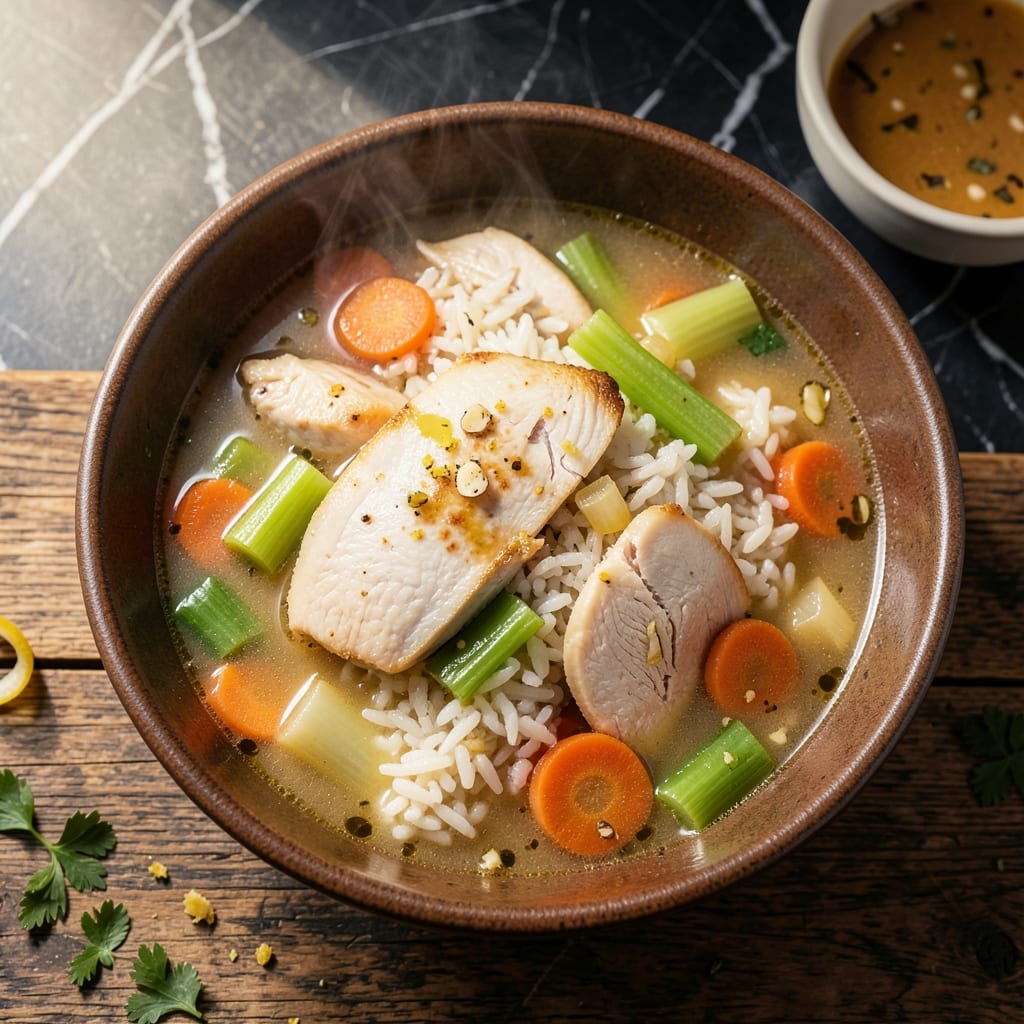
There’s nothing quite like a warm bowl of chicken soup to bring comfort to the table. This version combines tender chicken, hearty rice, and garden-fresh vegetables for a meal that soothes the soul.
The secret lies in the slow simmer, which allows the flavors to meld together beautifully. With simple ingredients and a straightforward method, this soup delivers restaurant-quality results without the fuss.
You’ll end up with a broth that’s rich and aromatic, packed with chunks of chicken, fluffy rice, and colorful vegetables. It’s the kind of dish that warms you from the inside out.
Perfect for chilly evenings or when you need a little extra nourishment. Here’s how to make it.
Ingredients for Chicken Rice and Vegetable Soup
Warm, comforting, and packed with garden-fresh veggies and tender chicken pieces.
| Ingredient | Amount | Notes |
|---|---|---|
| Boneless Chicken Breast 🍗 | 1 ½ lb | Cut into bite-sized pieces |
| Long-Grain White Rice 🍚 | ¾ cup | Uncooked, rinsed before use |
| Carrots 🥕 | 2 whole | Peeled and diced |
| Celery Stalks 🌿 | 2 whole | Diced for base flavor |
| Yellow Onion 🧅 | 1 whole | Medium, finely chopped |
| Garlic Cloves 🧄 | 3 cloves | Minced for depth |
| Chicken Broth 💧 | 8 cups | Low-sodium preferred |
| Zucchini 🥒 | 1 whole | Diced into small cubes |
| Green Beans 🌱 | 1 cup | Trimmed and cut |
| Canned Diced Tomatoes 🍅 | 1 can | 14.5 oz, undrained |
| Fresh Parsley 🌿 | ¼ cup | Chopped, for garnish |
| Olive Oil 🫒 | 2 tbsp | For sautéing vegetables |
| Dried Thyme 🍃 | 1 tsp | For aromatic depth |
| Bay Leaf 🍃 | 1 whole | Removed before serving |
| Salt 🧂 | 1 tsp | Adjust to taste |
| Black Pepper 🌶️ | ½ tsp | Freshly ground preferred |
The chicken here should be fresh—look for bright pink color with no gray spots. I grab mine from Whole Foods or the local butcher when I want extra quality. The rice matters too: jasmine or basmati work better than instant. For the broth, low-sodium lets you control the salt. Farmers markets often have the best carrots and celery (the ones with leaves still attached).
No chicken breast? Thighs work great—they’re juicier and hold up better in soup. Swap zucchini for yellow squash if that’s what’s in season. Fresh herbs can replace dried at triple the amount. Out of green beans? Frozen peas (tossed in at the end) work in a pinch. The canned tomatoes can be fresh—just add an extra cup of broth to compensate.
This soup tastes even better the next day after the flavors meld. Stores in the fridge for 4-5 days or freeze for 3 months. I like to portion it into containers for easy grab-and-go lunches (worth the extra minute).
Why You’ll Love This Recipe
- One Pot Wonder: I toss everything in at once—chicken, rice, carrots, celery—and let it simmer. Honestly, cleanup is just one pot and a cutting board.
- Rich Homemade Taste: The onion and celery sweat down into the broth, giving it that deep, cozy flavor you’d expect from hours of cooking.
- Meal Prep Magic: I make a big batch on Sunday and it reheats beautifully all week. My kids even eat the carrots without complaining.
- Budget Stretcher: A pound of chicken breast and a handful of rice feeds my family for two nights. Between us, it’s cheaper than takeout and twice as satisfying.
Step-by-Step Instructions for Chicken Rice and Vegetable Soup
This comforting bowl comes together with simple steps and everyday ingredients.
Step 1: Sauté the Aromatic Base
Heat the 2 tbsp olive oil in a large pot over medium heat. Add the finely chopped yellow onion, diced carrots, and diced celery stalks. Cook for 5-6 minutes until the vegetables soften and the onion becomes translucent.
Stir in the minced garlic cloves and cook for 30 seconds until fragrant. This builds the flavor foundation that makes the soup so satisfying. Watch for the edges of the onion to turn slightly golden.
Step 2: Brown the Chicken and Add Broth
Add the bite-sized pieces of boneless chicken breast to the pot. Cook for 3-4 minutes, stirring occasionally, until the chicken loses its pink color on the outside. It doesn’t need to be fully cooked yet.
Pour in all 8 cups chicken broth, then stir in the 1 can canned diced tomatoes with their juices, 1 tsp dried thyme, 1 whole bay leaf, 1 tsp salt, and 0.5 tsp black pepper. Bring to a gentle boil.
Step 3: Simmer with Rice and Vegetables
Stir in the rinsed 0.75 cup long-grain white rice, diced zucchini, and trimmed green beans. Reduce heat to medium-low and let the soup simmer uncovered for 15 minutes, stirring occasionally.
You’ll see the rice start to plump and the vegetables turn bright and tender. Keep an eye on the liquid level—if it reduces too much, add a little water. The chicken should be fully cooked through at this point.
Step 4: Finish and Serve
Remove the bay leaf and discard it. Taste the soup and adjust seasoning with more salt or black pepper if needed. The rice should be tender, and the broth should have a rich, savory depth.
Ladle the soup into bowls and sprinkle each serving with the chopped 0.25 cup fresh parsley. Serve hot for a meal that’s as nourishing as it is delicious. The parsley adds a fresh, bright finish that lifts every bite.
Pro Tips For Making Chicken Rice And Vegetable Soup
- Shred Warm Chicken: Let the chicken rest 5 minutes after cooking, then shred it while still warm—it absorbs broth better than cold, rubbery bits. I learned this the hard way after chewing on dry strips too many times.
- Toast the Rice: Before adding liquid, sauté the rice in the pot for 2-3 minutes with a little oil. Sounds weird, but it works: it keeps the grains from turning mushy and adds a nutty depth.
- Skip Raw Onions: Sweat the yellow onion with carrots and celery first—dumping them in raw leaves a harsh bite. After burning three batches, I finally figured out patience here actually changes the outcome.
- Use Chicken Stock: Swap water for stock, even if it’s just bouillon cubes in a pinch. My grandmother swore by this, and she was right: it turns a bland broth into something worth slurping.
Make-Ahead Tips for This Dish
Overnight Flavor Boost
This soup actually tastes better the next day after the flavors have time to meld. I always make a double batch and let it sit in the fridge overnight. The rice will absorb some broth, so add ½-1 cup water when reheating. 💡
Fridge Storage
Store cooled soup in airtight containers for up to 4-5 days. I use glass Pyrex containers—they’re sturdy and let me see the contents. The vegetables will soften more over time, but the flavor remains excellent.
Freezer Meal Prep
Portion into freezer-safe containers (leave 1-inch headspace) and freeze for up to 3 months. I prefer wide-mouth mason jars for single servings—they’re perfect for grab-and-go lunches. Thaw overnight in the fridge before reheating.
Rice Consideration
If freezing, slightly undercook the rice (12 minutes simmering instead of 15) to prevent mushiness. Or cook the rice separately and add it fresh when serving. This keeps the texture perfect every time.
Reheating Tips
Warm on the stovetop over medium-low heat for 10-15 minutes, stirring occasionally. Add a splash of broth or water if it’s too thick. Avoid microwaving if possible—it can make the chicken rubbery. ❄️
Garnish Fresh
Always add fresh parsley right before serving for that bright, vibrant finish. If storing garnished soup, keep the parsley separate and add it when reheating to maintain its fresh color and flavor.
Nutrition Facts
Frequently Asked Questions
Can I use brown rice instead?
Yes, but adjust the cooking time. Brown rice needs 30-40 minutes to soften, so add it with the broth and simmer longer. Check for doneness before serving.
What if my soup turns out too thick?
Simply thin it with extra broth or water. Add ½ cup at a time until you reach your desired consistency. Stir well and taste for seasoning.
How do I prevent the chicken from drying out?
Don’t overcook it! Remove the pot from heat as soon as the chicken reaches 165°F. It will finish cooking while resting in the hot broth.
Can I add other vegetables?
Try bell peppers, spinach, or mushrooms. Add hearty veggies with the broth and delicate ones like spinach 5 minutes before serving.

- Jollof Rice Sauce Recipe: West African Tomato and Spice Infusion - September 25, 2026
- Japanese Rice Soup Recipe: Umami-Rich Comfort in a Bowl - September 25, 2026
- Homemade Cream Of Rice Recipe: Silk-Smooth Breakfast in Minutes - September 25, 2026