
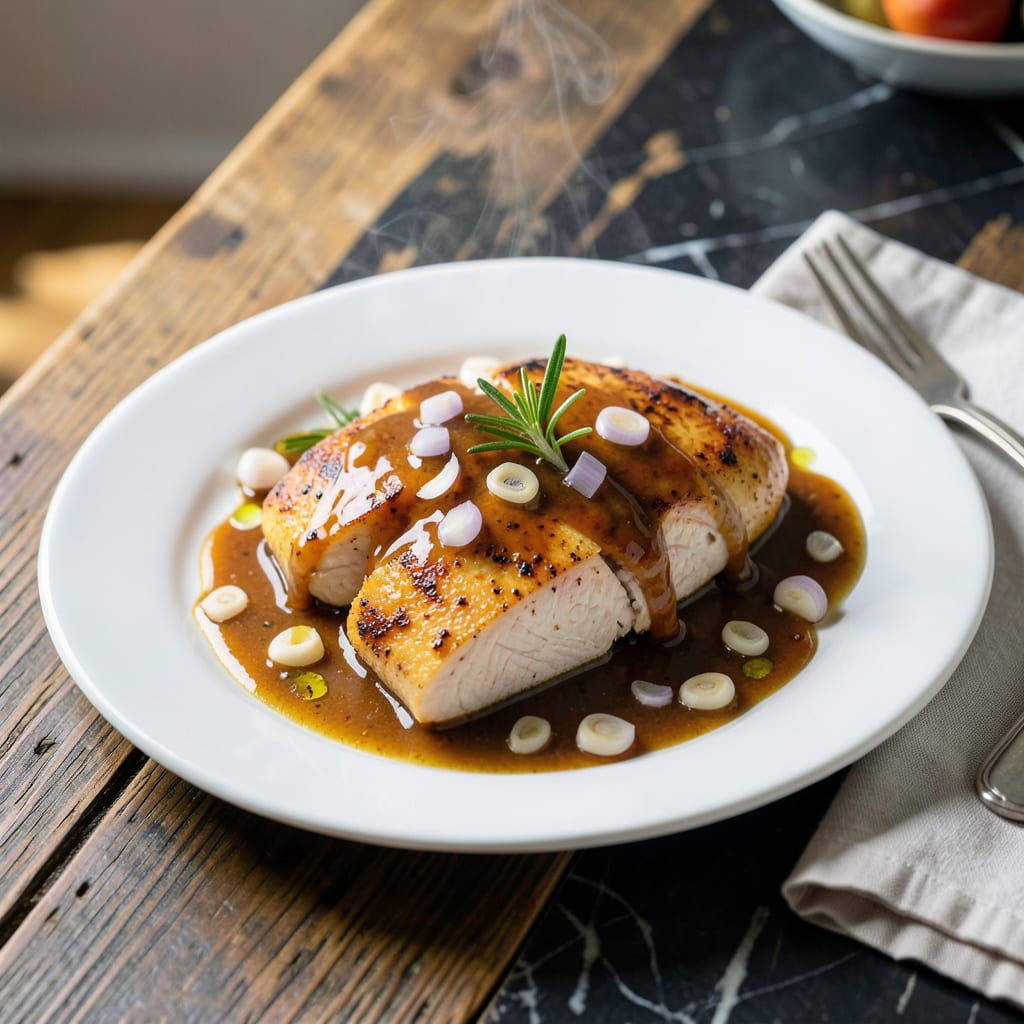
This chicken romano sauce recipe delivers a velvety tomato-parmesan blend that transforms simple chicken into a restaurant-worthy dish. The sauce comes together quickly with pantry staples.
You’ll achieve tender chicken coated in a rich, creamy sauce that balances tangy tomatoes with nutty parmesan. Perfect for weeknight dinners with minimal effort and maximum flavor.
Ingredients for Chicken Romano Sauce
Velvety tomato-parmesan sauce transforms simple chicken into a restaurant-worthy dish with pantry staples.
| Ingredient | Amount | Notes |
|---|---|---|
| Boneless Skinless Chicken Breasts 🍗 | 1 ½ lb | Pounded to even thickness |
| Olive Oil 🫒 | 2 tbsp | Divided for cooking |
| All-Purpose Flour 🌾 | ¼ cup | For light dredging |
| Garlic Cloves 🧄 | 4 cloves | Minced for sauce base |
| Shallot 🧅 | 1 whole | Finely diced for depth |
| Dry White Wine 🍷 | ½ cup | For deglazing pan |
| Crushed Tomatoes 🍅 | 1 can | 28 oz can, San Marzano preferred |
| Heavy Cream 🥛 | ¾ cup | Full-fat for creaminess |
| Parmesan Cheese 🧀 | 1 cup | Freshly grated from wedge |
| Dried Basil 🌿 | 1 tsp | Or 1 tbsp fresh chopped |
| Dried Oregano 🍃 | 1 tsp | Mediterranean variety preferred |
| Red Pepper Flakes 🌶️ | ¼ tsp | Optional for subtle heat |
| Kosher Salt 🧂 | 1 tsp | Diamond Crystal preferred |
| Freshly Ground Black Pepper 🌶️ | ½ tsp | To taste for finishing |
| Fresh Parsley 🌿 | 2 tbsp | Chopped for garnish |
[recipeingredientscaler]
The Parmesan is non-negotiable for authentic flavor. Grab a wedge of Parmigiano-Reggiano from Whole Foods or a specialty grocer—pre-grated lacks the depth and melts poorly. The crushed tomatoes make or break the sauce: San Marzano brands offer superior sweetness and low acidity. For the wine, any dry white like Pinot Grigio works perfectly (don’t waste expensive stuff here).
No white wine? Chicken broth with 1 tbsp lemon juice mimics the acidity. Heavy cream can be swapped for half-and-half (less rich) or full-fat coconut milk for a dairy-free version. Out of fresh parsley? Dried parsley at one-third the amount works, though fresh brings better color. The flour dredge can be skipped for gluten-free, but the sauce won’t cling as well to the chicken.
Sauce keeps 4-5 days refrigerated in an airtight container. Reheat gently to avoid separation. The cooked chicken is best served immediately but holds for 3 days. Freeze sauce alone for up to 3 months—thaw overnight before reheating.
Why You’ll Love This Recipe
- One Pan Wonder: I love that everything cooks in a single skillet—chicken, garlic, shallots, and that rich romano sauce.
- Garlic Lover’s Dream: The combo of garlic and shallot in the sauce gives it this deep, savory warmth that’s honestly irresistible.
- Weeknight Hero: Between us, this is my go-to when I need dinner on the table fast but still want it to feel special.
- Budget-Friendly Feast: Boneless chicken breasts stretch far, and a little flour and olive oil turn them into something restaurant-worthy.
Step-by-Step Instructions for Chicken Romano Sauce
Master this technique for a restaurant-quality dish with rich tomato and parmesan depth.
Step 1: Prepare and Sear the Chicken
Pound the 1.5 lb boneless skinless chicken breasts to an even ½-inch thickness between plastic wrap. This ensures even cooking and prevents dry, overdone edges. Season both sides with 1 tsp kosher salt and 0.5 tsp freshly ground black pepper.
Heat 1 tbsp olive oil in a large skillet over medium-high heat until shimmering. Dredge the chicken lightly in 0.25 cup all-purpose flour, shaking off excess. Sear for 4-5 minutes per side until golden brown and just cooked through. Transfer to a plate and tent with foil to retain warmth.
Step 2: Build the Aromatic Base
In the same skillet, add the remaining 1 tbsp olive oil and reduce heat to medium. Add the finely diced shallot and cook for 3-4 minutes until softened and translucent. Stir in the 4 minced garlic cloves and cook for 30 seconds until fragrant—don’t let it brown.
Add 1 tsp dried basil, 1 tsp dried oregano, and 0.25 tsp red pepper flakes. Toast the spices for 20 seconds to bloom their flavors, stirring constantly. This step creates the aromatic foundation that defines the dish’s character.
Step 3: Deglaze and Simmer the Sauce
Pour in 0.5 cup dry white wine and scrape up all browned bits from the pan with a wooden spoon. Let it reduce by half, about 3-4 minutes. This deglazing step captures all the concentrated chicken flavor trapped in those browned bits.
Stir in 1 can crushed tomatoes and simmer for 8-10 minutes until the sauce thickens slightly. Reduce heat to low and add 0.75 cup heavy cream, stirring to combine. The sauce should coat the back of a spoon with a velvety texture.
Step 4: Finish with Parmesan and Chicken
Gradually whisk in 1 cup parmesan cheese until fully melted and smooth. Return the chicken to the skillet along with any accumulated juices. Spoon the sauce over the chicken and simmer on low heat for 2-3 minutes to meld the flavors.
Garnish with 2 tbsp fresh parsley and serve immediately. The parmesan should create a rich, creamy texture that clings to the chicken, while the tomato sauce provides bright acidity to balance the dish perfectly.
Pro Tips For Making Chicken Romano Sauce
- Pound the Chicken: Use the flat side of a meat mallet to pound the chicken breasts to an even 1/2-inch thickness. I learned this the hard way—uneven pieces cook at different rates, leaving some dry while others stay raw.
- Toast the Flour: After coating the chicken in flour, let it sit for 5 minutes before browning. Sounds weird, but it works: the flour forms a better crust and the sauce clings better to the chicken.
- Skip Raw Garlic: Sauté the minced garlic and shallot in olive oil until just fragrant—about 30 seconds—before adding liquids. After burning three batches, I finally figured out that raw garlic turns bitter in the sauce.
- Deglaze Immediately: Pour in your liquid (wine, broth, etc.) right after removing the chicken to scrape up those browned bits. This isn’t the prettiest step, but it’s the tastiest—all that flavor belongs in your Romano sauce.
Storing and Reheating This Dish
Refrigerator Storage
Let the dish cool for no more than 2 hours before transferring to airtight containers—I use glass ones with snap-tight lids. Store in the fridge at 40°F or below for up to 3 days. The flavors meld beautifully overnight. ❄️
Freezer Storage
This creation freezes well for up to 3 months. I recommend separating the sauce and chicken for best results. Use quart-sized freezer bags, leaving 1 inch of headspace for expansion. Squeeze out excess air to prevent freezer burn.
Stovetop Reheating
Gently reheat in a saucepan over low-medium heat, stirring occasionally. Add 2-3 tbsp milk or broth if the sauce thickens too much. Heat until reaching 165°F internally, about 8-10 minutes. 🔥
Microwave Reheating
Place individual portions in a microwave-safe dish, cover with a damp paper towel, and heat on 70% power for 2-3 minutes. Stir, then continue in 30-second intervals until warmed through.
Nutrition Facts
Frequently Asked Questions
Can I use chicken thighs instead of breasts?
Boneless, skinless thighs work beautifully and stay juicier. Adjust cooking time to 5-6 minutes per side since they’re slightly thicker. They also hold up better to reheating.
What if my sauce is too thin?
Simmer uncovered for 3-5 extra minutes to reduce. For quick fixes, mix 1 tbsp cornstarch with 1 tbsp cold water and stir into the sauce until thickened. Avoid high heat to prevent curdling.
Can I make this dairy-free?
Yes! Swap heavy cream for full-fat coconut milk and use vegan parmesan. The flavor profile changes slightly but remains rich and satisfying.
How do I prevent the sauce from separating?
Keep heat at low-medium and stir frequently. If it does separate, whisk vigorously or blend briefly with an immersion blender to re-emulsify.

- Jollof Rice Sauce Recipe: West African Tomato and Spice Infusion - September 25, 2026
- Japanese Rice Soup Recipe: Umami-Rich Comfort in a Bowl - September 25, 2026
- Homemade Cream Of Rice Recipe: Silk-Smooth Breakfast in Minutes - September 25, 2026