
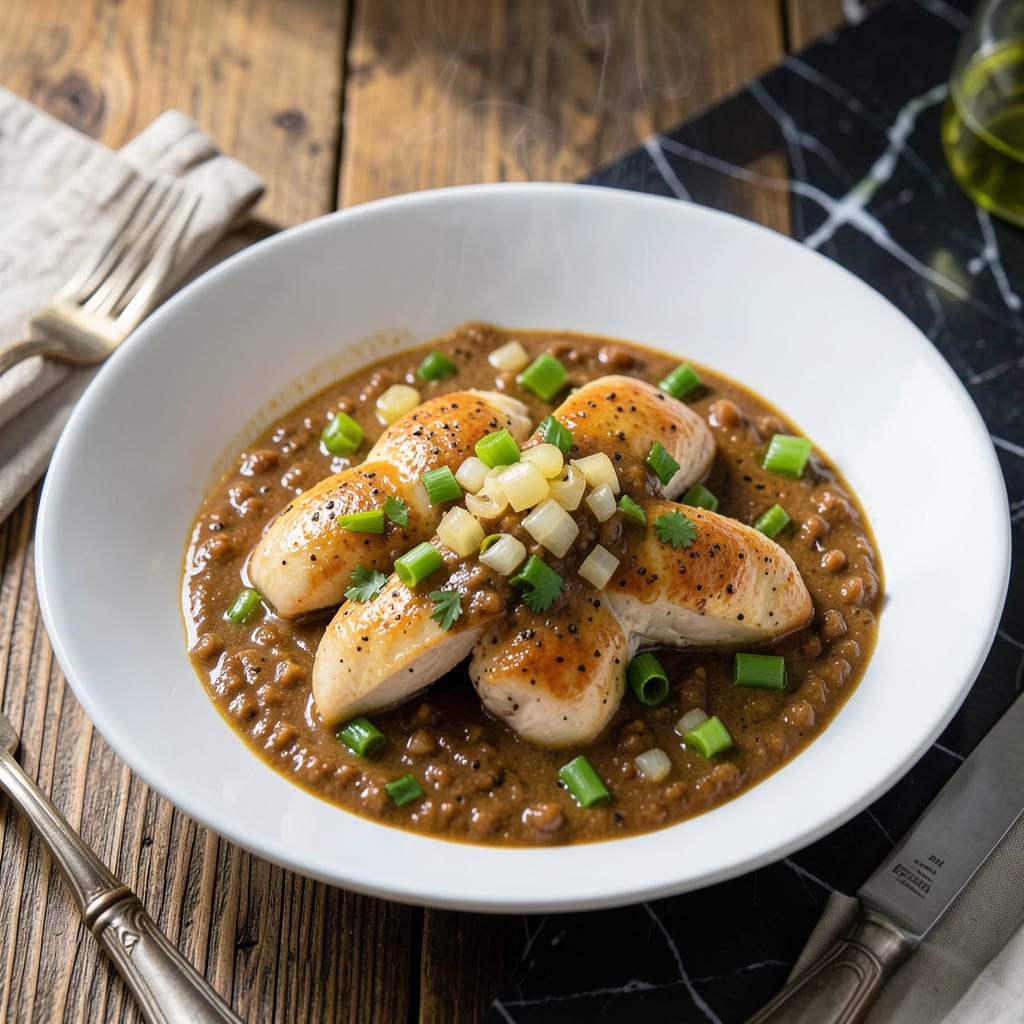
This classic chicken roux sauce forms the velvety foundation for countless Creole dishes. I rely on this proven technique to create a rich, smooth base that enhances any recipe.
By mastering the simple process of combining fat and flour, then gradually adding stock, you’ll achieve a perfectly thickened sauce with deep, complex flavor every time. The key is patience and constant stirring.
Ingredients for Chicken Roux Sauce
Ten ingredients build this velvety Creole foundation with professional technique and rich flavor.
| Ingredient | Amount | Notes |
|---|---|---|
| Unsalted Butter 🧈 | ½ cup | High-fat for rich roux |
| All-Purpose Flour 🌾 | ½ cup | For thickening base |
| Chicken Stock 🍲 | 3 cups | Homemade or low-sodium preferred |
| Yellow Onion 🧅 | 1 whole | Finely diced for flavor base |
| Celery Stalks 🥬 | 2 pieces | Diced, part of holy trinity |
| Green Bell Pepper 🌶️ | 1 whole | Diced, completes holy trinity |
| Garlic Cloves 🧄 | 3 cloves | Minced for aromatic depth |
| Kosher Salt 🧂 | 1 tsp | Diamond Crystal preferred |
| Freshly Ground Black Pepper 🌶️ | ½ tsp | For seasoning to taste |
| Cayenne Pepper 🔥 | ¼ tsp | For subtle Creole heat |
[recipeingredientscaler]
The roux demands attention to detail. Unsalted butter allows precise seasoning control, while all-purpose flour creates the perfect thickening base. For stock, homemade chicken stock delivers superior depth, though low-sodium store-bought from Whole Foods or Trader Joe’s works in a pinch. The holy trinity (onion, celery, bell pepper) must be finely diced for even cooking and proper integration.
Substitutions require care. Vegetable oil or bacon fat can replace butter for a darker roux, though flavor will differ. Gluten-free flour blends work but may alter texture. For the holy trinity, shallots can stand in for onion, and fennel can replace celery in a pinch. Adjust cayenne to taste—one-eighth teaspoon for mild heat, half teaspoon for a spicier kick.
The sauce keeps well but thickens as it cools. Store in an airtight container in the fridge for up to 5 days, or freeze for 3 months. Reheat gently with a splash of stock to restore consistency. The roux base itself can be made ahead and stored separately for 1 week refrigerated.
Why You’ll Love This Recipe
- One Pot Wonder: I love that this comes together in a single saucepan—no fancy equipment, just butter, flour, and stock doing the heavy lifting.
- Rich and Velvety: The butter and flour create this luscious, silky base that soaks up all the onion and celery flavor.
- Endless Uses: Honestly, I’ve drizzled it over mashed potatoes, stirred it into pasta, and even used it as a gravy for roasted chicken.
- Budget Stretcher: Between us, it costs pennies to make and turns a simple chicken breast into a restaurant-worthy meal.
Step-by-Step Instructions for Chicken Roux Sauce
Master the technique for this foundational sauce with precise timing and texture cues.
Step 1: Create a Rich Roux Base
Melt the 0.5 cup unsalted butter in a heavy-bottomed pot over medium heat. As it melts, watch for the foaming to subside—that’s your signal it’s ready for the next step.
Gradually whisk in the 0.5 cup all-purpose flour, adding it in small increments to prevent lumping. Continue whisking constantly for 10-12 minutes until the mixture turns a deep peanut butter color. This slow cooking removes the raw flour taste and develops the nutty depth essential to the sauce. If it browns too quickly, reduce the heat slightly—patience is key here.
Step 2: Build the Flavor Foundation
Immediately add the 1 whole yellow onion, 2 pieces celery stalks, and 1 whole green bell pepper (all finely diced) to the roux. Stir to coat the vegetables in the hot mixture. Cook for 5-7 minutes until the vegetables soften and the raw edge is gone from the roux.
Add the 3 cloves garlic cloves (minced) and cook for an additional 1-2 minutes until fragrant. Be careful not to let the garlic burn—it should smell sweet and aromatic, not bitter. This holy trinity of vegetables forms the aromatic base that defines the sauce’s character.
Step 3: Deglaze and Simmer to Perfection
Slowly pour in the 3 cups chicken stock, whisking constantly to incorporate it fully into the roux. The mixture will thicken initially, then loosen as more liquid is added. Bring to a gentle simmer, then reduce heat to low.
Simmer uncovered for 20-25 minutes, stirring occasionally, until the sauce coats the back of a spoon and has reduced slightly. The vegetables will have broken down into the sauce, and the roux will have fully integrated, creating a velvety texture. Skim off any foam that rises to the surface for a cleaner finish.
Step 4: Season and Finish
Stir in the 1 tsp kosher salt, 0.5 tsp freshly ground black pepper, and 0.25 tsp cayenne pepper. Taste and adjust seasoning as needed—the cayenne should provide a subtle warmth, not overpowering heat.
Remove from heat and let the sauce rest for 5 minutes before using. The flavors will meld during this time, and the sauce will thicken slightly as it cools. Strain if a smoother consistency is desired, though I prefer the rustic texture with the finely diced vegetables.
Pro Tips For Making Chicken Roux Sauce
- Cook the Roux Slow: Keep the heat at medium-low and stir constantly until the butter-flour mixture turns a light golden brown—about 5-7 minutes. I learned this the hard way after burning two batches by rushing it on high heat.
- Slice Veggies Fine: Dice the onion and celery into small, even pieces so they soften quickly and blend smoothly into the sauce. Sounds tedious, but it actually changes the outcome.
- Skip Cold Stock: Use room-temperature or warm chicken stock to prevent the roux from seizing up. After adding cold stock once, I finally figured out why my sauce turned lumpy.
- Strain for Silkiness: Pour the finished sauce through a fine-mesh strainer to remove the celery and onion bits. This isn’t the prettiest method, but it’s the tastiest way to get a velvety texture.
Creative Variations of These Flavors
Creole Étouffée Style
Transform this base into a seafood étouffée by adding 1 lb crawfish tails or shrimp during the final 10 minutes of simmering. Stir in 1 tbsp filé powder at the end for authentic Louisiana thickness and earthy depth. 🦞
Chicken Gravy Adaptation
For a comforting gravy, replace 1 cup chicken stock with whole milk and add 2 cups shredded cooked chicken after simmering. This creates a rich, creamy gravy perfect for biscuits or mashed potatoes.
Spicy Cajun Twist
Increase the heat by adding 1 tbsp Cajun seasoning (I use Tony Chachere’s) with the salt and pepper. Stir in 1 diced andouille sausage with the holy trinity for a bold, smoky flavor. 🔥
Vegetarian Mushroom Version
Swap chicken stock for vegetable stock and add 2 cups sliced mushrooms with the holy trinity. The mushrooms absorb the roux beautifully, creating a rich, umami-packed vegetarian sauce.
Cheesy Chicken Sauce
Stir in 1 cup shredded sharp cheddar and ½ cup grated Parmesan at the end for a decadent cheese sauce. This works wonderfully for mac and cheese or as a topping for baked potatoes.
Herb-Infused Variation
Add 1 tbsp fresh thyme and 2 bay leaves when simmering for a fragrant herb-infused sauce. Remove the bay leaves before serving. This pairs perfectly with roasted chicken or turkey. ✨
Nutrition Facts
Frequently Asked Questions
How can I tell when my roux is done?
Your roux reaches perfect color at a deep peanut butter shade after 10-12 minutes of constant stirring. It should smell nutty, not burnt. If it darkens too quickly, lower the heat to prevent scorching.
Can I make this sauce gluten-free?
Yes! Swap the all-purpose flour for a gluten-free 1:1 blend. The texture may vary slightly, so whisk vigorously to avoid lumps. Taste before seasoning, as some blends contain salt.
Why did my sauce turn lumpy?
Lumps usually form when stock is added too quickly. Always whisk constantly while pouring in liquid. If lumps appear, blend with an immersion blender to smooth it out.
How long does this sauce keep?
Store in an airtight container in the fridge for up to 5 days, or freeze for 3 months. Reheat gently with a splash of stock to restore creaminess.

- Jollof Rice Sauce Recipe: West African Tomato and Spice Infusion - September 25, 2026
- Japanese Rice Soup Recipe: Umami-Rich Comfort in a Bowl - September 25, 2026
- Homemade Cream Of Rice Recipe: Silk-Smooth Breakfast in Minutes - September 25, 2026