
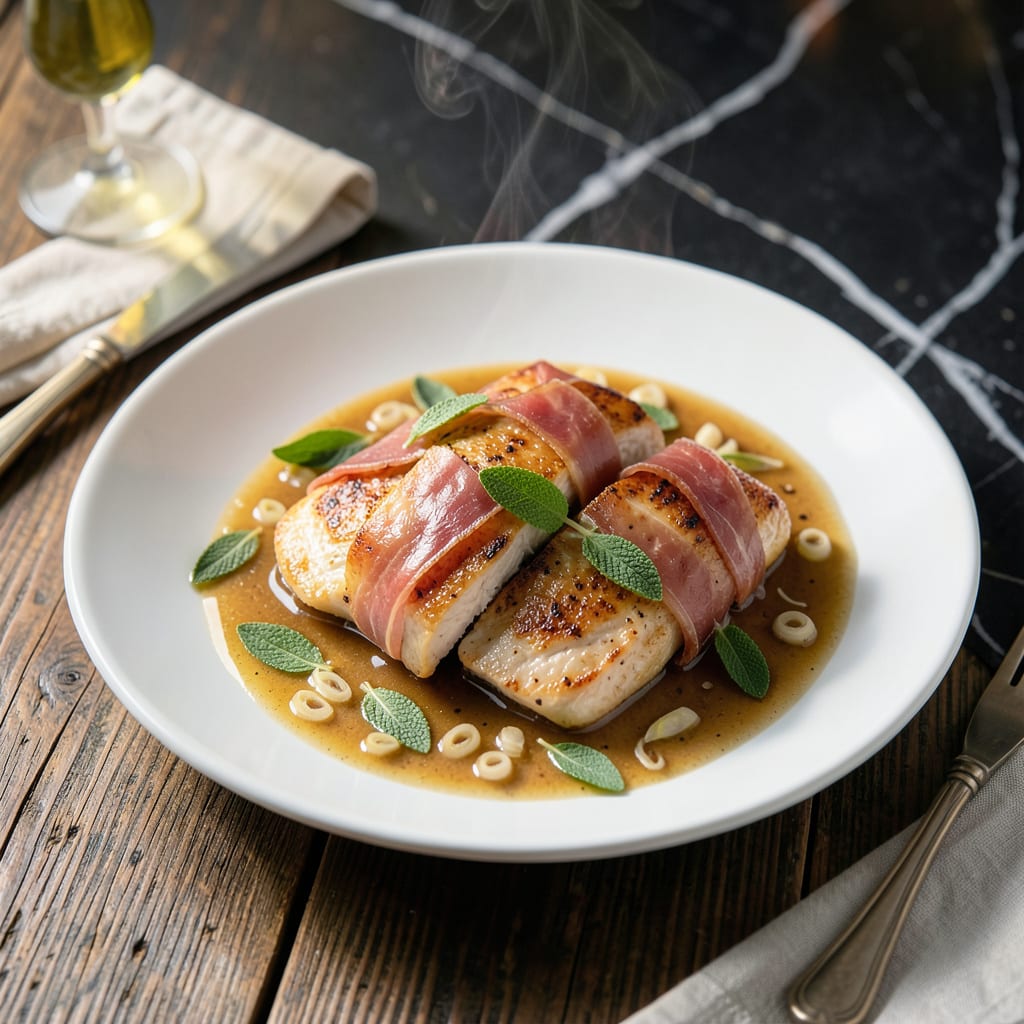
This sauce elevates chicken saltimbocca with its rich, aromatic blend of white wine and fresh sage. A simple reduction creates a velvety texture that complements the dish perfectly.
The process is straightforward: simmer wine, butter, and herbs until thickened. The result is a restaurant-quality sauce that ties every bite together with sophisticated flavor.
Ingredients for Chicken Saltimbocca Sauce
Ten ingredients deliver restaurant-quality elegance with white wine and fresh sage at its heart.
| Ingredient | Amount | Notes |
|---|---|---|
| Dry White Wine 🍷 | 1 cup | Dry variety like Pinot Grigio |
| Unsalted Butter 🧈 | ½ cup | Cold, cubed for emulsion |
| Fresh Sage Leaves 🌿 | ¼ cup | Loosely packed, whole leaves |
| Shallot 🧅 | 1 whole | Finely minced for depth |
| Garlic Cloves 🧄 | 2 cloves | Minced for aromatic base |
| Chicken Stock 🍲 | ½ cup | Low-sodium preferred for control |
| Lemon Juice 🍋 | 1 tbsp | Freshly squeezed for brightness |
| Dijon Mustard 🟡 | 1 tsp | For subtle tang and thickness |
| Kosher Salt 🧂 | ½ tsp | Diamond Crystal preferred for balance |
| Freshly Ground Black Pepper 🌶️ | ¼ tsp | Coarse grind for texture |
[recipeingredientscaler]
The wine is critical here. Opt for a dry white like Pinot Grigio or Sauvignon Blanc—sweet varieties will clash with the sage. Whole Foods or Total Wine have solid affordable options. The butter must be unsalted to control the seasoning. For the sage, fresh is non-negotiable; dried loses the aromatic oils that define this sauce. Look for bright green leaves with no wilting.
No white wine? Substitute with extra chicken stock plus 1 tbsp white wine vinegar. Shallots can be replaced with half a small white onion (minced). For a dairy-free version, use cold olive oil or vegan butter—the emulsion won’t be as stable but the flavor remains. If skipping the mustard, add a pinch of cornstarch slurry at the end to help thicken.
This sauce is best used immediately but can be reheated gently. Stores in the fridge for 3 days—rewhisk with a splash of water to restore the texture. Freezing isn’t recommended as the butter may separate. Always bring to room temperature before reheating to prevent splitting.
Why You’ll Love This Recipe
- One Pan Magic: I love that I can make this sauce while the chicken cooks—just melt butter, sauté shallots and garlic, then deglaze with wine.
- Sage Perfection: The fresh sage leaves infuse the butter and wine with this warm, earthy aroma that’s just chef’s kiss.
- Weeknight Hero: Between us, this sauce makes chicken feel fancy without any extra effort. (Yes, even on a Tuesday night)
- Budget Luxury: A splash of dry white wine and a handful of sage transform simple chicken into something restaurant-worthy, without the bill.
Step-by-Step Instructions for Chicken Saltimbocca Sauce
Master this elegant sauce with precise technique and balanced flavors.
Step 1: Infuse the Butter with Aromatics
Melt the 0.5 cup Unsalted Butter in a medium saucepan over medium heat. As it begins to foam, add the 0.25 cup Fresh Sage Leaves and let them sizzle for 1-2 minutes until the butter turns a pale golden brown and smells nutty.
Add the 1 whole Shallot and 2 cloves Garlic Cloves, both finely minced, and cook for 1 minute until fragrant but not browned. This builds the aromatic foundation without bitterness.
Step 2: Deglaze with Wine and Reduce
Pour in the 1 cup Dry White Wine and increase heat to medium-high. Simmer for 5-7 minutes until the liquid reduces by half and the alcohol smell dissipates. The mixture should coat the back of a spoon lightly.
Stir occasionally to prevent the shallots from sticking. The wine reduction concentrates the flavors and prepares the base for the rich, velvety finish.
Step 3: Emulsify with Stock and Mustard
Lower heat to medium-low and gradually whisk in the 0.5 cup Chicken Stock. Add the 1 tsp Dijon Mustard, 0.5 tsp Kosher Salt, and 0.25 tsp Freshly Ground Black Pepper, stirring until fully incorporated.
Simmer for 3-4 minutes until the sauce thickens slightly. The mustard acts as an emulsifier, binding the fat and liquid components into a smooth, cohesive sauce.
Step 4: Finish with Brightness and Serve
Remove the saucepan from heat and stir in the 1 tbsp Lemon Juice. Taste and adjust seasoning if needed. The acidity cuts through the richness and lifts the flavors.
Strain the sauce through a fine-mesh sieve if a silky texture is desired, pressing gently on the sage leaves to extract their essence. Serve immediately over prepared chicken saltimbocca for the best results.
Pro Tips For Making Chicken Saltimbocca Sauce
- Brown the Butter: Let the butter cook until it turns a light golden brown before adding the shallots—this adds a nutty depth that pairs perfectly with the sage and wine.
- Slap the Sage: Gently slap the fresh sage leaves between your palms before adding them to the pan to release their oils and intensify the flavor.
- Deglaze Immediately: Pour the white wine into the pan right after removing the chicken to scrape up all those browned bits—this builds the sauce’s rich base.
- Skip the Salt: Hold off on salting the sauce until the end since the prosciutto in the dish already adds plenty of saltiness.
Best Sauces and Condiments for This Recipe
White Wine Reduction
A classic pairing for chicken saltimbocca is a simple white wine reduction. Use the same dry white wine as in the recipe, like Pinot Grigio, and reduce it by half with a splash of lemon juice for brightness. This enhances the dish’s natural flavors beautifully. 🍷
Sage Brown Butter
For a richer option, make a sage brown butter sauce by melting ½ cup unsalted butter with ¼ cup fresh sage leaves until nutty and golden. Drizzle this over the chicken for an extra layer of aroma and depth.
Creamy Dijon Sauce
Whisk 1 tsp Dijon mustard into ½ cup heavy cream and simmer until slightly thickened. This creamy variation adds a tangy contrast to the salty prosciutto and tender chicken in the dish.
Garlic-Herb Pan Sauce
After cooking the chicken, deglaze the pan with ½ cup chicken stock, 2 minced garlic cloves, and 1 tbsp lemon juice. Simmer for 3-4 minutes to create a quick, flavorful pan sauce. 💡
Lemon-Caper Sauce
Combine 2 tbsp capers, 1 tbsp lemon juice, and ¼ cup chicken stock in a small saucepan. Simmer for 2 minutes to infuse the flavors. This bright, briny sauce cuts through the richness of the dish.
Balsamic Glaze
Reduce ½ cup balsamic vinegar with 1 tbsp honey until syrupy. Drizzle sparingly over the chicken for a sweet-tart finish that complements the sage and prosciutto perfectly.
Nutrition Facts
Frequently Asked Questions
Can I use dried sage instead of fresh?
Fresh sage is ideal, but in a pinch, use 1 tablespoon dried sage per ¼ cup fresh. Add it earlier in cooking to rehydrate the flavors fully. The taste won’t be as vibrant, but it’ll still work.
Why does my sauce split when reheating?
Splitting happens if reheated too quickly or at high heat. Warm gently over low heat while whisking constantly. If it separates, whisk in 1 teaspoon cold water to re-emulsify.
Can I make this sauce ahead of time?
Yes, but it’s best used fresh. Store in an airtight container in the fridge for up to 3 days. Reheat slowly and whisk to restore the smooth texture.
What’s the best wine substitute?
Replace white wine with extra chicken stock plus 1 tablespoon white wine vinegar. This mimics the acidity and depth without alcohol. Avoid cooking wines—they’re often too salty.

- Jollof Rice Sauce Recipe: West African Tomato and Spice Infusion - September 25, 2026
- Japanese Rice Soup Recipe: Umami-Rich Comfort in a Bowl - September 25, 2026
- Homemade Cream Of Rice Recipe: Silk-Smooth Breakfast in Minutes - September 25, 2026