
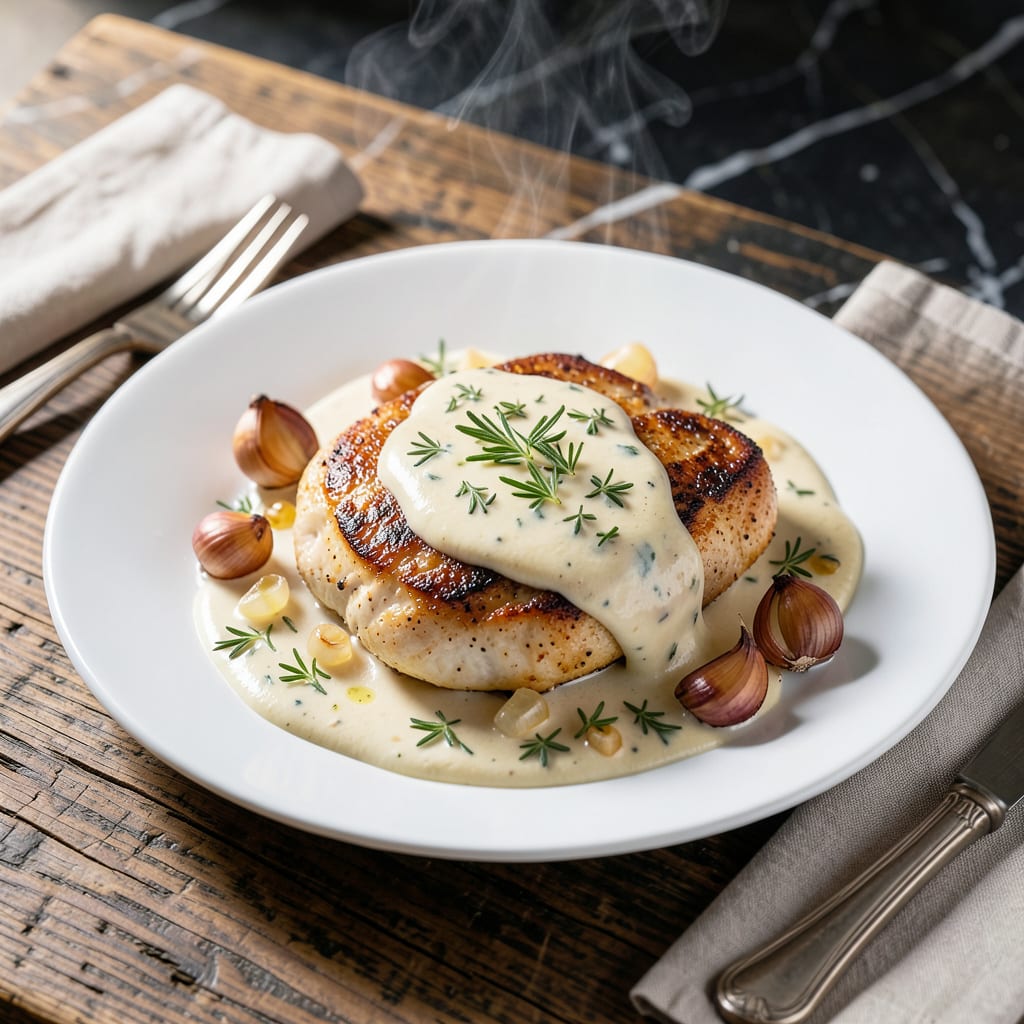
This velvety herb-infused sauce transforms simple chicken breast into a restaurant-quality dish. The secret lies in a precise balance of fresh herbs, creamy elements, and a touch of acidity to brighten each bite.
Ready in under 15 minutes, this foolproof sauce delivers rich flavor with minimal effort. It pairs perfectly with grilled, baked, or pan-seared chicken, elevating every meal.
Ingredients for Chicken Sauce Recipe for Chicken Breast
Ten ingredients create this restaurant-quality velvety herb sauce. Simple yet sophisticated flavors elevate every bite.
| Ingredient | Amount | Notes |
|---|---|---|
| Heavy Cream 🥛 | 1 cup | Full-fat for velvety texture |
| Unsalted Butter 🧈 | 4 tbsp | Divided for saute and finish |
| Fresh Thyme Leaves 🌿 | 2 tsp | Stems removed, finely chopped |
| Fresh Rosemary 🌿 | 1 tsp | Finely minced, stems discarded |
| Garlic Cloves 🧄 | 3 cloves | Minced to fine paste |
| Shallot 🧅 | 1 whole | Finely diced for subtle flavor |
| Dry White Wine 🍷 | ¼ cup | Sauvignon Blanc or Pinot Grigio |
| Chicken Stock 🥣 | ¼ cup | Low-sodium preferred for control |
| Dijon Mustard 🟡 | 1 tbsp | For subtle tang and depth |
| Lemon Juice 🍋 | 1 tbsp | Freshly squeezed for brightness |
[recipeingredientscaler]
The herbs are non-negotiable for that restaurant-quality depth. Fresh thyme and rosemary from the produce section (look for bright green, not wilted) make all the difference—dried won’t give you the same vibrant flavor. Whole Foods or a local farmers market often have the best selection. For the wine, any dry white you’d drink works perfectly. The butter should be European-style if you can find it—higher fat content means richer sauce.
No white wine? Substitute with additional chicken stock plus 1 tsp lemon juice. Out of fresh herbs? Use half the amount of dried, but the flavor won’t be as bright. Shallots can become yellow onion in a pinch, though the flavor will be slightly sharper. For a lighter version, half-and-half works but the texture won’t be as luxurious. The Dijon mustard adds subtle complexity—whole grain works too if that’s what you have.
This sauce keeps beautifully. Store in an airtight container in the fridge for up to 5 days. Reheat gently over low heat, stirring occasionally—don’t boil or it may separate. Freezes for up to 3 months, though the herbs may slightly dull in color and potency. Always make a little extra; it’s that good.
Why You’ll Love This Recipe
- One Pan Wonder: I just melt butter, toss in garlic and herbs, then add cream—no fancy techniques, no mess.
- Rich & Creamy: The heavy cream and butter blend into this velvety sauce that coats every bite of chicken.
- Meal Prep Magic: I make a big batch on Sunday and drizzle it over chicken all week for quick, flavorful meals.
- Budget Keeper: A little butter and cream go a long way, and fresh herbs stretch across multiple dishes.
Step-by-Step Instructions for Chicken Sauce for Breast
Master this technique and you’ll create a restaurant-quality sauce with perfect consistency every time.
Step 1: Sauté Aromatics in Butter
Heat 2 tbsp Unsalted Butter in a heavy saucepan over medium heat until melted and foaming subsides. Add the finely diced Shallot and cook for 2-3 minutes, stirring frequently, until translucent and just beginning to soften at the edges.
Add the minced Garlic Cloves, Fresh Thyme Leaves, and Fresh Rosemary, tossing constantly for 45-60 seconds until fragrant. Be careful not to let the garlic brown—this would introduce bitterness into your finished sauce.
Step 2: Deglaze with Wine and Reduce
Pour in the 0.25 cup Dry White Wine and increase heat to medium-high. Using a wooden spoon, scrape up any browned bits from the bottom of the pan. Let the mixture simmer for 3-4 minutes until the liquid reduces by about half.
This step is crucial for developing depth of flavor. The alcohol will cook off, leaving behind concentrated aromatic compounds that form the foundation of your sauce. You’ll know it’s ready when the pan has visible fond but no standing liquid.
Step 3: Build the Cream Base
Reduce heat to medium-low and add the 0.25 cup Chicken Stock, 1 tbsp Dijon Mustard, and 1 cup Heavy Cream. Whisk constantly for 2 minutes as the mixture comes to a gentle simmer.
The sauce will begin to thicken as the cream heats. Maintain a low simmer—you want tiny bubbles breaking the surface, not a rolling boil, to prevent curdling. The mustard will dissolve completely into the liquid, adding subtle complexity without overwhelming the herbal notes.
Step 4: Finish and Adjust
Let the sauce simmer for 5-7 minutes until it coats the back of a spoon and leaves a clear trail when your finger is drawn through it. The volume will reduce slightly, and the color will deepen to a rich ivory.
Remove from heat and whisk in the remaining 2 tbsp Unsalted Butter and 1 tbsp Lemon Juice. The butter adds a glossy finish and luxurious mouthfeel, while the lemon juice brightens all the flavors. Taste and adjust seasoning if needed before serving over chicken breast.
Pro Tips For Making Chicken Sauce Recipe For Chicken Breast
- Reduce Before Cream: Let the garlic, thyme, and rosemary cook in the butter for 2-3 minutes before adding the heavy cream—this builds a deeper flavor base that raw herbs just can’t match.
- Temper Your Cream: I learned this the hard way: cold heavy cream can split in hot butter, so let it sit at room temperature for 10 minutes or warm it slightly before stirring in.
- Skip the Stems: Fresh rosemary and thyme stems are woody and bitter, so strip the leaves first—your sauce will be smoother and more pleasant to eat.
- Finish with Cold Butter: After the sauce is off the heat, stir in 1 tablespoon of cold unsalted butter for a silky, restaurant-quality shine that hot butter just can’t deliver.
Regional Styles of This chicken sauce recipe for chicken breast
French Classic
In Provence, this becomes a sauce suprême with tarragon replacing thyme and a splash of cognac added with the wine. The French use crème fraîche instead of heavy cream for a slightly tangier result. I love this version with roasted chicken.
Italian Twist
Northern Italian cooks would add 2 tbsp grated Parmigiano-Reggiano at the end and replace the rosemary with fresh sage. The wine becomes dry vermouth for a more aromatic touch. This pairs beautifully with piccata-style chicken.
Southern Comfort
Down south, we’d swap the herbs for 1 tsp smoked paprika and add 2 tbsp chopped pimento. The wine gets replaced with chicken broth for a milder flavor. This version works wonders with fried chicken tenders.
Asian Fusion
For an Eastern flair, replace the herbs with 1 tbsp grated ginger and 1 minced lemongrass stalk. Use sake instead of wine and finish with 1 tsp fish sauce. This bright sauce elevates grilled chicken skewers. ✨
Mexican Inspired
Add 1 chopped chipotle in adobo with the aromatics and replace the wine with lime juice. Finish with 2 tbsp chopped cilantro instead of lemon. This smoky version is perfect for shredded chicken tacos.
Mediterranean Style
Stir in ½ cup crumbled feta and 1 tsp dried oregano at the end. Replace the white wine with ouzo for an authentic Greek touch. This pairs wonderfully with lemon-herb chicken. 💫
Nutrition Facts
Frequently Asked Questions
Can I use dried herbs instead of fresh?
Yes, but use half the amount. Dried herbs are more concentrated but won’t deliver the same bright flavor.
What if my sauce is too thin?
Simmer for 2-3 more minutes to reduce further. For immediate thickening, mix 1 tsp cornstarch with cold water and stir in.
How do I prevent the sauce from curdling?
Keep heat at medium-low and stir constantly. Never let it boil—tiny bubbles are fine, but rapid boiling causes separation.
Can I make this ahead of time?
Store in an airtight container in the fridge for up to 5 days. Reheat gently to avoid breaking.

- Jollof Rice Sauce Recipe: West African Tomato and Spice Infusion - September 25, 2026
- Japanese Rice Soup Recipe: Umami-Rich Comfort in a Bowl - September 25, 2026
- Homemade Cream Of Rice Recipe: Silk-Smooth Breakfast in Minutes - September 25, 2026