
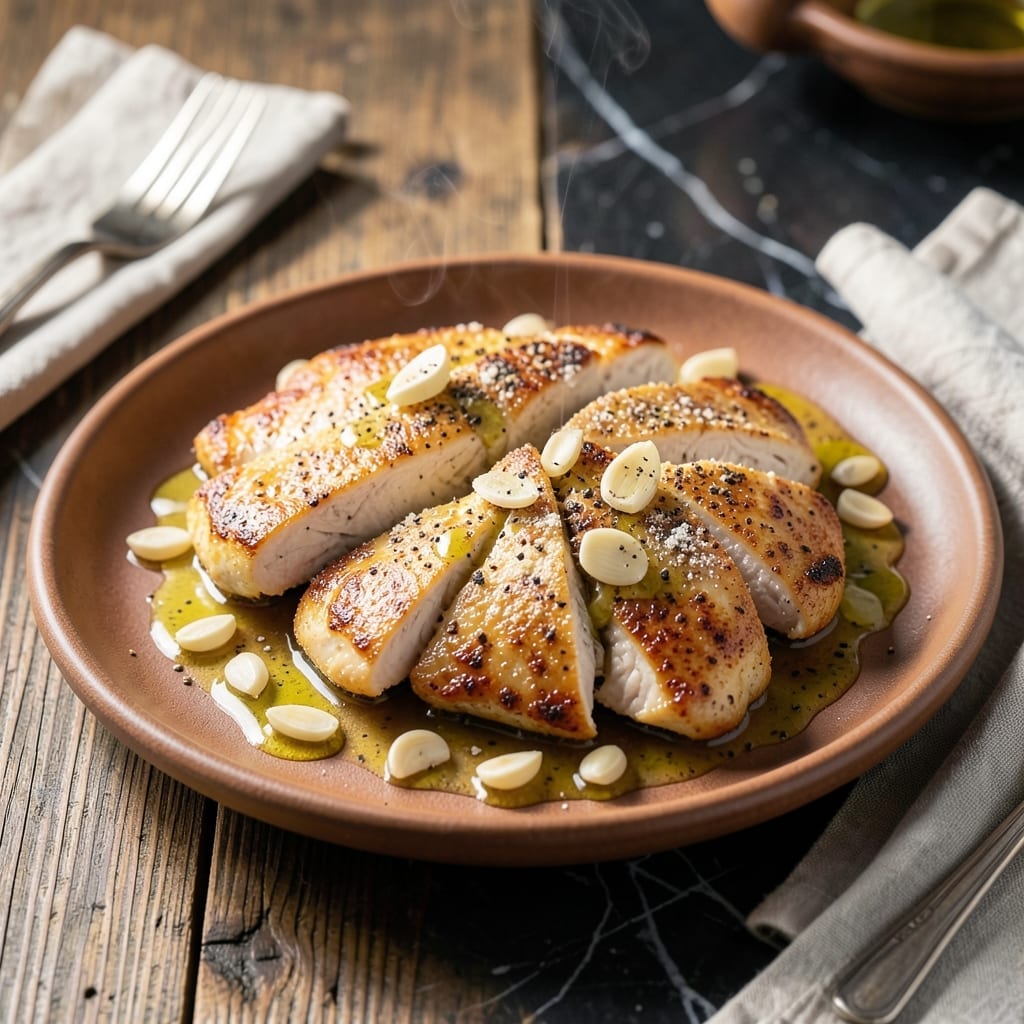
This chicken sauté delivers tender, flavorful bites in minutes. The technique is simple but precise—high heat, proper timing, and a few key ingredients transform ordinary chicken into something special.
Pan-searing locks in juices while creating a golden crust. I use a hot skillet and avoid overcrowding, ensuring each piece cooks evenly. The result is chicken that’s moist inside with a lightly crisped exterior.
Serve with roasted vegetables or a light salad for a complete meal. The versatility makes it perfect for weeknight dinners when time is tight but quality matters.
Ready in 20 minutes, this dish proves that quick doesn’t mean compromising on taste or texture. Let’s get started.
Ingredients for Chicken Saute
High heat, simple ingredients, and precise timing create this restaurant-quality dish at home.
| Ingredient | Amount | Notes |
|---|---|---|
| Boneless Skinless Chicken Breasts 🍗 | 1 ½ lb | Pounded to even thickness |
| All-Purpose Flour 🌾 | ¼ cup | For light dredging |
| Kosher Salt 🧂 | 1 ½ tsp | Diamond Crystal preferred |
| Freshly Ground Black Pepper 🌶️ | 1 tsp | Coarse grind ideal |
| Garlic Cloves 🧄 | 3 cloves | Minced finely |
| Unsalted Butter 🧈 | 3 tbsp | Divided for cooking |
| Olive Oil 🫒 | 2 tbsp | High smoke point |
| Fresh Thyme Sprigs 🌿 | 4 whole | Leaves stripped |
| Dry White Wine 🍷 | ⅓ cup | Sauvignon Blanc recommended |
| Chicken Stock 🥣 | ½ cup | Low-sodium preferred |
| Heavy Cream 🥛 | ¼ cup | For finishing sauce |
| Dijon Mustard 🟡 | 1 tbsp | Smooth variety |
| Lemon Juice 🍋 | 1 tbsp | Freshly squeezed |
| Fresh Parsley 🌿 | 2 tbsp | Chopped for garnish |
The chicken quality is paramount. Boneless, skinless breasts from Whole Foods or Costco offer consistent thickness and texture. Pounding to an even ½-inch thickness ensures uniform cooking—use a meat mallet or rolling pin. For the butter, Plugrá or Kerrygold provide superior browning. The thyme should be fresh, with vibrant green leaves and no woody stems.
No white wine? Substitute chicken stock plus 1 tsp lemon juice. For a dairy-free version, replace butter with avocado oil and heavy cream with coconut milk. Dried thyme at one-third the amount works in a pinch. The flour dredge can be omitted for a gluten-free version, though the crust won’t be as golden. Always use low-sodium stock to control seasoning.
The cooked chicken keeps 3-4 days refrigerated in an airtight container. Reheat gently in a skillet with a splash of stock to maintain moisture. The sauce can be frozen for 1 month—thaw and reheat slowly. For best results, use within 2 days of cooking. Never microwave the chicken, as it will dry out.
Why You’ll Love This Recipe
- One Pan Wonder: I can go from raw chicken to golden-brown perfection in a single skillet—no extra dishes, no fuss.
- Garlic Lovers Dream: The fresh garlic cloves caramelize in the pan, giving every bite that deep, savory punch.
- Weeknight Hero: Between us, this is my Tuesday night lifesaver when I need dinner fast but still crave-worthy.
- Budget Stretcher: Boneless chicken breasts stay affordable, and a little flour plus seasoning turns them into something special.
Step-by-Step Instructions for Chicken Saute
This method delivers perfectly tender chicken with a rich, creamy pan sauce in under 30 minutes.
Step 1: Prepare and Season the Chicken
Pound the 1.5 lb boneless skinless chicken breasts to an even ½-inch thickness between two sheets of plastic wrap. This ensures uniform cooking and prevents dry spots. Season both sides generously with 1.5 tsp kosher salt and 1 tsp freshly ground black pepper.
Lightly dredge the chicken in the 0.25 cup all-purpose flour, shaking off any excess. The flour creates a delicate crust that thickens the sauce later. Set the dredged chicken aside on a clean plate while you heat the pan—this prevents the coating from becoming soggy.
Step 2: Sear the Chicken to Golden Perfection
Heat 2 tbsp olive oil and 1 tbsp unsalted butter in a large skillet over medium-high heat until the butter foams. Add the chicken in a single layer, without crowding the pan. Cook for 4-5 minutes per side until golden brown and just cooked through.
Resist the urge to move the chicken—let it develop a proper sear. The chicken is ready to flip when it releases easily from the pan. Transfer the cooked chicken to a warm plate and tent loosely with foil to keep it warm while you build the sauce.
Step 3: Build the Aromatic Sauce Base
In the same skillet, reduce heat to medium and add the remaining 2 tbsp unsalted butter. Add the 3 minced garlic cloves and the stripped leaves from 4 fresh thyme sprigs, sautéing for 30 seconds until fragrant. Be careful not to let the garlic brown—it should just soften and release its aroma.
Pour in the 0.33 cup dry white wine to deglaze the pan, scraping up all the browned bits with a wooden spoon. Let the wine simmer for 2-3 minutes until it reduces by about half. This step captures all the concentrated chicken flavor from the pan.
Step 4: Finish with Creamy Pan Sauce
Add the 0.5 cup chicken stock, 1 tbsp Dijon mustard, and 1 tbsp lemon juice to the skillet. Simmer for 3-4 minutes until the liquid reduces slightly. Stir in the 0.25 cup heavy cream and simmer for another 2 minutes until the sauce thickens enough to coat the back of a spoon.
Return the chicken to the skillet along with any accumulated juices. Spoon the sauce over the chicken and let it simmer for 1-2 minutes to heat through and allow the flavors to meld. Taste and adjust seasoning if needed—the acidity from the lemon should balance the richness of the cream.
Step 5: Garnish and Serve Immediately
Transfer the chicken to serving plates and spoon the sauce over the top. Garnish with the 2 tbsp chopped fresh parsley for a pop of color and freshness. The parsley adds a bright contrast to the rich, creamy sauce.
Serve immediately while the chicken is still hot and the sauce is glossy. Each bite should deliver tender chicken with a velvety, flavorful sauce clinging to every piece. Pair with crusty bread or steamed vegetables to soak up every last drop.
Pro Tips For Making Chicken Saute
- Dry the Chicken: Pat the boneless skinless chicken breasts completely dry with paper towels before dredging in flour—this guarantees a proper sear instead of steamed meat.
- Heat the Pan First: Let your pan get screaming hot for at least 2-3 minutes before adding oil, then the chicken. I learned this the hard way after too many pale, sad pieces.
- Don’t Overcrowd: Resist the urge to fit all the chicken in at once—crowding drops the pan temp and you’ll end up with soggy, unevenly cooked pieces.
- Smash the Garlic: Lightly crush the garlic cloves with the side of your knife before mincing—it releases way more flavor with barely any extra effort.
Serving Suggestions for This Recipe
Plating Elegance
For a restaurant-worthy presentation, arrange the chicken in a single layer on warm plates. I drizzle the sauce in a zigzag pattern over the top, letting it pool slightly at the edges. The 2 tbsp chopped fresh parsley adds a vibrant pop of color that makes the dish look as good as it tastes. 💫
Bread Pairings
A slice of crusty baguette or sourdough bread is perfect for soaking up the creamy pan sauce. Toast the bread lightly and serve it on the side, or place a slice directly under the chicken to catch every drop of flavor.
Vegetable Sides
Steamed asparagus or green beans complement the richness of the dish beautifully. I toss them with a bit of olive oil and a pinch of salt, then finish with a squeeze of lemon to brighten the meal. The crisp texture balances the tender chicken perfectly.
Starch Options
For a heartier meal, serve the chicken over buttered egg noodles or mashed potatoes. The sauce clings beautifully to the noodles, while mashed potatoes provide a creamy base that pairs wonderfully with the dish.
Wine Pairing
A crisp Sauvignon Blanc or Pinot Grigio enhances the flavors of the creamy sauce. The acidity cuts through the richness, while the citrus notes complement the lemon in the dish. I prefer a chilled glass to balance the warmth of the meal. 🍷
Garnish Creatively
Beyond parsley, try a sprinkle of lemon zest or a few fresh thyme leaves for extra aroma. A light dusting of grated Parmesan adds a subtle savory note that ties everything together beautifully.
Nutrition Facts
Frequently Asked Questions
What’s the best pan for this dish?
A heavy stainless steel skillet works best for even heat distribution and developing a good sear. Avoid nonstick for this recipe as it won’t brown the chicken as effectively.
How do I know when the chicken is done?
Use a meat thermometer to check for 165°F internally. The chicken should release easily from the pan and the juices should run clear when pierced with a knife.
Can I make this dairy-free?
Yes! Replace butter with olive oil and swap heavy cream for coconut milk. The sauce will still be rich and flavorful with these substitutions.
Why did my sauce break?
Sauces can separate if boiled too vigorously. Keep it at a gentle simmer and stir constantly when adding the cream. If it breaks, whisk in 1 tsp cold butter to bring it back together.

- Chuy’s Green Chili Rice Copycat Recipe: Spicy Southwest Flavor in Every Bite - September 25, 2026
- Beaten Rice Recipe: Fluffy Grains With Nutty Depth - September 25, 2026
- Machboos Rice Recipe: Bahraini Spiced One-Pot Tradition - September 25, 2026