
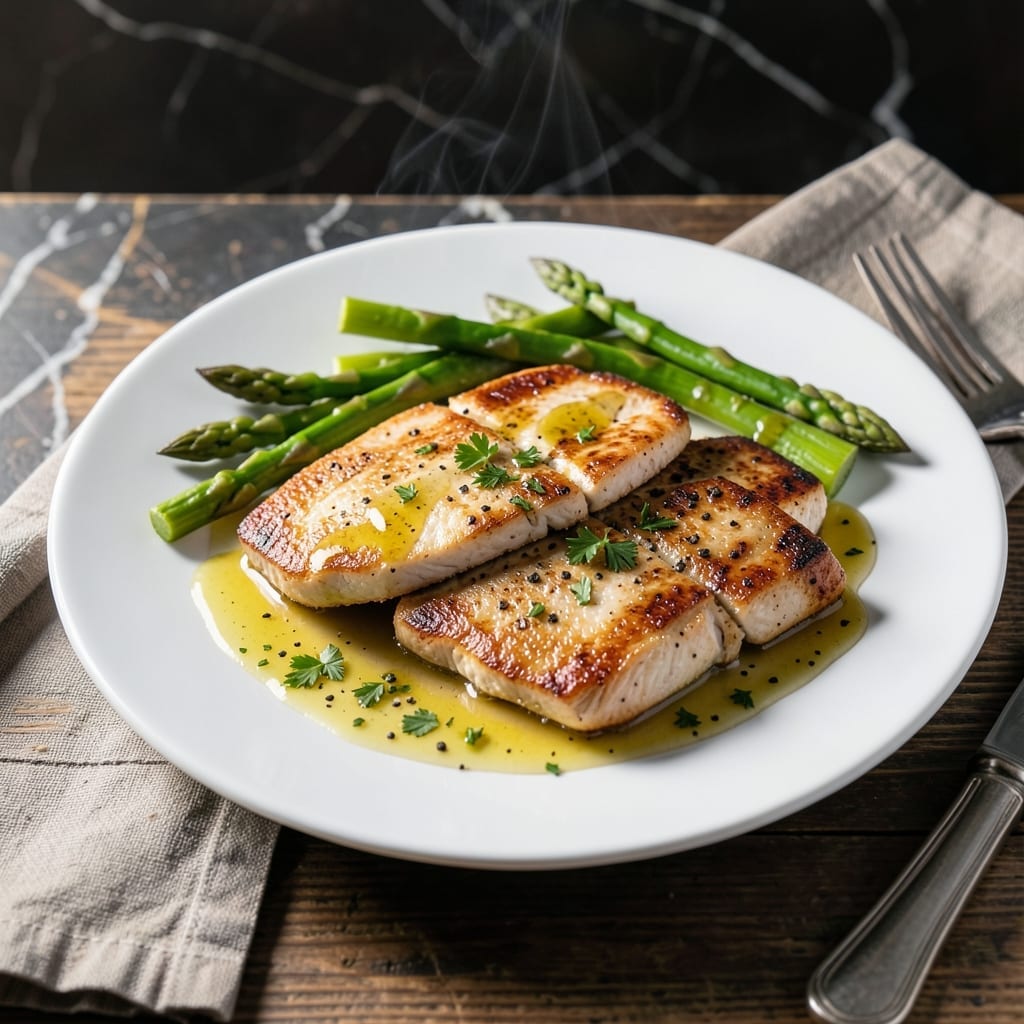
This chicken scallopini delivers restaurant-quality results with minimal effort. Thin cutlets cook quickly in a hot pan, developing a golden crust while staying tender inside.
The bright lemon-caper sauce transforms the dish, adding a tangy, briny contrast that cuts through the richness. It comes together in minutes while the chicken rests.
You’ll serve perfectly seared cutlets naps with a silky sauce that clings to every bite. The balance of crisp, juicy, and zesty makes this a standout main course.
Pair with roasted potatoes or a simple salad for a complete meal. The technique is simple, but the results are anything but ordinary.
Ingredients for Chicken Scallopini
Thin cutlets, bright sauce, and restaurant-worthy results with everyday ingredients.
| Ingredient | Amount | Notes |
|---|---|---|
| Chicken Breast Cutlets 🍗 | 1 ½ lb | Pounded to 1/4-inch thickness |
| All-Purpose Flour 🌾 | ½ cup | For dredging cutlets |
| Kosher Salt 🧂 | 1 tsp | Divided for seasoning |
| Black Pepper 🌶️ | ½ tsp | Freshly ground preferred |
| Olive Oil 🫒 | ¼ cup | For pan-searing |
| Unsalted Butter 🧈 | 4 tbsp | Divided for sauce and finishing |
| Garlic Cloves 🧄 | 3 cloves | Minced for sauce |
| Capers 🌿 | 2 tbsp | Drained and rinsed |
| Fresh Lemon Juice 🍋 | ¼ cup | About 2-3 lemons |
| Chicken Stock 🍲 | ½ cup | Low-sodium preferred |
| Fresh Parsley 🌿 | 2 tbsp | Chopped for garnish |
| Lemon Zest 🍋 | 1 tsp | From 1 lemon |
The chicken cutlets are the foundation—pound them evenly so they cook at the same rate. Whole Foods or a trusted butcher will have pre-cut cutlets, but buying whole breasts and slicing yourself is more economical. Look for boneless, skinless with even thickness. The flour for dredging should be standard all-purpose; no need for specialty types here.
No capers? Chopped green olives provide a similar briny kick. Out of fresh lemon juice? Bottled works in a pinch (just avoid the concentrate). The chicken stock can be swapped for white wine if you prefer—use something dry like Sauvignon Blanc. For extra richness, add a splash of heavy cream to the sauce at the end.
The sauce keeps well—store leftovers in an airtight container for up to 3 days. Reheat gently to avoid breaking the emulsion. Chicken is best eaten fresh, but cooked cutlets can be refrigerated for 3-4 days and reheated in a skillet.
Why You’ll Love This Recipe
- Ready in 20: I can have tender, golden cutlets on the table faster than ordering takeout.
- Crispy Perfection: That light flour coating fries up to a satisfying crunch with just olive oil, salt, and pepper.
- Weeknight Hero: It’s my go-to for busy evenings—equally great with pasta or a simple salad.
- Stretches Far: One pound of chicken breast cutlets feeds my family of four, with leftovers for lunch the next day.
Step-by-Step Instructions for Chicken Scallopini
Master the technique for tender cutlets and a vibrant lemon-caper sauce with these precise steps.
Step 1: Prepare and Season the Chicken Breast Cutlets
Pat the 1.5 lb chicken breast cutlets dry with paper towels to ensure even browning. Season both sides evenly with ½ tsp kosher salt and ¼ tsp black pepper—this initial seasoning builds flavor in every bite.
Place the 0.5 cup all-purpose flour in a shallow dish. Lightly dredge each cutlet in the flour, shaking off any excess. The flour creates a delicate crust that locks in juices during searing. Set the floured cutlets aside on a plate while you heat the pan.
Step 2: Pan-Sear the Cutlets to Golden Perfection
Heat ¼ cup olive oil in a large skillet over medium-high heat until it shimmers but doesn’t smoke. Working in batches to avoid crowding, add the cutlets and cook for 2-3 minutes per side until golden brown and crisp at the edges.
Resist the urge to move the cutlets—let them develop a deep golden crust before flipping. When the edges appear lightly browned and the cutlets release easily from the pan, they’re ready to turn. Transfer the seared cutlets to a warm plate and tent loosely with foil to retain heat.
Step 3: Build the Lemon-Caper Sauce
Reduce the heat to medium and add 2 tbsp unsalted butter to the same skillet. Once melted, add the 3 cloves minced garlic cloves and sauté for 30 seconds until fragrant but not browned. Stir in the 2 tbsp drained capers and cook for 1 minute to mellow their briny sharpness.
Pour in the ¼ cup fresh lemon juice and ½ cup chicken stock, scraping up any browned bits from the bottom of the pan. Simmer for 3-4 minutes until the liquid reduces by half and begins to thicken. Finish by whisking in the remaining 2 tbsp unsalted butter and the 1 tsp lemon zest for a glossy, emulsified sauce.
Step 4: Finish and Garnish
Return the chicken cutlets to the skillet, spooning the sauce over each piece to coat evenly. Cook for an additional 1-2 minutes on low heat, allowing the flavors to meld and the chicken to absorb the bright, tangy sauce.
Transfer the chicken to a serving platter and drizzle with any remaining sauce from the pan. Garnish with the 2 tbsp chopped fresh parsley for a pop of color and freshness. Serve immediately while the sauce is still vibrant and the chicken is at its juiciest.
Pro Tips For Making Chicken Scallopini
- Pound Evenly: Use a meat mallet to pound the chicken cutlets to an even 1/4-inch thickness—this guarantees they cook through at the same rate and stay tender. I learned this the hard way after pulling half-raw, half-dry cutlets from the pan.
- Season the Flour: Mix a teaspoon each of kosher salt and black pepper directly into the all-purpose flour before dredging. Sounds simple, but it actually changes the outcome by ensuring every bite is seasoned, not just the surface.
- Skip the Crowding: Cook the cutlets in batches if needed—overcrowding the pan drops the oil temperature and steams the chicken instead of searing it. After burning three batches, I finally figured out patience pays off.
- Rest Before Serving: Give the cooked scallopini a solid 5 minutes on a warm plate before serving. My grandmother swore by this, and she was right: it lets the juices redistribute so they don’t all spill onto the plate.
Regional Styles of This Recipe
Italian Classic Style
In Italy, this dish is called saltimbocca alla romana when made with veal, but chicken works beautifully. The traditional version layers prosciutto and sage leaves on the cutlets before cooking. I’ve found that adding 2 thin prosciutto slices per cutlet and 1 fresh sage leaf gives an authentic touch. 🗺️
French Variation
French cooks often make this as escalope de volaille, using a creamy Dijon mustard and white wine sauce. Replace the lemon-caper sauce with ½ cup dry white wine, 2 tbsp Dijon mustard, and ¼ cup heavy cream. Simmer until thickened for a richer, smoother finish.
Mediterranean Twist
For a Greek-inspired take, add ½ cup crumbled feta and ¼ cup chopped Kalamata olives to the sauce. I also like stirring in 1 tsp dried oregano for an extra layer of Mediterranean flavor. The briny olives pair perfectly with the capers.
Southern Italian Flair
In Sicily, they might include 2 tbsp sun-dried tomatoes and 1 tbsp pine nuts in the sauce. Toast the pine nuts first in the pan before adding other ingredients. This adds a sweet, nutty depth that complements the tangy lemon beautifully. 🌟
American Bistro Style
Many US restaurants serve this with a herb butter finish. After plating, top each cutlet with 1 tbsp herb butter (mix softened butter with 1 tbsp chopped parsley and 1 minced garlic clove). It melts into the sauce for an extra layer of richness.
Nutrition Facts
Frequently Asked Questions
How thin should I pound the chicken?
Aim for 1/4-inch thickness for even cooking. Use a meat mallet or rolling pin between plastic wrap to avoid tearing. Uniform thickness ensures all pieces finish cooking at the same time.
Can I use chicken thighs instead?
Yes, but boneless thighs may need 1-2 extra minutes per side due to higher fat content. Pound them to 1/4-inch thickness like breasts for best results. They’ll stay juicier than breast meat.
What’s the best pan for searing?
A heavy stainless steel or cast iron skillet works best for even heat distribution. Avoid nonstick for high-heat searing. Make sure it’s large enough to cook in batches without crowding.
Why did my sauce break?
This happens if the butter gets too hot. Remove the pan from heat when whisking in the final 2 tbsp butter. If it separates, a splash of cold water while whisking can bring it back together.

- Jollof Rice Sauce Recipe: West African Tomato and Spice Infusion - September 25, 2026
- Japanese Rice Soup Recipe: Umami-Rich Comfort in a Bowl - September 25, 2026
- Homemade Cream Of Rice Recipe: Silk-Smooth Breakfast in Minutes - September 25, 2026