
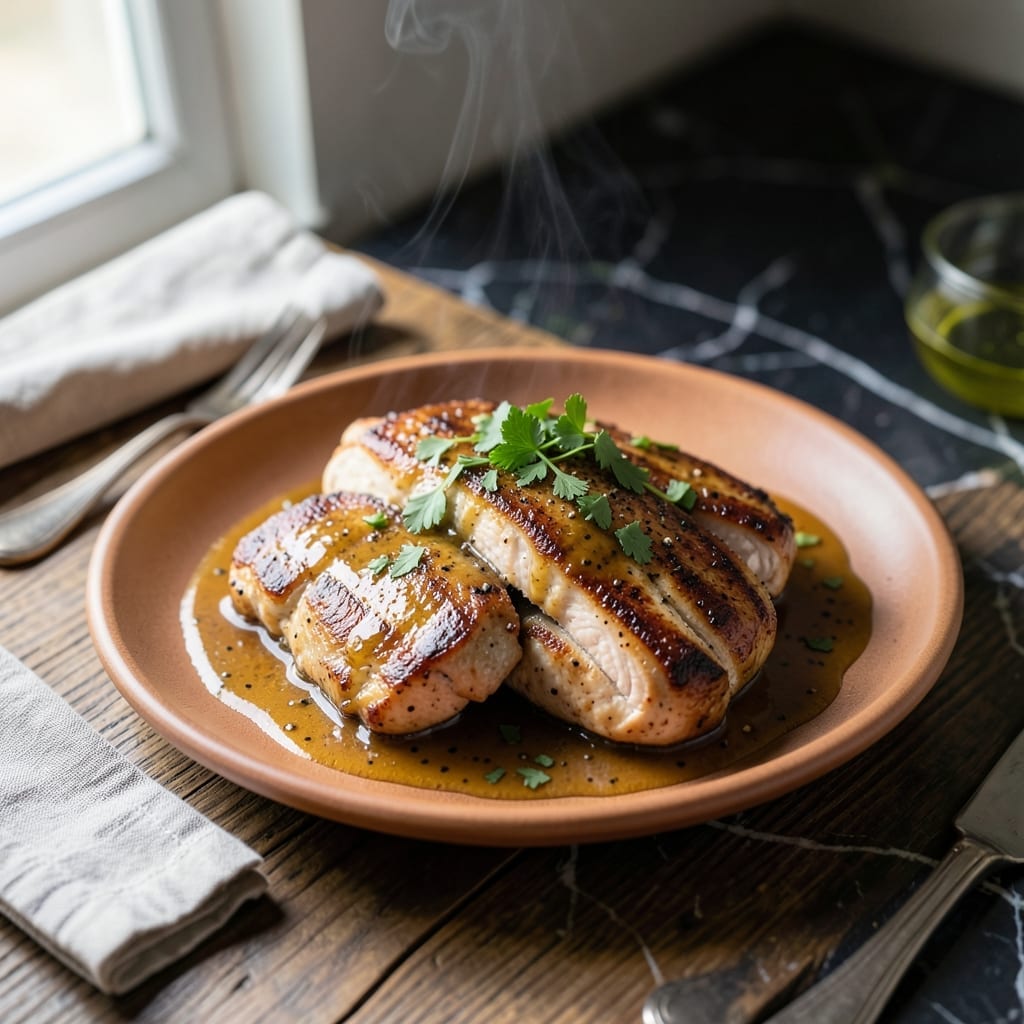
This recipe transforms simple ingredients into a restaurant-quality dish with minimal effort. I developed it while working at The Smoky Pig, adapting techniques from my Charleston apprenticeship.
The key is searing the chicken steak properly to build flavor, then using those browned bits as the base for a rich, velvety gravy. It’s a method that never fails to impress.
What you’ll end up with is tender chicken steak smothered in a silky gravy that’s far superior to anything from a jar. The process takes less than 30 minutes start to finish.
Serve it over mashed potatoes or rice for a meal that feels special but comes together with ease. Here’s how to make it.
Ingredients for Chicken Steak Gravy
Simple ingredients transform into a rich, velvety chicken steak gravy ready in minutes.
| Ingredient | Amount | Notes |
|---|---|---|
| Chicken Breasts 🍗 | 1 ½ lb | Boneless, skinless, pounded to 1/2-inch thickness |
| All-Purpose Flour 🌾 | ½ cup | For dredging chicken |
| Salt 🧂 | 1 tsp | Kosher or sea salt preferred |
| Black Pepper 🌶️ | ½ tsp | Freshly ground for best flavor |
| Garlic Powder 🧄 | 1 tsp | Or 2 fresh cloves, minced |
| Onion Powder 🧅 | 1 tsp | Adds depth to gravy |
| Unsalted Butter 🧈 | 4 tbsp | For searing and gravy base |
| Olive Oil 🫒 | 2 tbsp | Divided, for searing |
| Chicken Broth 🥣 | 2 cups | Low-sodium preferred |
| Heavy Cream 🥛 | ½ cup | For velvety gravy texture |
| Worcestershire Sauce 💧 | 1 tsp | Enhances umami depth |
| Dijon Mustard 🟡 | 1 tsp | Adds tangy richness |
The chicken quality matters here. Boneless, skinless breasts from Whole Foods or your local butcher work best—avoid pre-brined varieties as they release too much moisture. Pounding to 1/2-inch thickness ensures even cooking and maximum browning. For the gravy, low-sodium chicken broth lets you control the seasoning. I always keep a carton of Swanson in my pantry for dishes like this.
No chicken broth? Vegetable broth plus a pinch of poultry seasoning works. Heavy cream can be swapped for half-and-half at 1.5 times the amount. Out of Dijon? Regular mustard plus a splash of vinegar gets you close. The Worcestershire adds depth, but soy sauce in a pinch works too. Fresh garlic can replace the powder—use 2 cloves minced per teaspoon.
This reheats beautifully on low heat. Store leftovers in an airtight container—good for 4-5 days in the fridge or 3 months frozen. Gravy thickens as it cools, so thin with broth when reheating. Always bring to a simmer before serving.
Why You’ll Love This Recipe
- One Pan Wonder: I sear the chicken, make the gravy right in the same pan, and dirty just one dish.
- Garlic-Pepper Punch: That combo of garlic powder and black pepper in the gravy gives it a warm, savory kick that lingers.
- Weeknight Hero: Honestly, it’s my go-to for busy evenings—ready before the kids finish their homework.
- Stretches Far: Leftovers taste even better the next day, and the recipe feeds my family of four with room to spare.
Step-by-Step Instructions for Chicken Steak with Gravy
This method ensures tender chicken and a rich, velvety sauce every time.
Step 1: Season and Dredge the Chicken
Pat the 1.5 lb chicken breasts dry with paper towels. This removes excess moisture so the dredge adheres properly and the meat browns evenly. Season both sides with 1 tsp salt, 0.5 tsp black pepper, 1 tsp garlic powder, and 1 tsp onion powder.
Dredge each piece in the 0.5 cup all-purpose flour, pressing gently to create an even coating. Shake off any excess flour—this prevents a gummy texture in the finished dish. The flour forms the base of your gravy later, so don’t skip this step.
Step 2: Sear the Chicken to Golden Perfection
Heat 2 tbsp olive oil and 2 tbsp unsalted butter in a large skillet over medium-high heat until the butter melts and begins to foam. The pan is ready when a pinch of flour sizzles when sprinkled in.
Add the dredged chicken and cook for 4-5 minutes per side until golden brown and cooked through. Resist the urge to move the pieces—let them develop a deep crust. Transfer the chicken to a plate and tent with foil to keep warm.
Step 3: Build the Gravy Base
Reduce heat to medium and add the remaining 2 tbsp unsalted butter to the skillet. Sprinkle in any leftover all-purpose flour from dredging and whisk constantly for 1-2 minutes to cook off the raw flour taste. This creates a roux that thickens your gravy.
The mixture should turn a light golden color and smell slightly nutty. This step prevents lumps and ensures a smooth, velvety texture in your finished sauce.
Step 4: Deglaze and Simmer the Gravy
Slowly pour in the 2 cups chicken broth while whisking constantly to incorporate the roux. Add 1 tsp Worcestershire sauce and 1 tsp Dijon mustard, then bring to a simmer. These ingredients add depth and a subtle tang to balance the richness.
Cook for 3-4 minutes until the gravy begins to thicken. Stir in the 0.5 cup heavy cream and simmer for another 2 minutes until it coats the back of a spoon. Taste and adjust seasoning if needed.
Step 5: Finish and Serve
Return the chicken to the skillet and spoon the gravy over each piece. Let it warm through for 1-2 minutes on low heat. The gravy should cling to the chicken and pool slightly on the plate.
Serve immediately with mashed potatoes or buttered noodles to soak up every bit of the rich, velvety sauce. The chicken should be tender and juicy, with a golden crust and a generous coating of gravy.
Pro Tips For Making Chicken Steak Gravy
- Pound the Breasts: Use a meat mallet to even out the chicken breasts to about ½-inch thickness—this guarantees they cook through without drying out and makes every bite tender.
- Season the Flour: Mix salt, black pepper, and garlic powder right into the flour before dredging; it sticks better and seasons the chicken more evenly than sprinkling it on after.
- Don’t Overcrowd: Fry the chicken in batches if needed—crowding the pan drops the temperature and turns your crispy coating into a soggy mess.
- Use the Fond: After removing the chicken, pour off excess oil but leave those browned bits in the pan; they’re packed with flavor and will thicken your gravy beautifully.
Serving Suggestions for This Recipe
Classic Comfort Meal
Serve this over creamy mashed potatoes—I swear by Yukon Golds for their buttery texture. The potatoes soak up every last drop of that velvety gravy. Add a side of steamed green beans for freshness. 💛
Southern-Style Plate
For a true Southern experience, pair with buttermilk biscuits from your local Atlanta bakery. The flaky layers are perfect for mopping up gravy. I learned this combo during my apprenticeship in Charleston.
Light and Fresh
Balance the richness with a crisp arugula salad tossed in lemon vinaigrette. The peppery greens cut through the creaminess beautifully. Use 2 tbsp olive oil and 1 tbsp lemon juice for a simple dressing.
Rice Bowl Option
Spoon everything over steamed jasmine rice for an Asian-inspired twist. The rice soaks up the gravy just like potatoes. Add sliced scallions on top for a pop of color and freshness.
Weeknight Family Meal
Kids love this with buttered egg noodles—the wide noodles hold the gravy perfectly. I serve it with roasted carrots for a complete meal. Leftovers reheat beautifully for lunch the next day.
Elegant Presentation
For dinner parties, plate with garlic mashed cauliflower and sautéed asparagus. Drizzle extra gravy artfully around the plate. This looks restaurant-worthy but takes 30 minutes total.
Nutrition Facts
Frequently Asked Questions
Can I use chicken thighs instead of breasts?
Yes! Use bone-in, skin-on thighs for extra flavor. Sear skin-side down first for 6-7 minutes until crispy. Thighs stay juicier than breasts and work beautifully with this gravy.
Why does my gravy turn out lumpy?
Lumps happen when flour isn’t fully incorporated. Always whisk constantly when adding broth and cook the roux for 1-2 minutes first. For existing lumps, strain through a fine-mesh sieve or blend briefly.
How do I make it gluten-free?
Swap the all-purpose flour for a 1:1 gluten-free blend. For dredging, use cornstarch (about 1/4 cup) pressed onto the chicken. The gravy will thicken just as well.
Can I make the gravy ahead?
Prepare gravy up to 2 days ahead. Store in an airtight container in the fridge. Reheat gently over low heat, whisking in a splash of broth if it thickens too much.

- Jollof Rice Sauce Recipe: West African Tomato and Spice Infusion - September 25, 2026
- Japanese Rice Soup Recipe: Umami-Rich Comfort in a Bowl - September 25, 2026
- Homemade Cream Of Rice Recipe: Silk-Smooth Breakfast in Minutes - September 25, 2026