
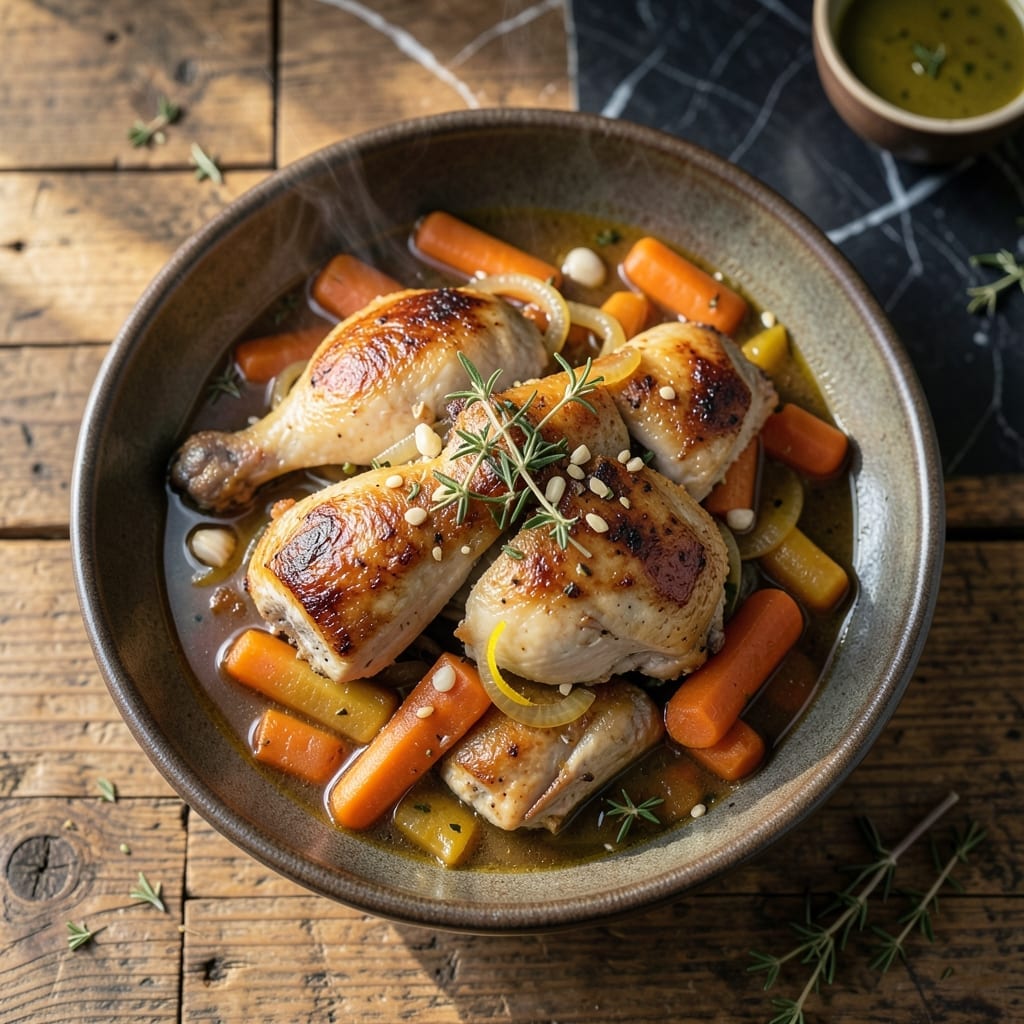
There’s nothing quite like a bowl of slow-simmered chicken stew to bring warmth to the coldest days. This rustic dish transforms simple ingredients into a comforting meal that feels like a hug in edible form.
I’ve perfected this method over years of Sunday dinners, focusing on low and slow cooking to develop deep, rich flavors. The chicken becomes fall-off-the-bone tender while the vegetables absorb the savory broth.
The secret lies in building layers—browning the chicken first, then deglazing with broth to capture every bit of flavor. Each spoonful delivers tender meat, soft vegetables, and a rich broth that soaks perfectly into crusty bread.
Whether serving family or meal prepping for the week, this stew delivers comfort that only improves with time. The flavors meld together beautifully, making leftovers taste even better the next day.
Ingredients for Chicken Stew
Simple ingredients transform into a hearty bowl of rustic comfort with every spoonful.
| Ingredient | Amount | Notes |
|---|---|---|
| Chicken Thighs 🍗 | 2 lb | Boneless, skinless preferred |
| Chicken Breasts 🍗 | 1 lb | Boneless, skinless, cut into chunks |
| Olive Oil 🫒 | 2 tbsp | Divided for browning and cooking |
| Yellow Onion 🧅 | 1 whole | Medium, diced |
| Garlic Cloves 🧄 | 4 cloves | Minced for depth of flavor |
| Carrots 🥕 | 3 whole | Peeled, sliced into rounds |
| Celery Stalks 🌿 | 3 whole | Sliced thinly for base |
| Russet Potatoes 🥔 | 2 whole | Peeled, cut into cubes |
| Chicken Broth 💧 | 6 cups | Low-sodium for control |
| Tomato Paste 🍅 | 2 tbsp | For umami richness |
| Dried Thyme 🍃 | 1 tsp | For earthy warmth |
| Dried Rosemary 🍃 | 1 tsp | Crushed between fingers |
| Bay Leaves 🍃 | 2 pieces | Whole, removed before serving |
| Kosher Salt 🧂 | 1 tsp | Adjust to taste |
| Black Pepper 🌶️ | ½ tsp | Freshly ground preferred |
The chicken is the foundation. Thighs and breasts together give you both richness and lean texture. For the best results, use bone-in, skin-on if you have time to skim the fat—it adds incredible depth. I source mine from Whole Foods or a trusted local butcher. The vegetables should be fresh but don’t stress over organic unless that’s your preference (the carrots and celery are the backbone here).
No chicken thighs? Doubling the breasts works, but add a splash of cream or coconut milk for richness. Swap the fresh herbs for dried—use one-third the amount. If you’re out of tomato paste, 1 tbsp ketchup in a pinch adds similar depth. The broth can be vegetable if you’re avoiding meat, but chicken broth gives that classic flavor. Frozen veggies? They work fine (just thaw first).
This stew tastes even better the next day—store in the fridge for up to 4 days. Freeze portions for 3 months (remove bay leaves first). Reheat gently on the stove to keep the chicken from breaking apart too much.
Why You’ll Love This Recipe
- One Pot Wonder: I brown the chicken thighs first, then everything simmers together—no extra pans, no fuss.
- Garlic & Onion Magic: The yellow onions and garlic cloves melt into the broth, making every bite ridiculously flavorful.
- Feeds a Crowd: I make a big batch on Sunday and we’re set for lunches all week.
- Budget Friendly: Chicken thighs keep it affordable, and I stretch it even further with extra veggies.
Step-by-Step Instructions for Chicken Stew
This method builds deep flavor through careful browning and a gentle, extended simmer.
Step 1: Brown the Chicken for Maximum Flavor
Heat 1 tablespoon Olive Oil in a large Dutch oven over medium-high heat. Season the 2 lb Chicken Thighs and 1 lb Chicken Breasts with 1 tsp Kosher Salt and 0.5 tsp Black Pepper. Working in batches, add the chicken to the pot and sear for 4-5 minutes per side until deeply golden brown.
Don’t crowd the pot—this lowers the temperature and steams the meat instead of browning it. Transfer the browned chicken to a plate and set aside. The fond left in the pot will become the base of your rich, flavorful broth.
Step 2: Build the Aromatic Base
Reduce heat to medium and add the remaining 1 tablespoon Olive Oil to the Dutch oven. Add the 1 whole Yellow Onion, 3 whole Carrots, and 3 whole Celery Stalks. Cook for 6-8 minutes, stirring occasionally, until the onion is translucent and the vegetables begin to soften.
Stir in the 4 cloves Garlic Cloves and 2 tbsp Tomato Paste, cooking for 1-2 minutes until the tomato paste darkens slightly. This step intensifies the umami flavor and creates a rich foundation for the stew.
Step 3: Simmer Until Tender and Flavorful
Return the chicken to the pot along with any accumulated juices. Add the 2 whole Russet Potatoes, 6 cups Chicken Broth, 1 tsp Dried Thyme, 1 tsp Dried Rosemary, and 2 pieces Bay Leaves. Bring to a boil, then reduce heat to low and cover.
Let the stew simmer gently for 45-50 minutes, stirring occasionally, until the chicken is fork-tender and the potatoes are easily pierced with a knife. Skim any excess fat from the surface during cooking to keep the stew clean and balanced.
Step 4: Adjust and Serve
Remove and discard the bay leaves. Taste the stew and adjust seasoning if needed, though the initial browning and slow simmer should have built plenty of flavor. The chicken should be falling-apart tender, and the vegetables should be soft but still holding their shape.
Ladle the stew into bowls while hot. The broth should be rich and deeply flavored, with a velvety texture from the dissolved tomato paste and rendered chicken fat. Serve with crusty bread to soak up every last bit of this comforting dish.
Pro Tips For Making Chicken Stew
- Brown the Chicken: I learned this the hard way—skip rushing the browning step. Give the chicken thighs and breasts 3-4 minutes per side in hot olive oil until golden; it builds flavor that simmers through the whole stew.
- Sear the Onions: After pulling the chicken out, toss the diced yellow onion into the same pot and let it caramelize for 5-7 minutes. Sounds tedious, but it adds a deep sweetness that raw onions just can’t.
- Skip Overcrowding: Brown the chicken in batches—yes, even if you’re impatient like me. Crowding the pot steams the meat instead of searing it, and you’ll end up with pale, sad chicken.
- Smash the Garlic: Instead of mincing, lightly smash the garlic cloves with the side of your knife before adding them. It releases more aroma with less effort, and you can pull the cloves out before serving if you prefer.
Make-Ahead Tips for chicken stew
Prep Ahead Strategy
I always chop all my vegetables the night before—onion, carrots, and celery stay fresh in sealed containers. Store the prepped 2 lb Chicken Thighs and 1 lb Chicken Breasts in the fridge on a plate to catch any drips. This cuts morning prep to 10 minutes flat. ⏰
Slow Cooker Method
Brown the chicken first for flavor, then transfer everything to your slow cooker. Cook on low for 6-7 hours or high for 3-4 hours. I use a Crock-Pot with a locking lid for easy transport to potlucks.
Fridge Storage
Cool the stew completely before refrigerating in airtight containers. It keeps for 4-5 days, and the flavors deepen beautifully. I portion mine into 2-cup containers for easy grab-and-go lunches.
Freezer Friendly
This stew freezes wonderfully for up to 3 months. I use quart-size freezer bags laid flat to save space. Label with the date and reheat-from-frozen instructions for future me. ❄️
Reheating Tips
Thaw overnight in the fridge, then reheat on the stove over medium-low heat for 10-15 minutes. Add a splash of broth if it’s too thick. Microwave works in 2-minute bursts, stirring between each.
Day-Of Assembly
If short on time, brown the chicken in advance and refrigerate. In the morning, just add the remaining ingredients and simmer. The 45-50 minute cook time remains the same, but you’ll save 15 minutes of active prep.
Nutrition Facts
Frequently Asked Questions
Can I use chicken breasts instead of thighs?
Yes, but thighs add richness and stay juicier during long cooking. If using only breasts, add 1 cup of broth extra and reduce simmer time to 30-35 minutes to prevent dryness.
Why do I need to brown the chicken first?
Browning creates a flavorful fond that enriches the stew broth. Skipping this step results in a paler dish with less depth. The Maillard reaction adds complex, savory notes.
Can I make this in a slow cooker?
Brown the chicken first, then cook on low for 6-7 hours or high for 3-4 hours. The flavors meld beautifully with this hands-off method.
What if my stew is too thin?
Simmer uncovered for 10-15 minutes to reduce and thicken. Alternatively, mix 1 tablespoon cornstarch with cold water and stir in during the last 5 minutes.

- Jollof Rice Sauce Recipe: West African Tomato and Spice Infusion - September 25, 2026
- Japanese Rice Soup Recipe: Umami-Rich Comfort in a Bowl - September 25, 2026
- Homemade Cream Of Rice Recipe: Silk-Smooth Breakfast in Minutes - September 25, 2026