
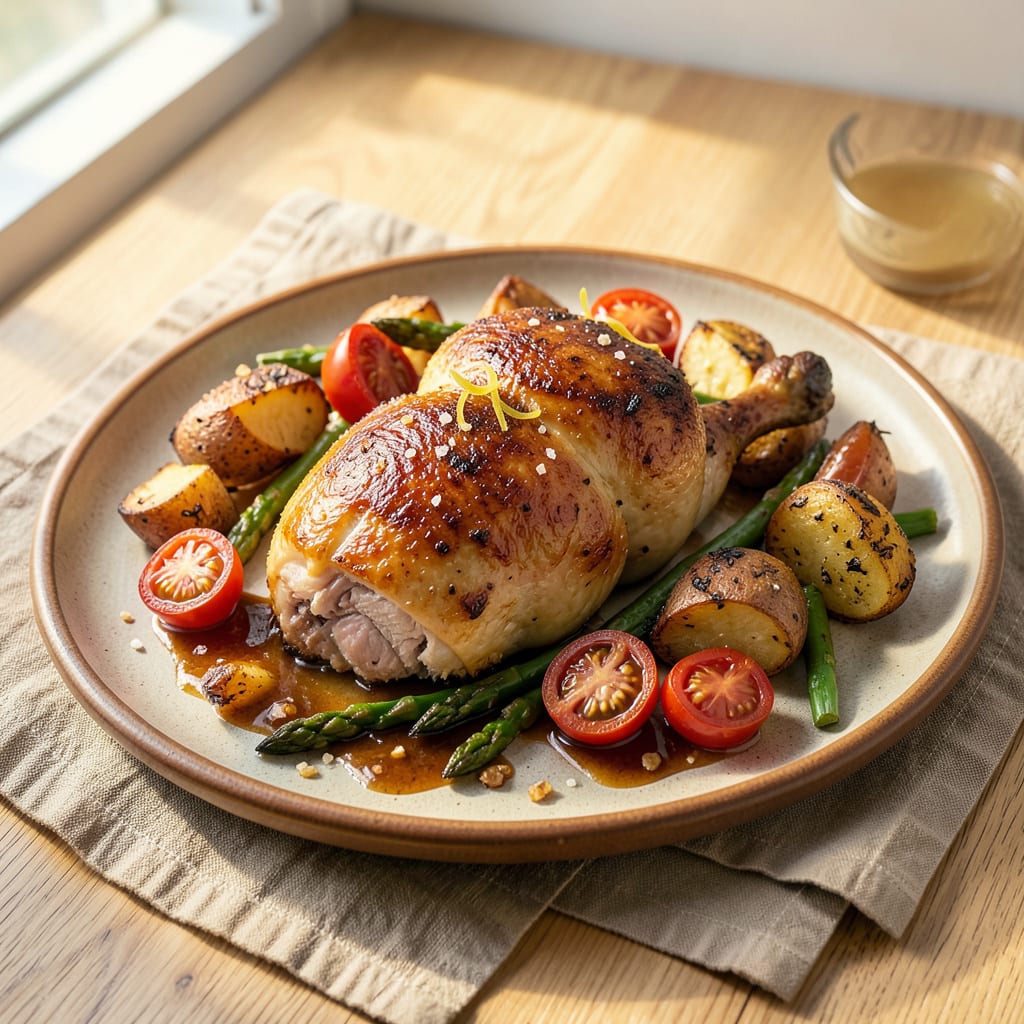
Browned chicken has a golden to deep amber crust with crispy edges, while the meat stays juicy inside. The surface should be evenly colored without blackened spots, indicating proper Maillard reaction for rich flavor development.
This perfect balance of color and texture is what separates good chicken from great. 🔥 The golden-brown hue comes from proteins and sugars reacting at high heat, creating complex flavors that taste far richer than pale, steamed chicken. I always look for that satisfying crunch when biting into the skin—it should resist slightly before giving way to tender meat underneath.
What’s fascinating is how the color gradient tells you about doneness. A light golden shade means it’s just starting to develop flavor, while that deep amber signals maximum crispiness. The key is watching for uniform color—no splotchy areas or burnt edges, which happen when heat isn’t properly controlled.
💡 In This Article
- The Science Behind Perfectly Browned Chicken Skin
- How to Achieve Even Browning on Chicken Every Time
The Science Behind Perfectly Browned Chicken Skin
That irresistible golden-brown crust forms through the Maillard reaction—a complex chemical process where amino acids and reducing sugars react at temperatures between 300-400°F. Unlike caramelization (which only involves sugars), this reaction transforms proteins and sugars simultaneously, creating hundreds of new flavor compounds. The result? A nutty, savory depth you can’t achieve through simple cooking.
Here’s what’s actually happening at the molecular level: As heat breaks down proteins, they rearrange into new structures that reflect light differently—giving that rich amber color. The ideal browning temperature range (325-375°F) allows this reaction to proceed without burning.
🔥 Too low and you’ll get pale, rubbery skin; too high and you risk bitter, blackened spots from carbonization.
Moisture is the enemy of perfect browning. Wet skin steams instead of sears, preventing the necessary dry surface for Maillard reactions. That’s why professional chefs always pat chicken completely dry before cooking—removing surface moisture allows the skin to reach the critical 212°F threshold where water evaporates and browning begins.
The drier the surface, the more intense the color and crunch.
The fat content in chicken skin plays a crucial role too. As the skin renders, fat acts as a conductor for heat distribution while creating that signature crispy texture. Thin-skinned pieces like breasts brown faster than thighs because they have less fat to render.
This explains why dark meat often develops deeper color—those extra fat layers promote more aggressive Maillard reactions.
What most people don’t realize is that pH affects browning too. Chicken skin’s natural acidity (pH around 5.7) actually slows the Maillard reaction slightly compared to more alkaline proteins.
This is why marinades with lemon juice or vinegar can inhibit browning—lowering the pH further requires higher heat or longer cooking to achieve the same color development.
Timing matters more than you think. The browning process typically takes 8-12 minutes at proper heat levels. 💫 That window allows for complete protein denaturation and sugar caramelization without crossing into burnt territory. The visual cue?
When the edges start curling slightly and the color transitions from pale yellow to rich amber, you’re in the perfect browning zone.
Pro tip: The “browning zone” isn’t just about color—it’s about sound too. Properly browning chicken should sizzle consistently at a medium-high pitch. If the sizzle stops, your pan isn’t hot enough; if it’s crackling violently, you’re risking burnt flavors rather than developed ones. This auditory feedback is your secret weapon for perfect results every time.

- Jollof Rice Sauce Recipe: West African Tomato and Spice Infusion - September 25, 2026
- Japanese Rice Soup Recipe: Umami-Rich Comfort in a Bowl - September 25, 2026
- Homemade Cream Of Rice Recipe: Silk-Smooth Breakfast in Minutes - September 25, 2026