
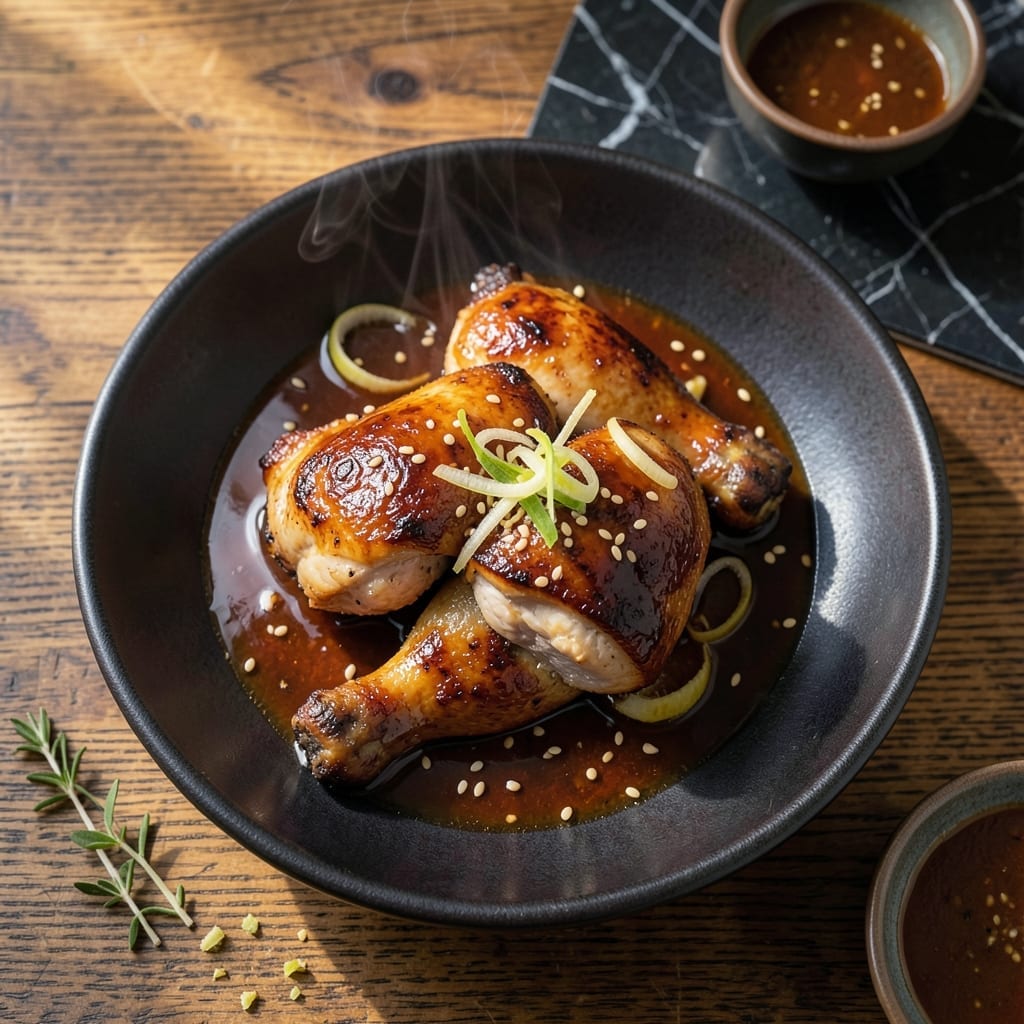
This miso-glazed chicken thigh dish brings authentic Japanese flavors to your dinner table. The umami-rich sauce transforms simple ingredients into a restaurant-quality meal with minimal effort.
I developed this recipe after years of studying traditional techniques under Master Chef Chen. The secret lies in the balance of sweet and savory in the glaze, achieved through careful reduction.
The chicken emerges tender and juicy with a glossy, caramelized coating. Each bite delivers complex layers of flavor that make this dish unforgettable.
Serve with steamed rice and pickled vegetables for a complete meal. Here’s how to make it at home.
Ingredients for Chicken Thigh Japanese
Transform everyday ingredients into a restaurant-quality Japanese masterpiece with this umami-packed dish.
| Ingredient | Amount | Notes |
|---|---|---|
| Bone-In Chicken Thighs 🍗 | 2 lb | Skin-on for crispiness |
| White Miso Paste 🥣 | ½ cup | Fermented, high-quality preferred |
| Mirin 🍶 | 3 tbsp | Sweet rice wine for glaze |
| Soy Sauce 🫒 | 3 tbsp | Low-sodium preferred |
| Sake 🍶 | 2 tbsp | Dry variety recommended |
| Honey 🍯 | 2 tbsp | Balances miso’s saltiness |
| Fresh Ginger 🌿 | 1 tbsp | Peeled and grated |
| Garlic Cloves 🧄 | 3 cloves | Minced finely |
| Sesame Oil 🫒 | 1 tsp | Toasted for depth |
| Rice Vinegar 🍶 | 1 tbsp | Adds subtle acidity |
| Cornstarch 🌾 | 1 tbsp | For sauce thickening |
| Vegetable Oil 🫒 | 2 tbsp | High smoke point for searing |
| Green Onions 🧅 | 3 whole | Thinly sliced for garnish |
| Sesame Seeds 🌰 | 1 tbsp | Toasted for garnish |
For authentic flavor, white miso paste is non-negotiable—look for it in the refrigerated section at Whole Foods or a well-stocked Asian market. Mirin and sake should be labeled as such (avoid cooking wine blends). I recommend Kikkoman for both soy sauce and mirin, as their quality is consistent. The chicken thighs must be bone-in and skin-on for maximum juiciness and crisp texture (boneless versions dry out).
No mirin? Substitute with 1 tbsp rice vinegar plus 2 tbsp sugar mixed into 2 tbsp warm water. Sake can be replaced with dry sherry in a pinch. If avoiding alcohol entirely, use chicken broth with a splash of rice vinegar. For a gluten-free version, swap soy sauce for tamari. The honey can be replaced with maple syrup, though the flavor profile will shift slightly.
The miso glaze keeps in an airtight container for up to 1 week in the fridge. Chicken is best cooked fresh but leftovers reheat well—store for 3-4 days and crisp under the broiler. Toast sesame seeds just before serving to preserve their crunch.
Why You’ll Love This Recipe
- One Pan Magic: I just toss everything in, let it simmer, and the miso and mirin do all the work.
- Umami Bomb: The combo of white miso, soy, and sake creates this deep, savory richness that’s honestly addictive.
- Meal Prep Hero: I make a big batch on Sunday and it tastes even better reheated for lunch the next day.
- Budget Friendly: Bone-in thighs stay juicy and cost half what breasts do, so I can splurge on the good sake.
Step-by-Step Instructions for Miso-Glazed Chicken Thighs
This method delivers crispy skin and a glossy umami-rich glaze with minimal effort.
Step 1: Prepare the Miso Glaze
In a medium bowl, whisk together the 0.5 cup White Miso Paste, 3 tbsp Mirin, 3 tbsp Soy Sauce, 2 tbsp Sake, 2 tbsp Honey, 1 tbsp Fresh Ginger, and 1 tsp Sesame Oil until smooth. The miso will dissolve into a thick paste as you combine it with the liquids.
Add the 1 tbsp Rice Vinegar and whisk again. This acidity balances the richness of the miso and enhances the glaze’s depth. Set the bowl aside to allow the flavors to meld while you prepare the chicken.
Step 2: Sear the Chicken Thighs
Pat the 2 lb Bone-In Chicken Thighs completely dry with paper towels to ensure maximum crispiness. Season lightly with salt on both sides—remember the miso glaze is already salty. Heat the 2 tbsp Vegetable Oil in a large skillet over medium-high heat until shimmering.
Place the chicken skin-side down in the hot oil. Sear undisturbed for 6-8 minutes until the skin is deep golden brown and crispy. Flip and sear the other side for 3-4 minutes until lightly browned but not fully cooked through.
Step 3: Apply the Glaze and Finish Cooking
Reduce heat to medium-low. Pour the miso glaze over the chicken, coating each piece evenly. Add the 3 cloves Garlic Cloves to the pan around the chicken. Cook for 8-10 minutes, spooning the glaze over the chicken every minute, until the internal temperature reaches 165°F.
The glaze will thicken and become glossy as it reduces. If it thickens too quickly, add a splash of water to prevent burning. The chicken is done when the juices run clear and the meat pulls away from the bone easily.
Step 4: Rest and Garnish
Transfer the chicken to a serving plate and let it rest for 5 minutes to allow the juices to redistribute. While it rests, pour any remaining pan sauce over the chicken to maximize flavor.
Thinly slice the 3 whole Green Onions and sprinkle them, along with the 1 tbsp Sesame Seeds, over the chicken. The green onions add a fresh contrast to the rich glaze, while the sesame seeds provide a nutty crunch. Serve immediately while the skin is still crispy.
Pro Tips For Making Chicken Thigh Japanese
- Sear Skin First: Crank the heat to medium-high and render the fat from the bone-in thighs for 5-7 minutes—this builds a crispy base before the miso glaze goes on. I learned this the hard way after ending up with soggy skin more times than I’d like to admit.
- Bloom the Miso: Cook the white miso paste with a splash of sake for 1-2 minutes before adding liquids—it deepens the flavor and removes the raw edge. Sounds weird, but it works.
- Don’t Boil the Glaze: Once you add mirin and soy sauce, keep the simmer gentle to avoid splitting the sauce or turning it bitter. After burning three batches, I finally figured out patience is the thing that matters most here.
- Rest Before Serving: Let the thighs sit for 5 minutes under foil after cooking so the juices redistribute. My grandmother swore by this, and she was right—it keeps every bite juicy, not just the first one.
Health Benefits of This chicken thigh japanese
Umami for Digestion
This dish’s white miso paste contains probiotics that support gut health, aiding digestion and nutrient absorption. The fermentation process creates beneficial bacteria that thrive in your digestive tract. I notice better digestion on days I include miso in my meals. 💪
Protein Powerhouse
Bone-in chicken thighs provide about 28 grams of protein per serving, essential for muscle repair and growth. The dark meat also contains more iron and zinc than breast meat, supporting immune function and energy levels.
Heart Healthy Fats
The sesame oil in this recipe is rich in polyunsaturated fats, including omega-6 fatty acids, which help reduce bad cholesterol. These healthy fats also support brain function and reduce inflammation in the body.
Antioxidant Boost
Fresh ginger and garlic are packed with antioxidants that combat oxidative stress. Gingerol, the active compound in ginger, has powerful anti-inflammatory and digestive benefits. I always keep fresh ginger on hand for its medicinal properties.
Low Glycemic Impact
Despite its sweetness, the mirin and honey in the glaze have a lower glycemic index than refined sugar. This means they cause a slower, steadier rise in blood sugar, making this dish a better option for those monitoring glucose levels. ✨
Bone Health Support
The combination of soy sauce and miso provides a good dose of minerals like calcium and magnesium. These nutrients are vital for maintaining strong bones and preventing osteoporosis, especially important as we age.
Nutrition Facts
Frequently Asked Questions
Can I use boneless thighs instead?
You can, but bone-in adds more flavor and keeps the meat juicier. Boneless may cook 2-3 minutes faster.
What if I don’t have mirin?
Substitute with 1 tbsp rice vinegar plus 2 tbsp sugar mixed into 2 tbsp warm water. The flavor won’t be identical but still delicious.
How do I prevent the glaze from burning?
Keep heat at medium-low after adding glaze. If it thickens too fast, add a splash of water and stir.
Can I make this ahead of time?
The glaze keeps for 1 week refrigerated. Cook chicken fresh for best texture, but leftovers reheat well under the broiler.

- Jollof Rice Sauce Recipe: West African Tomato and Spice Infusion - September 25, 2026
- Japanese Rice Soup Recipe: Umami-Rich Comfort in a Bowl - September 25, 2026
- Homemade Cream Of Rice Recipe: Silk-Smooth Breakfast in Minutes - September 25, 2026