
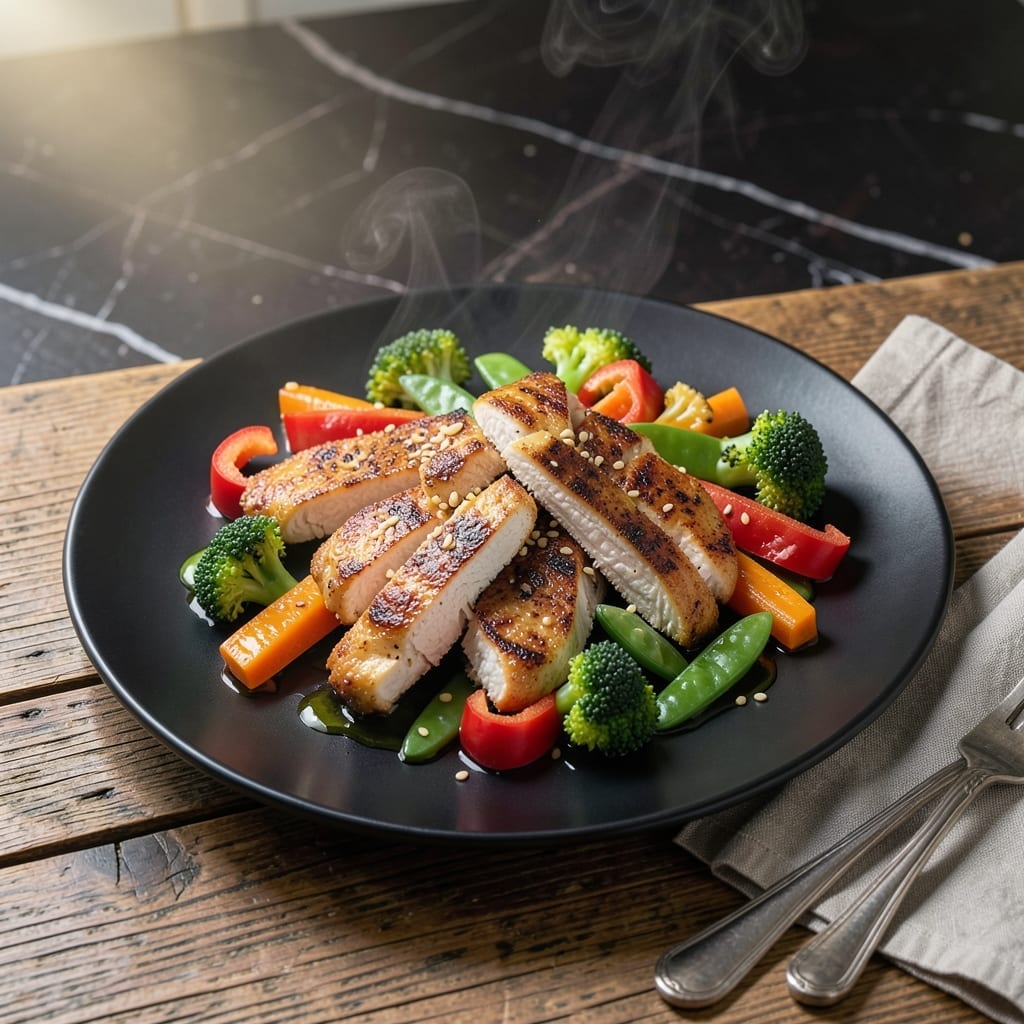
This vibrant stir-fry brings fresh garden vegetables and tender chicken together in a dish that’s as nutritious as it is flavorful. The key lies in high-heat cooking to lock in natural sweetness and crisp textures.
I developed this method to highlight seasonal produce while keeping the chicken juicy and perfectly cooked. A simple sauce ties everything together without overpowering the ingredients’ natural tastes.
You’ll end up with a colorful, restaurant-worthy meal that’s ready in under 30 minutes. The balance of tender chicken and crisp vegetables makes it a family favorite.
Serve it over steamed rice or noodles for a complete, satisfying dinner. Here’s how to make it.
Ingredients for Chicken Veg
Fresh veggies, tender chicken, and a simple sauce. Nothing complicated here.
| Ingredient | Amount | Notes |
|---|---|---|
| Boneless Skinless Chicken Breast 🍗 | 1 ¼ lb | Cut into thin strips |
| Bell Peppers 🌶️ | 2 whole | Sliced into strips, mixed colors |
| Broccoli Florets 🥦 | 3 cups | Fresh, bite-sized pieces |
| Carrots 🥕 | 2 whole | Julienned or thinly sliced |
| Snap Peas 🌱 | 1 cup | Fresh or frozen, thawed |
| Garlic Cloves 🧄 | 4 cloves | Minced finely |
| Fresh Ginger Root 🌿 | 1 tbsp | Peeled and grated |
| Soy Sauce 🫕 | 3 tbsp | Low-sodium preferred |
| Oyster Sauce 🫕 | 1 tbsp | Optional for depth |
| Sesame Oil 🫒 | 1 tsp | Toasted for aroma |
| Rice Vinegar 🍚 | 1 tbsp | For brightness |
| Brown Sugar 🍚 | 1 tsp | Light or dark |
| Cornstarch 🌾 | 1 tbsp | For thickening sauce |
| Vegetable Oil 🫒 | 2 tbsp | High smoke point for stir-frying |
| Green Onions 🧅 | ½ cup | Sliced for garnish |
The chicken is the star—boneless, skinless breasts stay juicy when sliced thin against the grain. Costco has great pre-trimmed options if you’re short on time, but any supermarket will do. Look for vibrant, firm vegetables—the bell peppers should feel heavy for their size, and the broccoli should be deep green (no yellowing). Fresh ginger and garlic are non-negotiable here; the jarred stuff just doesn’t cut it.
No bell peppers? Zucchini or mushrooms work in a pinch. Swap snap peas for snow peas or sliced green beans. Vegetarian? Extra-firm tofu (pressed and cubed) holds up beautifully. If you’re avoiding gluten, tamari instead of soy sauce does the trick. The oyster sauce can be skipped entirely, but if you’re going for that umami depth, vegetarian oyster sauce is a solid stand-in.
Everything cooks fast, so prep all your ingredients before heating the pan. Leftovers keep for 3-4 days in the fridge—reheat gently to avoid soggy veggies. The sauce thickens as it cools, so if it seems thin right after cooking, give it 10 minutes off the heat (worth the wait).
Why You’ll Love This Recipe
- One Pan Wonder: I toss the chicken, bell peppers, and snap peas on a single sheet pan—roast, serve, and only one dish to wash.
- Crave-Worthy Bite: The carrots caramelize while the chicken stays juicy, and that combo with crisp broccoli? I make it twice a week.
- Meal Prep MVP: It reheats beautifully, so I pack it for lunches all week. Honestly, it tastes even better the next day.
- Budget Stretcher: A pound of chicken breast and a handful of veggies feed my family for two meals without breaking the bank.
Step-by-Step Instructions for Chicken Veg Stir-Fry
This method delivers crisp-tender vegetables and juicy chicken with a glossy, flavor-packed sauce.
Step 1: Prep Chicken and Make Sauce Base
Cut the 1.25 lb Boneless Skinless Chicken Breast into thin, even strips—about ¼-inch thick and 2 inches long. Uniform pieces ensure even cooking. Toss the chicken with the 1 tbsp Cornstarch until lightly coated; this creates a velvety texture and helps the sauce cling.
In a small bowl, whisk together the 3 tbsp Soy Sauce, 1 tbsp Oyster Sauce, 1 tsp Sesame Oil, 1 tbsp Rice Vinegar, and 1 tsp Brown Sugar. Set this sauce aside. Here’s the thing—tasting it now tells you if it needs balancing (a pinch more sugar or splash of vinegar).
Step 2: Stir-Fry Chicken Until Just Cooked
Heat 1 tbsp Vegetable Oil in a wok or large skillet over high heat until shimmering. Add the chicken in a single layer and let it sear undisturbed for 1 minute before stirring. Cook for 4-5 minutes total until the pieces are no longer pink inside but still juicy.
Transfer the chicken to a clean plate. Don’t overcrowd the pan—if needed, cook in batches. The chicken should have a light golden sear on the edges. Real talk: if it looks dry, you’ve cooked it too long. The residual heat will finish it as it rests.
Step 3: Cook Vegetables in Stages
Add the remaining 1 tbsp Vegetable Oil to the same pan. Start with the 2 whole Carrots (julienned) and stir-fry for 2 minutes until slightly softened. Then add the 2 whole Bell Peppers (sliced) and 1 cup Snap Peas, cooking for another 2-3 minutes until the peppers begin to blister.
Toss in the 3 cups Broccoli Florets, 4 cloves Garlic Cloves (minced), and 1 tbsp Fresh Ginger Root (grated). Stir-fry for 2 minutes until the broccoli turns bright green and the garlic is fragrant but not browned. The veggies should still have a slight bite—they’ll soften further in the sauce.
Step 4: Combine and Finish with Sauce
Return the chicken to the pan along with any accumulated juices. Pour the sauce over everything and stir well to coat. Cook for 1-2 minutes until the sauce thickens slightly and glazes the chicken and vegetables. The sauce should look glossy and coat the back of a spoon.
Remove from heat and stir in the 0.5 cup Green Onions. Taste and adjust seasoning if needed. The dish should have a balance of savory, sweet, and tangy notes with a hint of umami from the oyster sauce. Serve immediately over steamed rice or noodles for the best texture.
Pro Tips For Making Chicken Veg
- Cut Evenly: Slice the chicken breast into uniform 1-inch pieces so they cook at the same rate—no more dry, overdone bits while waiting for the thick ones to finish.
- Blanch the Broccoli: Toss broccoli florets in boiling water for 30 seconds before stir-frying to keep them bright green and crisp-tender, not mushy.
- Skip the Crowd: Cook the chicken in a single layer with space between pieces—crowding steams it instead of searing, and nobody wants rubbery chicken.
- Use Cold Water: After cutting bell peppers, rinse them in cold water to remove excess starch so they stay crisp in the final dish instead of turning soggy.
Troubleshooting This Dish
Soggy Vegetables
Overcrowding the pan steams instead of stir-fries. Work in batches if needed—2 cups veggies max per batch in a standard skillet. Keep the heat at high and resist stirring too often; let ingredients sear for 1-2 minutes before tossing. 🔥
Dry Chicken
Slicing too thick causes uneven cooking. Aim for ¼-inch strips, and don’t overcook—pull the chicken at 160°F internal temp. The residual heat will finish it to 165°F. Tossing with cornstarch before cooking adds moisture-retaining protection.
Thin Sauce
If your sauce is watery, simmer uncovered for 1-2 minutes after combining. The cornstarch needs heat to thicken properly. If it’s still thin, mix ½ tsp cornstarch with 1 tsp cold water, stir into the sauce, and cook for 30 seconds.
Bitter Garlic
Burnt garlic turns bitter fast. Add it only in the last 2 minutes of cooking the veggies. Keep the heat at medium-high (not max) when garlic is in the pan. If it browns too quickly, remove the pan from heat briefly to cool it down.
Uneven Cooking
Cut all vegetables uniformly—julienned carrots and thin bell pepper strips cook at the same rate. Start with the hardest veggies (carrots) first, then add quicker-cooking ones (snap peas) later. This staged approach ensures everything finishes together. 💡
Sticky Pan
Use a well-seasoned wok or cast iron skillet for best results. If food sticks, your pan isn’t hot enough—wait until oil shimmers before adding ingredients. A metal spatula helps release any stubborn bits without damaging the pan.
Nutrition Facts
Frequently Asked Questions
Can I use frozen vegetables?
Yes, but thaw and pat them completely dry first to prevent excess moisture. frozen veggies can make the dish watery.
What’s the best oil for stir-frying?
Use oils with a high smoke point like vegetable, peanut, or avocado oil. Avoid olive oil as it can burn at high heat.
How do I keep the chicken tender?
Slice it thin (¼-inch strips) and cook just until 160°F. The cornstarch coating also helps retain moisture.
Can I make this ahead of time?
Prep ingredients in advance, but cook just before serving for best texture. Leftovers keep 3-4 days in the fridge.

- Jollof Rice Sauce Recipe: West African Tomato and Spice Infusion - September 25, 2026
- Japanese Rice Soup Recipe: Umami-Rich Comfort in a Bowl - September 25, 2026
- Homemade Cream Of Rice Recipe: Silk-Smooth Breakfast in Minutes - September 25, 2026