
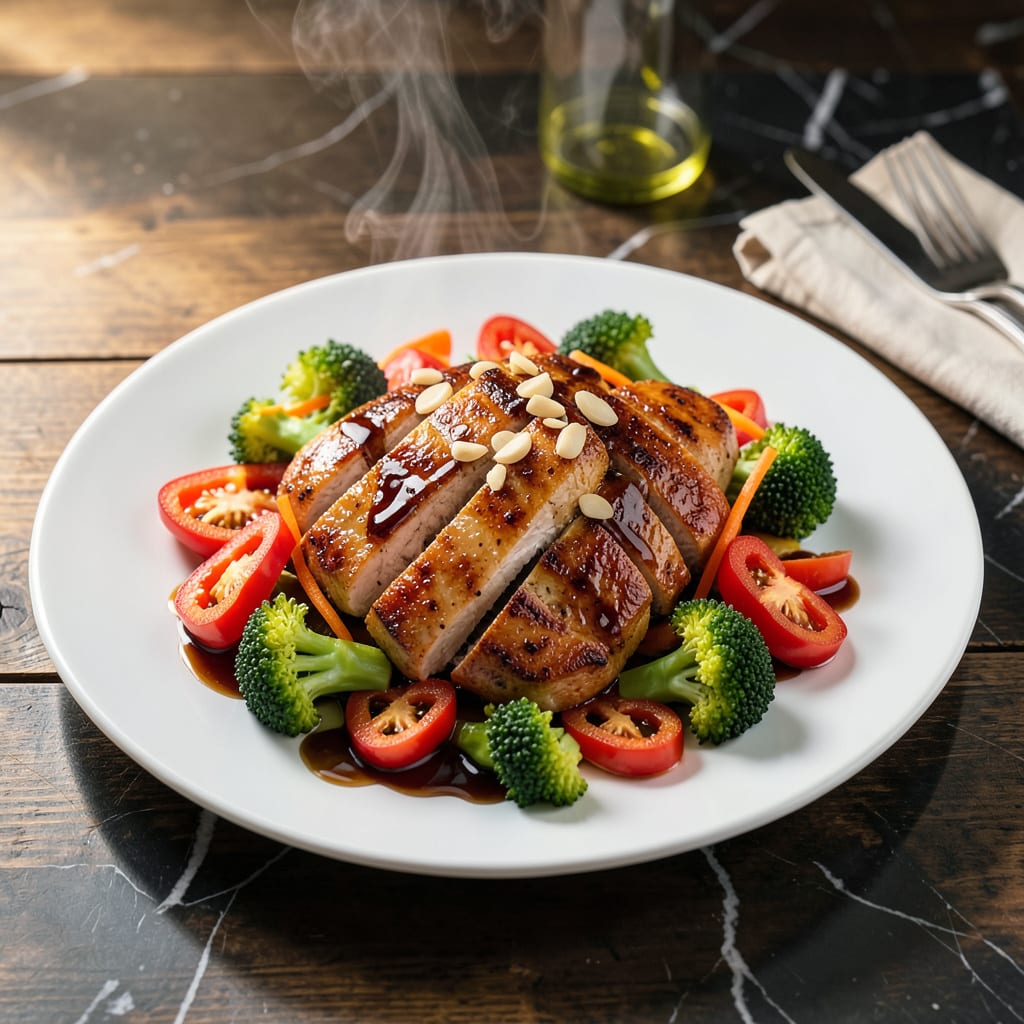
This pan-seared dish transforms simple ingredients into a restaurant-quality meal with minimal effort. The soy sauce glaze creates a rich umami coating that elevates both chicken and vegetables.
With just one pan and 20 minutes, you’ll achieve tender chicken, crisp-tender vegetables, and a glossy, savory sauce that ties everything together perfectly.
Ingredients for Chicken Vegetables Soy Sauce
Simple, fresh ingredients for a pan-seared dish with restaurant-quality results.
| Ingredient | Amount | Notes |
|---|---|---|
| Chicken Breast 🍗 | 1 ½ lb | Boneless, skinless, cut into strips |
| Broccoli Florets 🥦 | 3 cups | Fresh or frozen, thawed |
| Red Bell Pepper 🌶️ | 1 whole | Thinly sliced into strips |
| Carrot 🥕 | 1 whole | Peeled, julienned |
| Garlic Cloves 🧄 | 4 cloves | Minced finely |
| Fresh Ginger 🌿 | 1 tbsp | Peeled, grated |
| Soy Sauce 💧 | ⅓ cup | Low-sodium preferred |
| Honey 🍯 | 2 tbsp | For balancing sweetness |
| Rice Vinegar 🍚 | 2 tbsp | For acidity |
| Sesame Oil 🫒 | 1 tbsp | Toasted for depth |
| Cornstarch 🌾 | 1 tbsp | For thickening glaze |
| Neutral Oil 🫒 | 2 tbsp | Avocado or vegetable oil |
| Green Onions 🧅 | 3 whole | Thinly sliced for garnish |
| Sesame Seeds 🌰 | 1 tsp | Toasted for garnish |
[recipeingredientscaler]
The chicken is the foundation—boneless, skinless breasts ensure even cooking and tender results. For vegetables, broccoli florets, red bell pepper, and carrots provide the perfect crisp-tender contrast. Source these from Whole Foods or your local market for optimal freshness. The ginger and garlic, when freshly prepared, deliver the aromatic base that defines this dish.
No soy sauce? Tamari or coconut aminos work as direct substitutes. Out of honey? Brown sugar or maple syrup can balance the glaze. The rice vinegar can be replaced with apple cider vinegar in a pinch. For a gluten-free version, use tamari instead of soy sauce and ensure cornstarch is labeled gluten-free.
Store raw chicken in the coldest part of your fridge—use within 2 days. Vegetables keep for 1 week in the crisper drawer. The glaze components can be pre-mixed and stored in an airtight container for up to 5 days.
Why You’ll Love This Recipe
- One Pan Meal: I toss the chicken, broccoli, bell pepper, and carrots together with a splash of soy sauce—no extra pots, no fuss.
- Garlic Soy Magic: The garlic cloves caramelize in the soy sauce, making every bite of chicken and veggies ridiculously savory.
- Meal Prep Hero: I make a big batch on Sunday, and it reheats beautifully for lunches all week.
- Budget Stretcher: Chicken breast and seasonal veggies keep this dish light on the wallet but heavy on flavor.
Step-by-Step Instructions for Chicken Vegetables Soy Sauce
Master this technique for perfectly seared chicken and vibrant vegetables with a glossy umami glaze.
Step 1: Prepare the Chicken and Vegetables
Cut the 1.5 lb chicken breast into even ½-inch thick strips to ensure uniform cooking. Pat them completely dry with paper towels—this step is crucial for achieving a proper sear rather than steaming the meat.
Thinly slice the red bell pepper into strips and julienne the carrot. Trim the broccoli florets into bite-sized pieces. Mince the 4 cloves garlic cloves and grate the 1 tbsp fresh ginger. Thinly slice the 3 whole green onions, separating the whites from the greens.
Step 2: Sear the Chicken to Golden Perfection
Heat 2 tbsp neutral oil in a large skillet or wok over medium-high heat until shimmering. Add the chicken strips in a single layer, working in batches if necessary to avoid crowding the pan. Sear undisturbed for 3-4 minutes per side until golden brown and cooked through to 165°F internally.
Remove the chicken from the skillet and set aside. The residual oil in the pan will provide the perfect base for cooking the vegetables and building the sauce.
Step 3: Stir-Fry the Vegetables Until Tender-Crisp
In the same skillet, add the sliced red bell pepper and julienned carrot. Stir-fry over medium-high heat for 3 minutes until the vegetables begin to soften. Add the 3 cups broccoli florets, minced garlic, and grated ginger, then stir-fry for another 2-3 minutes until the broccoli turns bright green and all vegetables are tender-crisp.
Add the white parts of the green onions and cook for 30 seconds until fragrant. This layering of ingredients builds depth of flavor in the dish.
Step 4: Create the Umami Glaze and Combine
In a small bowl, whisk together the 0.33 cup soy sauce, 2 tbsp honey, 2 tbsp rice vinegar, 1 tbsp sesame oil, and 1 tbsp cornstarch until smooth. Pour this mixture into the skillet with the vegetables and stir well to combine.
Return the seared chicken to the skillet and toss everything together. Cook for an additional 1-2 minutes until the sauce thickens into a glossy glaze that coats the chicken and vegetables evenly. The cornstarch will create that desirable, slightly sticky texture that defines this dish.
Step 5: Garnish and Serve Immediately
Transfer the chicken and vegetables to a serving platter. Sprinkle with the sliced green onion tops and 1 tsp sesame seeds for a pop of color and nutty flavor. The sesame seeds add a delightful crunch that contrasts beautifully with the tender chicken and crisp vegetables.
Serve immediately while hot, as the glaze is at its best when fresh. Each serving should feature a balance of chicken, vegetables, and that irresistible umami sauce that ties everything together.
Pro Tips For Making Chicken Vegetables Soy Sauce
- Velvet the Chicken: Slice the chicken breast into even, thin strips and marinate with 1 tsp cornstarch and 1 tbsp soy sauce for 15 minutes—I learned this the hard way after dealing with rubbery chicken for years.
- Blanch the Broccoli: Toss broccoli florets in boiling water for 60 seconds before stir-frying, then shock in ice water. Sounds like extra work, but it keeps them bright green and crisp-tender in the final dish.
- Don’t Crowd the Pan: Cook the chicken in batches if needed—overcrowding steams instead of sears, and you’ll end up with pale, soggy pieces instead of that golden brown crust.
- Prep All Ingredients: Have everything chopped, minced, and measured before you start cooking. After burning garlic twice while scrambling to slice peppers, I finally accepted this was non-negotiable.
Storing and Reheating chicken vegetables soy sauce
Refrigerator Storage
Let this dish cool for no more than 2 hours before transferring to airtight containers. It keeps in the fridge at 40°F or below for up to 4 days. The flavors actually deepen as the soy glaze melts into the chicken and vegetables. ❄️
Freezer Storage
For longer storage, freeze in quart-sized freezer bags with excess air removed. It maintains quality for up to 3 months. Leave 1 inch of headspace for expansion. I recommend flat freezing for efficient stackability.
Stovetop Reheating
This is my preferred method. Warm in a skillet over medium-low heat with 2 tbsp water or chicken broth for 5-7 minutes. Stir occasionally until heated through to 165°F. The added liquid prevents the sauce from drying out. 🔥
Microwave Reheating
Place portions in a microwave-safe dish, cover with a damp paper towel, and heat on 70% power for 2-3 minutes. Stir, then continue in 30-second intervals until reaching 165°F. Add a splash of water if it looks dry.
Nutrition Facts
Frequently Asked Questions
Can I use chicken thighs instead of breast?
Chicken thighs stay juicier and can handle longer cooking. Use 1.5 lb boneless, skinless thighs and cook to 175°F for best results.
What if my sauce is too thin?
Mix 1 tsp cornstarch with 1 tbsp cold water and stir into the simmering sauce. Cook for 1-2 minutes until thickened. Avoid over-thickening as it will congeal when cool.
Can I add other vegetables?
Yes! Snow peas, mushrooms, or snap peas work well. Add delicate veggies like spinach at the very end to avoid overcooking.
How do I make this gluten-free?
Swap regular soy sauce for tamari and use certified gluten-free cornstarch. Always check labels to ensure no cross-contamination.

- Jollof Rice Sauce Recipe: West African Tomato and Spice Infusion - September 25, 2026
- Japanese Rice Soup Recipe: Umami-Rich Comfort in a Bowl - September 25, 2026
- Homemade Cream Of Rice Recipe: Silk-Smooth Breakfast in Minutes - September 25, 2026