
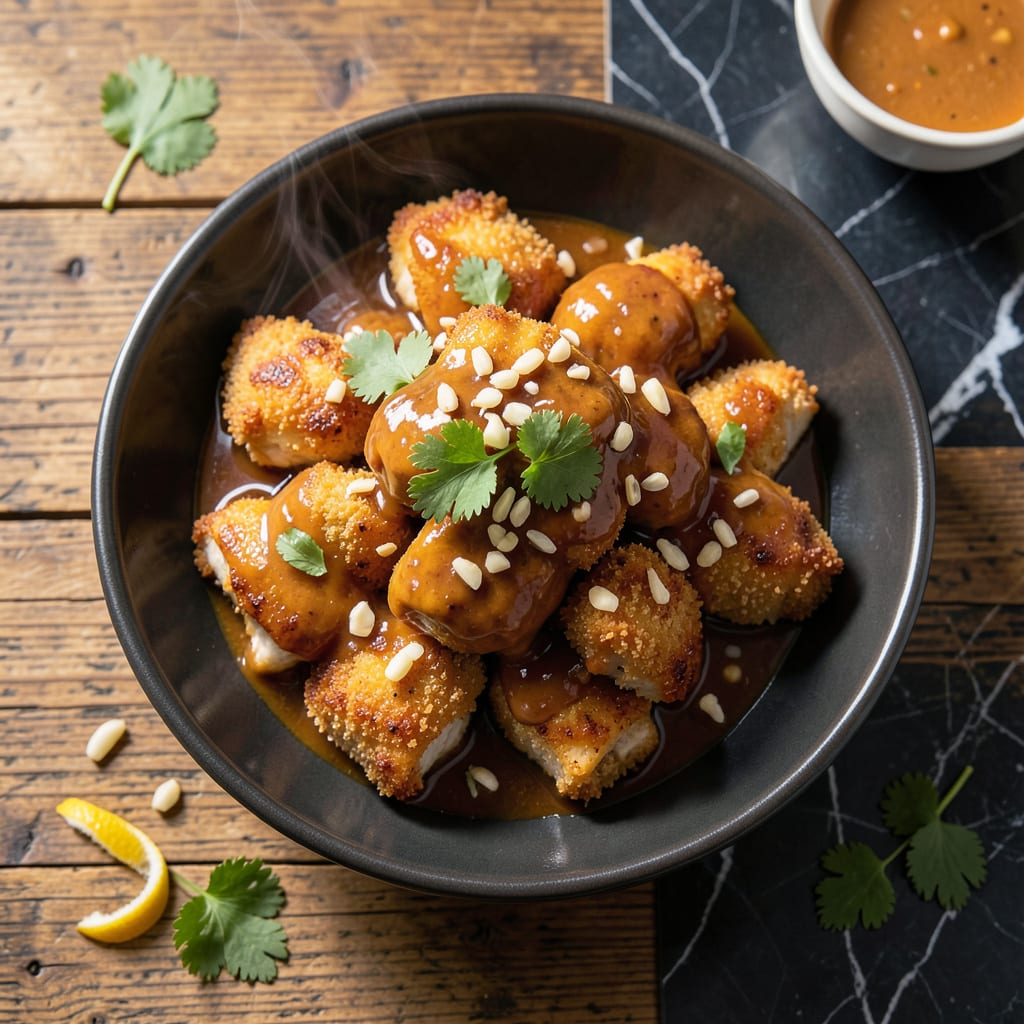
This Cantonese classic brings restaurant flavor straight to your kitchen table. I’ve recreated that signature rich, savory lobster sauce that coats every piece of tender chicken.
What you’ll get is a dish with velvety sauce and juicy chicken that tastes just like your favorite takeout. Simple ingredients, big results.
Ingredients for Chicken with Lobster Sauce
Velvety sauce and juicy chicken come from these carefully chosen ingredients.
| Ingredient | Amount | Notes |
|---|---|---|
| Boneless Skinless Chicken Thighs 🍗 | 1 ½ lb | Cut into bite-sized pieces |
| Large Eggs 🥚 | 2 whole | Lightly beaten for velvety texture |
| Cornstarch 🌾 | ½ cup | For coating chicken |
| Vegetable Oil 🫒 | ½ cup | For frying, neutral flavor |
| Garlic Cloves 🧄 | 4 cloves | Minced finely for depth |
| Fresh Ginger 🌿 | 1 tbsp | Grated or minced |
| Green Onions 🧅 | 4 whole | Sliced, whites and greens separated |
| Oyster Sauce 🍶 | 3 tbsp | Essential for authentic flavor |
| Soy Sauce 🍶 | 2 tbsp | Low-sodium preferred |
| Shaoxing Wine 🍷 | 2 tbsp | Dry sherry as substitute |
| Chicken Stock 🍲 | 1 cup | Low-sodium for control |
| Granulated Sugar 🍚 | 1 tsp | Balances savory notes |
| White Pepper 🌶️ | ½ tsp | Ground, for subtle heat |
| Sesame Oil 🫒 | 1 tsp | Toasted, for finishing |
[recipeingredientscaler]
The oyster sauce is non-negotiable for that authentic Cantonese flavor—look for Kikkoman or Lee Kum Kee brands at any Asian market (or the international aisle at Whole Foods). Chicken thighs stay juicier than breasts here, and I always buy air-chilled if available (better texture, less water). Cornstarch gives the chicken that perfect tender-crisp coating. Don’t skip the Shaoxing wine—it adds depth you can’t fake.
No Shaoxing? Dry sherry at one-to-one ratio works fine. Oyster sauce allergies? Vegetarian oyster sauce (made from mushrooms) is a solid swap. Fresh ginger is ideal, but ground ginger at half the amount in a pinch. The green onions add freshness—if you only have regular onions, soak thin slices in cold water for 10 minutes to mellow the bite. Chicken stock can be bouillon cube dissolved in hot water.
Sauce thickens as it cools—stir in a splash of water when reheating. Best eaten fresh, but leftovers keep 3-4 days in the fridge. Freezes for 2 months (thaw overnight before reheating). I portion into single-serving containers for easy takeout-style lunches.
Why You’ll Love This Recipe
- One Pan Wonder: I toss the chicken, cornstarch, and eggs together, fry it up, and the garlic-infused sauce comes together right in the same pan.
- Ridiculously Good: That velvety lobster sauce clinging to crispy chicken thighs? I’ll admit I’ve licked the plate clean.
- Weeknight Hero: Between us, this feels fancy enough for company but honestly takes less time than ordering takeout.
- Budget Stretcher: Chicken thighs are cheap, and a little cornstarch goes a long way to make this meal feed four for under $15.
Step-by-Step Instructions for Chicken With Lobster Sauce
This authentic Cantonese technique delivers restaurant-quality results with a rich, velvety sauce.
Step 1: Velvet and Fry the Chicken
Cut the 1.5 lb boneless skinless chicken thighs into bite-sized pieces. In a bowl, combine the chicken with the 2 whole large eggs and 0.5 cup cornstarch, mixing until each piece is evenly coated. I use my hands for this—it ensures every nook gets covered.
Heat the 0.5 cup vegetable oil in a wok over medium-high heat until it shimmers. Carefully add the chicken in a single layer and fry for 2-3 minutes until light golden brown and just cooked through. The coating should be crisp but not deeply browned. Remove with a slotted spoon and drain on paper towels.
Step 2: Sauté the Aromatics
Pour off all but 2 tablespoons of oil from the wok. Add the 4 cloves minced garlic, 1 tbsp grated fresh ginger, and the white parts of the 4 whole green onions. Stir-fry for 30 seconds until the garlic turns fragile and golden—don’t let it brown or it’ll turn bitter.
This is where the foundation of flavor builds. The ginger and garlic should perfume your kitchen, and the green onion whites will soften slightly. If the mixture starts to color too quickly, lower the heat slightly to prevent burning.
Step 3: Create the Lobster Sauce
Pour in the 2 tbsp Shaoxing wine and let it sizzle for 15 seconds to cook off the alcohol. Add the 3 tbsp oyster sauce, 2 tbsp soy sauce, 1 cup chicken stock, 1 tsp granulated sugar, and 0.5 tsp white pepper. Stir well and bring to a gentle simmer.
Let the sauce reduce for 2-3 minutes until it thickens enough to coat the back of a spoon. The oyster sauce will deepen in color and the liquid will become glossy. This is the signature lobster sauce base—rich, savory, and slightly sweet.
Step 4: Finish with Chicken and Garnish
Return the fried chicken to the wok and toss gently to coat in the sauce. Cook for 1-2 minutes until the chicken is heated through and the sauce clings beautifully to each piece. The cornstarch coating will absorb some of the sauce, creating that characteristic velvety texture.
Drizzle with the 1 tsp sesame oil and sprinkle with the green parts of the green onions. The sesame oil adds a nutty aroma that rounds out the dish. Serve immediately over steamed rice while the sauce is still glossy and the chicken is piping hot.
Pro Tips For Making Chicken With Lobster Sauce
- Velvet the Chicken: Toss the chicken thighs in cornstarch and egg for 10 minutes before frying—this creates that silky, restaurant-style texture that absorbs the lobster sauce beautifully. I learned this the hard way after my first few attempts came out dry and tough.
- Skip the Cold Oil: Heat the vegetable oil until it shimmers before adding the chicken; cold oil makes the coating absorb grease instead of crisping up. After burning three batches, I finally figured out the oil needs to be hot enough to sizzle immediately.
- Mince Garlic Fine: Garlic burns fast in hot oil, so mince it finely and add it last to avoid bitterness. My grandmother swore by this, and she was right: big chunks turn bitter in seconds.
- Rest Before Serving: Let the chicken rest 2-3 minutes after cooking so the juices redistribute—this keeps every bite tender. I skip this when I’m lazy, but the dish is noticeably better when I don’t.
Wine and Beer Pairings for This Recipe
White Wine Elegance
A crisp dry Riesling with its bright acidity cuts through the richness beautifully. I love Dr. Loosen Blue Slate—its citrus notes complement the dish without overwhelming it. The slight mineral finish cleanses your palate between bites. 🍷
Rich Chardonnay Option
For a bolder pairing, try an unoaked Chardonnay like Kendall-Jackson Avant. Its creamy texture mirrors the velvety sauce while its apple and pear notes add refreshing contrast. Serve slightly chilled for best results.
Asian Beer Classics
A light Asian lager like Singha or Tsintgtao offers crisp, clean refreshment that balances the savory depths. The subtle sweetness in these beers harmonizes with the dish’s umami profile. The carbonation helps reset your palate. 🍺
Craft Beer Twist
For craft beer lovers, a Belgian witbier with its citrus and coriander notes provides interesting contrast. Hoegaarden is my go-to—its spice character complements the ginger and garlic in the sauce surprisingly well.
Sparkling Alternative
A dry sparkling wine like Prosecco works wonderfully, with its effervescence cutting through the richness. The light body won’t compete with the dish’s delicate flavors. I find the La Marca brand particularly reliable.
Nutrition Facts
Frequently Asked Questions
Can I use chicken breast instead of thighs?
Yes, but thighs stay juicier. If using breasts, cut into smaller pieces and reduce frying time to 1-2 minutes to prevent dryness. The cornstarch coating helps retain moisture.
What if I don’t have Shaoxing wine?
Dry sherry is the best substitute at a 1:1 ratio. In a pinch, use 1 tbsp white wine + 1 tbsp water with a pinch of sugar. Avoid cooking wine—it’s too salty.
How do I prevent the sauce from being too thin?
Simmer uncovered for 2-3 minutes to reduce. If still thin, mix 1 tsp cornstarch with 1 tbsp water and stir in. The sauce should coat the back of a spoon.
Can I make this ahead of time?
Best served fresh, but leftovers keep 3-4 days refrigerated. Reheat gently with a splash of water to restore the sauce’s glossy texture.

- Jollof Rice Sauce Recipe: West African Tomato and Spice Infusion - September 25, 2026
- Japanese Rice Soup Recipe: Umami-Rich Comfort in a Bowl - September 25, 2026
- Homemade Cream Of Rice Recipe: Silk-Smooth Breakfast in Minutes - September 25, 2026