
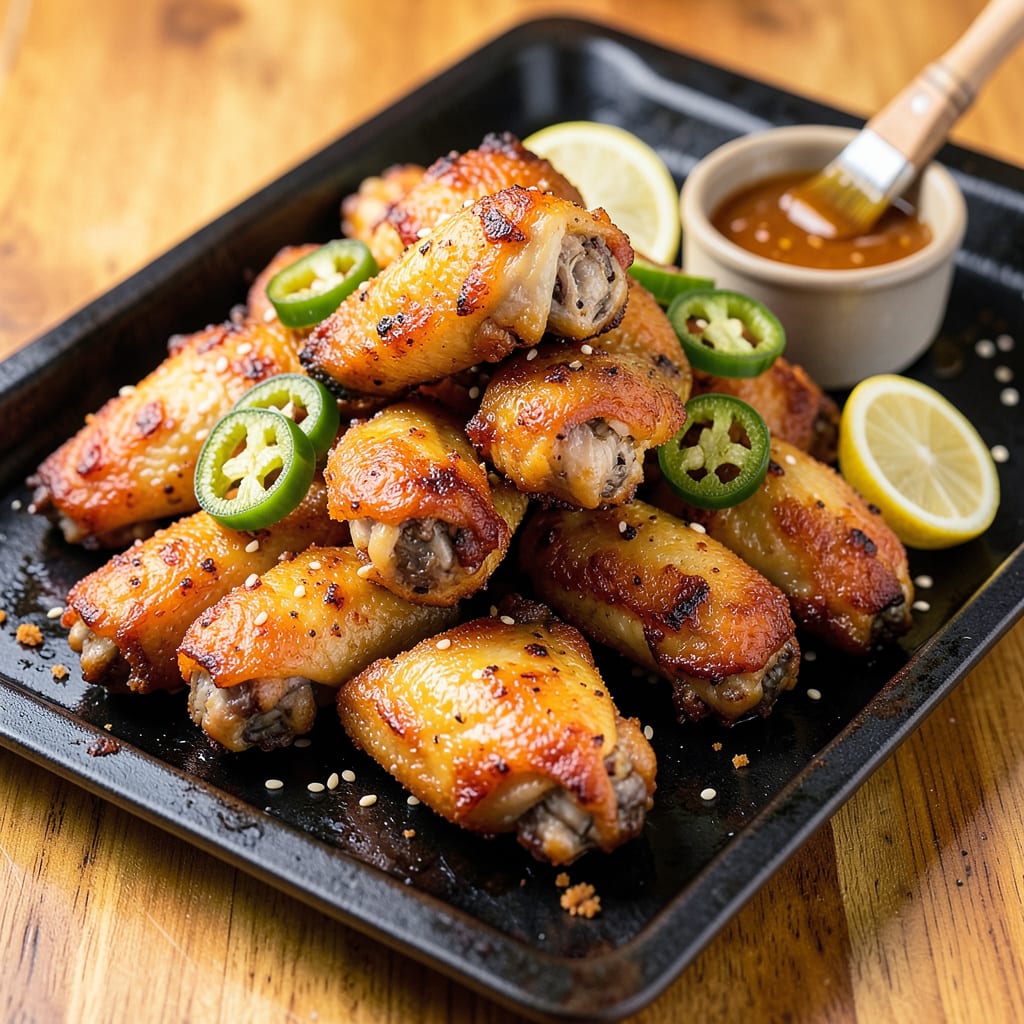
Bake chicken wings at 400°F for 40-45 minutes, flipping halfway through. For extra crispiness, broil 2-3 minutes at the end or pat dry before baking. Always check internal temperature reaches 165°F.
This method delivers that perfect balance between juicy meat and crispy skin every time. The 400°F temperature is high enough to render fat efficiently while allowing the Maillard reaction to develop rich, caramelized flavors. I’ve found that drying the wings thoroughly before baking removes excess moisture, which is the secret to achieving that satisfying crunch. 🔥
What sets this approach apart is how it transforms ordinary wings into restaurant-quality appetizers. The halfway flip ensures even cooking, while the optional broil step adds that final touch of golden-brown perfection. Just remember that oven variations can affect timing slightly, so always rely on that 165°F internal temperature as your foolproof guide. ✨
💡 In This Article
- Why 400°F Is the Ideal Temperature for Baking Chicken Wings
- Pro Tips for Perfect Baked Chicken Wings at 400°F
Why 400°F Is the Ideal Temperature for Baking Chicken Wings
At 400°F, you’re hitting the sweet spot where two critical processes happen simultaneously. First, the Maillard reaction kicks into high gear—this is where amino acids and reducing sugars combine to create that deep brown color and complex, savory flavors.
The reaction starts around 300°F but accelerates dramatically at 400°F, giving you maximum flavor development without burning. 🔥
Second, this temperature perfectly renders the fat under the skin. Chicken wing skin contains about 25-30% fat, and at 400°F, it melts gradually over the 40-45 minute cooking time. Lower temps like 350°F leave you with rubbery skin, while higher temps like 425°F risk burning before the fat fully renders.
The gradual process creates that coveted crispy texture while keeping the meat juicy.
The science behind moisture loss is fascinating here. At 400°F, the surface dries out just enough to create crispiness while the interior retains about 75% of its natural moisture. Compare this to 375°F, where you’d need 50+ minutes to achieve similar crispiness, often resulting in drier meat.
The higher heat also means less time for collagen to break down excessively, keeping the wings tender rather than mushy. ✨
What most home cooks don’t realize is how this temperature affects the skin’s structure. The rapid heat causes the proteins in the skin to denature and form a tighter matrix, which is what gives you that satisfying “snap” when you bite into a perfectly baked wing.
This only happens reliably in the 375-425°F range, with 400°F being the goldilocks zone where you get maximum crispiness without sacrificing moisture.
Consider the fat rendering timeline at this temperature:
- First 15 minutes: Surface moisture evaporates, skin begins tightening
- 15-30 minutes: Fat starts rendering, Maillard reaction accelerates
- 30-45 minutes: Skin reaches peak crispiness, internal temp climbs
The final piece of the puzzle is how this temperature interacts with seasonings. At 400°F, dry rubs caramelize beautifully without burning, while the fat rendering helps distribute flavors evenly. This is particularly noticeable with sugar-based rubs, which at higher temps would burn but at 400°F develop a perfect glaze-like finish.
The result is wings with complex, layered flavors in every bite. ⚡

- Jollof Rice Sauce Recipe: West African Tomato and Spice Infusion - September 25, 2026
- Japanese Rice Soup Recipe: Umami-Rich Comfort in a Bowl - September 25, 2026
- Homemade Cream Of Rice Recipe: Silk-Smooth Breakfast in Minutes - September 25, 2026