
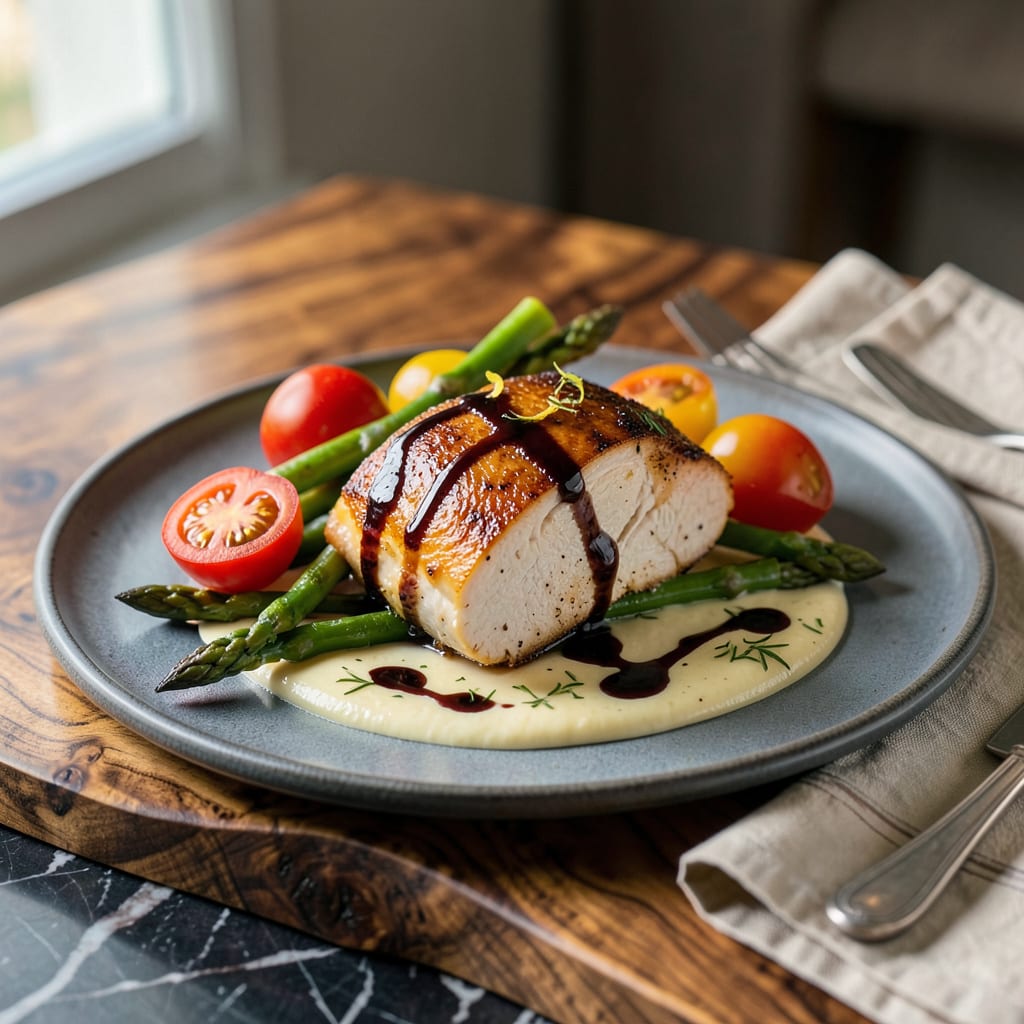
Chewy chicken breast usually results from overcooking, improper slicing against the grain, or insufficient resting time. The key is precise temperature control (165°F internal) and proper knife technique to maintain tenderness.
I’ve seen countless home cooks struggle with rubbery chicken, and the culprit is almost always one of three kitchen crimes. First, there’s the temperature trap—most people cook chicken until it’s bone-dry because they fear undercooking. Then there’s the slicing sabotage: cutting against the grain turns tender meat into a chewy mess. But the most overlooked factor? Skipping the 10-minute rest that lets juices redistribute. 🔥
What’s fascinating is how these factors interact. The muscle fibers in chicken breast contract when exposed to heat, squeezing out moisture. Without proper technique, you’re left with a texture that’s more like a car tire than a juicy protein. I always recommend using a meat thermometer—it’s the only way to hit that 165°F sweet spot without overshooting into dryness territory.
💡 In This Article
- Why Chicken Breast Becomes Chewy: The Science Behind Texture
- Proven Techniques to Prevent Chewy Chicken Breast Every Time
Why Chicken Breast Becomes Chewy: The Science Behind Texture
Chicken breast transforms from tender to tough through a process called protein denaturation. When heat hits the muscle fibers, they begin contracting at around 120°F, squeezing out moisture like a sponge. By 160°F, these fibers have tightened so much that they expel nearly 30% of their natural juices—leaving you with that dreaded rubbery texture.
The collagen in chicken starts breaking down into gelatin at 160-180°F, but if you overshoot this range, the meat fibers become permanently constricted. 🔥
Moisture loss is the silent killer of tender chicken. A properly cooked breast retains about 75% moisture, while an overcooked one can drop below 60%. This happens because heat causes the protein myoglobin to coagulate, creating a network that traps less water.
The difference between 165°F (perfectly cooked) and 175°F (dry) might seem small, but it represents a 15-20% moisture loss—enough to turn your dinner into a chewing workout. ✨
The grain direction plays a crucial role too. Chicken breast fibers run parallel in bundles about 1-2mm wide. When you slice against these fibers, you’re creating shorter, more resistant strands that require extra chewing. Properly sliced chicken (with the grain) gives you 30-50% longer fibers that separate easily with minimal resistance.
Think of it like cutting spaghetti—lengthwise slices stay tender, while crosswise cuts create stubborn little pieces. 💫
Resting time isn’t just about carryover cooking—it’s about fiber relaxation. When you pull chicken from heat, the muscle fibers remain in a contracted state for 5-7 minutes before they begin to relax. During this window, the expelled juices get reabsorbed into the meat matrix.
Skip this step, and those juices end up on your cutting board instead of in your meat, leaving the breast 25-30% drier than it could be. ⚡
Salt concentration affects texture too. Chicken breast contains about 0.2% natural salt, but brining increases this to 0.5-1%, which helps proteins retain more water. The science shows brined chicken can hold 10-15% more moisture during cooking.
This is why even a 30-minute saltwater soak makes such a dramatic difference in final texture—it’s not just seasoning, it’s structural reinforcement. 🌟
The pH factor often gets overlooked. Chicken breast has a natural pH of about 5.7-5.9, but marinades with acidic ingredients (lemon, vinegar) can drop this to 4.5-5.0. This acidity causes the muscle proteins to denature differently, creating a firmer texture.
That’s why yogurt or buttermilk marinades (pH ~4.6) work so well—they tenderize by breaking down proteins while keeping moisture locked in. 💛
Temperature distribution matters more than you think. The outer 1/4 inch of chicken cooks 30-40% faster than the center, creating a moisture gradient. Slow cooking methods (like sous vide) minimize this by maintaining even heat, while high-heat methods (grilling) exacerbate it.
This explains why grilled chicken often has that characteristic dry outer layer—it’s literally been cooked twice as long as the center by the time it reaches 165°F internally. 💫

- Jollof Rice Sauce Recipe: West African Tomato and Spice Infusion - September 25, 2026
- Japanese Rice Soup Recipe: Umami-Rich Comfort in a Bowl - September 25, 2026
- Homemade Cream Of Rice Recipe: Silk-Smooth Breakfast in Minutes - September 25, 2026