
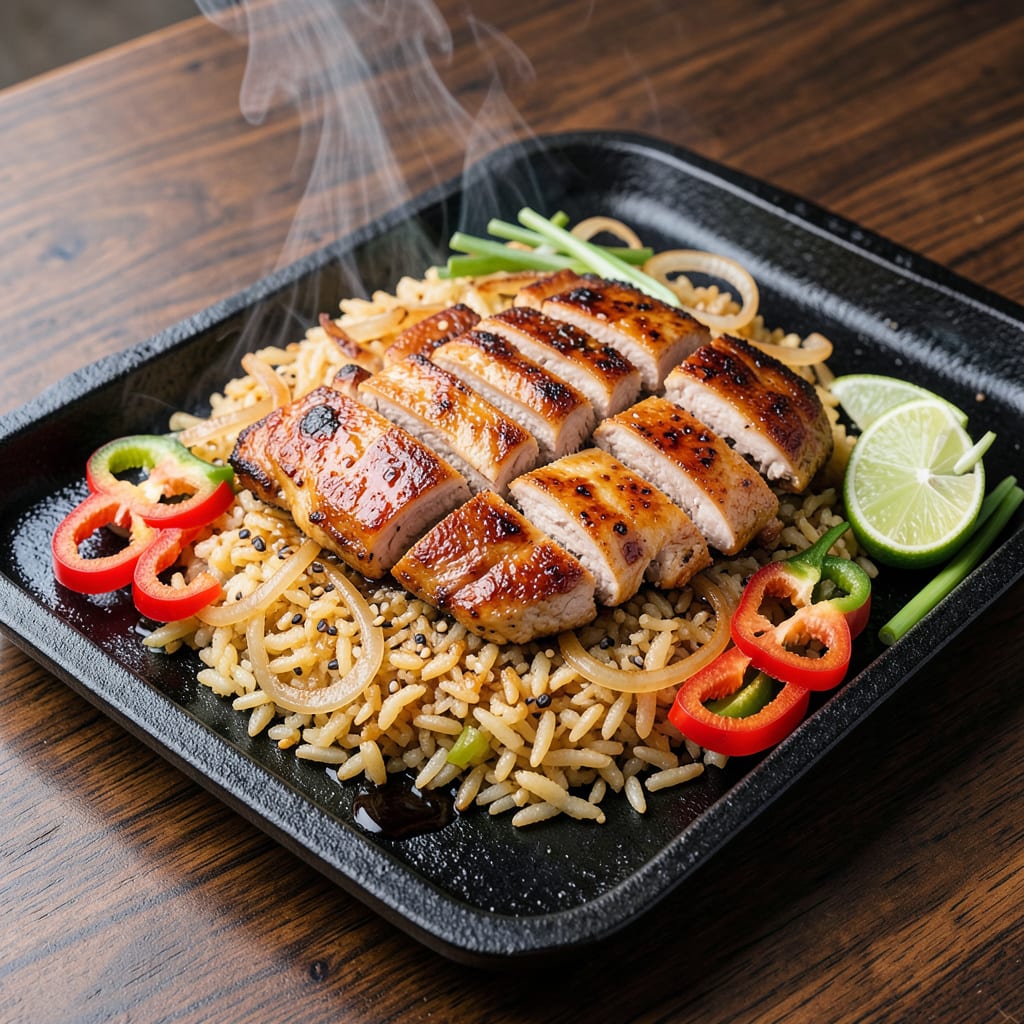
A typical serving of hibachi chicken and rice contains 450-600 calories, with variations depending on portion size, oil used, and added sauces. The dish balances protein from chicken with carbs from rice, often including vegetables for fiber.
What makes hibachi meals unique is their interactive cooking style, which directly impacts nutrition. 🔥 The high-heat grilling locks in flavors but can increase calorie density when generous amounts of oil or butter are used. I’ve noticed that restaurant versions tend to be higher in calories due to larger portions and richer sauces, while homemade versions let you control ingredients like using olive oil spray instead of butter or adding extra veggies to bulk up the dish without excess calories.
This balance of macronutrients makes it a satisfying meal, but the preparation method matters. The combination of lean protein, complex carbs, and fiber from vegetables creates a well-rounded dish that keeps you full longer. However, it’s worth noting that sauces like teriyaki or yum yum can add 100-200 calories per serving if used heavily. ✨
💡 In This Article
- Nutritional Breakdown of Hibachi Chicken and Rice
- How to Reduce Calories in Hibachi Chicken and Rice
Nutritional Breakdown of Hibachi Chicken and Rice
The calorie count in hibachi chicken and rice comes from three main components: protein, carbohydrates, and fats. A standard 6-ounce serving of chicken breast provides about 180-200 calories and 35 grams of protein, while the same amount of white rice contributes 200-220 calories and 45 grams of carbs.
The real calorie booster is the cooking oil—just 1 tablespoon of butter or sesame oil adds 120-140 calories of pure fat.
Restaurant versions often use more oil for that signature sizzle and flavor. A typical hibachi chef might use 2-3 tablespoons of oil per serving, which can add 240-420 extra calories compared to homemade versions.
The sauces make a difference too: 2 tablespoons of teriyaki sauce packs about 70 calories, while the same amount of yum yum sauce contains 110-130 calories due to its mayonnaise base. 🔥
Vegetables like zucchini, onions, and mushrooms add volume with minimal calories—about 25-50 calories per cup. However, the cooking process matters: stir-frying in oil increases calorie absorption, while steaming would keep them lower. The high-heat cooking method also caramelizes natural sugars in the veggies, enhancing flavor without needing extra calories from sauces.
Portion sizes create the biggest variation. A restaurant serving might include 8 ounces of chicken, 1.5 cups of rice, and 1 cup of veggies, totaling 600-700 calories. At home, you could reduce this to 4 ounces of chicken, 1 cup of rice, and 2 cups of veggies for about 450 calories—same satisfaction with better balance.
✨
The protein-to-carb ratio makes this dish satisfying. With roughly 30-40 grams of protein and 60-80 grams of carbs per serving, it provides sustained energy. The fiber from vegetables (about 4-6 grams per serving) helps slow digestion, preventing blood sugar spikes that might occur with plain white rice alone.
What most people overlook is the sodium content. Between soy sauce, teriyaki, and seasoned rice, a single serving can contain 1,200-1,800mg of sodium—more than half the daily recommended limit. This is why homemade versions with low-sodium soy sauce or coconut aminos can be significantly healthier while maintaining that classic hibachi flavor. 💫

- Jollof Rice Sauce Recipe: West African Tomato and Spice Infusion - September 25, 2026
- Japanese Rice Soup Recipe: Umami-Rich Comfort in a Bowl - September 25, 2026
- Homemade Cream Of Rice Recipe: Silk-Smooth Breakfast in Minutes - September 25, 2026