
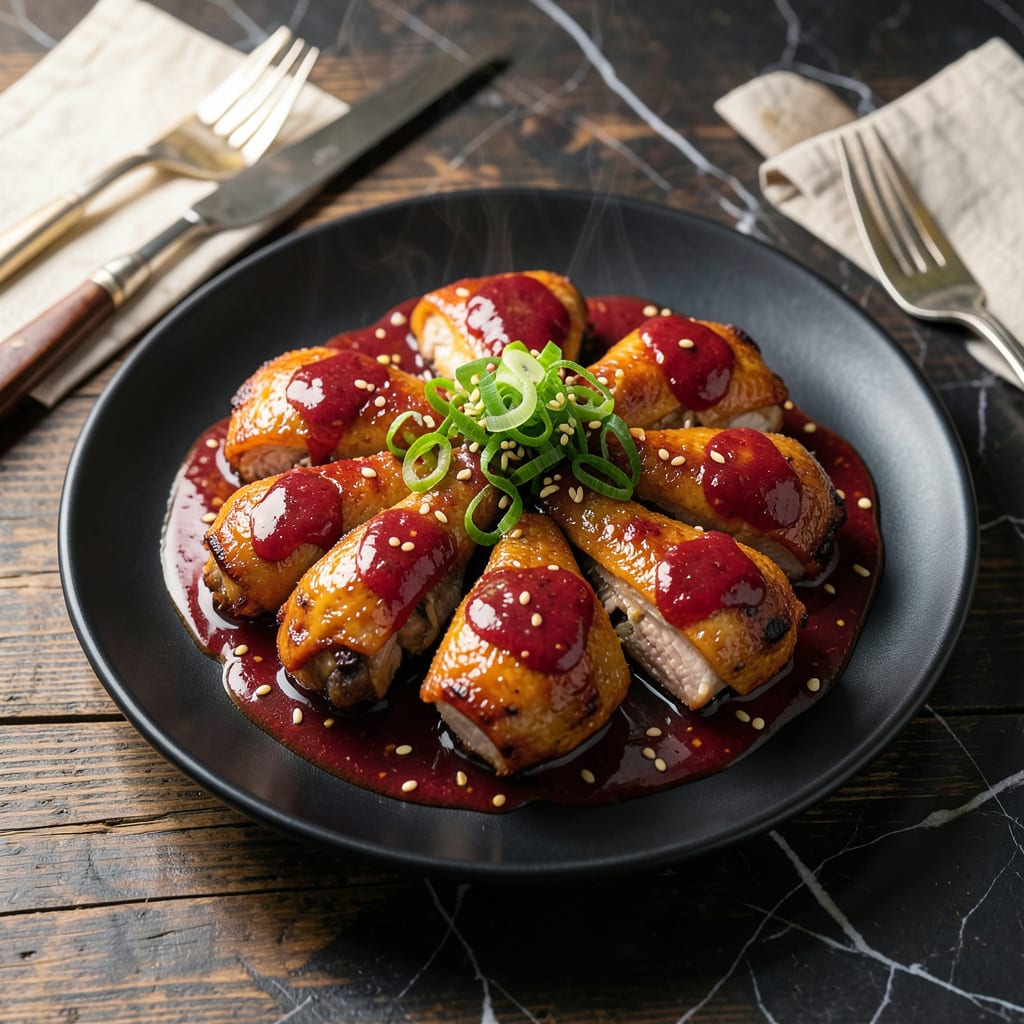
This recipe transforms simple chicken into a juicy, flavor-packed dish with a spicy Korean glaze that clings to every bite.
The gochujang sauce provides a perfect balance of heat, sweetness, and umami, creating a restaurant-quality meal with minimal effort and maximum flavor impact.
Ingredients for Chicken with Gochujang Sauce
Transform everyday chicken with bold Korean flavors and a sticky, spicy-sweet glaze that delivers restaurant-quality results.
| Ingredient | Amount | Notes |
|---|---|---|
| Boneless Skinless Chicken Thighs 🍗 | 1 ½ lb | Trimmed of excess fat |
| Gochujang 🌶️ | ½ cup | Korean fermented chili paste |
| Soy Sauce 🥄 | 3 tbsp | Low-sodium preferred |
| Honey 🍯 | 2 tbsp | Balances heat with sweetness |
| Rice Vinegar 🍚 | 1 tbsp | For bright acidity |
| Sesame Oil 🫒 | 1 tbsp | Toasted variety preferred |
| Garlic Cloves 🧄 | 4 cloves | Minced for maximum flavor |
| Fresh Ginger 🌿 | 1 tbsp | Peeled and finely grated |
| Brown Sugar 🥣 | 1 tbsp | Light or dark variety |
| Sesame Seeds 🌰 | 1 tbsp | Toasted for garnish |
| Green Onions 🧅 | 3 whole | Thinly sliced for serving |
| Cornstarch 🌾 | 1 tbsp | For thickening sauce |
| Neutral Oil 🛢️ | 1 tbsp | High smoke point for searing |
| Red Pepper Flakes 🔥 | ½ tsp | Optional for extra heat |
[recipeingredientscaler]
The gochujang is non-negotiable for authentic flavor. H Mart or Asian grocery stores carry the best selection—look for Sempio or CJ brands. Chicken thighs stay juicier than breasts (as promised in the intro), so don’t substitute unless you must. For the sesame oil, Kadoya is a reliable brand available at most supermarkets. Fresh ginger and garlic are essential—no pre-minced jars here.
No gochujang? Sriracha plus miso paste (1:1 ratio) gets you close but lacks depth. Swap honey for maple syrup or brown sugar if needed. Low-sodium soy sauce can be replaced with tamari for gluten-free. The cornstarch slurry is key for that glossy sauce—use half the amount if you prefer a thinner consistency. Frozen ginger works in a pinch (grate it straight from frozen).
Sauce keeps 1 week refrigerated in an airtight container. Chicken is best served fresh but leftovers reheat well—store 3-4 days. Toast sesame seeds just before serving for maximum crunch. Gochujang itself lasts 6-12 months unopened, 3 months once opened.
Why You’ll Love This Recipe
- One Pan Wonder: I just toss the chicken thighs with the gochujang, soy, honey, and vinegar, then let the oven do the work.
- Flavor Bomb: That sweet-spicy kick from the gochujang with the tang of rice vinegar? I could eat it straight off the spoon.
- Meal Prep Hero: I make a double batch on Sunday and it tastes even better reheated for lunch the next day.
- Budget Friendly: Chicken thighs stay juicy and cheap, and a little gochujang goes a long way to make it taste special.
Step-by-Step Instructions for Chicken With Gochujang Sauce
Master this technique for tender, juicy chicken with a glossy, spicy-sweet Korean glaze.
Step 1: Sear the Chicken Thighs
Pat the 1.5 lb Boneless Skinless Chicken Thighs dry with paper towels to ensure a good sear. Heat 1 tbsp Neutral Oil in a large skillet over medium-high heat until shimmering. Add the chicken in a single layer, being careful not to overcrowd the pan.
Sear undisturbed for 4-5 minutes per side until deeply golden brown and the internal temperature reaches 165°F. The chicken should release easily from the pan when properly seared. Transfer to a plate and set aside.
Step 2: Build the Gochujang Sauce Base
In the same skillet, reduce heat to medium and add minced 4 cloves Garlic Cloves and 1 tbsp Fresh Ginger. Sauté for 30 seconds until fragrant. Immediately add 0.5 cup Gochujang, 3 tbsp Soy Sauce, 2 tbsp Honey, 1 tbsp Rice Vinegar, 1 tbsp Brown Sugar, and 0.5 tsp Red Pepper Flakes.
Stir to combine, scraping up any browned bits from the chicken. Let the mixture simmer for 2 minutes to meld the flavors and thicken slightly. The sauce should be deep red and glossy.
Step 3: Thicken and Finish the Sauce
In a small bowl, mix 1 tbsp Cornstarch with 1 tbsp cold water to create a slurry. Stir this into the sauce and simmer for 1-2 minutes until it thickens enough to coat the back of a spoon. Remove from heat and stir in 1 tbsp Sesame Oil for depth of flavor.
The sauce should now have a velvety texture. Taste and adjust seasoning if needed, though the balance of spicy, sweet, and umami should already be well-developed from the gochujang and soy sauce.
Step 4: Glaze the Chicken and Serve
Return the seared chicken to the skillet with the sauce, coating each piece thoroughly. Simmer over low heat for 2-3 minutes to allow the chicken to absorb the flavors and the sauce to cling beautifully to each piece.
Transfer to a serving platter and garnish with 1 tbsp Sesame Seeds and thinly sliced 3 whole Green Onions. The chicken should glisten with sauce, and the sesame seeds should provide a nutty contrast to the rich glaze.
Pro Tips For Making Chicken With Gochujang Sauce
- Sear Chicken First: Brown the boneless thighs in a hot pan for 3-4 minutes per side before adding the sauce—this builds a deep flavor base that the gochujang clings to.
- Thin the Gochujang: Mix the gochujang with the rice vinegar and soy sauce first to loosen it; otherwise, it’ll clump and coat the chicken unevenly.
- Skip the Boil: Simmer the sauce gently once it’s on the chicken—boiling it hard makes the honey separate and the gochujang turn bitter.
- Rest Before Serving: Let the chicken sit in the warm sauce off heat for 5 minutes after cooking so the flavors sink in and the juices redistribute.
Health Benefits of This Recipe
Protein Powerhouse
This dish delivers about 35 grams of protein per serving, helping build and repair muscles. Chicken thighs are rich in essential amino acids, making this a complete protein source that keeps you full and energized for hours. 💪
Metabolism Boost
The capsaicin in gochujang may slightly increase your metabolic rate, aiding in fat burning. Combined with the protein from chicken, this creates a satisfying meal that supports your body’s natural processes.
Rich in Antioxidants
Gochujang contains fermented chili peppers packed with vitamin C and capsaicin, which act as powerful antioxidants. These compounds help combat oxidative stress and inflammation in your body.
Gut Health Benefits
Fermented foods like gochujang introduce beneficial probiotics to your gut microbiome. The garlic and ginger in the sauce also contain prebiotic fibers that feed your good gut bacteria, supporting digestive health.
Low-Calorie Flavor Boost
At approximately 350 calories per serving, this dish offers bold flavors without excessive calories. The gochujang sauce provides intense taste satisfaction, allowing you to enjoy a flavorful meal while watching your calorie intake.
Essential Vitamins
This creation provides a good dose of B vitamins from the chicken, particularly B6 and B12, which are vital for energy metabolism and brain function. The garlic adds a boost of vitamin C to support your immune system. ✨
Nutrition Facts
Frequently Asked Questions
Can I use chicken breasts instead of thighs?
You can, but thighs stay juicier. If using breasts, reduce cooking time to 3-4 minutes per side and monitor internal temp closely to avoid dryness.
How do I make the sauce less spicy?
Balance the heat by adding 1 extra tbsp honey or a splash of coconut milk. Remove red pepper flakes entirely for milder flavor.
What’s the best way to store leftovers?
Keep in an airtight container for 3-4 days in the fridge. Reheat gently on the stove with a splash of water to prevent drying.
Can I make this sauce ahead of time?
The sauce keeps for 1 week refrigerated. Reheat before adding to freshly cooked chicken for best texture.

- Jollof Rice Sauce Recipe: West African Tomato and Spice Infusion - September 25, 2026
- Japanese Rice Soup Recipe: Umami-Rich Comfort in a Bowl - September 25, 2026
- Homemade Cream Of Rice Recipe: Silk-Smooth Breakfast in Minutes - September 25, 2026