
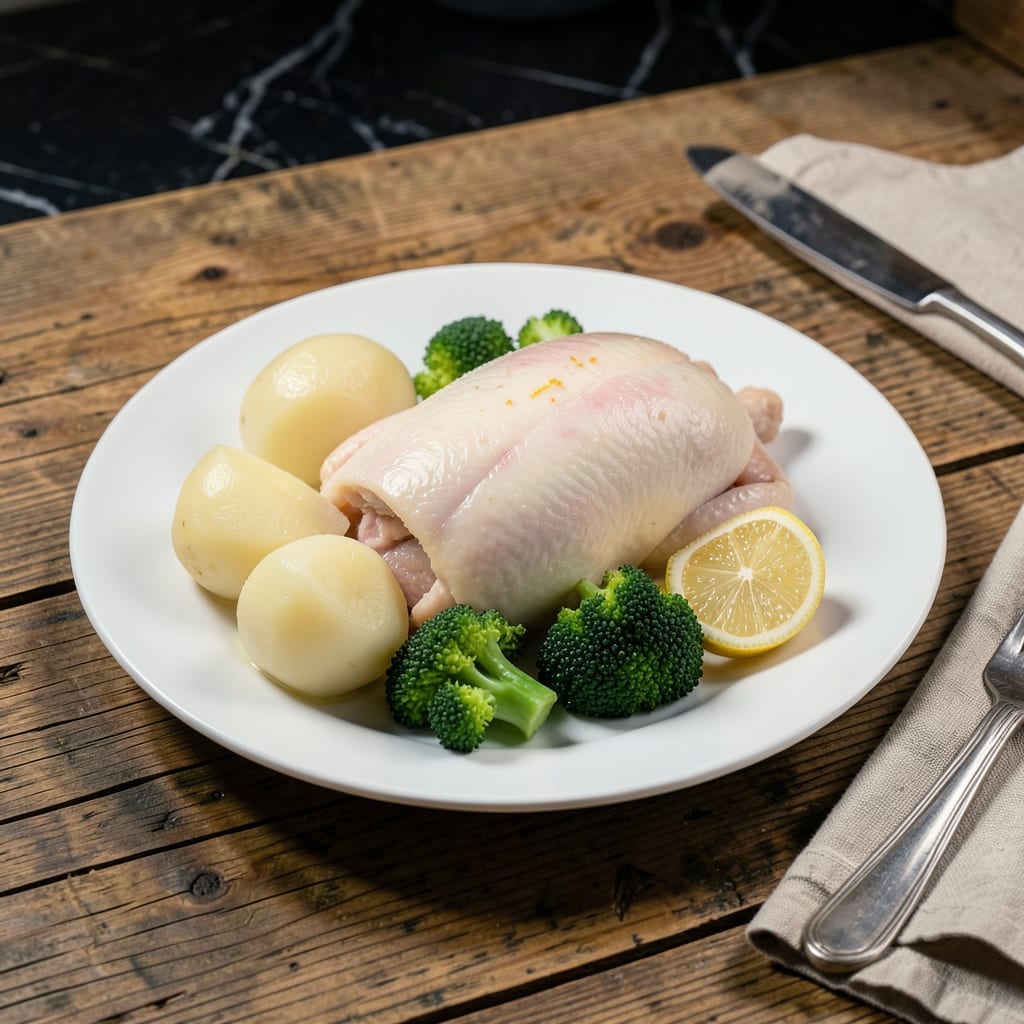
Cooking chicken without seasoning relies on proper techniques like brining, slow cooking, or high-heat searing to enhance its natural juiciness and mild flavor. The key is moisture retention and even heat distribution.
I’ve found that unseasoned chicken actually reveals its true character when prepared thoughtfully. The natural richness comes from the bird’s fat content and connective tissues, which break down beautifully with gentle heat. 🔥 Techniques like sous vide cooking at 145°F for 2 hours or poaching in aromatic liquids (even without salt) can transform plain chicken into something remarkably tender and satisfying.
What most people don’t realize is that chicken has inherent umami compounds that become more pronounced through proper cooking methods. The Maillard reaction—those golden-brown crusts you get from searing—creates complex flavors without any added spices. I always recommend starting with high-quality chicken, as the breed and diet significantly impact the final taste.
💡 In This Article
- How Natural Chicken Flavor Develops During Cooking
- Best Cooking Methods for Unseasoned Chicken
How Natural Chicken Flavor Develops During Cooking
The magic of unseasoned chicken lies in its protein structure and fat distribution. Chicken contains about 15-20% protein and 5-10% fat (depending on the cut), which transform dramatically when exposed to heat. The collagen in connective tissues breaks down into gelatin at temperatures above 160°F, creating that silky mouthfeel we associate with well-cooked poultry.
Dark meat (thighs, drumsticks) has more fat and collagen than breast meat, which is why it stays juicier when cooked unseasoned. 🔥
Two key chemical reactions dominate flavor development: the Maillard reaction and caramelization. The Maillard reaction occurs between amino acids and reducing sugars at 280-330°F, producing those complex, nutty flavors in seared chicken skin. Meanwhile, caramelization of natural sugars happens at 320°F+, adding subtle sweetness.
Steam-based methods like poaching work differently—they preserve the chicken’s natural juices by maintaining temperatures between 160-180°F, preventing moisture loss while gently coagulating proteins. ✨
Fat distribution plays a crucial role in perceived flavor. The subcutaneous fat layer under chicken skin renders during cooking, basting the meat from within. This self-basting effect is why skin-on chicken stays moister than skinless when cooked without seasonings.
The fat also carries flavor compounds—when heated, it releases volatile aromatics that our noses perceive as “chickeny” richness. Slow cooking methods maximize this effect by giving fat more time to render and infuse the meat. 💫
What most cooks overlook is how protein denaturation affects texture and flavor perception. Chicken proteins begin unfolding at 104°F and fully coagulate by 165°F. This process squeezes out moisture—unless you control the cooking environment. Methods like sous vide (cooking at precise low temperatures) minimize moisture loss by preventing excessive protein contraction.
The result is chicken that tastes naturally richer because its juices remain trapped within the muscle fibers. ⚡
Even the chicken’s diet affects its unseasoned flavor profile. Pasture-raised chickens develop more complex flavors from their varied diet, including omega-3 fatty acids that contribute to a cleaner taste. Their meat contains about 20% more fat than conventional chicken, which translates to better mouthfeel when cooked without seasonings.
The difference becomes especially noticeable in simple preparations where the chicken’s natural qualities take center stage. 🌟
Here’s what’s actually happening at the molecular level during cooking:
- 104-140°F: Myosin proteins begin unfolding, muscle fibers start contracting
- 140-160°F: Collagen converts to gelatin, fat begins rendering
- 160-180°F: Proteins fully coagulate, moisture gets expelled unless controlled
- 280°F+: Maillard reaction creates hundreds of new flavor compounds

- Jollof Rice Sauce Recipe: West African Tomato and Spice Infusion - September 25, 2026
- Japanese Rice Soup Recipe: Umami-Rich Comfort in a Bowl - September 25, 2026
- Homemade Cream Of Rice Recipe: Silk-Smooth Breakfast in Minutes - September 25, 2026