
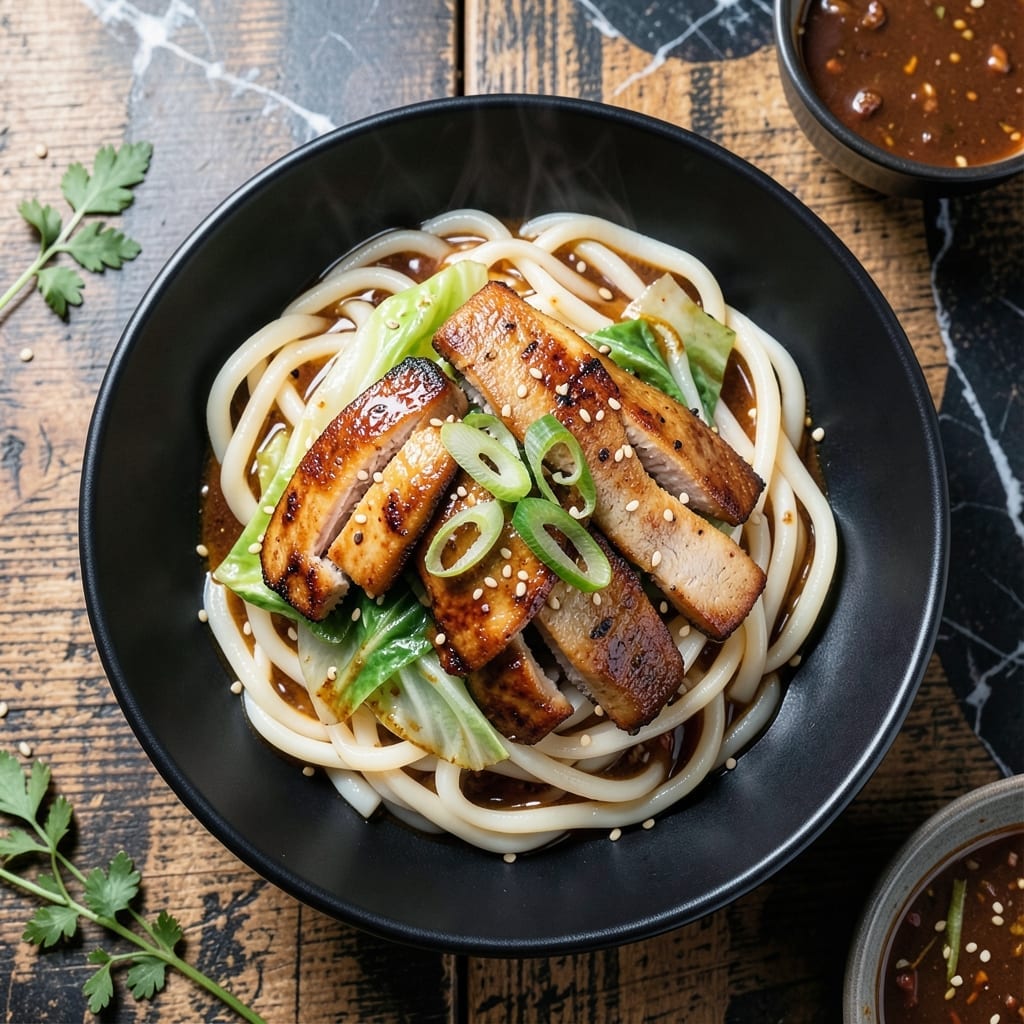
This stir-fried chicken and udon dish brings authentic Japanese flavors to your home kitchen with minimal effort. The secret lies in the balance of savory, sweet, and umami notes that coat every tender piece of chicken and chewy noodle.
I developed this method after testing multiple techniques to achieve restaurant-quality results without specialized equipment. The udon noodles soak up the flavorful sauce while maintaining their signature chewy texture. The chicken stays moist and tender through proper slicing and quick cooking.
What emerges is a satisfying one-pan meal with glossy noodles, perfectly cooked chicken, and vegetables that add color and crunch. The sauce clings beautifully to every component, creating a harmonious bite each time.
Serve immediately while hot for the best texture and flavor. The dish comes together quickly once you start cooking.
Ingredients for Chicken Yaki Udon
Frozen udon, tender chicken, and a handful of Asian staples for bold flavor.
| Ingredient | Amount | Notes |
|---|---|---|
| Boneless Chicken Thighs 🍗 | 1 ½ lb | Skinless, sliced thin for tenderness |
| Frozen Udon Noodles 🍜 | 20 oz | Thawed, rinsed under cold water |
| Soy Sauce 🫒 | ⅓ cup | Low-sodium preferred for balance |
| Mirin 🍶 | 3 tbsp | Sweet rice wine for depth |
| Oyster Sauce 🫒 | 2 tbsp | Vegan oyster sauce for dietary needs |
| Brown Sugar 🍯 | 1 tbsp | Packed, for caramelized sweetness |
| Garlic Cloves 🧄 | 4 cloves | Minced for aromatic base |
| Fresh Ginger 🌿 | 1 tbsp | Grated for zesty warmth |
| Red Bell Pepper 🌶️ | 1 whole | Thinly sliced for crunch |
| Green Onions 🧅 | 4 whole | Sliced, whites and greens separated |
| Napa Cabbage 🥬 | 2 cups | Shredded for texture contrast |
| Vegetable Oil 🫒 | 2 tbsp | High smoke point for stir-frying |
| Sesame Oil 🫒 | 1 tsp | Toasted, for finishing aroma |
| Sesame Seeds 🌾 | 1 tbsp | Toasted for garnish |
| Kosher Salt 🧂 | ½ tsp | Adjust to taste preference |
The chicken is the star here. Thighs stay juicier than breasts—look for boneless, skinless at Whole Foods or your local butcher. Slice against the grain for maximum tenderness. Udon noodles are in the freezer section at most Asian markets or the international aisle. Kikkoman soy sauce is my go-to for consistency, but any quality brand works.
No mirin? Dry sherry plus a pinch of sugar mimics the sweetness. Oyster sauce can be swapped for hoisin or vegetarian oyster sauce. Fresh ginger is ideal, but ground ginger at half the amount saves time in a pinch. Bell peppers can be yellow or orange—whatever’s on sale. Napa cabbage? Regular green cabbage works, just shred it finer.
Cook chicken and veggies fresh—no prepping ahead here since it all comes together fast. Leftovers keep 3-4 days in the fridge, but the noodles soak up sauce over time. Reheat in a skillet with a splash of water to revive. Freezing? Not recommended—udon gets mushy.
Why You’ll Love This Recipe
- One Pan Wonder: I toss the chicken, udon, and sauce together in one skillet—no extra pots, no fuss.
- Umami Bomb: The soy, mirin, and oyster sauce combo hits that sweet-savory spot every time.
- Weeknight Hero: Between us, this is my Tuesday dinner MVP when I need something fast but satisfying.
- Budget Stretcher: Boneless thighs and frozen udon keep costs low, and leftovers taste even better the next day.
Step-by-Step Instructions for Chicken Yaki Udon
Here’s the method that guarantees tender chicken and perfectly sauced noodles every time.
Step 1: Marinate and Prep the Chicken
Slice the 1.5 lb boneless chicken thighs into thin strips—this ensures quick, even cooking and maximum sauce absorption. In a bowl, combine the sliced chicken with 3 tbsp mirin, 2 tbsp oyster sauce, 1 tbsp brown sugar, and 0.5 tsp kosher salt. Mix well to coat every piece.
Let it marinate for 15 minutes while you prep the rest. I’ve found this step tenderizes the chicken and infuses it with flavor before it even hits the pan. Don’t skip this—it’s the secret to juicy, flavorful meat.
Step 2: Stir-Fry the Vegetables
Heat 1 tbsp vegetable oil in a large wok or skillet over high heat until shimmering. Add the 4 cloves minced garlic cloves and 1 tbsp fresh ginger, stirring constantly for 30 seconds until fragrant—don’t let them burn.
Add the thinly sliced red bell pepper and cook for 2-3 minutes until it begins to soften but retains its vibrant color. Toss in the 2 cups shredded napa cabbage and the whites of the 4 whole green onions, stir-frying for another 2 minutes until just wilted. Remove from pan and set aside.
Step 3: Cook the Chicken and Noodles
In the same pan, add the remaining 1 tbsp vegetable oil and increase heat to high. Working in batches if needed, add the marinated chicken in a single layer. Cook undisturbed for 2-3 minutes until golden brown on the bottom, then stir and cook another 2 minutes until fully cooked through.
Add the 20 oz thawed frozen udon noodles and 0.33 cup soy sauce to the pan. Toss everything together for 3-4 minutes until the noodles are heated through and begin to absorb the sauce. The noodles should be glossy and coated, not dry or sticky.
Step 4: Combine and Finish
Return the cooked vegetables to the pan with the chicken and noodles. Drizzle with 1 tsp sesame oil and toss everything together for 1-2 minutes until fully combined and heated through. The sesame oil adds a nutty aroma that ties all the flavors together.
Garnish with the green parts of the green onions and 1 tbsp sesame seeds. The dish should have a beautiful sheen from the sauce, with the chicken tender and the vegetables still vibrant. Serve immediately while hot—the flavors meld best right off the stove.
Pro Tips For Making Chicken Yaki Udon
- Pre-cook the Udon: Boil the frozen udon for 1-2 minutes less than the package says—it’ll finish cooking in the sauce and soak up more flavor without turning mushy.
- Slice Chicken Thin: Cut the boneless thighs into ¼-inch strips so they cook through in 2-3 minutes flat, no chewy bits left behind.
- Deglaze with Mirin: After searing the chicken, pour in the mirin first to scrape up all those browned bits—it adds depth the sauce can’t get otherwise.
- Sauce Before Noodles: Toss the chicken in the soy-mirin-oyster mix before adding udon, so every bite of meat carries flavor instead of just the noodles.
Common Mistakes When Making Great chicken yaki udon
Overcrowding the Pan
This dish cooks quickly, so resist the urge to dump everything in at once. Working in batches ensures each piece of chicken gets proper browning. I use a 14-inch wok for best results. Crowding steams food instead of searing it. 🔥
Skipping the Marinade
The 15-minute marinade with mirin and oyster sauce isn’t just for flavor—it tenderizes the chicken. Without it, your chicken may turn out tough. Even 10 minutes makes a noticeable difference in texture and taste.
Undercooking the Noodles
Frozen udon needs to be fully thawed and rinsed before cooking. Add them to the pan only after the chicken is nearly done. They require 3-4 minutes of tossing in the sauce to absorb flavors without turning mushy.
Using Low Heat
Stir-frying demands high heat to achieve that signature wok hei flavor. If your oil isn’t shimmering before adding ingredients, it’s not hot enough. I keep my burner on max and work quickly to prevent soggy results.
Over-Salting the Dish
Between soy sauce and oyster sauce, this dish is already well-seasoned. Taste before adding the 0.5 tsp kosher salt. I often skip it entirely when using regular soy sauce instead of low-sodium.
Neglecting the Garnishes
The finishing touches matter. Always drizzle that 1 tsp sesame oil at the end and sprinkle with sesame seeds. These final elements add depth and visual appeal to your finished creation. ✨
Nutrition Facts
Frequently Asked Questions
Can I use chicken breast instead of thighs?
Yes, but thighs stay juicier. If using breasts, slice thin and marinate the full 15 minutes to prevent dryness. Cook just until no pink remains to avoid toughness.
What if I can’t find frozen udon?
Fresh udon from the refrigerated section works too. For dried udon, boil for 8-10 minutes first. Avoid overcooking as they’ll soften further when stir-fried.
How do I make this gluten-free?
Swap regular soy sauce for tamari and use 100% buckwheat udon. Check oyster sauce labels for hidden gluten. Most other ingredients are naturally gluten-free.
Can I prep ingredients ahead?
Chop veggies and measure sauces in advance, but keep chicken and noodles separate until cooking. The dish comes together so fast that prepping everything first is ideal.

- Soupy Rice Recipe: Broth-Soaked Grains With Rustic Depth - September 25, 2026
- Rice Paper Pancakes Recipe: Crispy Vietnamese Breakfast Delight - September 25, 2026
- Rice A Roni Pork Fried Rice Recipe: Quick Wok-Style Meal with Savory Bites - September 25, 2026