
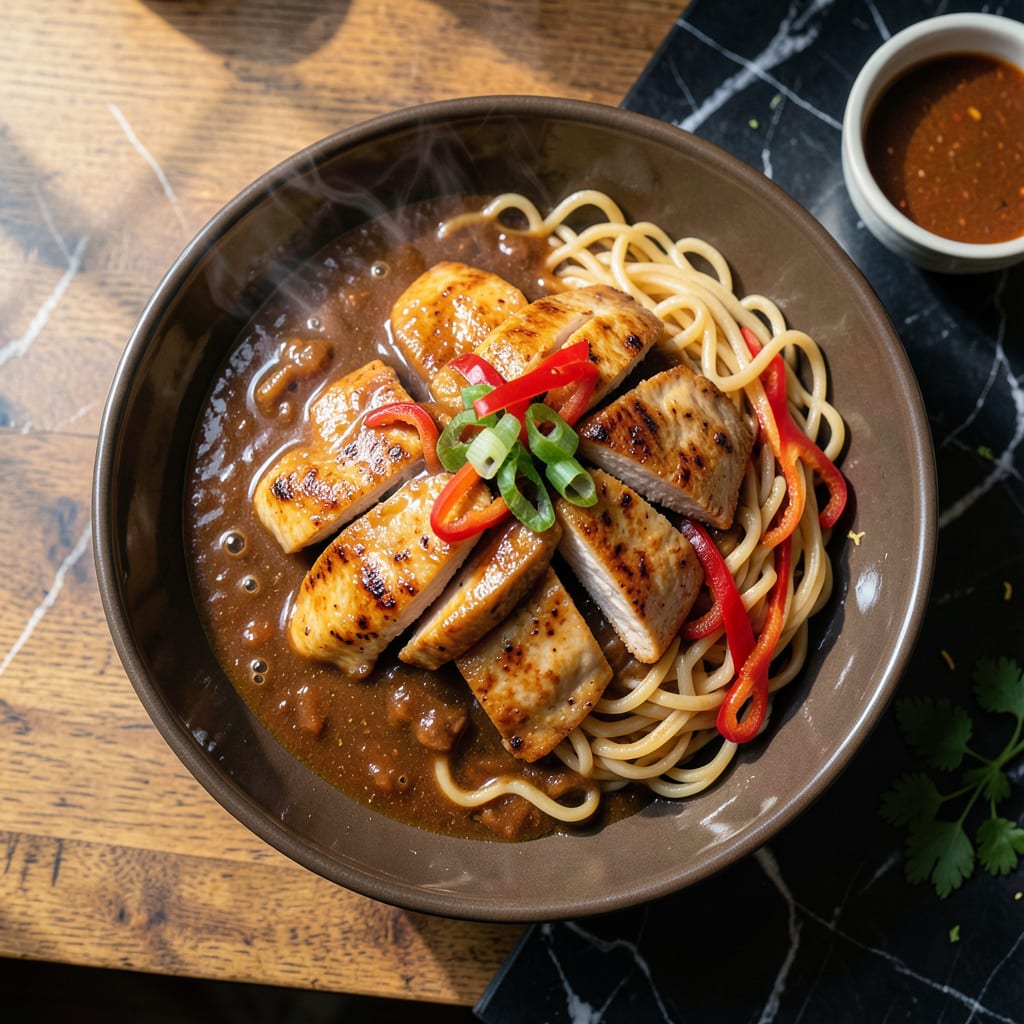
This tangy umami sauce transforms ordinary chicken and noodles into an authentic Japanese stir-fry experience. The balanced blend of sweet, salty, and savory flavors makes it incredibly versatile.
With just 5 minutes of mixing and common pantry staples, you can create a restaurant-quality sauce that elevates your home cooking. Store it in the fridge for up to a week.
Ingredients for Chicken Yakisoba Sauce
Nine simple ingredients for that perfect tangy umami blend everyone loves.
| Ingredient | Amount | Notes |
|---|---|---|
| Worcestershire Sauce 💧 | 2 tbsp | Vegan version if needed |
| Ketchup 🍅 | ½ cup | High-quality for depth |
| Oyster Sauce 🫒 | 3 tbsp | Or vegetarian oyster sauce |
| Soy Sauce 🫒 | 3 tbsp | Low-sodium preferred |
| Brown Sugar 🧈 | 2 tbsp | Packed, light or dark |
| Rice Vinegar 🍯 | 1 tbsp | Unseasoned variety |
| Sesame Oil 🫒 | 1 tsp | Toasted for best flavor |
| Garlic 🧄 | 2 cloves | Minced or pressed |
| Fresh Ginger 🌿 | 1 tsp | Grated or minced |
[recipeingredientscaler]
The Worcestershire and oyster sauces are non-negotiable for that deep umami base. Kikkoman for soy sauce is my go-to, but any good brand works. Trader Joe’s has a solid oyster sauce at a great price. For the brown sugar, I always keep light brown on hand—it dissolves faster and blends better than dark. Fresh ginger and garlic make a huge difference here (the jarred stuff just doesn’t cut it).
No oyster sauce? Hoisin sauce plus a splash of soy gets you 80% there. Vegan? Vegetarian oyster sauce (made from mushrooms) is your friend. Out of rice vinegar? Apple cider vinegar at the same amount works. Need it sweeter? Add another tablespoon of brown sugar. The sesame oil should be toasted—Kadokawa brand is my favorite for its rich aroma.
This keeps beautifully in the fridge for 7 days in a sealed jar. The flavors actually deepen after a day. Freeze it? Not ideal—the texture changes. But if you must, use within 1 month (thaw in the fridge overnight).
Why You’ll Love This Recipe
- 5-Minute Mix: I just dump all five ingredients into a bowl and whisk—no chopping, no fuss.
- Umami Bomb: The Worcestershire and oyster sauce combo hits that deep, savory note every time.
- Feeds the Freezer: I double the batch and keep it for those nights I need a quick stir-fry fix.
- Pantry Staples: Honestly, I always have these sauces and sugar on hand, so it’s a no-shop dinner.
Step-by-Step Instructions for Chicken Yakisoba Sauce
This tangy umami sauce comes together in minutes with just a bowl and whisk.
Step 1: Combine the Liquid Base
In a medium mixing bowl, pour in the 0.5 cup Ketchup, 3 tbsp Oyster Sauce, 3 tbsp Soy Sauce, and 2 tbsp Worcestershire Sauce. These form the foundation of your sauce with that signature sweet-savory depth.
I use a fork or small whisk here to break up any thicker elements in the ketchup. You want a smooth, uniform mixture before moving to the next step.
Step 2: Add the Sweet and Tangy Elements
Measure in the 2 tbsp Brown Sugar and 1 tbsp Rice Vinegar. The brown sugar adds molasses notes that complement the umami, while the rice vinegar provides that bright tang that cuts through the richness.
Whisk vigorously until the brown sugar fully dissolves—this usually takes about 1 minute of steady mixing. You’ll notice the sauce darken slightly as the sugar incorporates.
Step 3: Finish with Aromatics and Oil
Add the 2 cloves Garlic (minced) and 1 tsp Fresh Ginger (grated). These fresh elements add layers of complexity that dried versions can’t match. Stir well to distribute the aromatics evenly throughout the sauce.
Finally, drizzle in the 1 tsp Sesame Oil and whisk one last time. This toasted oil adds a nutty depth that ties all the flavors together. The sauce should be glossy and slightly thick, coating the back of a spoon.
Step 4: Rest for Flavor Development
Let the sauce sit at room temperature for 10-15 minutes before using. This resting period allows the garlic and ginger to infuse the liquid with their full flavor potential.
Give it a final stir before incorporating into your stir-fry. The sauce will keep in an airtight container in the refrigerator for up to 1 week, though it’s best used fresh for maximum vibrancy.
Pro Tips For Making Chicken Yakisoba Sauce
- Simmer the Sauce: Let the sauce bubble gently for 3-4 minutes—this melts the brown sugar completely and blends the Worcestershire, ketchup, and oyster sauce into a smooth, cohesive flavor.
- Balance the Sweetness: Taste before adding all the brown sugar; some ketchups are sweeter than others, and you might need just 1-2 teaspoons less to keep the sauce from being cloying.
- Skip the Boil Over: I learned this the hard way—reduce heat to medium-low once the sauce starts thickening, or the sugars in the ketchup and brown sugar will scorch and stick to the pan.
- Use Fresh Oyster Sauce: Sounds weird, but it works: check the expiration date on your oyster sauce—old bottles lose their depth, and the sauce won’t have that rich, umami punch you’re after.
Regional Styles of This Recipe
Tokyo Street Style
In Tokyo, yakisoba sauce tends to be slightly sweeter with a glossier finish. I add an extra 1 tbsp brown sugar and 1 tsp honey to achieve that signature sheen. The sauce clings beautifully to noodles, creating that iconic street food appearance. 🗺️
Osaka Savory Twist
Osaka’s version leans more savory with a deeper umami profile. I swap 1 tbsp ketchup for 1 tbsp tonkatsu sauce and add ½ tsp dashi powder for extra depth. This creates a more adult-oriented flavor that pairs perfectly with beer.
Hokkaido Hearty Style
Northern Japan prefers a heartier sauce to combat cold weather. I include 1 tbsp miso paste and 1 tsp grated daikon radish for earthy complexity. The miso adds richness while the daikon provides a subtle freshness.
Kyoto Elegant Version
Kyoto’s refined approach uses white miso instead of regular, and replaces rice vinegar with yuzu juice for citrusy brightness. I also reduce the Worcestershire to 1 tbsp to let the more delicate flavors shine through.
Okinawa Tropical Touch
In Okinawa, they incorporate tropical flavors by adding 1 tbsp pineapple juice and a pinch of shichimi togarashi for heat. This creates a unique sweet-spicy balance that reflects the island’s culinary influences.
Nutrition Facts
Frequently Asked Questions
Can I make this sauce ahead of time?
Yes, the sauce keeps well in an airtight container in the fridge for up to 1 week. The flavors actually deepen after 24 hours.
What can I use instead of oyster sauce?
For a similar umami depth, substitute with hoisin sauce plus 1 tsp soy sauce. Vegan? Use mushroom-based vegetarian oyster sauce for identical results.
Why is my sauce too thick?
This usually happens if the brown sugar wasn’t fully dissolved. Thin it with 1-2 tsp warm water and whisk until smooth. The texture should coat a spoon but still drip easily.
Can I freeze the sauce?
Not recommended—the texture separates and flavors dull. If necessary, freeze for 1 month max in a sealed container and thaw overnight in the fridge.

- Jollof Rice Sauce Recipe: West African Tomato and Spice Infusion - September 25, 2026
- Japanese Rice Soup Recipe: Umami-Rich Comfort in a Bowl - September 25, 2026
- Homemade Cream Of Rice Recipe: Silk-Smooth Breakfast in Minutes - September 25, 2026