
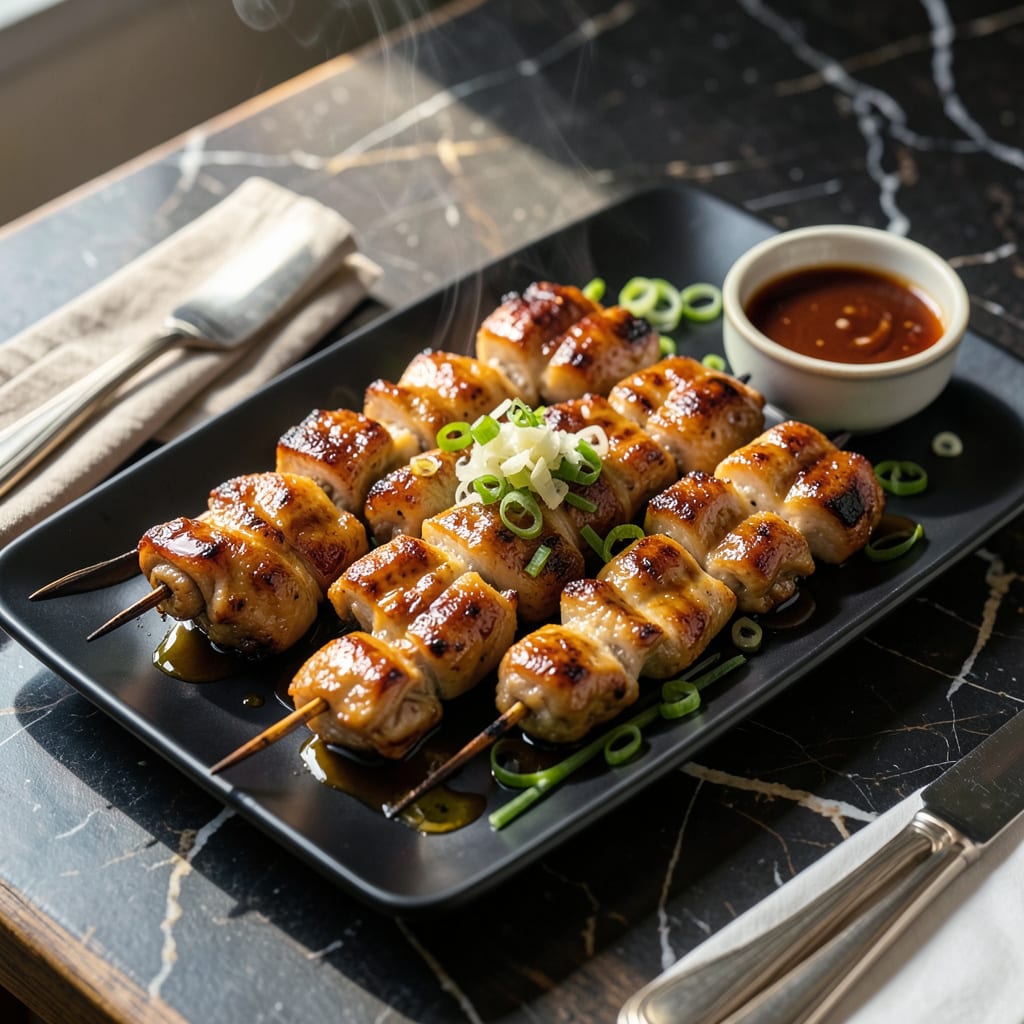
This sweet-savory glaze transforms ordinary grilled chicken into an authentic Japanese street food experience. The balance of soy, mirin, and sugar creates a sticky, caramelized coating that’s both tangy and slightly sweet.
Unlike store-bought versions, this homemade yakitori sauce contains no preservatives and allows you to control the sweetness level. It keeps well in the fridge for up to two weeks, ready for your next grilling session.
Ingredients for Chicken Yakitori Sauce
Nine simple ingredients create that signature sticky, sweet-savory glaze you love on grilled skewers.
| Ingredient | Amount | Notes |
|---|---|---|
| Soy Sauce 🥢 | ½ cup | Low-sodium preferred for balance |
| Mirin 🍶 | ½ cup | Sweet rice wine, authentic flavor |
| Granulated Sugar 🍚 | ¼ cup | Adjust to taste preference |
| Sake 🍶 | ¼ cup | Dry Japanese rice wine |
| Fresh Ginger 🌿 | 1 tbsp | Finely grated for smooth texture |
| Garlic Cloves 🧄 | 3 cloves | Minced for depth of flavor |
| Rice Vinegar 🍯 | 1 tbsp | Balances sweetness with acidity |
| Sesame Oil 🫒 | 1 tsp | Toasted for nutty aroma |
| Green Onions 🧅 | 2 whole | Thinly sliced for garnish |
[recipeingredientscaler]
The soy sauce is non-negotiable for that umami backbone. Kikkoman is my go-to, but any Japanese brand works—just avoid the super cheap stuff. Mirin is key here (don’t swap for sugar + water), and Mitsukan makes a great bottle that’s easy to find at most Asian markets or even Whole Foods. Sake can be the cheap cooking kind, no need for premium stuff.
Out of mirin? 1 tbsp sugar + 1 tbsp water + 1 tsp vinegar per 2 tbsp mirin gets you close. No sake? Dry sherry or white wine in a pinch. The ginger and garlic are fresh only—powdered versions won’t give you that bright, zingy kick the dish needs. The sesame oil should be toasted (the dark brown kind), not light.
This keeps like a dream. Store in an airtight jar in the fridge for up to 2 weeks. The flavors actually deepen after a day or two. Freeze for 3 months if you want to batch it—just thaw and stir before using.
Why You’ll Love This Recipe
- One Pot Wonder: I just dump soy sauce, mirin, sugar, sake, and ginger in a pan—no fancy steps.
- Sweet-Savory Balance: The mirin and sugar caramelize into this sticky glaze that clings to every bite.
- Weeknight Hero: I use it for skewers, stir-fries, or even as a marinade for chicken thighs.
- Budget Stretch: A small batch makes enough sauce for multiple meals, and the ingredients last forever in my pantry.
Step-by-Step Instructions for Chicken Yakitori Sauce
This method delivers a glossy, balanced glaze with minimal effort and maximum flavor.
Step 1: Combine the Liquid Base
In a medium saucepan, pour in the 0.5 cup soy sauce, 0.5 cup mirin, 0.25 cup sake, and 0.25 cup granulated sugar. Stir gently over medium heat until the sugar begins to dissolve—you’ll see it disappear into the liquid within 2-3 minutes.
This base creates the perfect sweet-savory foundation. The mirin adds its characteristic sweetness while the sake balances it with a subtle dryness. Keep the heat moderate to prevent scorching.
Step 2: Add Aromatics and Simmer
Stir in the 1 tbsp fresh ginger (finely grated) and 3 cloves garlic cloves (minced). These aromatics infuse the sauce with depth as it simmers. Reduce heat to medium-low and let the mixture cook for 8-10 minutes.
Watch for the sauce to thicken slightly—it should coat the back of a spoon but still be pourable. The ginger and garlic will mellow into the background, adding complexity without overpowering the final glaze.
Step 3: Finish with Acid and Oil
Remove the saucepan from heat and stir in the 1 tbsp rice vinegar and 1 tsp sesame oil. The rice vinegar brightens all the flavors, while the sesame oil adds its distinctive nutty aroma that defines authentic yakitori sauce.
Let the sauce cool for 5 minutes at room temperature. It will thicken further as it cools. The finished sauce should have a glossy sheen and a balance of sweet, salty, and umami flavors.
Step 4: Garnish and Store
Thinly slice the 2 whole green onions and sprinkle them over the finished sauce or reserve for garnishing the grilled chicken. This adds a fresh, oniony contrast to the rich glaze.
Transfer the sauce to a jar or bowl. It will keep in the refrigerator for up to 2 weeks. For best results, brush the sauce onto chicken during the last few minutes of grilling to create that signature sticky, caramelized coating.
Pro Tips For Making Chicken Yakitori Sauce
- Reduce Low and Slow: Simmer the sauce on medium-low heat for 8-10 minutes, stirring often—rushing with high heat burns the sugar before the flavors meld.
- Grate the Ginger: Use a microplane for the fresh ginger to get every bit of juice and aroma, and don’t bother peeling it first (the skin softens when cooked).
- Skip the Substitutes: Mirin isn’t just sweet—its acidity balances the soy, so don’t swap it for sugar water or the sauce will taste flat and one-dimensional.
- Strain Before Using: After cooking, run the sauce through a fine-mesh strainer to remove ginger fibers—smooth texture means better cling to the chicken.
Best Sauces and Condiments for These Flavors
Classic Yakitori Pairing
For the most authentic experience, pair this sauce with grilled chicken skewers. Brush it on during the last 2-3 minutes of cooking for that perfect caramelized finish. I use thigh meat for juicier results.
Vegetable Dippers
Raw or grilled veggies work wonderfully as dippers. Try cucumber slices, bell pepper strips, or carrot sticks. The sauce’s sweet-savory profile complements their freshness beautifully. 🥗
Rice Bowl Enhancer
Drizzle this over steamed rice for an instant flavor boost. I love it with jasmine or sushi rice. Add a soft-boiled egg and thinly sliced scallions for a complete meal that’s ready in 10 minutes.
Noodle Toss
Toss 1 lb cooked ramen or udon noodles with ¼ cup of this sauce. Add shredded cabbage and bean sprouts for crunch. This creates a quick, satisfying noodle dish with minimal effort.
Marinade Base
Use it as a marinade for pork tenderloin or tofu. Marinate for 2-4 hours before grilling. The acidity in the sauce helps tenderize while adding incredible flavor depth.
Dipping Sauce
Serve it as a dipping sauce for dumplings or spring rolls. Thin it slightly with 1 tbsp water if needed. I particularly love it with pork gyoza for that extra umami kick. 💛
Nutrition Facts
Frequently Asked Questions
Can I use honey instead of sugar?
Yes, substitute honey in a 1:1 ratio for sugar. It adds a deeper flavor and natural sweetness. Reduce other liquids slightly to compensate for honey’s moisture content.
How long can I store the leftover sauce?
It stays fresh in an airtight container in the fridge for up to 2 weeks. For longer storage, freeze for up to 3 months. Thaw overnight before using.
Can I make this sauce without mirin?
Use 1 tbsp sugar + 1 tbsp water + 1 tsp vinegar per 2 tbsp mirin. While not identical, this mimics the sweetness and acidity.
Why did my sauce turn out too thin?
Simmer longer on medium-low heat until it coats a spoon. If still thin, mix 1 tsp cornstarch with water and stir in. Cook for 1-2 minutes more.

- Jollof Rice Sauce Recipe: West African Tomato and Spice Infusion - September 25, 2026
- Japanese Rice Soup Recipe: Umami-Rich Comfort in a Bowl - September 25, 2026
- Homemade Cream Of Rice Recipe: Silk-Smooth Breakfast in Minutes - September 25, 2026