
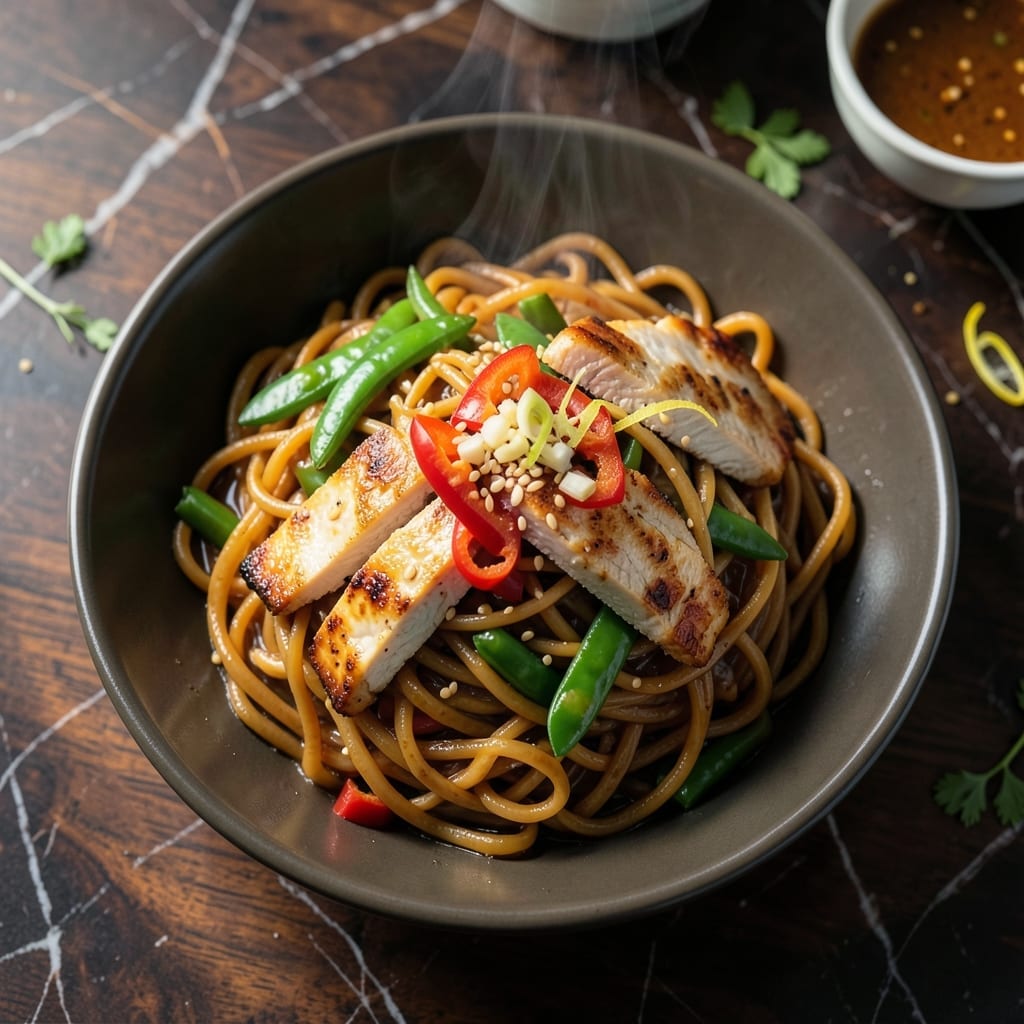
This dish brings authentic Chinese takeout flavors to your home kitchen with a perfect balance of textures and tastes.
I developed this method after years of testing to achieve that signature wok-tossed quality. The key is high heat and constant motion, which creates noodles that are tender yet chewy with just the right amount of char.
You’ll end up with glossy lo mein noodles coated in a savory sauce, packed with chicken, vegetables, and that unmistakable umami depth. The sauce clings to every strand without making the dish soggy.
Serve it fresh from the wok for the best experience. Here’s how to make it right.
Ingredients for Chinese Chicken Lo Mein
Simple ingredients, restaurant-quality results at home with this wok-tossed classic.
| Ingredient | Amount | Notes |
|---|---|---|
| Dried Lo Mein Noodles 🍜 | 12 oz | Or fresh egg noodles |
| Boneless Chicken Breast 🍗 | 1 lb | Thinly sliced for even cooking |
| Soy Sauce 🫒 | ⅓ cup | Low-sodium preferred for balance |
| Oyster Sauce 🫒 | 2 tbsp | Vegetarian oyster sauce if needed |
| Sesame Oil 🫒 | 1 tbsp | Toasted for depth of flavor |
| Garlic Cloves 🧄 | 4 cloves | Minced for maximum flavor |
| Fresh Ginger 🌿 | 1 tbsp | Grated or minced fine |
| Bell Peppers 🌶️ | 2 whole | Thinly sliced, any color |
| Carrots 🥕 | 2 whole | Julienned for even cooking |
| Green Onions 🧅 | 4 whole | Sliced thin, whites and greens separated |
| Neutral Oil 🫒 | 3 tbsp | For high-heat stir-frying |
| Cornstarch 🌾 | 1 tbsp | For velvety sauce texture |
| Chicken Broth 🍲 | ½ cup | Low-sodium for control |
| Brown Sugar 🍚 | 1 tbsp | Balances savory flavors |
| Salt 🧂 | ½ tsp | Adjust to taste at end |
The noodles are non-negotiable—look for dried lo mein in the Asian aisle at Whole Foods or your local Asian market. Fresh egg noodles work too (the refrigerated kind, not the dry spaghetti-like ones). For the chicken, thighs stay juicier than breasts, but either works. I grab mine from Costco for bulk savings. Make sure your soy sauce is fresh—old soy sauce loses its punch fast.
No oyster sauce? Hoisin plus a dash of fish sauce gets you close (skip the fish sauce for vegetarian). Short on veggies? Broccoli or snap peas are great swaps. The cornstarch can be arrowroot powder at the same ratio. If you don’t have sesame oil, toasted Asian chili oil adds a different but delicious depth. Always taste your sauce before adding to the noodles—adjust with a splash of water if it’s too salty.
Cooked noodles will keep in the fridge for 3-4 days, but they’re best fresh. The sauce ingredients can be mixed ahead and stored for 1 week. Leftovers reheat well in a skillet with a splash of water—microwave makes them gummy. Always store noodles and sauce separately if prepping ahead.
Why You’ll Love This Recipe
- One Pan Wonder: I toss everything in a single wok—noodles, chicken, and that rich soy-oyster-sesame combo—and it’s done in 20 minutes flat.
- Umami Bomb: The oyster sauce and sesame oil hit you with this deep, savory punch that makes the chicken taste like it simmered all day.
- Feeds a Crowd: I stretch this to four generous servings with just two chicken breasts and a pack of noodles. Honestly, it’s my cheat for dinner parties.
- Even Better Tomorrow: The noodles soak up all the sauce overnight, so leftovers taste richer. I’ll be real: I make extra just for lunch the next day.
Step-by-Step Instructions for Chinese Chicken Lo Mein
Here’s my foolproof method that delivers that classic wok-tossed flavor every time.
Step 1: Prep and Marinate the Chicken
Slice the 1 lb Boneless Chicken Breast into thin strips about ¼-inch thick. Uniform pieces ensure even cooking and maximum surface area for absorbing flavor. Place the chicken in a bowl and toss with 1 tbsp Cornstarch to create a light coating that will give you that signature velvety texture.
Add 1 tbsp Soy Sauce and 1 tbsp Sesame Oil to the chicken and mix well. This quick marinade infuses flavor and helps the cornstarch adhere. Let it sit for 10 minutes while you prep the vegetables—this short rest makes a noticeable difference in tenderness.
Step 2: Stir-Fry the Vegetables
Heat 2 tbsp Neutral Oil in a wok or large skillet over high heat until it shimmers. Add the 4 cloves Garlic Cloves and 1 tbsp Fresh Ginger, stirring constantly for 30 seconds until fragrant. Watch closely—garlic burns easily at this temperature.
Toss in the 2 whole Bell Peppers (thinly sliced) and 2 whole Carrots (julienned). Stir-fry for 4-5 minutes until the vegetables soften slightly but retain their bright color and crispness. The carrots should be tender enough to pierce easily but still have a slight bite. Transfer the vegetables to a plate and set aside.
Step 3: Cook the Chicken
Add the remaining 1 tbsp Neutral Oil to the wok and increase heat to high. Working in batches if needed, add the chicken in a single layer. Let it cook undisturbed for 1-2 minutes until the bottom develops a golden brown crust, then stir-fry until cooked through.
The chicken should reach 165°F internally and have no pink remaining. The cornstarch coating will create a light glaze on the chicken as it cooks. Remove the chicken from the wok and set it aside with the vegetables.
Step 4: Toss Everything Together
Return all the cooked chicken and vegetables to the wok. Add the 12 oz Dried Lo Mein Noodles (cooked according to package directions and drained), 0.33 cup Soy Sauce, 2 tbsp Oyster Sauce, 1 tbsp Brown Sugar, and 0.5 cup Chicken Broth. Stir-fry everything together for 2-3 minutes until the noodles are well coated and heated through.
The sauce should cling to the noodles and create a glossy sheen. If the mixture seems dry, add a splash more chicken broth. The lo mein should be moist but not soupy—you want each strand to glisten with flavor.
Step 5: Finish and Serve
Sprinkle with 0.5 tsp Salt and taste for seasoning. Adjust with more salt if needed, but remember the soy and oyster sauces are already quite salty. Stir in the 4 whole Green Onions (sliced) just before serving to preserve their fresh, crisp texture.
Transfer to serving plates and drizzle with any remaining sauce from the wok. The green onions add a pop of color and a mild oniony bite that perfectly complements the rich, savory flavors of this dish. Serve immediately while hot.
Pro Tips For Making Chinese Chicken Lo Mein
- Parboil the Noodles: Cook the dried lo mein noodles for just 2-3 minutes in boiling water before stir-frying—I learned this the hard way after ending up with gummy, overcooked noodles every time I skipped it.
- Velvet the Chicken: Marinate the chicken breast with 1 teaspoon cornstarch and 1 tablespoon soy sauce for 15 minutes before cooking. Sounds weird, but it works: the cornstarch keeps the chicken crazy tender.
- Skip the Overcrowding: Stir-fry the chicken in batches if needed—resist the urge to dump it all in at once, or you’ll steam it instead of searing it.
- Finish with Sesame Oil: Drizzle the sesame oil at the very end, off the heat. My grandmother swore by this, and she was right: it preserves the fragrant aroma instead of burning it off.
Regional Styles of This Dish
Cantonese Style
In Cantonese cuisine, lo mein leans lighter with a focus on the wok hei (breath of the wok). I use 1 tsp Shaoxing wine in the sauce for depth. The noodles are often parboiled separately before the final toss to achieve that perfect chew. 🔥
Sichuan Spicy
For Sichuan flair, add 1 tbsp chili oil and 1 tsp Sichuan peppercorns to the stir-fry. The numbing heat pairs beautifully with the savory sauce. I also throw in dried red chilies for extra spice and color.
Shanghai Sweet
Shanghai versions often include 1 tbsp black vinegar for tang and 2 tsp sugar for balance. The sauce becomes slightly sticky, coating the noodles in a glossy sheen. I love the sweet-savory contrast with the chicken.
Taiwanese Garlic
Taiwanese lo mein emphasizes garlic—use 6 cloves instead of 4. Add 1 tbsp fried shallots as a garnish for crunch. The garlic flavor is bold but not overpowering, creating a rich aromatic base.
American Takeout
American versions often add 1 cup bean sprouts and ½ cup cabbage for texture. The sauce is typically thicker, so I reduce the broth to ⅓ cup. This is the version most familiar to US audiences, with a heartier, more substantial bite.
Nutrition Facts
Frequently Asked Questions
Can I use a different type of noodle?
Yes! While lo mein noodles are traditional, you can use spaghetti or linguine in a pinch. For the best texture, slightly undercook them before stir-frying.
How do I prevent the noodles from sticking?
Use high heat and keep everything moving constantly. A well-seasoned wok or non-stick pan helps too. If needed, add a splash of oil or broth to loosen the mixture.
Can this dish be made ahead of time?
Cook the noodles and prep ingredients in advance, but stir-fry just before serving. Leftovers keep for 3-4 days in the fridge, though they’re best fresh.
Why is my sauce too salty?
Soy and oyster sauces are salty. Taste as you go and adjust with 1 tsp sugar or ¼ cup water if needed. Always use low-sodium versions when possible.

- Jollof Rice Sauce Recipe: West African Tomato and Spice Infusion - September 25, 2026
- Japanese Rice Soup Recipe: Umami-Rich Comfort in a Bowl - September 25, 2026
- Homemade Cream Of Rice Recipe: Silk-Smooth Breakfast in Minutes - September 25, 2026