
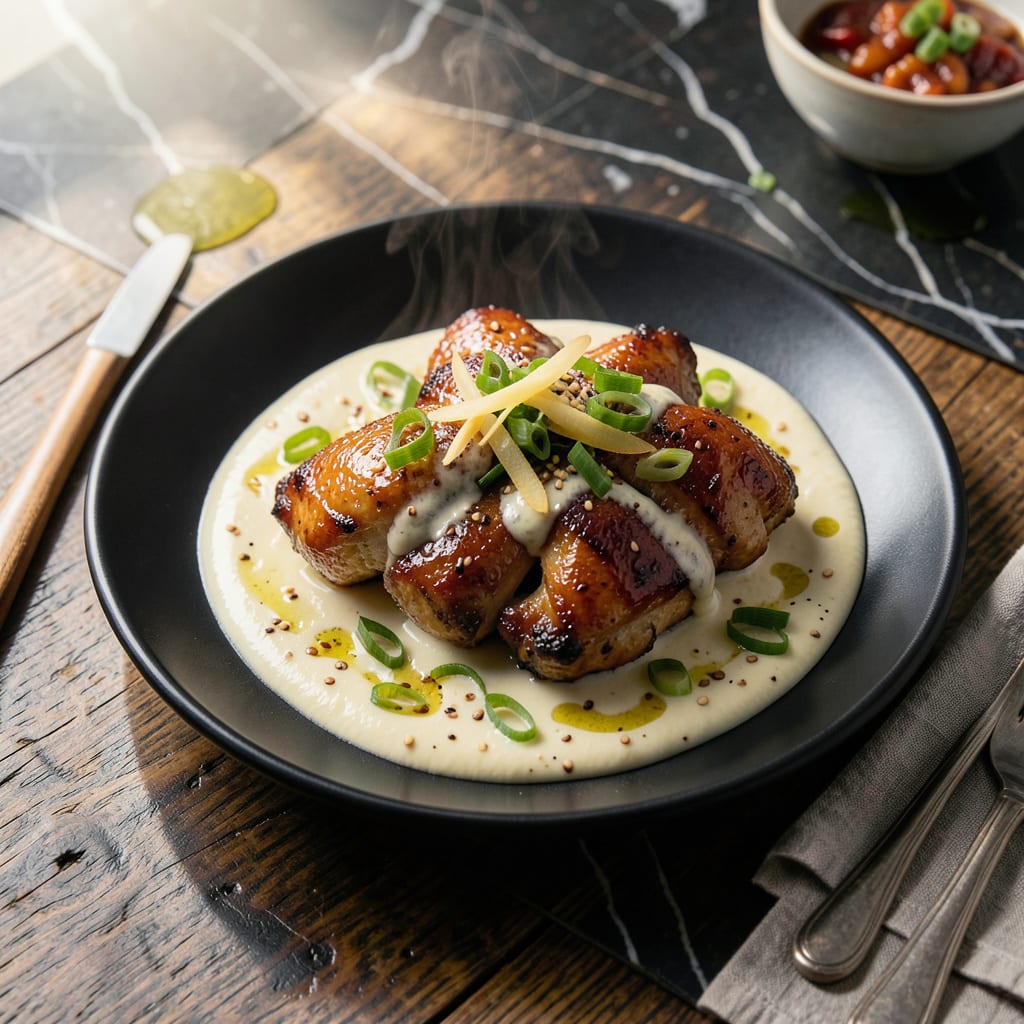
This sauce brings together the richness of coconut with traditional Chinese flavors for a versatile tropical twist. It’s perfect for elevating stir-fries, dipping, or drizzling over grilled proteins.
With a balance of sweet, savory, and creamy notes, this creation adds depth to any dish. Simple to prepare and easy to store, it keeps well for up to a week in the fridge.
Ingredients for Chinese Coconut Chicken Sauce
These balanced ingredients blend rich coconut with bold Chinese flavors perfectly.
| Ingredient | Amount | Notes |
|---|---|---|
| Coconut Milk 🥥 | 1 cup | Full-fat for creamy texture |
| Soy Sauce 🫒 | ¼ cup | Low-sodium preferred |
| Rice Vinegar 🍚 | 2 tbsp | Adds bright acidity |
| Brown Sugar 🍚 | 2 tbsp | Light or dark works |
| Fresh Ginger 🌿 | 1 tbsp | Peeled, finely grated |
| Garlic Cloves 🧄 | 3 cloves | Minced for depth |
| Sesame Oil 🫒 | 1 tsp | Toasted for aroma |
| Red Pepper Flakes 🌶️ | ½ tsp | Adjust for heat |
| Cornstarch 🌾 | 1 tbsp | Slurry for thickening |
| Water 💧 | 2 tbsp | For cornstarch slurry |
[recipeingredientscaler]
The coconut milk is the foundation here. Full-fat cans from Thai Kitchen or Native Forest give the best texture—light versions just don’t deliver the same creaminess. For soy sauce, Kikkoman low-sodium is my go-to, but any quality brand works. Fresh ginger is non-negotiable (the jarred stuff lacks punch). Look for firm roots at Whole Foods or any well-stocked produce section.
No brown sugar? Honey or maple syrup works in a pinch, though the flavor shifts slightly. Out of rice vinegar? Apple cider at half the amount gets you close. If you’re avoiding heat, skip the red pepper flakes entirely. The cornstarch slurry is key for that glossy finish—arrowroot powder can sub in equal amounts if needed.
This sauce keeps beautifully. Store in an airtight jar in the fridge for up to 1 week. For longer storage, freeze in ice cube trays, then transfer to a bag—3 months max. The flavors meld overnight, so it tastes even better the next day.
Why You’ll Love This Recipe
- One Pan Wonder: I just dump everything into a pan—coconut milk, soy sauce, ginger—and let it simmer while I prep the rice.
- Sweet & Tangy Magic: The brown sugar and rice vinegar create this addictive balance, and the ginger gives it that warm kick.
- Meatballs to Stir-Fry: I’ve used this sauce with chicken, tofu, even shrimp—honestly, it works with whatever protein I have on hand.
- Makes Extra: Leftovers taste even better the next day, and I always have enough to drizzle over rice or noodles.
Step-by-Step Instructions for Chinese Coconut Chicken Sauce
This tropical fusion sauce comes together quickly with careful attention to texture and balance.
Step 1: Bloom the Aromatics
Heat the sesame oil in a saucepan over medium heat until it shimmers. Add the 1 tbsp fresh ginger and 3 cloves garlic cloves, stirring constantly for 30-45 seconds until fragrant but not browned.
This step releases the essential oils from the ginger and garlic, building the foundation of flavor. Watch closely—burnt aromatics will make the sauce bitter. The mixture should smell bright and pungent, not acrid.
Step 2: Combine the Liquid Base
Pour in the 1 cup coconut milk, 0.25 cup soy sauce, 2 tbsp rice vinegar, 2 tbsp brown sugar, and 0.5 tsp red pepper flakes. Whisk until the brown sugar fully dissolves and the mixture is smooth.
Bring to a gentle simmer over medium heat, then reduce to low heat. The sauce should bubble lightly at the edges. This allows the flavors to meld without reducing too quickly. The coconut milk will create a creamy, velvety base.
Step 3: Simmer for Depth of Flavor
Let the sauce simmer uncovered for 8-10 minutes, stirring occasionally. You’ll notice the liquid reduce slightly and the colors deepen as the sugar caramelizes. The sauce should coat the back of a spoon but still be pourable.
Taste and adjust seasoning if needed, though the balance of sweet, salty, and tangy should already be harmonious. The red pepper flakes will infuse a subtle heat that builds gradually. Don’t let it boil vigorously—this can cause the coconut milk to separate.
Step 4: Thicken to Perfection
In a small bowl, whisk together the 1 tbsp cornstarch and 2 tbsp water until smooth. Slowly pour this slurry into the simmering sauce while whisking constantly to prevent lumps.
Continue cooking for 1-2 minutes until the sauce thickens to your desired consistency—it should cling to a spoon but still flow easily. The cornstarch activates quickly, so remove from heat as soon as it reaches the right texture. The final sauce will have a glossy, velvety appearance.
Pro Tips For Making Chinese Coconut Chicken Sauce
- Simmer, Don’t Boil: Keep the coconut milk at a gentle simmer—boiling it hard will cause it to separate and lose that creamy texture. I learned this the hard way after my first three batches turned into a greasy mess.
- Grate the Ginger: Fresh ginger releases way more flavor when finely grated instead of minced or sliced. Sounds tedious, but it actually changes the outcome.
- Balance the Sweet: Taste before serving and add a splash more rice vinegar if the brown sugar overpowers the sauce. My grandmother swore by this, and she was right.
- Use Full-Fat Coconut Milk: Skip the light version—it won’t give you that rich, velvety base the dish needs. After trying both, I never go back.
Flavor Customization for This chinese coconut chicken sauce
Spice It Up
For extra heat, add 1 tsp sriracha or 1 tbsp gochujang while simmering. This builds on the existing 0.5 tsp red pepper flakes for a bolder kick. I love the depth sriracha adds without overpowering the coconut base.
Citrus Twist
Brighten the flavors with 1 tbsp lime juice or 1 tsp orange zest at the end. The acidity complements the creamy coconut beautifully. Just stir it in after removing from heat to preserve the fresh citrus notes.
Herb Infusion
Fresh herbs can elevate this sauce significantly. Stir in 2 tbsp chopped cilantro or 1 tbsp Thai basil just before serving. The aromatic herbs add a layer of freshness that balances the richness perfectly. 🌿
Umami Boost
For deeper savory notes, add 1 tbsp oyster sauce or 1 tsp fish sauce with the soy sauce. These traditional Chinese ingredients enhance the sauce’s complexity. A little goes a long way in amplifying the existing flavors.
Sweet Variations
Adjust the sweetness by swapping the 2 tbsp brown sugar for 2 tbsp honey or 1 tbsp maple syrup. Each brings a unique profile—honey adds floral notes while maple offers earthy undertones.
Creamier Texture
For an even richer sauce, stir in 2 tbsp cream of coconut at the end. This thickens the sauce further while intensifying the coconut flavor. It’s perfect when you want a more decadent finish. 💛
Nutrition Facts
Frequently Asked Questions
Can I use light coconut milk instead of full-fat?
Yes, but the texture will be thinner and less rich. For best results, stick with full-fat to achieve that creamy consistency. You can reduce the amount of cornstarch slightly if using light coconut milk.
How long does this sauce keep in the fridge?
Store it in an airtight container and it will stay fresh for up to 1 week. For longer storage, freeze in ice cube trays for up to 3 months.
What can I use instead of rice vinegar?
Apple cider vinegar works well, but use half the amount. For a milder taste, white vinegar is a good substitute, though it lacks the depth of rice vinegar.
Why did my sauce separate?
This usually happens if the sauce boils too vigorously. Keep it at a gentle simmer and stir occasionally. If it does separate, whisk vigorously to bring it back together.

- Jollof Rice Sauce Recipe: West African Tomato and Spice Infusion - September 25, 2026
- Japanese Rice Soup Recipe: Umami-Rich Comfort in a Bowl - September 25, 2026
- Homemade Cream Of Rice Recipe: Silk-Smooth Breakfast in Minutes - September 25, 2026