
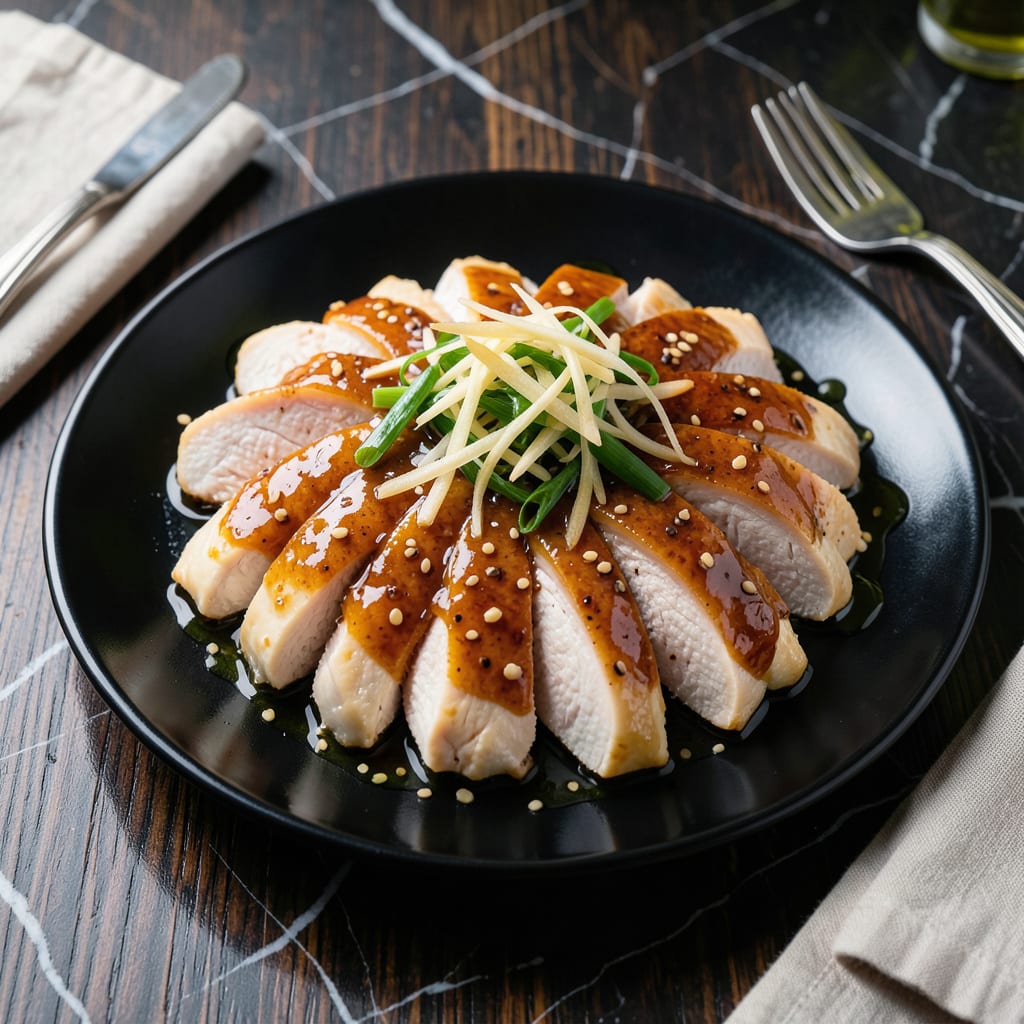
This authentic Cantonese sauce delivers the bright, punchy flavors that define traditional cold ginger chicken. The balance of fresh ginger, scallions, and soy creates a marinade that’s both aromatic and deeply savory.
With just a few simple ingredients and no cooking required, this authentic sauce comes together in minutes. It transforms poached chicken into a restaurant-quality dish with its bold, fresh taste.
Ingredients for Chinese Cold Ginger Chicken Sauce
Nine ingredients create this bold, authentic Cantonese sauce with bright ginger and savory depth.
| Ingredient | Amount | Notes |
|---|---|---|
| Fresh Ginger 🌿 | ½ cup | Finely julienned or shredded |
| Scallions 🧅 | ½ cup | Thinly sliced, white and green parts |
| Light Soy Sauce 🫒 | 3 tbsp | Low-sodium preferred for balance |
| Rice Vinegar 🍯 | 2 tbsp | Unseasoned for clean acidity |
| Sesame Oil 🫒 | 2 tsp | Toasted variety for depth |
| Granulated Sugar 🍚 | 1 tbsp | Dissolved completely in mixture |
| Neutral Cooking Oil 🫒 | 1 tbsp | Peanut or vegetable oil works |
| Garlic Cloves 🧄 | 2 cloves | Minced to fine paste |
| Shaoxing Wine 🍷 | 1 tbsp | Dry sherry as substitute |
[recipeingredientscaler]
The ginger is non-negotiable—fresh only, never powdered (it loses all punch). Look for plump, firm rhizomes at Asian markets or the produce section of well-stocked grocers. Scallions should be crisp with dark green tops; avoid any with wilting or yellowing. For soy sauce, Pearl River Bridge or Kikkoman Light deliver the right balance without overpowering saltiness.
No Shaoxing wine? Dry sherry works in a pinch, or omit entirely and add an extra splash of vinegar. Sugar can be swapped for rock sugar (dissolve it first) or a touch of honey. For a gluten-free version, use tamari instead of soy sauce. The sesame oil must be toasted—untasty raw versions won’t give you that nutty finish.
This sauce keeps 3-4 days refrigerated in a sealed jar (the flavors deepen overnight). Don’t freeze—ginger loses texture. For best results, let it sit 30 minutes before using so the ginger infuses fully. Always bring to room temperature before tossing with chicken.
Why You’ll Love This Recipe
- Five-Minute Mix: I just toss grated ginger, chopped scallions, soy, vinegar, and sesame oil in a bowl—no cooking, no fuss.
- Zingy & Fresh: That ginger bite with the tangy rice vinegar and nutty sesame oil? It’s the flavor bomb I crave all week.
- Meal Prep Hero: Drizzle it over chicken salad for lunch, or cold noodles for dinner—it keeps beautifully in the fridge.
- Budget Stretch: A handful of affordable ingredients makes enough sauce for three meals, and it tastes like takeout.
Step-by-Step Instructions for Chinese Cold Ginger Chicken Sauce
This authentic Cantonese marinade comes together quickly with precise technique and proper ingredient balance.
Step 1: Bloom Aromatics in Neutral Oil
Heat the 1 tablespoon neutral cooking oil in a small saucepan over medium-low heat. Add the 2 cloves garlic cloves and stir until fragrant, about 30 seconds—just until the edges turn pale golden but before any browning occurs.
Immediately add the 0.5 cup fresh ginger and cook for an additional 1-2 minutes, stirring constantly. The ginger should soften slightly and release its pungent aroma without taking on color. Remove from heat promptly to prevent bitterness.
Step 2: Dissolve Sugar and Deglaze
Return the saucepan to low heat and add the 1 tablespoon granulated sugar. Stir continuously until the sugar fully dissolves into a light syrup, about 1 minute. This step ensures the sugar incorporates evenly rather than settling at the bottom.
Pour in the 1 tablespoon Shaoxing wine to deglaze the pan, scraping up any browned bits from the ginger and garlic. The alcohol will cook off during this process, leaving behind its nutty depth. Let the mixture simmer gently for 30 seconds.
Step 3: Balance with Acid and Soy
Add the 3 tablespoons light soy sauce and 2 tablespoons rice vinegar to the pan. Stir to combine and bring the mixture to a brief simmer. The vinegar will cut through the richness while the soy sauce provides thesalty backbone.
Taste and adjust the balance if needed—the sauce should be tangy, slightly sweet, and umami-rich without being overly salty. Remove from heat and let the mixture cool to room temperature, about 10 minutes.
Step 4: Finish with Aromatics and Oil
Stir in the 0.5 cup scallions, reserving a small handful for garnish if desired. The residual heat will soften the scallions slightly while preserving their fresh bite. Finally, whisk in the 2 teaspoons sesame oil to add a nutty finish.
The sauce should now have a glossy appearance with visible flecks of ginger, garlic, and scallions. Let it sit for 5 minutes to allow the flavors to meld before using it to marinate your poached chicken or as a dipping sauce.
Pro Tips For Making Chinese Cold Ginger Chicken Sauce
- Grate the Ginger: Use a microplane to finely grate the ginger—it releases more juice and blends smoothly into the sauce. I learned this the hard way after chewing on fibrous ginger bits in my first few attempts.
- Bloom the Aromatics: Lightly cook the scallions and ginger in sesame oil for 30 seconds before mixing with other ingredients. Sounds weird, but it works: it mellows the raw bite without losing freshness.
- Balance the Vinegar: Start with half the rice vinegar you think you need, then adjust. After overpowering a batch with too much tang, I now add it gradually—about 1 tablespoon at a time.
- Rest Before Serving: Let the sauce sit for 10 minutes after mixing. My grandmother swore by this, and she was right: the flavors meld and the ginger’s heat softens just enough.
Serving Suggestions for This Recipe
Plating Style
For an authentic Cantonese presentation, arrange your poached chicken pieces on a bed of shredded iceberg lettuce or butter lettuce leaves. This adds crisp texture contrast and traditional visual appeal. I love using white plates to make the sauce’s vibrant colors pop. 💛
Sauce Application
Pour the sauce generously over the chicken just before serving. Let it pool slightly at the base of the plate for that classic restaurant-style look. For maximum flavor, ensure each piece gets thoroughly coated—about ¼ cup sauce per pound of chicken works perfectly.
Garnish Ideas
Finish with a sprinkle of toasted sesame seeds and the reserved scallion greens for freshness. A few thin ginger julienne strips on top adds height and reinforces the star flavor. I sometimes add cilantro sprigs for a pop of color.
Serving Temperature
This dish is meant to be served cold or at room temperature. Chill your chicken completely before saucing, then let it sit for 10 minutes to allow the flavors to penetrate. The contrast of cool chicken with the aromatic sauce is what makes it special.
Accompaniment Pairings
Serve with steamed jasmine rice to soak up the extra sauce. For a complete meal, add blanched bok choy or stir-fried green beans on the side. The lightness of these vegetables balances the bold ginger flavor. 🌟
Family-Style Option
For gatherings, present the chicken on a large platter with the sauce in a separate bowl. Let guests pour their own sauce—this keeps the chicken from getting soggy if not eaten immediately. Provide extra scallions and ginger on the side for customization.
Nutrition Facts
Frequently Asked Questions
Can I use ground ginger instead of fresh?
No, fresh ginger is essential for authentic flavor. Ground ginger loses its bright, pungent qualities and won’t provide the same texture. Always use 0.5 cup finely julienned fresh ginger for best results.
How long should I marinate the chicken?
For optimal flavor, marinate the poached chicken in the sauce for at least 30 minutes. For deeper penetration, 2-3 hours in the fridge works even better. Don’t exceed 4 hours or the texture may suffer.
What can I substitute for Shaoxing wine?
Dry sherry is the best substitute, using the same 1 tablespoon measurement. In a pinch, you can omit it entirely and add an extra splash of rice vinegar for acidity.
Why does my sauce taste too salty?
This usually happens with regular soy sauce. Use light soy sauce and taste as you go. If it’s too salty, balance with a touch more sugar or vinegar.

- Jollof Rice Sauce Recipe: West African Tomato and Spice Infusion - September 25, 2026
- Japanese Rice Soup Recipe: Umami-Rich Comfort in a Bowl - September 25, 2026
- Homemade Cream Of Rice Recipe: Silk-Smooth Breakfast in Minutes - September 25, 2026