
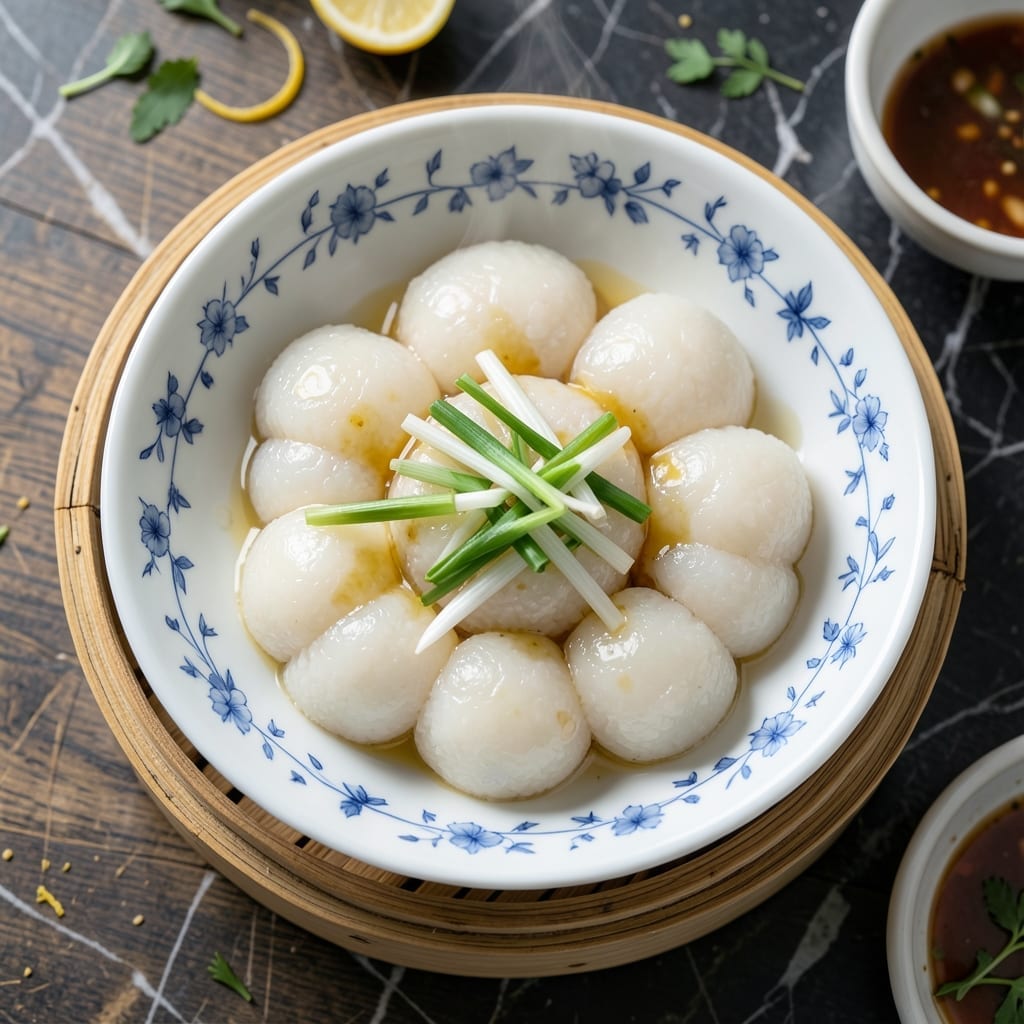
This traditional dish delivers chewy, pillowy rice cakes with a delicate texture that absorbs flavors beautifully. I developed this method to ensure perfect results every time.
The secret lies in proper steaming and resting to achieve that signature bounce. These rice cakes work as a base for stir-fries or soups, adding authentic texture to your meal.
Ingredients for Chinese White Rice Cake
Glutinous rice flour and warm water create these delicate, chewy rice cakes from scratch.
| Ingredient | Amount | Notes |
|---|---|---|
| Glutinous Rice Flour 🌾 | 2 cups | Also called sweet rice flour |
| Water 💧 | 1 ¼ cups | Warm, for mixing dough |
| Kosher Salt 🧂 | ½ tsp | Diamond Crystal preferred |
| Neutral Oil 🫒 | 1 tbsp | For greasing steamer |
| Sesame Oil 🫒 | 1 tsp | Toasted, for aroma |
| Scallions 🧅 | 4 whole | Thinly sliced for garnish |
| Garlic Cloves 🧄 | 3 cloves | Minced for serving |
| Soy Sauce 🥫 | 2 tbsp | Low-sodium preferred |
| Rice Vinegar 🍚 | 1 tbsp | For brightness |
| Sugar 🍬 | 1 tsp | Granulated, balances flavors |
| Cornstarch 🌽 | 2 tbsp | For dusting work surface |
| Red Pepper Flakes 🌶️ | ½ tsp | Optional, for heat |
Glutinous rice flour is non-negotiable here. Bob’s Red Mill or Erawan brands are widely available at Whole Foods or Asian markets. The flour must be labeled specifically as glutinous or sweet rice flour—regular rice flour lacks the necessary elasticity. Look for finely milled versions for the smoothest texture. The quality directly impacts the chewiness, so avoid expired stock (the oil in the flour can go rancid).
No glutinous rice flour? Mochiko is the exact same product, just sold under a different name. For a neutral oil, avocado or grapeseed oil works beautifully. If avoiding gluten entirely, confirm your soy sauce is tamari. The rice vinegar can be substituted with apple cider vinegar in a pinch, though the flavor profile will shift slightly. Fresh scallions are ideal, but chives make an acceptable replacement.
Store glutinous rice flour in an airtight container in a cool, dark place for up to 1 year. The rice cakes themselves are best used fresh but can be refrigerated in an airtight container for 3 days. Re-steam briefly to restore texture before serving. Do not freeze the cooked cakes, as this ruins their delicate structure.
Why You’ll Love This Recipe
- Five Ingredient Magic: I love that this only needs glutinous rice flour, water, salt, and a touch of both neutral and sesame oil—no fancy pantry items.
- Chewy Perfection: That soft, slightly sticky texture with just a hint of nutty sesame flavor? It’s the reason I make these every week.
- Endlessly Adaptable: I’ve served them plain, with stir-fries, or even drizzled with chili oil for a snack. They work for any meal, honestly.
- Budget Stretch: A bag of glutinous rice flour costs pennies and makes multiple batches. Between us, it’s my go-to for feeding a crowd without breaking the bank.
Step-by-Step Instructions for Chinese White Rice Cake
This method ensures the signature chewy texture and pillowy softness that defines authentic rice cakes.
Step 1: Combine the Dough Ingredients
In a large mixing bowl, whisk together the 2 cups glutinous rice flour, 0.5 tsp kosher salt, and 1 tsp sugar until evenly distributed. The sugar is essential—it doesn’t just sweeten but aids in creating that characteristic chewy texture.
Gradually pour in the 1.25 cups warm water while stirring with a wooden spoon until a smooth, thick batter forms. The consistency should resemble pancake batter but slightly thicker. Lumps indicate under-mixing; keep stirring until the batter is completely smooth and cohesive.
Step 2: Steam the Batter Until Firm
Grease a heatproof dish or steamer tray with the 1 tbsp neutral oil, ensuring all surfaces are lightly coated to prevent sticking. Pour the batter into the dish, spreading it evenly into a 1-inch thick layer. Smooth the top with a spatula for uniform cooking.
Place the dish in a steamer over boiling water, cover tightly, and steam for 30-35 minutes until the center is set and a toothpick inserted comes out clean. Avoid lifting the lid during steaming—condensation can drip onto the batter, causing uneven texture.
Step 3: Cool and Shape the Cakes
Remove the steamed cake from the steamer and let it cool on a wire rack for 10 minutes. This brief rest firms up the texture, making it easier to handle. Dust your work surface lightly with the 2 tbsp cornstarch to prevent sticking.
Turn the cake onto the dusted surface and cut into 1-inch cubes or rectangles using a sharp knife. For clean cuts, dip the knife in hot water between slices. The cakes should hold their shape but remain slightly tacky to the touch.
Step 4: Pan-Fry for Crispy Edges
Heat a non-stick skillet over medium-high heat and add the remaining neutral oil if needed. Arrange the rice cake pieces in a single layer, leaving space between each. Cook undisturbed for 4-5 minutes until the bottoms develop a golden-brown crust.
Flip carefully with a spatula and fry the opposite side for another 3-4 minutes. The exterior should be crisp while the interior stays soft and chewy. Transfer to a plate and keep warm.
Step 5: Prepare the Savory Garnish
In a small bowl, combine the 2 tbsp soy sauce, 1 tbsp rice vinegar, and 1 tsp sesame oil. Thinly slice the 4 whole scallions and mince the 3 cloves garlic cloves.
Drizzle the soy mixture over the warm rice cakes and sprinkle with scallions, garlic, and 0.5 tsp red pepper flakes if using. Serve immediately while the cakes are still warm and slightly crisp at the edges.
Pro Tips For Making Chinese White Rice Cake
- Steam Evenly: Use a bamboo steamer lined with parchment—poke holes in it first so steam circulates under the batter, or you’ll end up with a gummy bottom. I learned this the hard way after scraping raw dough off my first three attempts.
- Rest the Batter: Let the glutinous rice flour and water mixture sit for 15-20 minutes before steaming. Sounds weird, but it works: the flour hydrates fully, giving you that perfect chewy texture instead of a dense, chalky cake.
- Skip the Overmixing: Stir just until the batter is smooth—no more. Overworking it develops too much gluten in the rice flour, turning your rice cakes tough instead of tender.
- Oil the Knife: Dip your knife in neutral oil before slicing the cooled cake. It glides through cleanly without dragging or tearing, and you’ll get those neat, professional-looking pieces every time.
Serving Suggestions for Leftovers
Hot and Sour Soup
These rice cakes shine in a steaming bowl of hot and sour soup. Add the pan-fried cubes directly to the broth during the last 5 minutes of cooking. They’ll soak up the tangy, spicy liquid while maintaining their chewy center. I always garnish with extra scallions for freshness. 🥣
Stir-Fry Sensation
Create a quick stir-fry by tossing warm rice cakes with bell peppers, snap peas, and your choice of protein. The cakes will absorb the stir-fry sauce beautifully. Use medium-high heat and keep everything moving to prevent sticking.
Breakfast Hash
For a hearty breakfast, make a rice cake hash with leftover cubes. Sauté with diced potatoes, onions, and a fried egg on top. The crispy edges and soft centers add wonderful texture contrast to each bite.
Sweet Ending
Don’t overlook dessert possibilities! Toss warm rice cakes with brown sugar and coconut milk for a simple sweet treat. The slight chew pairs wonderfully with the creamy coconut. This is my kids’ favorite way to enjoy them.
Dipping Sauce Pairing
The soy-garlic mixture from the recipe makes an excellent dipping sauce. I also love serving with sweet chili sauce or peanut sauce for variety. Offer 2-3 sauce options to let guests customize their experience.
Cold Salad Option
Chilled rice cakes work surprisingly well in salads. Toss cooled cubes with cucumber, carrots, and a light rice vinegar dressing. The texture holds up better than you might expect when refrigerated overnight. 💡
Nutrition Facts
Frequently Asked Questions
Can I use regular rice flour instead of glutinous?
No, regular rice flour won’t work. Glutinous rice flour is essential for the signature chewy texture. Regular rice flour lacks the necessary elasticity and will result in crumbly cakes.
Why does my dough feel too sticky?
Sticky dough usually means too much water. Add a little more glutinous rice flour, 1 tbsp at a time, until it reaches a smooth, thick batter consistency. Dusting with cornstarch also helps manage stickiness.
How do I prevent the cakes from sticking to the steamer?
Always grease your steamer dish thoroughly with neutral oil before adding the batter. This creates a barrier that allows the cake to release easily after steaming.
Can I make these ahead of time?
Yes, but they’re best served fresh. You can steam and shape the cakes up to 1 day ahead. Store in an airtight container, then pan-fry just before serving to restore texture.

- Rice Mix Recipe: Fluffy Grains With Customizable Flavor Boost - September 25, 2026
- Soupy Rice Recipe: Broth-Soaked Grains With Rustic Depth - September 25, 2026
- Rice Paper Pancakes Recipe: Crispy Vietnamese Breakfast Delight - September 25, 2026