
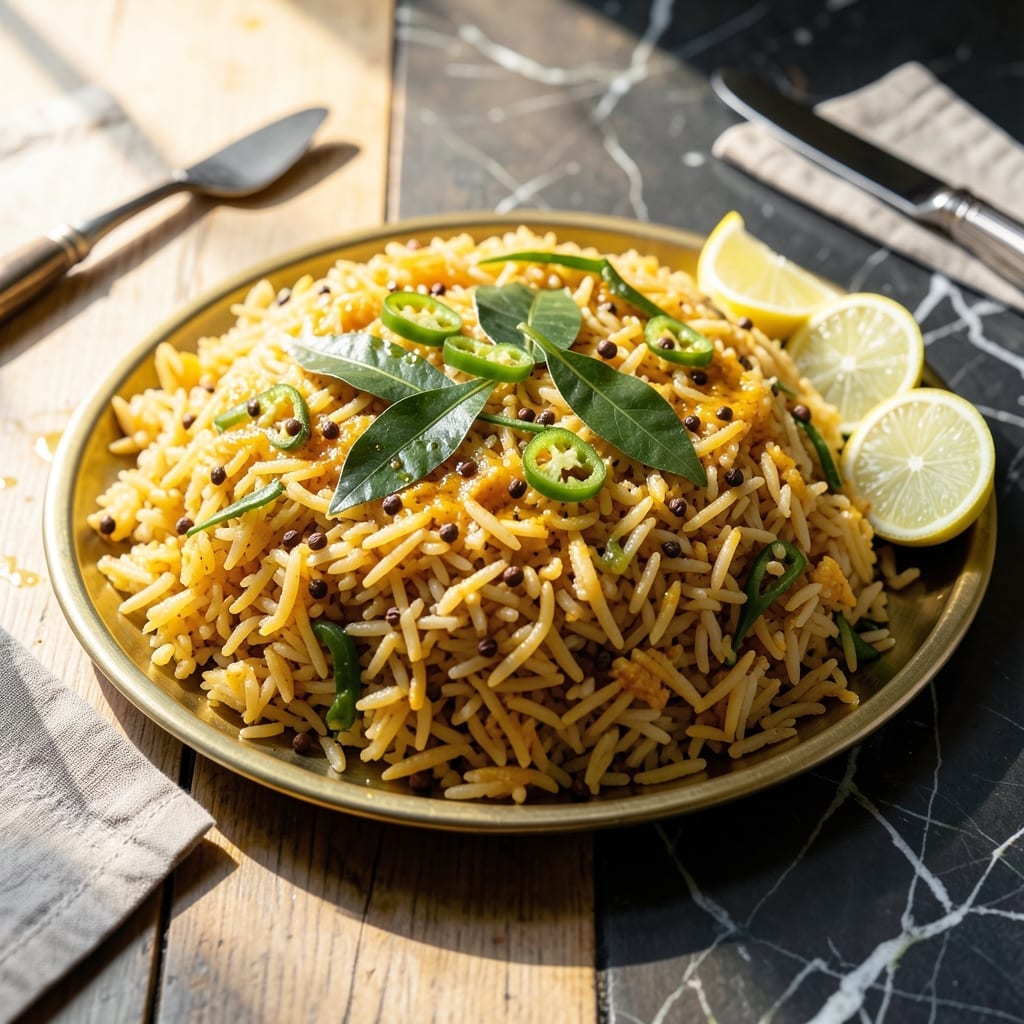
There’s a reason chitranna rice holds a special place in South Indian homes. This lemon-infused dish transforms simple ingredients into bright, comforting perfection with minimal effort.
The magic lies in tempering mustard seeds, curry leaves, and turmeric in hot oil before mixing with cooked rice. This step builds layers of aromatic flavor that define the dish.
What emerges is a vibrant bowl of rice with zesty citrus notes, earthy spices, and a satisfying texture. It’s the kind of meal that feels both nourishing and indulgent.
Serve it warm or at room temperature—this dish only improves as the flavors meld. Here’s how to make it authentic and delicious.
Ingredients for Chitranna Rice
Bright citrus, earthy spices, and fluffy rice create this South Indian comfort bowl with ease.
| Ingredient | Amount | Notes |
|---|---|---|
| Basmati Rice 🍚 | 2 cups | Rinsed until water runs clear |
| Lemons 🍋 | 2 whole | Juiced and zested for brightness |
| Mustard Seeds 🌿 | 1 tsp | Black or yellow variety |
| Curry Leaves 🍃 | 10 pieces | Fresh for authentic aroma |
| Ground Turmeric 🌶️ | ½ tsp | For color and earthiness |
| Green Chilies 🌶️ | 2 whole | Slit lengthwise for heat |
| Ginger 🌿 | 1 whole | Peeled and minced finely |
| Neutral Oil 🫒 | 3 tbsp | Coconut or vegetable oil preferred |
| Asafoetida 🌿 | 0.125 tsp | Hing, for umami depth |
| Roasted Peanuts 🥜 | ¼ cup | Lightly crushed for crunch |
| Fresh Cilantro 🌿 | ¼ cup | Chopped for garnish |
| Salt 🧂 | 1 tsp | Adjust to taste preference |
| Water 💧 | 4 cups | For cooking rice |
The rice quality matters here. Basmati from an Indian grocery store offers superior length and aroma compared to standard supermarket varieties. Curry leaves are non-negotiable for authenticity—Patel Brothers or any South Asian market will stock them fresh. Asafoetida (hing) might seem obscure, but a tiny amount adds profound depth (find it in the same markets, usually near other spices).
No curry leaves? Dried curry leaf powder at half the amount works in a pinch, though fresh is exponentially better. Cashews instead of peanuts add a richer crunch. If you must skip asafoetida, a pinch of garlic powder offers some compensation. Green chilies can be jalapeños or serranos—adjust quantity for heat preference. Always use freshly squeezed lemon juice, never bottled.
Store cooked chitranna in an airtight container in the fridge for up to 4 days. The flavors intensify overnight, making leftovers even more delicious. Freeze without cilantro for up to 3 months—add fresh garnish when reheating. Bring to room temperature before serving for best texture.
Why You’ll Love This Recipe
- One Pot Wonder: I just dump everything into a single pot—basmati rice, turmeric, mustard seeds—and let it work its magic.
- Zesty Lemon Punch: The tart lemon juice mixed with fragrant curry leaves gives it a bright, tangy kick that’s totally addictive.
- Lunchbox Hero: Honestly, it’s my go-to for meal prep—tastes just as good cold the next day, and the kids actually eat it.
- Pantry Staples Only: Between us, I always have basmati rice and turmeric on hand, so this is my backup plan when the fridge is bare.
Step-by-Step Instructions for South Indian Lemon Rice
Master the tempering technique and timing for authentic flavor in this comforting dish.
Step 1: Prepare and Cook the Rice
Rinse the 2 cups Basmati Rice under cold water until the water runs completely clear. This removes excess starch and prevents the grains from clumping together during cooking. Drain thoroughly in a fine-mesh strainer.
In a medium pot, combine the drained rice with 4 cups Water and ½ tsp Salt. Bring to a boil over high heat, then reduce to low, cover, and simmer for 12-15 minutes until the water is absorbed and the rice is just tender. Spread the cooked rice on a large plate to cool completely—this prevents it from turning mushy when mixed with the tempering.
Step 2: Temper the Spices
Heat the 3 tbsp Neutral Oil in a large skillet or kadhai over medium heat. Once hot, add the 1 tsp Mustard Seeds and allow them to sizzle and pop for about 30 seconds until they turn grayish-white. Immediately add the 0.125 tsp Asafoetida, 10 pieces Curry Leaves, 2 whole Green Chilies (slit lengthwise), and 1 whole Ginger (minced).
Sauté for 1-2 minutes until the curry leaves become crisp and the ginger turns lightly golden. Stir in the 0.5 tsp Ground Turmeric and cook for 10 seconds just until fragrant—be careful not to burn the turmeric, as it can turn bitter. Remove from heat promptly to preserve the vibrant yellow color.
Step 3: Combine Rice and Tempering
Add the cooled rice to the skillet with the tempered spices. Gently fold everything together with a spatula, ensuring the rice is evenly coated with the oil and spices. The grains should remain separate and distinct, not mashed or broken.
Drizzle the juice and zest from the 2 whole Lemons over the rice. Add the remaining ½ tsp Salt (adjusting to taste) and the 0.25 cup Roasted Peanuts. Fold again to distribute the lemon and peanuts evenly throughout the rice. The lemon juice should brighten the flavors without making the dish soggy.
Step 4: Finish and Rest
Return the skillet to low heat and warm the rice for 2-3 minutes, stirring occasionally, to allow the flavors to meld together. The rice should be heated through and the peanuts lightly toasted. Remove from heat and let it sit covered for 5 minutes to allow the flavors to deepen.
Garnish with the 0.25 cup Fresh Cilantro just before serving. The cilantro adds a fresh, herbal note that complements the tangy lemon and earthy spices. Serve warm for the best texture and flavor, ensuring every bite delivers the comforting balance of citrus, spice, and crunch.
Pro Tips For Making Chitranna Rice
- Toast the Mustard Seeds: Heat the mustard seeds in hot oil until they start popping—about 30 seconds—before adding anything else. I learned this the hard way after ending up with bitter, raw-tasting seeds more than once.
- Rinse the Rice: Soak basmati rice for 15 minutes, then rinse until the water runs clear to remove excess starch. This keeps your chitranna light and fluffy, not gummy.
- Use Fresh Curry Leaves: Skip the dried stuff—fresh curry leaves add a bright, citrusy aroma that dried just can’t match. My grandmother swore by this, and she was right.
- Add Turmeric Last: Stir in the ground turmeric only after tempering the mustard seeds and curry leaves to prevent burning. Sounds weird, but it works and saves you from a bitter aftertaste.
Dietary Considerations for This Recipe
Vegetarian and Vegan
This dish is naturally vegetarian and vegan, with its bright flavors coming from plant-based ingredients. The rice, lemon, and spices create a satisfying meal without any animal products, making it perfect for those following plant-based diets. 🌱
Gluten-Free
Chitranna is inherently gluten-free since it relies on rice as the base. Just ensure your spices, like asafoetida, are certified gluten-free to avoid cross-contamination. I always double-check labels when buying from bulk bins.
Nut Allergies
If nut allergies are a concern, simply omit the roasted peanuts or replace them with toasted sunflower seeds for a similar crunch. This swap maintains the texture without compromising safety.
Always verify that your spices are processed in nut-free facilities if allergies are severe.
Low-Sodium Option
To reduce sodium, cut the salt in half or eliminate it entirely. The lemon juice and turmeric still provide plenty of flavor. I often use low-sodium vegetable broth instead of water when cooking the rice for extra depth. 💡
Oil Preferences
For a lighter version, replace the neutral oil with coconut oil or even avocado oil. Both add subtle flavors that complement the dish beautifully while keeping it heart-healthy.
Nutrition Facts
Frequently Asked Questions
What kind of rice works best?
Use Basmati rice for authentic texture and aroma. Rinse until water runs clear to remove excess starch and prevent clumping. Short-grain rice can turn mushy.
Can I make it without curry leaves?
Fresh curry leaves are ideal, but dried leaf powder at half the amount works. Skip them entirely if needed, though the flavor will be less authentic.
How do I prevent soggy rice?
Cool cooked rice completely before mixing with tempering. Use 2-3 tbsp oil and fold gently to keep grains separate and distinct.
Can I use bottled lemon juice?
Always use fresh lemon juice for bright, natural flavor. Bottled juice lacks freshness and can taste artificial or overly processed.

- Jollof Rice Sauce Recipe: West African Tomato and Spice Infusion - September 25, 2026
- Japanese Rice Soup Recipe: Umami-Rich Comfort in a Bowl - September 25, 2026
- Homemade Cream Of Rice Recipe: Silk-Smooth Breakfast in Minutes - September 25, 2026