
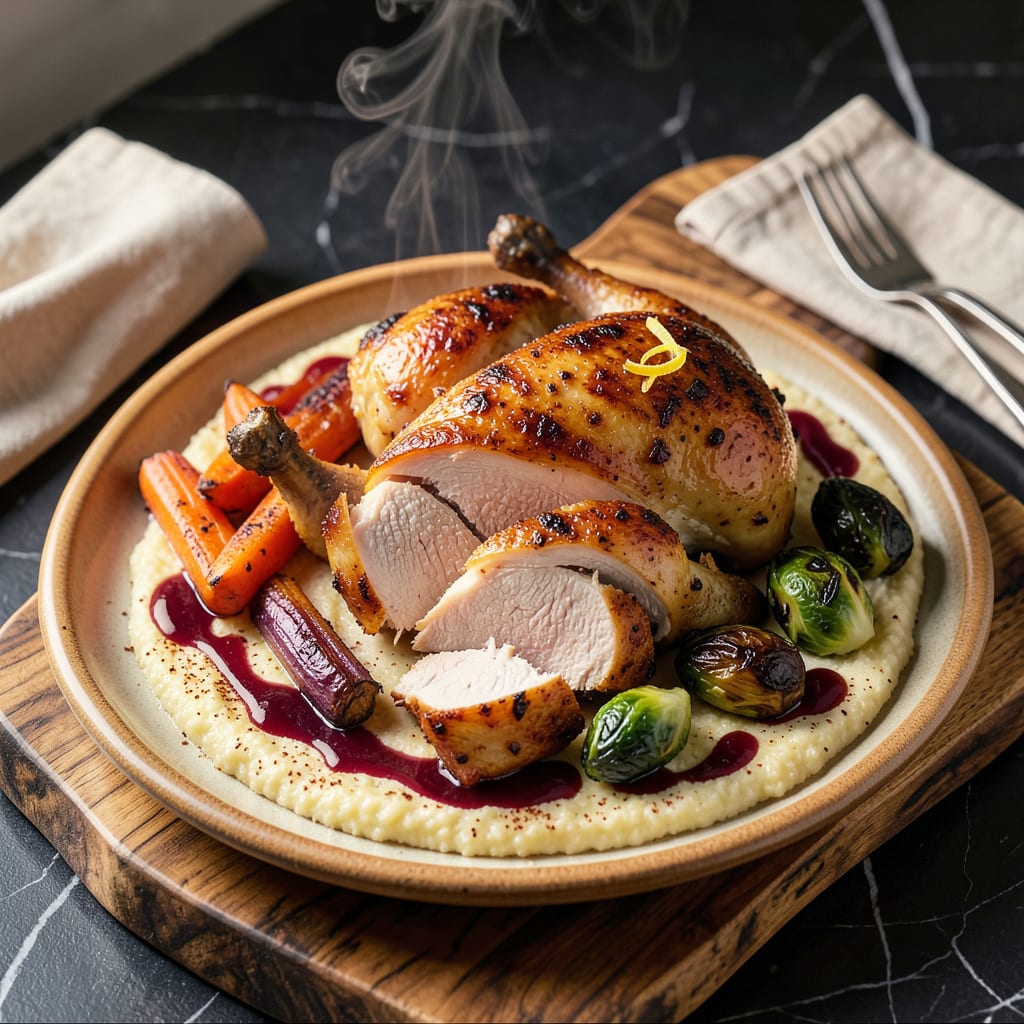
Cooks Venture pasture-raised chicken delivers richer flavor, firmer texture, and higher nutritional value than conventional poultry, thanks to its slow-growth process and outdoor access. The meat stays juicier when cooked and has a cleaner, more robust taste.
This isn’t just another chicken label—it’s a completely different farming philosophy that shows up on your plate. 🔥 The birds’ outdoor lifestyle and natural diet translate to meat with 30% more omega-3s and noticeably less water content than factory-farmed options. I’ve found the difference is especially apparent when grilling or roasting, where the meat holds its moisture better and develops a deeper caramelized crust.
What really sets it apart is the Pioneer breed they use, which grows at half the speed of conventional chickens. This slower development allows muscles and connective tissues to mature properly, giving you that satisfying bite that doesn’t turn rubbery when slightly overcooked. The flavor complexity comes from their varied diet of grasses, seeds, and insects—something you just can’t replicate in a confined operation. ✨
💡 In This Article
- Why Cooks Venture Pasture-Raised Chicken Tastes Different
- Best Cooking Techniques for Cooks Venture Chicken
Why Cooks Venture Pasture-Raised Chicken Tastes Different
The secret starts with the Pioneer breed, which grows 56 days to market weight—nearly twice as long as conventional broilers. This extended growth period allows muscle fibers to develop more fully, creating a denser, more structured meat that holds moisture better during cooking.
The difference is measurable: pasture-raised birds typically have 20-30% less water content in their meat compared to factory-farmed chickens, which translates directly to richer flavor concentration.
Their outdoor foraging diet makes all the difference in fatty acid composition. While conventional chickens eat a controlled corn/soy diet, Cooks Venture birds consume grasses, seeds, and insects—naturally boosting their omega-3 levels by 3-5x. This varied diet also introduces complex flavor compounds like terpenes from plants and umami-rich amino acids from insects. The result?
A taste profile with layered depth that conventional chicken simply can’t match. 🌿
Stress levels dramatically impact meat quality. Conventional chickens in crowded conditions produce more cortisol, which degrades muscle quality. Cooks Venture’s low-stress environment means their birds maintain optimal pH levels post-slaughter (5.7-5.9), preventing the tough, dry texture that plagues many store-bought chickens.
This ideal pH also enhances the meat’s ability to retain juices during cooking—something I notice immediately when searing or roasting.
The muscle development tells the story. Slow-growing birds develop more red muscle fibers (similar to dark meat) throughout their body, including the breast. These fibers contain more myoglobin and mitochondria, giving the meat its deeper color and more robust flavor.
When cooked, these fibers break down into gelatin more effectively, creating that coveted silky mouthfeel that disappears in fast-grown conventional birds. 🔥
Even the fat composition differs significantly. Pasture-raised chickens have fat that’s higher in monounsaturated fats (like oleic acid) and lower in saturated fats compared to conventional. This fat melts at lower temperatures (140-160°F), basting the meat from within during cooking.
That’s why you’ll see less shrinkage and more even cooking—especially noticeable when grilling or pan-searing at high heat.
Chefs often describe the flavor as “cleaner” because the meat lacks the medicinal aftertaste that can come from conventional chickens treated with antibiotics. The natural diet also means no artificial flavor enhancers are needed—the meat’s natural glutamates and nucleotides provide plenty of savory depth on their own.
This purity lets complementary flavors like rosemary, garlic, or citrus really shine through. ✨
The proof is in the cooking performance. Try roasting both types side-by-side at 375°F. The pasture-raised chicken will develop a deeper golden crust while staying juicy inside, while conventional chicken often dries out before achieving the same color.
This performance difference comes down to the protein structure—slow-grown meat has more stable collagen that converts beautifully to gelatin during cooking.

- Jollof Rice Sauce Recipe: West African Tomato and Spice Infusion - September 25, 2026
- Japanese Rice Soup Recipe: Umami-Rich Comfort in a Bowl - September 25, 2026
- Homemade Cream Of Rice Recipe: Silk-Smooth Breakfast in Minutes - September 25, 2026