
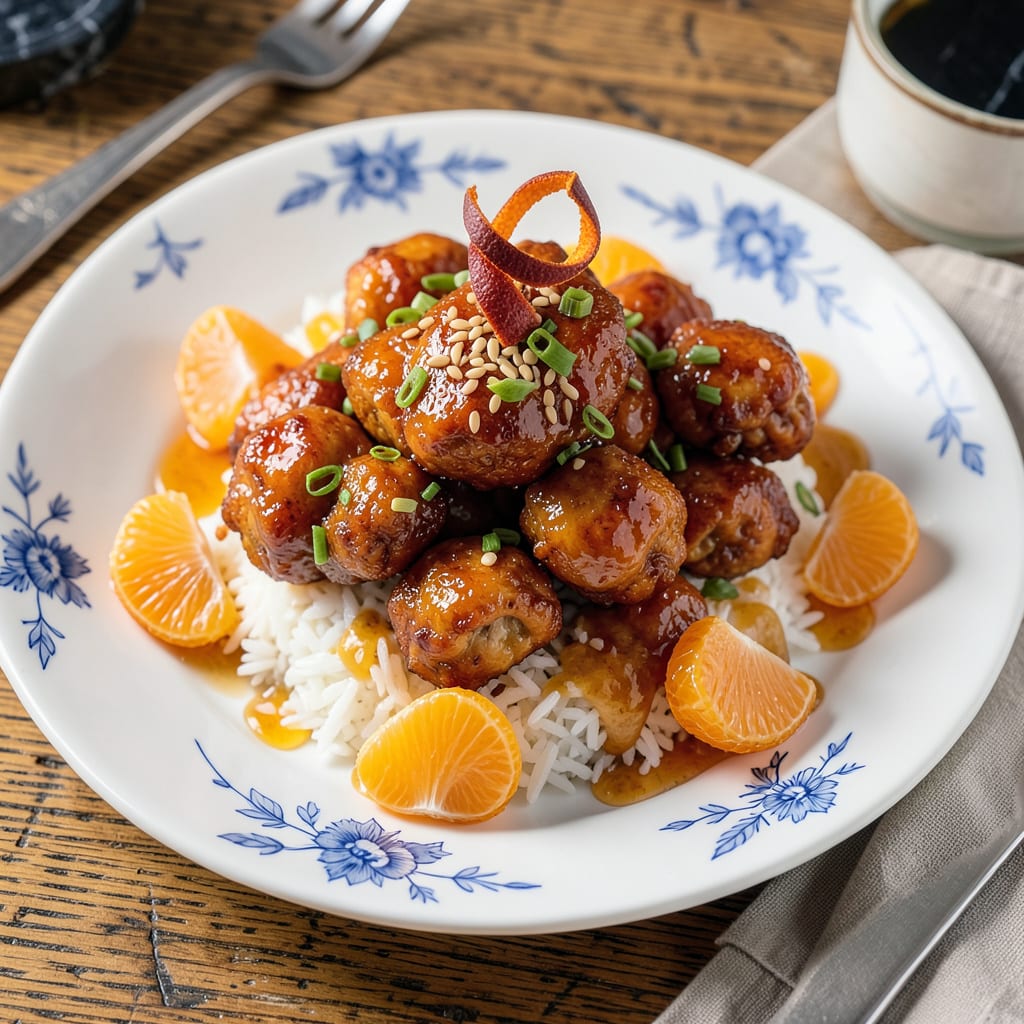
Authentic orange chicken typically uses 3-4 tablespoons of sugar per pound of chicken to balance tangy and savory flavors. Brown sugar adds depth, while white sugar creates a crispier glaze.
This sweetness level isn’t arbitrary—it’s carefully calibrated to create that signature sticky-savory contrast we crave. 🔥 The sugar doesn’t just add sweetness; it transforms during cooking through caramelization, creating complex flavor layers that make the dish irresistible. I’ve found that using less than 3 tablespoons per pound can leave the sauce tasting flat, while exceeding 4 tablespoons risks overwhelming the delicate balance with citrus and soy notes.
What’s fascinating is how different sugars behave in the sauce. Brown sugar’s molasses content introduces subtle caramel undertones, while white sugar promotes better crispiness on the chicken’s exterior. This dual-purpose role explains why most authentic recipes don’t skimp on sugar—it’s working double duty as both flavor enhancer and texture creator. ✨
💡 In This Article
- How Sugar Balances Flavors in Orange Chicken Sauce
- Best Sugar Alternatives for Healthier Orange Chicken
How Sugar Balances Flavors in Orange Chicken Sauce
The magic happens when sugar interacts with the sauce’s acidic components. Orange chicken typically contains rice vinegar (pH 2.5-3.0) and soy sauce (pH 4.5-5.0), which create a sharp tang. Sugar’s molecular structure (C₆H₁₂O₆) neutralizes these acids through a process called “flavor bridging,” where sweetness literally connects and softens harsh notes.
This isn’t just masking—it’s chemical harmony at 180-200°F, where sugar begins transforming. 🔥
At 230°F, sucrose breaks down into glucose and fructose, which then undergo Maillard reactions with amino acids from the chicken. This creates over 100 new flavor compounds that add depth beyond simple sweetness. The 3-4 tablespoons per pound ratio ensures enough sugar for caramelization without crossing into dessert territory.
Brown sugar’s molasses (about 3.5% by volume) adds vanillin and other phenolic compounds that enhance the sauce’s complexity.
What most home cooks miss is sugar’s role in texture. As the sauce reduces, sugar increases the liquid’s viscosity through hydrogen bonding with water molecules. This creates that signature glossy coating that clings perfectly to crispy chicken.
White sugar achieves a higher glass transition temperature (~140°F), resulting in a shatter-like crispness when the sauce cools slightly on the chicken’s surface. ✨
The umami enhancement comes from sugar’s ability to potentiate glutamate receptors. When sugar and MSG (common in soy sauce) combine, they create a synergistic effect that makes flavors pop. This is why reducing the sugar below 3 tablespoons makes the dish taste flat—you’re losing both the flavor bridge and the umami amplification.
The right amount makes the orange zest’s limonene and the ginger’s zingerone sing in harmony.
Temperature control is everything. Below 280°F, you get sweetness without depth. Above 320°F, the sugar burns, creating bitter pyrazines. Professional woks hit that 280-310°F sweet spot where caramelization happens without burning.
This precise range explains why restaurant versions taste more complex than home attempts—it’s all about maintaining that thermal balance during the 2-3 minute sauce reduction phase. 💫
Here’s the sensory breakdown of what proper sugaring achieves:
- First bite: Initial sweetness hits the tip of your tongue
- Mid-chew: Tangy notes emerge as acids cut through the sweetness
- Finish: Umami lingers from the sugar-glutamate interaction
- Aftertaste: Caramelized notes remain on the palate for 10-15 seconds

- Jollof Rice Sauce Recipe: West African Tomato and Spice Infusion - September 25, 2026
- Japanese Rice Soup Recipe: Umami-Rich Comfort in a Bowl - September 25, 2026
- Homemade Cream Of Rice Recipe: Silk-Smooth Breakfast in Minutes - September 25, 2026