
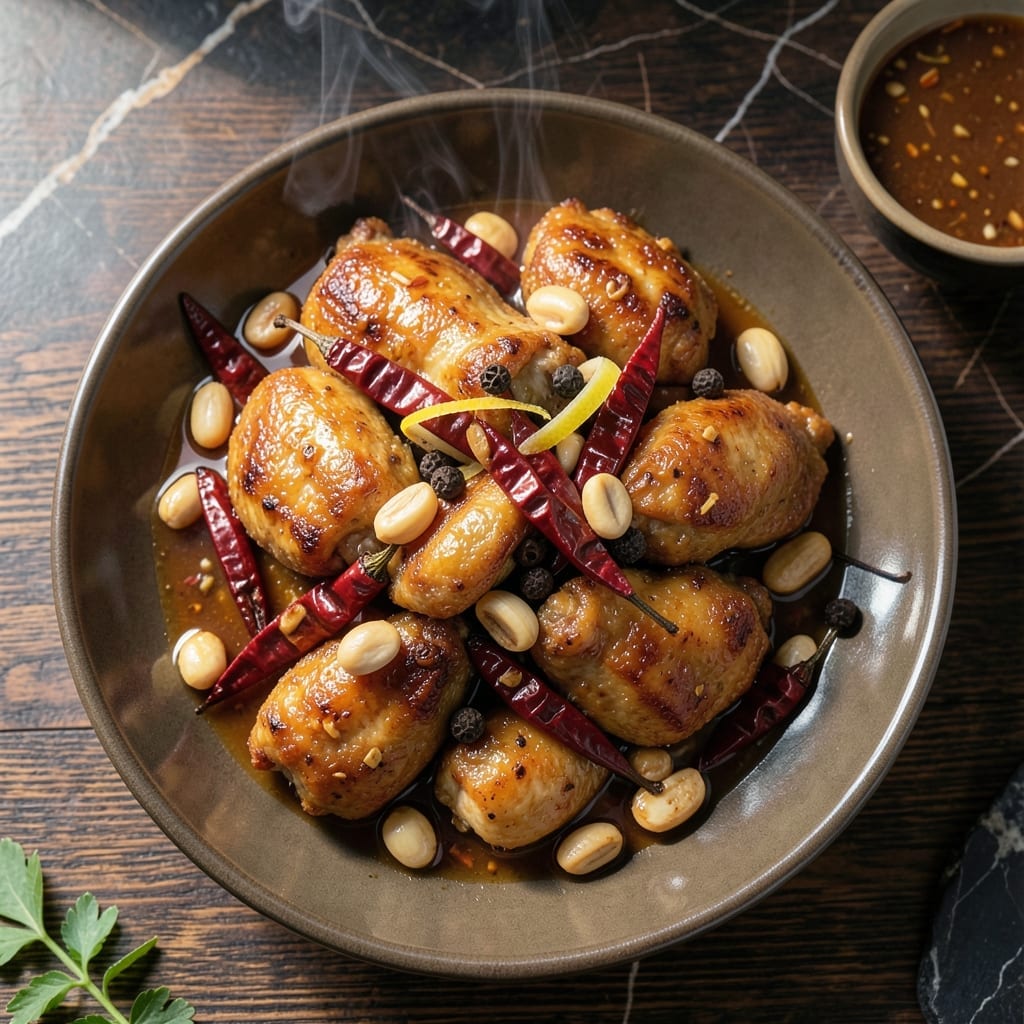
This restaurant-quality dish brings bold Sichuan flavors to your home kitchen with authentic heat and texture. The combination of tender chicken, roasted peanuts, and dried chilies creates a perfect balance of spicy, sweet, and savory.
I’ve refined this technique to replicate the takeout favorite without shortcuts. The key is quick cooking over high heat to maintain the chicken’s tenderness while developing deep, complex flavors in the sauce.
You’ll achieve that signature numbing spice from Sichuan peppercorns and the satisfying crunch of peanuts in every bite. The sauce clings beautifully to each piece of chicken, delivering layers of flavor.
Serve with steamed rice to soak up every drop of the aromatic sauce. This version stays true to the original while being simple enough for weeknight cooking.
Ingredients for Copycat Kung Pao Chicken
Pantry staples meet bold flavors for that authentic takeout taste at home.
| Ingredient | Amount | Notes |
|---|---|---|
| Boneless Skinless Chicken Thighs 🍗 | 1 ½ lb | Cut into 1-inch pieces |
| Roasted Peanuts 🥜 | ¾ cup | Unsalted, dry-roasted preferred |
| Dried Red Chilies 🌶️ | 8 whole | Thai or Sichuan variety |
| Sichuan Peppercorns 🌿 | 1 tsp | Lightly crushed for numbing spice |
| Garlic Cloves 🧄 | 4 cloves | Minced for aromatic base |
| Fresh Ginger 🌿 | 1 tbsp | Minced, peeled first |
| Soy Sauce 🫒 | 3 tbsp | Low-sodium or regular |
| Light Brown Sugar 🍚 | 1 tbsp | Packed for sweetness |
| Black Vinegar 🍶 | 1 tbsp | Or substitute rice vinegar |
| Shaoxing Wine 🍾 | 2 tbsp | Or dry sherry in a pinch |
| Cornstarch 🌾 | 1 tbsp | For velveting chicken |
| Sesame Oil 🫒 | 1 tsp | Toasted, for finishing |
| Green Onions 🧅 | 4 whole | Thinly sliced for garnish |
| Vegetable Oil 🫒 | ½ cup | High smoke point for frying |
The chicken is everything here. Boneless, skinless thighs stay juicier than breasts—Costco has great bulk options if you’re making this often. For the peanuts, Trader Joe’s dry-roasted are perfect (no added oil). The dried chilies should be vibrant red, not dull—Asian markets have the best selection. Sichuan peppercorns are non-negotiable for that signature tingle, but most large supermarkets stock them now.
No Shaoxing wine? Dry sherry works at a one-to-one ratio. Black vinegar can be tricky to find—rice vinegar with a pinch of sugar gets you 90% there. If you’re avoiding alcohol, substitute chicken broth with extra vinegar. The sugar can be swapped for honey (though not traditional), but brown sugar’s molasses notes really complement the dish. Cornstarch is key for that velvety texture—don’t skip it.
Leftovers keep 3-4 days in the fridge, though the peanuts soften over time. Freeze without peanuts for up to 3 months—add them fresh when reheating. The sauce thickens as it cools, so thin with a splash of water before serving.
Why You’ll Love This Recipe
- One Pan Wonder: I toss everything in a wok and it’s done in 20 minutes—no extra pots, no fuss.
- That Spicy Kick: The Sichuan peppercorns and dried chilies give it that numbing heat I crave.
- Feeds a Crowd: Honestly, it’s my go-to for game night or when the kids bring friends over.
- Better Leftovers: The flavors deepen overnight, so lunch the next day tastes even more ridiculous.
Step-by-Step Instructions for Kung Pao Chicken
Here’s the method that delivers authentic takeout flavor with perfect heat and texture every time.
Step 1: Velvet the Chicken for Tenderness
Cut the 1.5 lb Boneless Skinless Chicken Thighs into 1-inch pieces and place them in a bowl. Add the 1 tbsp Cornstarch and 2 tbsp Shaoxing Wine, mixing until the chicken is evenly coated. This velveting technique ensures your chicken stays juicy and tender during frying.
Let the chicken marinate for 15 minutes while you prep the remaining ingredients. The cornstarch will create a protective layer that locks in moisture, while the Shaoxing wine adds depth of flavor. Don’t skip this step—it’s what separates good Kung Pao from great.
Step 2: Toast the Aromatics and Dried Chilies
Heat 0.5 cup Vegetable Oil in a wok or large skillet over high heat until shimmering. Add the 8 whole Dried Red Chilies and 1 tsp Sichuan Peppercorns, stirring for 30 seconds until fragrant. Be careful—the peppercorns will start to pop and release their signature numbing aroma.
Quickly add the 4 cloves Garlic Cloves and 1 tbsp Fresh Ginger, stir-frying for another 30 seconds until the garlic is just beginning to turn golden. This builds the foundation of your sauce with layers of heat, spice, and aroma. Watch closely to avoid burning.
Step 3: Fry the Chicken Until Crispy
Add the marinated chicken to the wok, spreading it in a single layer. Let it sear undisturbed for 1-2 minutes until the bottoms are golden brown, then stir-fry for another 2-3 minutes until the chicken is cooked through and crispy on all sides.
The cornstarch coating will create a beautiful, slightly crispy exterior while keeping the inside moist. Transfer the chicken to a plate and set aside, leaving as much oil as possible in the wok for the next steps.
Step 4: Build the Sauce and Combine
In the same wok, add the 3 tbsp Soy Sauce, 1 tbsp Light Brown Sugar, and 1 tbsp Black Vinegar. Stir well and let the sauce simmer for 1 minute until it thickens slightly and becomes glossy. Taste and adjust the balance of flavors if needed.
Return the chicken to the wok along with the 0.75 cup Roasted Peanuts, tossing everything together for 1-2 minutes until the chicken is fully coated and heated through. The peanuts will soften slightly and absorb the sauce, adding a satisfying crunch to each bite.
Step 5: Finish and Garnish
Remove from heat and stir in the 1 tsp Sesame Oil. Transfer to a serving dish and garnish with the thinly sliced 4 whole Green Onions. The sesame oil adds a nutty depth, while the green onions provide a fresh, bright contrast to the rich, spicy flavors.
Serve immediately while hot, with steamed rice to soak up every last bit of the sauce. The dish should have a perfect balance of heat from the chilies, numbness from the Sichuan peppercorns, and sweetness from the sugar—just like your favorite takeout.
Pro Tips For Making Copycat Kung Pao Chicken
- Velvet the Chicken: Toss the chicken thighs with 1 tsp cornstarch and 1 tbsp soy sauce before cooking—this keeps them absurdly tender, even if you overcook them a little. I learned this the hard way after serving chewy kung pao to my in-laws.
- Toast the Peanuts: Dry-toast the peanuts in a pan for 2-3 minutes until fragrant before adding to the dish. Sounds like an extra step, but it deepens their flavor and stops them from tasting raw.
- Bloom the Aromatics: Cook the garlic, chilies, and Sichuan peppercorns in hot oil for just 30 seconds before adding the chicken—any longer and they’ll burn, turning the dish bitter. After ruining a batch, I now set a timer.
- Use Thighs, Not Breast: Boneless skinless chicken thighs stay juicy even with the high heat this dish demands. I was skeptical until I tried it, but breast just dries out no matter how fast you cook it.
Common Mistakes When Making This Recipe
Overcrowding the Wok
Cooking too much chicken at once lowers the wok’s temperature, leading to steamed rather than seared pieces. I fry the 1.5 lb chicken in 2 batches maximum, ensuring each piece gets crispy edges while staying juicy inside. 🔥
Skipping the Velveting
Omitting the cornstarch marinade results in tough, dry chicken. The 1 tbsp cornstarch and 2 tbsp Shaoxing wine create a protective coating that locks in moisture during high-heat cooking.
Burning the Aromatics
Garlic and ginger burn quickly over high heat. I stir-fry the 4 garlic cloves and 1 tbsp ginger for only 30 seconds after toasting the chilies to prevent bitterness.
Using Low Smoke Point Oil
Vegetable oil’s high smoke point is essential for stir-frying. Olive oil or butter will burn, creating off-flavors. I always use 0.5 cup vegetable oil for this dish.
Adding Peanuts Too Early
Peanuts soften quickly in hot sauce. I add the 0.75 cup peanuts only in the final 1-2 minutes of cooking to maintain their satisfying crunch. 💪
Neglecting the Sauce Balance
Taste before serving! The 1 tbsp brown sugar should balance the 3 tbsp soy sauce and 1 tbsp vinegar. Adjust with a pinch more sugar or splash of vinegar if needed.
Nutrition Facts
Frequently Asked Questions
Can I use chicken breast instead of thighs?
Yes, but thighs stay juicier. If using breast, cut into 1-inch pieces and reduce cooking time by 1 minute to prevent dryness. The velveting step becomes even more crucial.
How do I make it less spicy?
Reduce dried chilies to 4-5 and omit Sichuan peppercorns. Add 1 tsp honey to balance heat with sweetness. The peanuts will still provide texture without extra spice.
What’s the best substitute for Shaoxing wine?
Dry sherry works perfectly at a 1:1 ratio. For alcohol-free, use 2 tbsp chicken broth with 1 tsp rice vinegar. Avoid cooking wine—it contains added salt.
Why did my sauce turn out watery?
Likely from overcrowding or insufficient heat. Cook in 2 batches and ensure the wok is very hot before adding ingredients. A 30-second simmer thickens the sauce nicely.

- Jollof Rice Sauce Recipe: West African Tomato and Spice Infusion - September 25, 2026
- Japanese Rice Soup Recipe: Umami-Rich Comfort in a Bowl - September 25, 2026
- Homemade Cream Of Rice Recipe: Silk-Smooth Breakfast in Minutes - September 25, 2026