
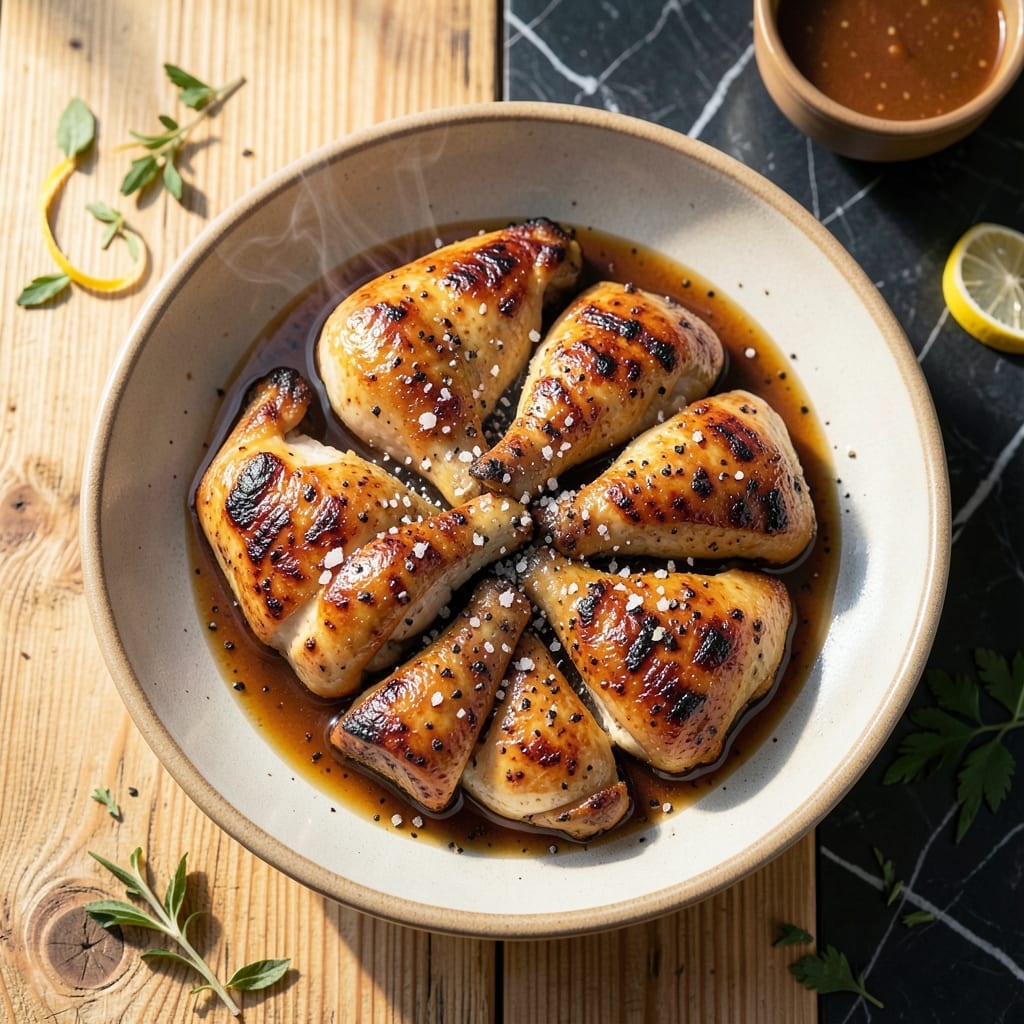
There’s a reason Cornell chicken has remained a beloved grilling tradition for generations. This vinegar-based marinade transforms simple chicken into something extraordinary through a perfect balance of tangy, sweet, and savory flavors.
The secret lies in the marinade—a blend of cider vinegar, oil, and spices that tenderizes the meat while creating a caramelized exterior. Grilled over medium-high heat, the chicken develops a crisp, golden crust that locks in juices.
What results is juicy, flavorful chicken with a distinctive tang that keeps everyone coming back for more. The vinegar not only enhances taste but also acts as a natural preservative, making this dish ideal for picnics and gatherings.
Serve it hot off the grill with classic sides for a meal that’s as nostalgic as it is delicious. This method delivers consistent, restaurant-quality results every time.
Ingredients for Cornell Grilled Chicken
A vinegar-based marinade transforms humble chicken into a grilled masterpiece of tangy perfection.
| Ingredient | Amount | Notes |
|---|---|---|
| Chicken Thighs 🍗 | 2 ½ lb | Boneless, skin-on preferred |
| Apple Cider Vinegar 💧 | 1 cup | Raw, unfiltered for depth |
| Vegetable Oil 🫒 | ½ cup | Neutral flavor, high smoke point |
| Granulated Sugar 🍚 | ¼ cup | Balances vinegar acidity |
| Salt 🧂 | 1 tbsp | Diamond Crystal kosher preferred |
| Black Pepper 🌶️ | 1 tsp | Freshly ground for potency |
| Garlic Powder 🧄 | 1 tsp | Fine grind for even distribution |
| Onion Powder 🧅 | 1 tsp | Complements garlic flavor |
| Paprika 🌶️ | 1 tsp | Sweet or smoked variety |
| Dried Thyme 🌿 | ½ tsp | Rubbed between fingers to release oils |
| Dried Oregano 🍃 | ½ tsp | Mediterranean variety preferred |
| Cayenne Pepper 🔥 | ¼ tsp | Adjust for desired heat level |
The chicken quality is paramount here. Boneless, skin-on thighs yield the juiciest results—breasts tend to dry out on the grill. Source from local butchers or Whole Foods for superior marbling. For the vinegar, raw, unfiltered apple cider vinegar (like Bragg) provides the authentic tang that defines this dish. The oil should be neutral—avocado or vegetable oil works best to prevent smoking.
No apple cider vinegar? White vinegar plus 1 tsp sugar per cup gets you close. Short on spices? Poultry seasoning at half the amount can replace thyme and oregano. For a smokier profile, swap paprika for smoked paprika. The cayenne can be omitted for milder palates, but it adds the signature kick. If using chicken breasts, brine them first to maintain moisture.
The marinade keeps for 1 week refrigerated in an airtight container. Chicken can marinate for 4-24 hours—longer yields deeper flavor. Grilled leftovers stay fresh for 3-4 days and freeze beautifully for 3 months. Always bring chicken to room temperature before grilling for even cooking.
Why You’ll Love This Recipe
- Five Ingredient Magic: I love that this only needs chicken thighs, apple cider vinegar, oil, sugar, and salt—no fancy shopping required.
- Tangy-Sweet Perfection: The vinegar and sugar create that signature Cornell glaze that’s sticky, tangy, and just sweet enough.
- Backyard Star: Honestly, this is my go-to for summer cookouts, game days, or even a quick weeknight dinner.
- Budget-Friendly Feast: Chicken thighs stay juicy and cheap, so I can feed a crowd without breaking the bank.
Step-by-Step Instructions for Cornell Chicken
This method delivers perfectly charred, tangy chicken with a caramelized exterior every time.
Step 1: Create the Cornell Marinade Base
In a large bowl, whisk together the 1 cup apple cider vinegar with the 0.5 cup vegetable oil until fully emulsified. The oil and vinegar will separate if left unattended, so whisk vigorously to create a temporary stable emulsion.
Add the 0.25 cup granulated sugar and continue whisking until completely dissolved. This sweet element is crucial as it balances the sharp acidity of the vinegar and promotes caramelization during grilling. The mixture should appear slightly cloudy at this stage.
Step 2: Build the Flavor Profile with Spices
Incorporate the 1 tbsp salt and 1 tsp black pepper into the marinade. These foundational seasonings penetrate deeply during the marinating process, ensuring every bite is properly seasoned.
Add the 1 tsp garlic powder, 1 tsp onion powder, 1 tsp paprika, 0.5 tsp dried thyme, 0.5 tsp dried oregano, and 0.25 tsp cayenne pepper. I rub the dried thyme between my fingers before adding to release its essential oils, enhancing the aromatic quality of the marinade.
Step 3: Marinate the Chicken Thoroughly
Place the 2.5 lb chicken thighs in a large resealable plastic bag or shallow dish. Pour the marinade over the chicken, ensuring all pieces are fully coated. For best results, use boneless, skin-on thighs as specified—the skin protects the meat during grilling while allowing the marinade to penetrate.
Seal the bag or cover the dish and refrigerate for at least 4 hours, though overnight marinating yields the most pronounced flavor. Turn the chicken occasionally during marinating to ensure even distribution of the acidic vinegar mixture, which tenderizes while infusing flavor.
Step 4: Grill to Caramelized Perfection
Preheat your grill to medium-high heat (about 375-400°F). Remove the chicken from the marinade, shaking off excess but leaving a visible coating. Discard any remaining marinade that has come into contact with raw chicken.
Place the chicken skin-side down on the grill grates. Cook for 6-8 minutes until the skin develops a deep mahogany color and releases easily from the grates. Flip and cook for an additional 6-8 minutes or until the internal temperature reaches 165°F.
Step 5: Rest and Serve
Transfer the grilled chicken to a clean plate and let it rest for 5 minutes. This allows the juices to redistribute throughout the meat, ensuring each bite remains moist and flavorful.
The finished chicken should display distinct grill marks with a glossy, slightly sticky exterior from the caramelized sugar in the marinade. The skin will be crisp while the interior remains juicy and tender. Serve immediately while hot for the best texture and flavor.
Pro Tips For Making Cornell Grilled Chicken
- Marinate Overnight: I learned this the hard way—soaking the thighs in the apple cider vinegar, oil, sugar, and salt mixture for at least 8 hours (ideally overnight) lets the flavors penetrate deep and tenderize the meat.
- Pat Dry Before Grilling: After marinating, always pat the chicken dry with paper towels—it guarantees a better sear and prevents steaming on the grill.
- Skip High Heat: Resist the urge to crank the grill to maximum; medium heat keeps the sugar in the marinade from burning while the chicken cooks through.
- Use Boneless Thighs: Sounds weird, but switching to boneless, skinless thighs saves time and makes eating easier, while still staying juicy thanks to the vinegar and oil marinade.
Regional Styles of This cornell grilled chicken
Upstate New York Original
The classic Cornell version hails from Upstate New York, where it became a campground favorite in the 1950s. The original recipe uses cider vinegar from local orchards, giving it that signature tang. I remember my first taste at a Finger Lakes picnic—it was love at first bite. 🗺️
Southern BBQ Twist
Down South, they add 2 tbsp brown sugar and 1 tsp smoked paprika for deeper caramelization. Some even swap the vinegar for white vinegar with a splash of hot sauce. The result is a sweeter, smokier profile that pairs perfectly with collard greens.
Texas Bold Version
Everything’s bigger in Texas, including the heat. They amp up the cayenne to 1 tsp and add 1 tbsp chili powder. The marinade gets a 1-hour room temp soak before grilling for maximum penetration. This version packs a serious punch.
Coastal Seafood Adaptation
Near the coast, they use chicken breasts (brined first) and add 1 tbsp Old Bay seasoning to the marinade. The vinegar tenderizes the leaner meat while the Old Bay gives it that seafood shack flavor. Serve with corn on the cob for a true shore dinner.
Midwest Sweet Style
Midwesterners sweeten the deal with ½ cup honey in place of sugar and add 1 tsp mustard powder. The result is a sticky, sweet glaze that’s popular at county fairs. I like to brush extra honey on during the last 2 minutes of grilling. 💛
Nutrition Facts
Frequently Asked Questions
What’s the minimum marinating time?
For noticeable flavor, marinate at least 4 hours. Overnight is ideal for maximum tenderness and taste penetration.
Can I use chicken breasts instead?
Yes, but brine them first to prevent dryness. Breasts cook faster—reduce grilling to 5-6 minutes per side.
Why does the skin get so crispy?
The sugar in the marinade caramelizes at 375-400°F, creating that signature sticky, golden crust.
How long will leftovers keep?
Store in an airtight container for 3-4 days refrigerated or freeze for up to 3 months.

- Jollof Rice Sauce Recipe: West African Tomato and Spice Infusion - September 25, 2026
- Japanese Rice Soup Recipe: Umami-Rich Comfort in a Bowl - September 25, 2026
- Homemade Cream Of Rice Recipe: Silk-Smooth Breakfast in Minutes - September 25, 2026